'%3E%3Cpath d='M16.3574 35.6519H12.9537L15.0491 18.8873L16.3574 35.6519ZM30.4229 54.0093L22.309 0.994385H7.91795L0 54.0093H10.6634L11.5802 46.3855H17.4014L17.9914 54.0093H30.4229Z' fill='%23971B20'/%3E%3Cpath d='M48.2073 41.8813C48.2073 43.4049 47.4892 44.0011 46.1144 44.0011H43.7595V11.0687H46.1144C47.4892 11.0687 48.2073 11.6636 48.2073 13.1885V41.8813ZM59.5273 43.6695V11.3326C59.5273 3.71323 53.5729 0.994385 47.8157 0.994385H31.7213V54.0093H47.8157C53.5729 54.0093 59.5273 51.29 59.5273 43.6695Z' fill='%23971B20'/%3E%3Cpath d='M90.183 0.994385H78.6039L75.0711 30.6157L71.9955 0.994385H59.4346L69.2474 54.0093H80.373L90.183 0.994385Z' fill='%23971B20'/%3E%3Cpath d='M107.063 42.3448C107.063 43.7359 105.951 44.5974 104.643 44.5974C103.269 44.5974 102.157 43.7359 102.157 42.3448V12.658C102.157 11.2676 103.269 10.4058 104.643 10.4058C105.951 10.4058 107.063 11.2676 107.063 12.658V42.3448ZM119.233 43.2723V11.7312C119.233 6.36384 112.952 -3.8147e-06 104.643 -3.8147e-06C96.2667 -3.8147e-06 89.9867 6.36384 89.9867 11.7312V43.2723C89.9867 48.6393 96.2667 55 104.643 55C112.952 55 119.233 48.6393 119.233 43.2723Z' fill='%23971B20'/%3E%3Cpath d='M150.976 43.9349V33.7309H139.069V42.3448C139.069 43.7359 137.957 44.5974 136.582 44.5974C135.076 44.5974 133.964 43.7359 133.964 42.3448V12.658C133.964 11.2676 135.076 10.4058 136.582 10.4058C137.957 10.4058 139.069 11.2676 139.069 12.658V21.2723H150.976V11.0687C150.976 5.70107 145.283 -3.8147e-06 136.582 -3.8147e-06C127.75 -3.8147e-06 121.796 5.70107 121.796 11.0687V43.9349C121.796 49.3022 127.75 55 136.582 55C145.283 55 150.976 49.3022 150.976 43.9349Z' fill='%23971B20'/%3E%3Cpath d='M167.478 35.6519H164.076L166.17 18.8873L167.478 35.6519ZM181.544 54.0093L173.432 0.994385H159.037L151.123 54.0093H161.785L162.704 46.3855H168.523L169.114 54.0093H181.544Z' fill='%23971B20'/%3E%3Cpath d='M205.412 10.4058V0.994385H177.081V10.4058H185.392V54.0093H197.428V10.4058H205.412Z' fill='%23971B20'/%3E%3Cpath d='M230.002 54.0093V43.9349H218.914V31.8746H226.635V21.8028H218.914V10.4058H230.002V0.994385H206.875V54.0093H230.002Z' fill='%23971B20'/%3E%3C/g%3E%3Cdefs%3E%3CclipPath id='clip0_260_7080'%3E%3Crect width='230' height='55' fill='white'/%3E%3C/clipPath%3E%3C/defs%3E%3C/svg%3E)

When Jerry Mitchell arrived in New York in 1980, the dance community was in crisis. Young dancers and choreographers, who like Mitchell had moved to the city with big Broadway dreams, were being mowed down by the AIDS epidemic.
In 1987, the seven-time Tony-winning director and choreographer of A Chorus Line, Michael Bennett, died after battling the disease. Two years later, the legendary Alvin Ailey died from an AIDS-related illness. By the mid-’90s, Ron Field, Joe Layton, Chris Chadman, and numerous other Broadway dancers and choreographers had also died.
“I witnessed Broadway’s dance representation go away,” Mitchell says. He recalls how, with a dwindling number of dancers and a growing stigma around physical touch, dance itself was being carved out of shows as well.
“Dance, in its deepest soul, is speaking through physical contact,” Mitchell says. “You’re touching. You’re feeling. It’s extremely sensual, and dancers’ bodies are sexual. That was being taken out of musicals. Musicals were becoming the sung-through British musicals with no touching. Cats being the only exception, and then they were all covered in unitards.”
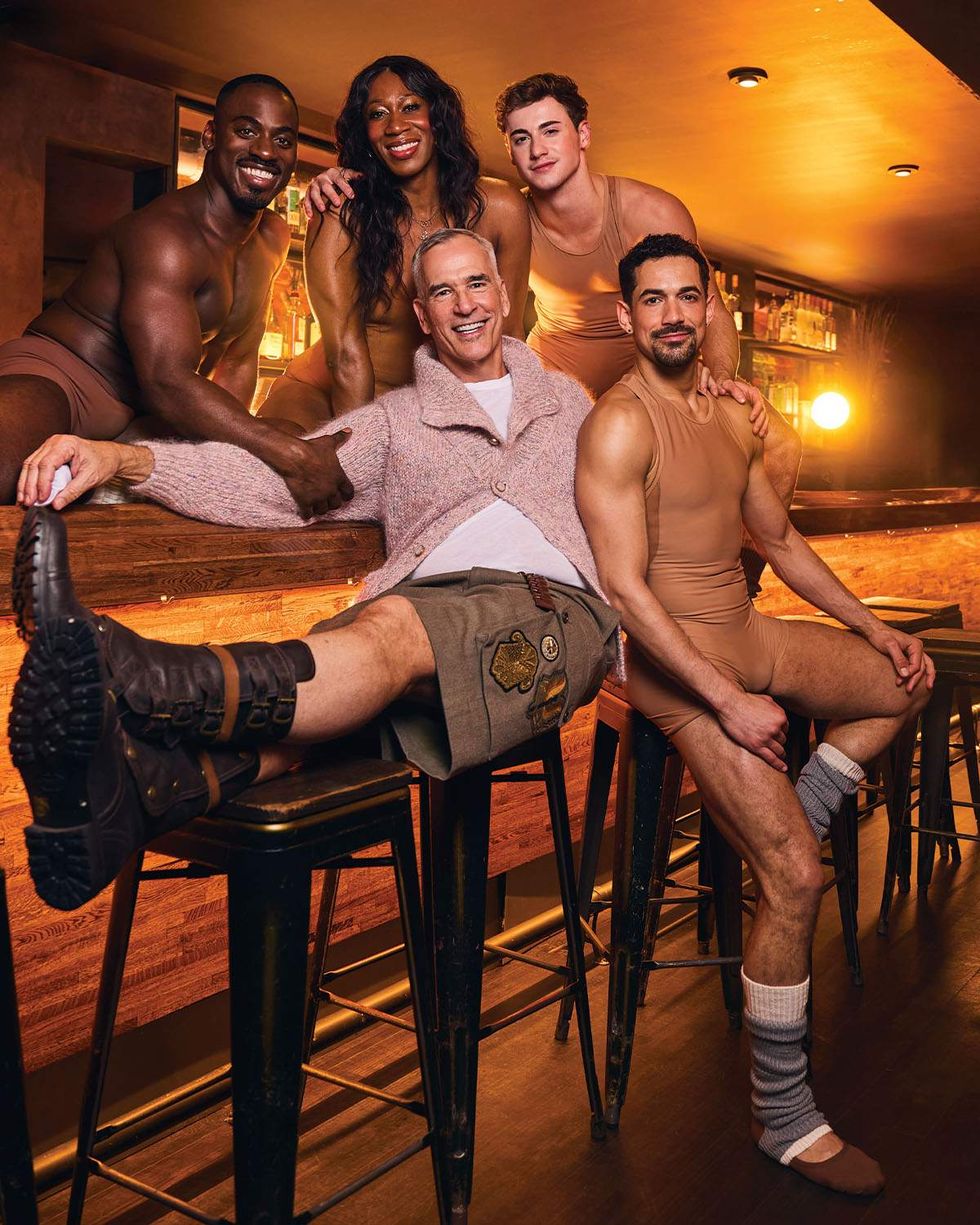 Broadway Bares dancers Chris Patterson-Rosso, Mila Jam, Aydin Eyikan, and Héctor Juan Maisonet with Jerry MitchellMatt Monath
By the spring of 1992, Mitchell, who was regularly performing in The Will Rogers Follies on Broadway, was eager to fight back against both the epidemic laying waste to his community and the new stigma associated with dance. So when a friend suggested he perform a burlesque number at the Chelsea gay bar Splash to raise money for the charity Broadway Cares, a light bulb went off. Mitchell called up seven fellow dancers, asking if they’d join in his strip show. He’d choreograph an opening number, they’d each perform a solo strip, and the $10 entrance fees would all go to an organization that provided essential services to people living with HIV and other critical illnesses.
“It was a rainy Sunday, and there was a line around the block,” Mitchell remembers. “We did the show, and the place went crazy. We were wet from those showers Splash had, and all the money was wet. My back was filthy from sliding on the floor. The owners came up, and they said, ‘We have a line outside. If we turn the lights on and kick everybody out, we can make people come back and pay another entry fee.’”
After a round of tequila shots, Mitchell and the company performed their wet-n-wild strip routines again, before Mitchell headed home with a dripping pillowcase full of soggy bills. The next morning, he headed to the Broadway Cares office with the sack full of money, which, when dried and counted, amounted to over $8,000.
And thus Broadway Bares was born.
Thirty-four years later, Broadway Bares has evolved from an eight-person strip show at a gay bar with showers into a massive yearly endeavor featuring 200 dancers and built by over 500 volunteers. Now, instead of $8,000, the dancers who strip off their clothes each June raise millions for the charity. The show routinely features A-list stars like Matt Bomer, Ariana DeBose, Allison Janney, and Laverne Cox, and has spawned spinoffs in Las Vegas, London, San Francisco, and Italy. But three decades later, Broadway Cares, which merged with Equity Fights AIDS shortly after that first Broadway Bares, still provides the same support to those with HIV.
Of course, a lot has changed for Mitchell since 1992 as well. After that first fateful strip, he’d go on to choreograph Broadway productions of The Full Monty, The Rocky Horror Show, Hairspray, and La Cage aux Folles, the last of which earned him his first Tony Award. He’d then direct and choreograph Legally Blonde, Kinky Boots, Pretty Woman, and Boop, snagging a total of nine Tony nominations and two wins while becoming an internationally renowned theater icon. As Mitchell, now 66, sits down to speak with The Advocate in early April, he’s preparing to leave on an eight-week trip to Japan.
“Tomorrow at 10 o’clock, a car picks me up, and I’m off to Japan to get the first international company of Boop on its feet in Japanese,” he says via video chat, mementos from his past shows arranged on shelves in his office behind him. “It’ll be my third musical transfer to Japan. They’re just hungry for American musicals there.”
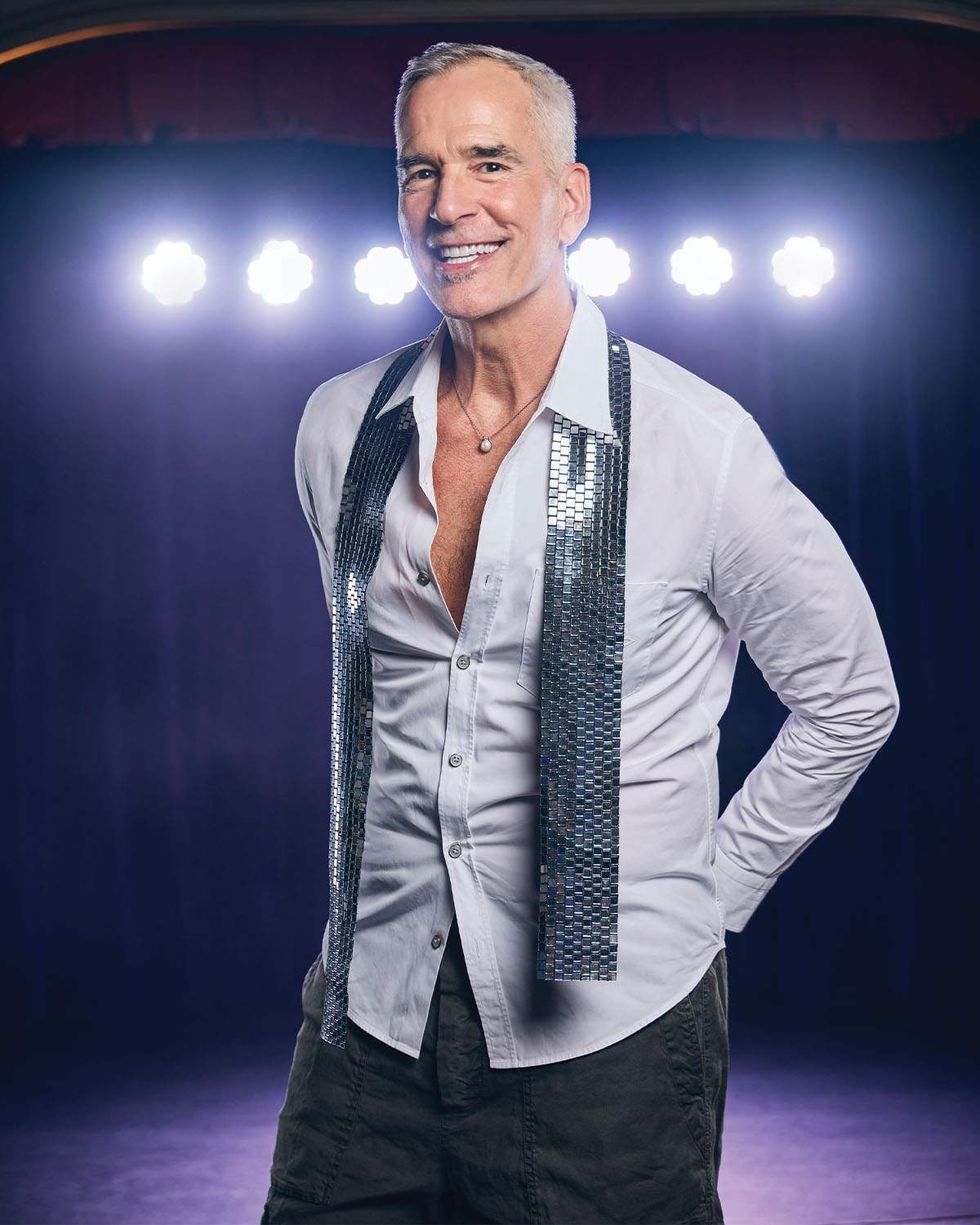 Choreographer and Broadway Bares founder Jerry MitchellMatt Monath
When Mitchell returns, the 34th edition of Broadway Bares, a 007-themed outing titled “License to Strip,” will be in the thick of rehearsals on a mad dash toward the two shows scheduled for Sunday, June 21, at the Hammerstein Ballroom.
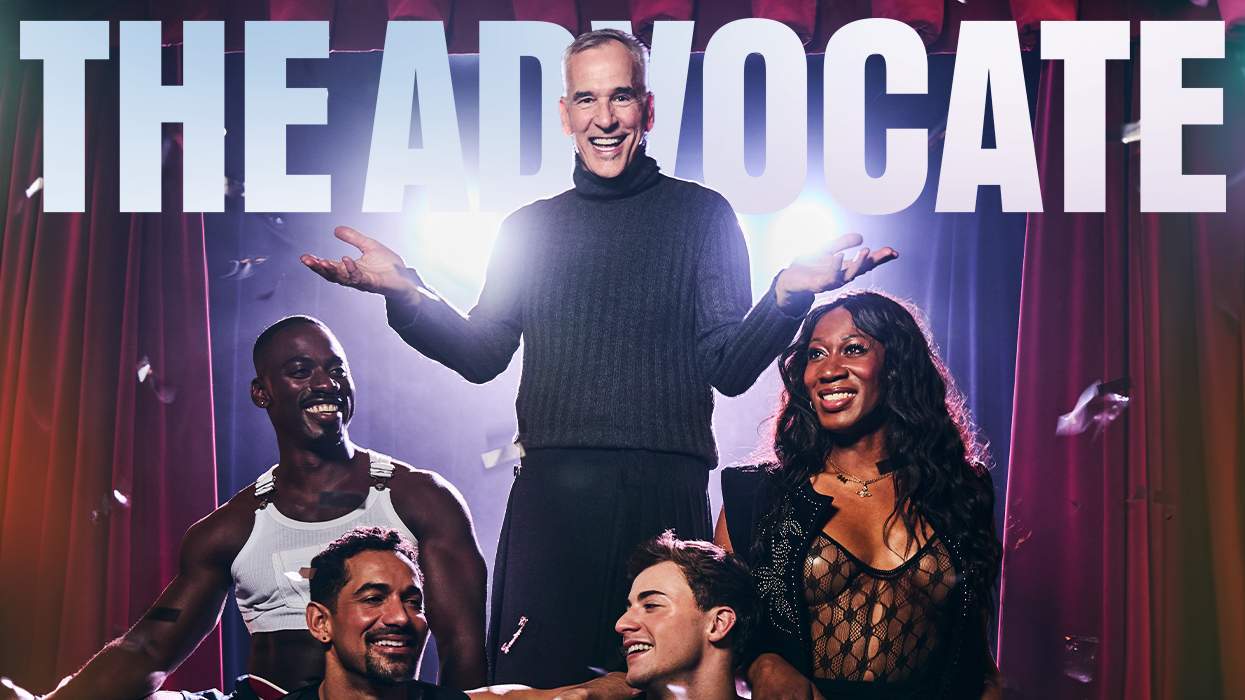
Among the 200 dancers on stage that evening will be Aydin Eyikan, Chris Patterson-Rosso, Mila Jam, and Héctor Juan Maisonet, all of whom joined Mitchell for The Advocate’s cover shoot in the Playhouse Bar, a West Village queer nightlife venue.
Eyikan, who’s currently dancing in MJ: The Musical on Broadway and was a lead in the 2024 edition of Broadway Bares, remembers older dancers talking about the production when he moved to the city as an 18-year-old. “People talked about it like, ‘It’s fam, It’s fam,’” he remembers. “You hear that with things, and then sometimes you show up, and you’re like, ‘This ain’t no family.’ [Broadway Bares] is literally. I remember in rehearsals being like, ‘Oh, people are really caring about one another.’”
Jam, a singer, dancer, and activist who’s been performing in Broadway Bares since 2017, adds that part of that family dynamic is created by the show’s intentional inclusiveness. In 2019, Jam portrayed trans activist Marsha P. Johnson in a number about the historic Stonewall riots.
“It’s imperative that we have representation for Black trans people, and being able to headline that was a dream come true,” she says. “We had Pride flags coming out of my dress and a diverse group of beautiful, talented dancers. I’ll never forget it. It’s something that I hold very near and dear to my heart.”
That community mindset has been baked into Broadway Bares from the start, due to both the show’s mission of helping those in need, as well as Mitchell’s building of those early shows around his friends.
For the second Broadway Bares, the production moved from Splash to Shout, a nightclub on 43rd Street that would eventually become the Stephen Sondheim Theatre. Mitchell’s friends clamored to join the cast, which would now include women. One such friend was Ken Ard, who originated the role of Macavity in Cats on Broadway (and now plays DJ Griddlebone in Cats: The Jellicle Ball).
“He did a back handspring out of his pants,” Mitchell remembers. “He undid his pants and did a back handspring. His pants went flying. People went crazy.”
To raise extra money, Mitchell called in a favor from a friendly Broadway producer — a liquor dynasty heir — to supply a free VIP bar so Broadway Bares could charge $50 for a top-shelf experience. The scrappy operation more than doubled its earnings, bringing in $18,000 for its sophomore effort.
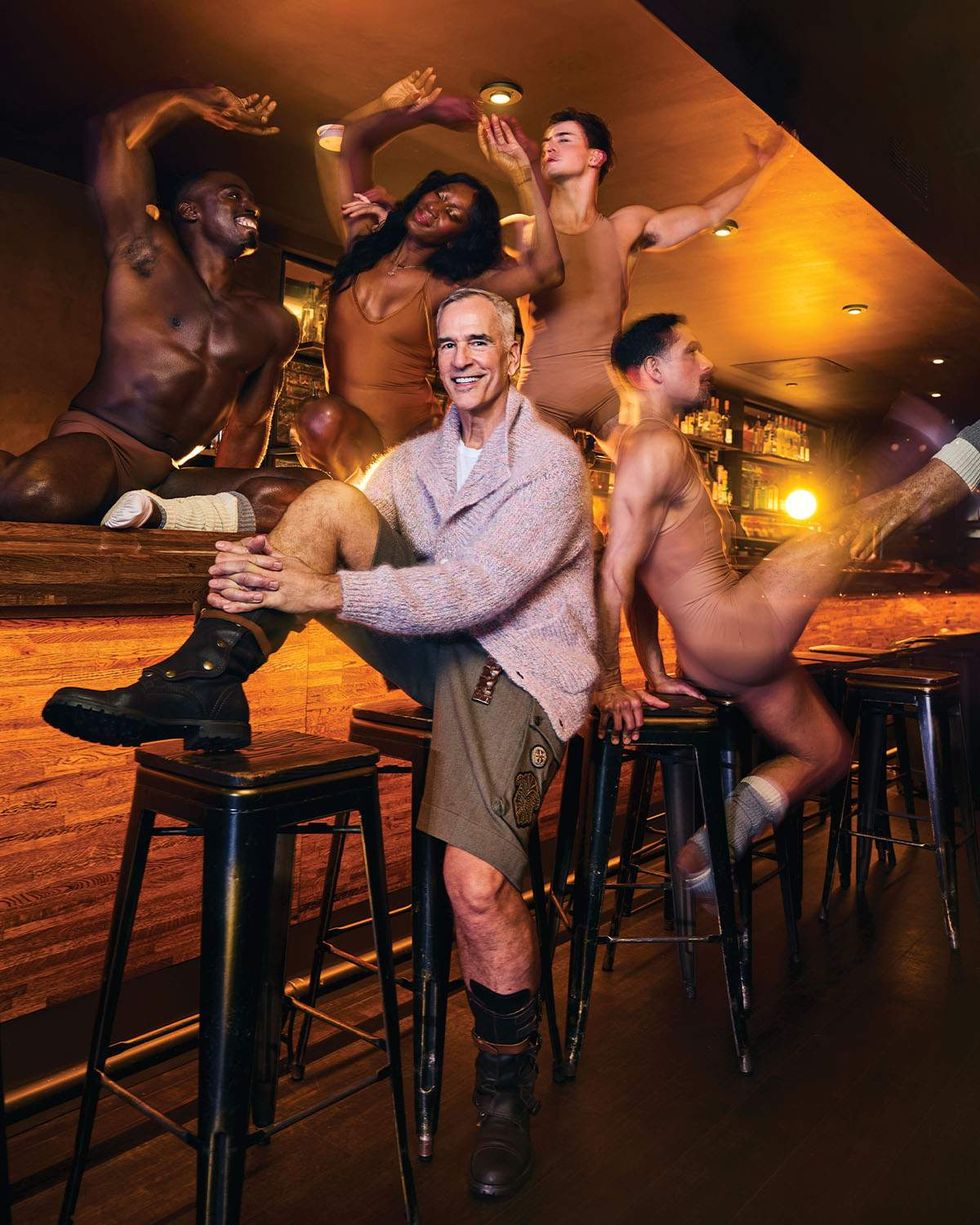 Jerry Mitchell and Broadway Bares dancers Chris Patterson-Rosso, Mila Jam, Aydin Eyikan, and Héctor Juan MaisonetMatt Monath
For the third Broadway Bares, Mitchell moved the event again, this time to Club USA, a massive nightclub on 47th Street that included a 100-foot slide to the dance floor, fondly nicknamed “the K-Hole.” Mitchell pushed the date back a month and, for the first time, added drag queens and a theme, “The Lusty Month of May.” The third Broadway Bares also brought on Broadway Cares/Equity Fights AIDS as an official producing partner.
“I was still doing everything,” Mitchell remembers. “I was directing it. I was choreographing it. I show up for the third year at 8 a.m., and there were [volunteers from Broadway Cares/Equity Fights AIDS] there before me, setting up a runway. I started crying because I thought, ‘There are people who believe in this enough to be here earlier than me.’ Now we have hundreds of volunteers.”
To stage a show at the level of the modern Broadway Bares, hundreds of volunteers are needed, and they start working way before 8 a.m. on show day. Each fall, Mitchell starts planning for the following year by meeting with the show’s director and Broadway Cares/Equity Fights AIDS to decide the upcoming year’s theme. The choreographers then begin building out their specific numbers in November, with the campaign’s photoshoot staged in early winter. At the same time, the director and choreographers also regularly meet with the teams creating the sets, projections, sound, lighting designs, and costumes.
The dancers finally sign up in the spring. But due to their hectic Broadway schedules, each choreographer only has three rehearsals, spread over three weeks, with their dancers. “The first one, you teach the dancers the number,” says Mitchell. “The second one, you hone it, you tighten it, you make it fabulous. The third rehearsal, we do a run-through of the show in the studio.”
On Broadway Bares weekend, the aerialists fly in from Las Vegas, and the Broadway vocalists and celebrities pop in for test runs and mic checks between their Saturday matinees and evening shows. On Sunday at 8 a.m., the 200 dancers (the most allowed by the fire marshal) and hundreds of backstage volunteers descend upon Hammerstein Ballroom.
“We do a run-through, then we do a second, which we call the ‘undress rehearsal,’ where they’re ripping off all their stuff,” Mitchell says. “Then everybody goes and does a matinee [on Broadway]. They come back, we do a full undress rehearsal with makeup, costumes. We get ready at 7 p.m. for the 9 p.m. show. Then we do it again. It’s the craziest day in the world.”
While Broadway Bares has become a theater tradition, that doesn’t mean newcomers aren’t nervous about performing in the buff. Maisonet, who has danced as a co-lead twice in Broadway Bares and appears in the 2026 campaign photoshoot, initially balked at the idea of stripping in front of so many people, but he’s glad he did. “When I did it for the first year, it was just such a rewarding feeling,” says Maisonet, who is currently performing in Buena Vista Social Club. “You’re no longer shy, you go out there, and you’re free.”
In addition to ripping their clothes off on stage, since 2004, the dancers each year also compete to raise money in the months leading up to Broadway Bares via the Strip-a-Thon, an online pledge drive that helps reach far beyond the show’s New York attendees. In the run-up to the 2025 shows, the Strip-a-Thon dancers raised nearly $1.3 million, over half the $2.4 million that the show earned in total. According to Broadway Cares/Equity Fights AIDS, that money translates to more than 200,000 HIV tests, nearly a million healthy meals, and 70,000 doctor visits for theater professionals without insurance.
That mission hits close to home for Patterson-Rosso, who, in addition to performing in five Broadway Bares, has also been a recipient of the services Broadway Cares offers.
“I’m HIV-positive and have been for the last 21 years,” he says. “I go to Callen-Lorde [Community Health Center for treatment], and a huge amount of the money they get is from Broadway Cares every year. There have been times when I have not had insurance and have not been able to pay for the medication I need to survive. I use these services, and I help raise money to keep these services alive, especially now when this government funding is being pulled from agencies like this.”
Since 1992, Broadway Bares has raised over $31 million, which provides essential services across all 50 states.
In the early 2000s, around the 12th Broadway Bares, Mitchell’s role began to shift from director/choreographer to executive producer. He’d started working on larger Broadway shows, which required him to travel internationally, meaning he didn’t have time to solve the day-to-day directorial problems like re-choreographing an Amelia Earhart strip number hours before the show (which did really happen). Instead, Mitchell happily pivoted into larger-scale fundraising, which allowed room for younger directors and choreographers to steer Broadway Bares.
When Mitchell launched Broadway Bares in 1992, the theater world was losing choreographers, but Broadway Bares has helped new dancers and choreographers reach the Great White Way. “Jodi Moccia, Dennis Jones, Josh Rhodes, Lorin Latarro, Sergio Trujillo, Nick Kenkel,” Mitchell lists. “All of these choreographers who’ve done Broadway Bares are now choreographing on Broadway, and none of them had done a Broadway show before. That is crazy to me. Not only did it give back to the community, it reinfused the community with choreography.”
Broadway Bares has not only brought new choreographers to Broadway, it’s also helped return the art of dance itself to Broadway.
“We started to battle AIDS and to climb out of that dark hole and find a way to live with HIV and AIDS and to be full again,” Mitchell says. “That sensuality came back to choreography, came back to the world, and came back to Broadway.”
But if you think Mitchell, on the eve of the 34th Broadway Bares, is satisfied with the status quo, you’d be wrong. “I’m always interested in how to reach more people,” he says, “Because reaching more people fights stigma and could help raise funds to give back to more people.”
Mitchell and Broadway Bares will keep changing the world, one striptease at a time.
This cover story is part of The Advocate’s May-June 2026 print issue, which hits newsstands May 26. Support queer media and subscribe — or download the issue through Apple News+, Zinio, Nook, or PressReader starting May 14.
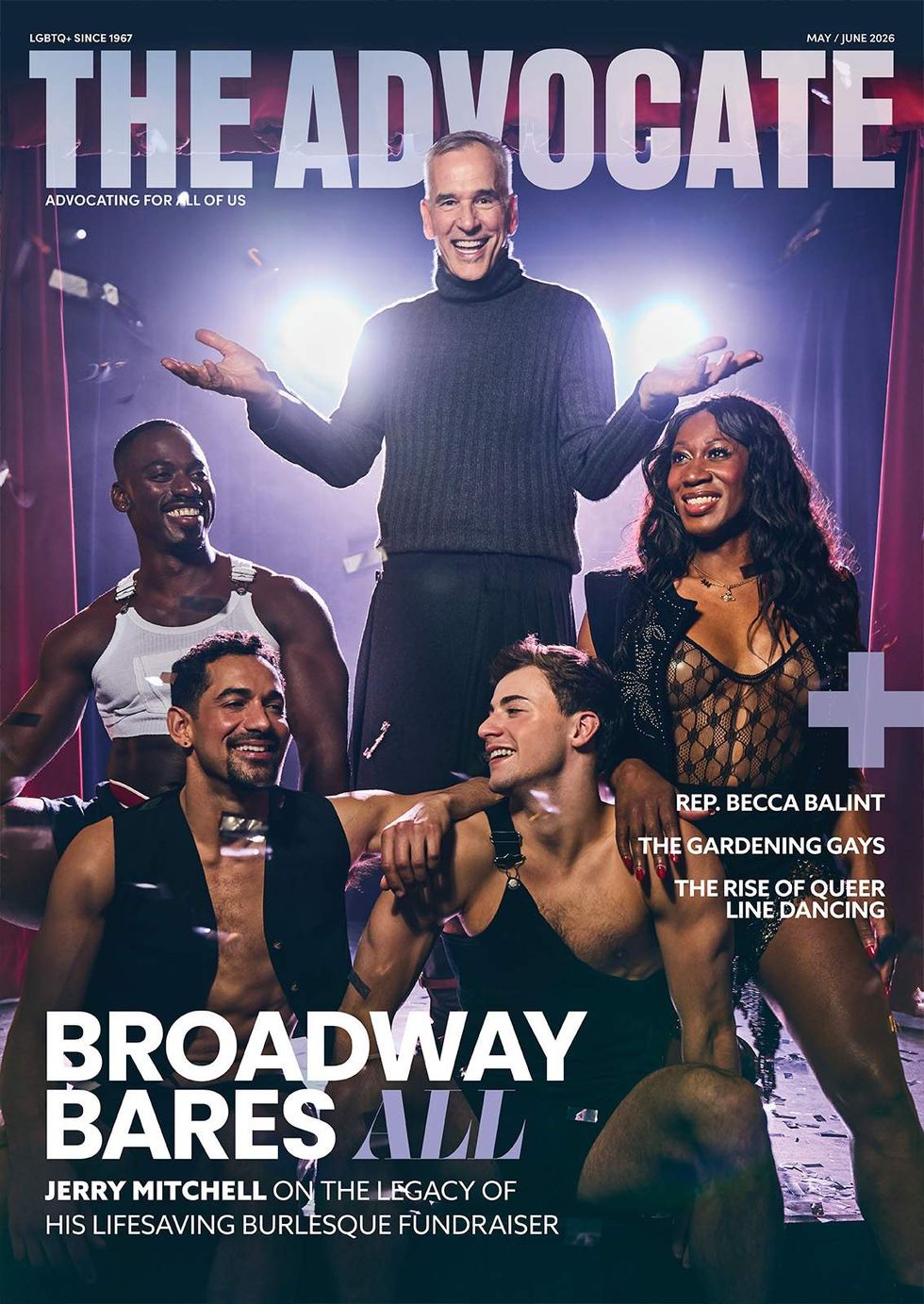 The May-June 2026 cover of The Advocate
talent JERRY MITCHELL @jammyprod @broadwaycares AYDIN EYIKAN @aydineyikan CHRIS PATTERSON-ROSSO @cprgivesyoulife HECTOR JUAN MAISONET @hectorjuan27 MILA JAM @themilajam
photographer MATT MONATH @mattmonath
digital tech MATTHEW JAMES ORTIZ @matthewjamesortiz
lighting tech SEQUOYAH WILDWYN-DECHTER @sequoyah.nyc
creative director MIKEY LOMBARDO @djmikeypop
stylist MARTIN GREGORY JEREZ @martin_gregory
stylist assistant LAM NGO @lamngw
grooming & makeup ANGEL GABRIEL @angelgabrielmakeup
videographer STUART SOX @sox_andthecity
location PLAYHOUSE BAR @playhousebarnyc playhousebar.com
Go behind the scenes with Jerry Mitchell and Broadway Bares dancers Chris Patterson-Rosso, Mila Jam, Aydin Eyikan, and Hector Juan Maisonet