'%3E%3Cpath d='M16.3574 35.6519H12.9537L15.0491 18.8873L16.3574 35.6519ZM30.4229 54.0093L22.309 0.994385H7.91795L0 54.0093H10.6634L11.5802 46.3855H17.4014L17.9914 54.0093H30.4229Z' fill='%23971B20'/%3E%3Cpath d='M48.2073 41.8813C48.2073 43.4049 47.4892 44.0011 46.1144 44.0011H43.7595V11.0687H46.1144C47.4892 11.0687 48.2073 11.6636 48.2073 13.1885V41.8813ZM59.5273 43.6695V11.3326C59.5273 3.71323 53.5729 0.994385 47.8157 0.994385H31.7213V54.0093H47.8157C53.5729 54.0093 59.5273 51.29 59.5273 43.6695Z' fill='%23971B20'/%3E%3Cpath d='M90.183 0.994385H78.6039L75.0711 30.6157L71.9955 0.994385H59.4346L69.2474 54.0093H80.373L90.183 0.994385Z' fill='%23971B20'/%3E%3Cpath d='M107.063 42.3448C107.063 43.7359 105.951 44.5974 104.643 44.5974C103.269 44.5974 102.157 43.7359 102.157 42.3448V12.658C102.157 11.2676 103.269 10.4058 104.643 10.4058C105.951 10.4058 107.063 11.2676 107.063 12.658V42.3448ZM119.233 43.2723V11.7312C119.233 6.36384 112.952 -3.8147e-06 104.643 -3.8147e-06C96.2667 -3.8147e-06 89.9867 6.36384 89.9867 11.7312V43.2723C89.9867 48.6393 96.2667 55 104.643 55C112.952 55 119.233 48.6393 119.233 43.2723Z' fill='%23971B20'/%3E%3Cpath d='M150.976 43.9349V33.7309H139.069V42.3448C139.069 43.7359 137.957 44.5974 136.582 44.5974C135.076 44.5974 133.964 43.7359 133.964 42.3448V12.658C133.964 11.2676 135.076 10.4058 136.582 10.4058C137.957 10.4058 139.069 11.2676 139.069 12.658V21.2723H150.976V11.0687C150.976 5.70107 145.283 -3.8147e-06 136.582 -3.8147e-06C127.75 -3.8147e-06 121.796 5.70107 121.796 11.0687V43.9349C121.796 49.3022 127.75 55 136.582 55C145.283 55 150.976 49.3022 150.976 43.9349Z' fill='%23971B20'/%3E%3Cpath d='M167.478 35.6519H164.076L166.17 18.8873L167.478 35.6519ZM181.544 54.0093L173.432 0.994385H159.037L151.123 54.0093H161.785L162.704 46.3855H168.523L169.114 54.0093H181.544Z' fill='%23971B20'/%3E%3Cpath d='M205.412 10.4058V0.994385H177.081V10.4058H185.392V54.0093H197.428V10.4058H205.412Z' fill='%23971B20'/%3E%3Cpath d='M230.002 54.0093V43.9349H218.914V31.8746H226.635V21.8028H218.914V10.4058H230.002V0.994385H206.875V54.0093H230.002Z' fill='%23971B20'/%3E%3C/g%3E%3Cdefs%3E%3CclipPath id='clip0_260_7080'%3E%3Crect width='230' height='55' fill='white'/%3E%3C/clipPath%3E%3C/defs%3E%3C/svg%3E)
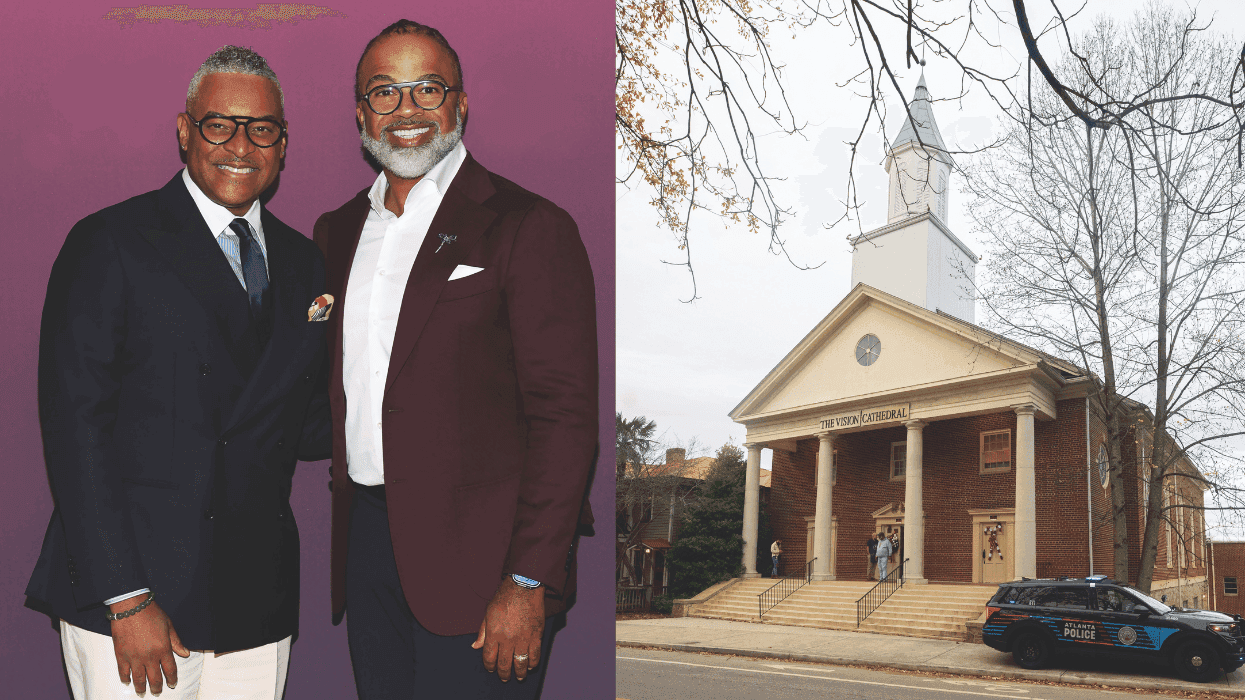
Two decades after founding Vision Cathedral of Atlanta, Bishop O.C. Allen III says the church’s work is more urgent than ever. The LGBTQ-affirming Black Pentecostal congregation, which first gathered in his living room and now fills a sprawling sanctuary every Sunday, has become both a spiritual home and a civic hub at a time when queer and trans people are facing escalating political attacks across the South and the nation at large.
Keep up with the latest in LGBTQ+ news and politics. Sign up for The Advocate's email newsletter.
On a Sunday in early October, the crowd was strikingly mixed: longtime parishioners and first-time visitors, older Black women in colorful hats, a young Asian woman with her white husband and their infant daughter, and a group of college students from Spelman and Morehouse. It was casual, exuberant, and full of motion — the kind of worship that blurs the line between ceremony and celebration. What began 20 years ago with a handful of friends has grown into a joyful, diverse congregation that claps, sings, and dances through services filled with tambourines and hugs between neighbors. Monitors above the altar flash a simple greeting: “Welcome to the Vision Experience. Invite a friend. Join the family. Let us pray with you.”
The service marked a week until Vision Cathedral’s 20th anniversary and doubled as a stop on the Human Rights Campaign’s “American Dreams” tour, led by HRC President Kelley Robinson. Robinson sat beside Allen onstage, flanked by his husband, Rashad Burgess.
When Georgia state Rep. Park Cannon rose to the pulpit to present a proclamation honoring the church’s anniversary, the crowd roared. The energy was both sacred and political — an affirmation of endurance. The congregation’s call-and-response rhythm pulsed as Allen then preached, “You can’t take my joy! Congress can’t take my joy!”
The church, which bought and renovated the former Confederate Avenue Baptist Church in 2010, now stands as one of the most visible LGBTQ-affirming faith institutions in the South. Confederate Avenue has been renamed United Avenue, and the church stands at its intersection with Ormewood Avenue. That morning, minister Toi Washington-Reynolds, a transgender member of the clergy, joined in prayer as the band played and the congregation swayed, and participated in a town hall conversation later in the service.
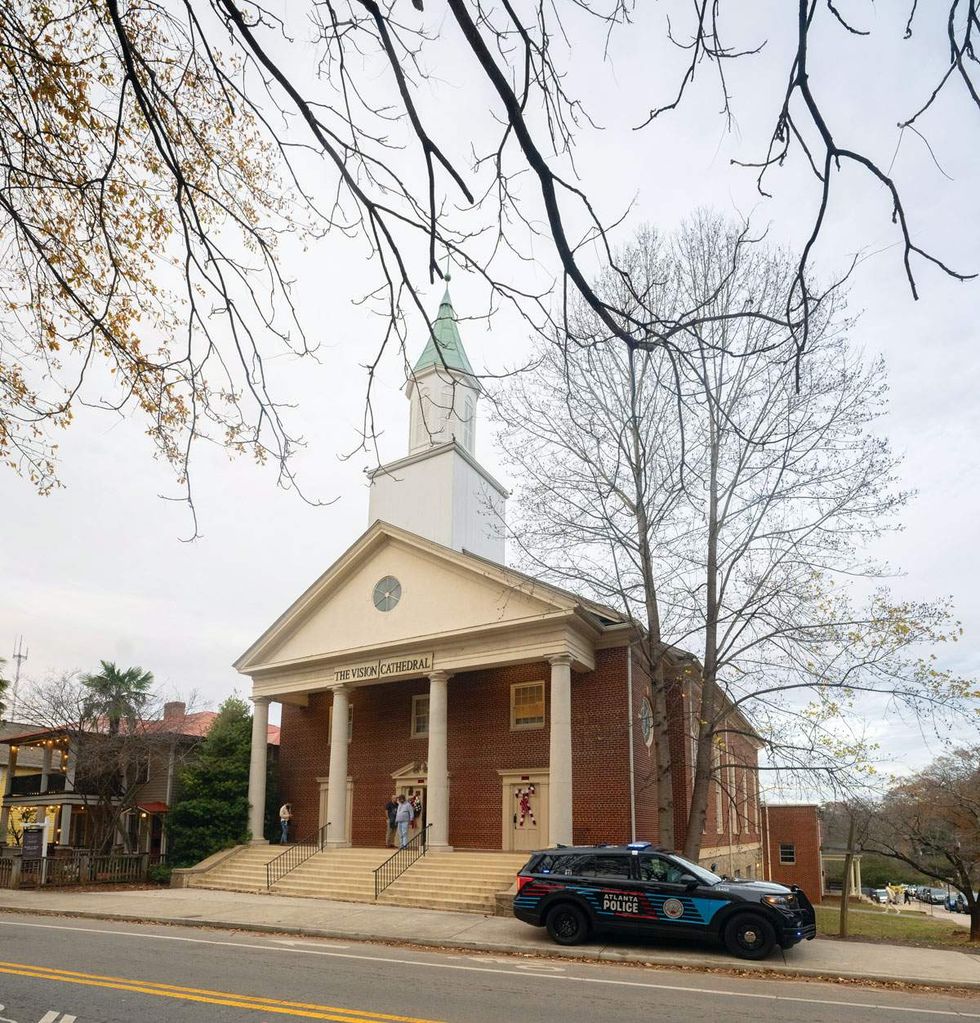 The Vision Cathedral church in Atlanta, GeorgiaPrince Williams/WireImage for ABA/GettyImages
From the pulpit, Allen reminded worshippers that Vision Cathedral’s mission was born out of necessity. “If another table isn’t safe for you,” he told The Advocate, “you have the agency to create your own.”
The HRC visit reflected that philosophy in action. Robinson, whose Atlanta trip was part of a nationwide effort to elevate LGBTQ+ voices and reimagine advocacy, called the congregation “a living example of what resilience looks like in the South. [This is] a faith community that refuses to surrender its joy.”
For Allen, the partnership was a natural extension of his theology. “Faith without justice is empty,” he said. “When national movements meet local communities like ours, that’s when real change begins. That’s when we see faith come alive.”
He said the work ahead involves “meeting people where they are, spiritually, socially, and politically, and reminding them that the church is not a refuge from the world, it’s a force within it.”
When Allen and Burgess first began hosting small gatherings in 2005, they didn’t plan to start a church. Instead, they were looking for safety. “We didn’t use language like ‘affirming’ or ‘inclusive’ back then,” Allen said. “We just needed a moment to feel safe.”
That moment evolved into a movement. Today, Vision Cathedral’s congregation includes trans people, straight families, conservatives, and progressives worshipping together. “We have people who might look like Trump supporters sitting next to queer folks, and we’re all together. That’s the miracle,” Allen said.
The bishop credits that diversity to a shared need for belonging. “Everyone is looking for a safe space,” he said. “If we could find a way for people to feel loved and fully themselves, we’d see something powerful. Diversity brings diversity — of thought, of politics, of experience — and that makes us whole.”
According to the American Civil Liberties Union, Republicans have introduced more than 1,100 anti-LGBTQ+ bills in state legislatures since 2024, with more than 600 just in 2025. Allen believes that as anti-LGBTQ+ legislation spreads, more people are seeing the church as a path to fight back. “To live fully and authentically is the work,” he said.
Allen recalled Vision Cathedral’s early years, when protests and threats were routine. “We had protesters, death threats,” he said. “But we showed up the next Sunday and the Sunday after that. We have always known how to survive.”
His theology of joy and his choice to celebrate even in crisis were on full display during the anniversary service. “We sing, we dance, we celebrate, because that’s how we survived,” Allen said. “Our ancestors danced their way through pain and persecution. Joy is not naïve. It’s resistance.”
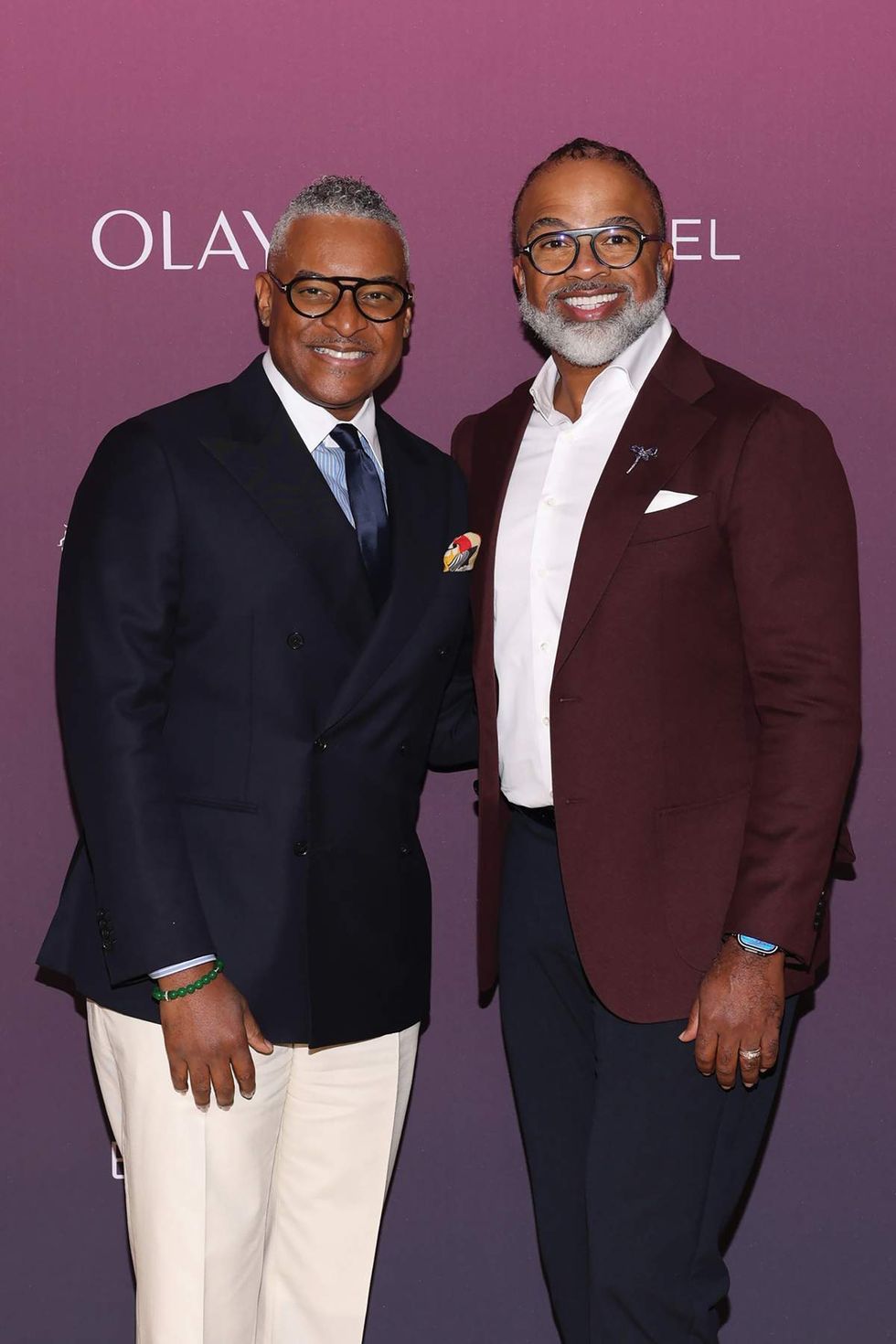 Bishop O.C. Allen III and husband Rashad BurgessNatasha Campos/Getty Images for BET
He added that progress always invites backlash. “When Obama became president, I told our church, ‘Get ready. It’s about to be a long 20 years,’” he said. “Progress is real, but the pendulum swings.”
Today, as President Donald Trump wields his second-term power to target marginalized communities, Allen’s words feel prescient. “Our greatness is not defined by an authoritarian,” he said. “The question is whether we’ll be students of history or of our own fear.”
Allen leads Vision Cathedral alongside husband Burgess, who parishioners affectionately call the first gentleman. Their partnership, once controversial in Pentecostal spaces, is now the cornerstone of the church’s public witness.
“This is my husband,” Allen said. “If this church isn’t for you, there are thousands of others. But if you’re here, know that existence is resistance. We don’t need rainbow flags on the walls, because the people are the flag. We walk in; that’s the parade.”
He added that the Black church itself has long been shaped by queer influence. “The entire culture of the Black church — the aesthetic, the music, the flair — is a Black gay male phenomenon,” Allen said. “The irony is that this institution, born of resistance, was shaped by people who were never fully welcomed in it.”
Allen’s sermon that morning, like much of his ministry, was about endurance — the kind that transforms survival into strength. “If it’s dark, that’s your sign: activate,” he said. “We’re not waiting for anyone to save us. We take care of each other. That’s what church is.”
That conviction defines Vision Cathedral’s next chapter. The church’s 20th anniversary is not an end point, Allen said, but a recommitment to radical welcome. “We’re proudly a church,” he said. “But we’re also unapologetically a movement. We’re here to spark transformation in faith, in politics, and in culture.”
As Vision Cathedral continues to grow in both reach and influence, Allen said success isn’t measured by numbers but by transformation. “We called it Vision because we believed our calling was to inspire everyone else’s vision,” he said. “Everyone has one. Sometimes you just need to clean your glasses. The church is the cloth.”
He paused, then added: “It’s a privilege and an honor to do this work. We’re not trying to make everyone a Christian. We’re trying to make transformers: people who change the world through love and faith, in whatever form that takes.”
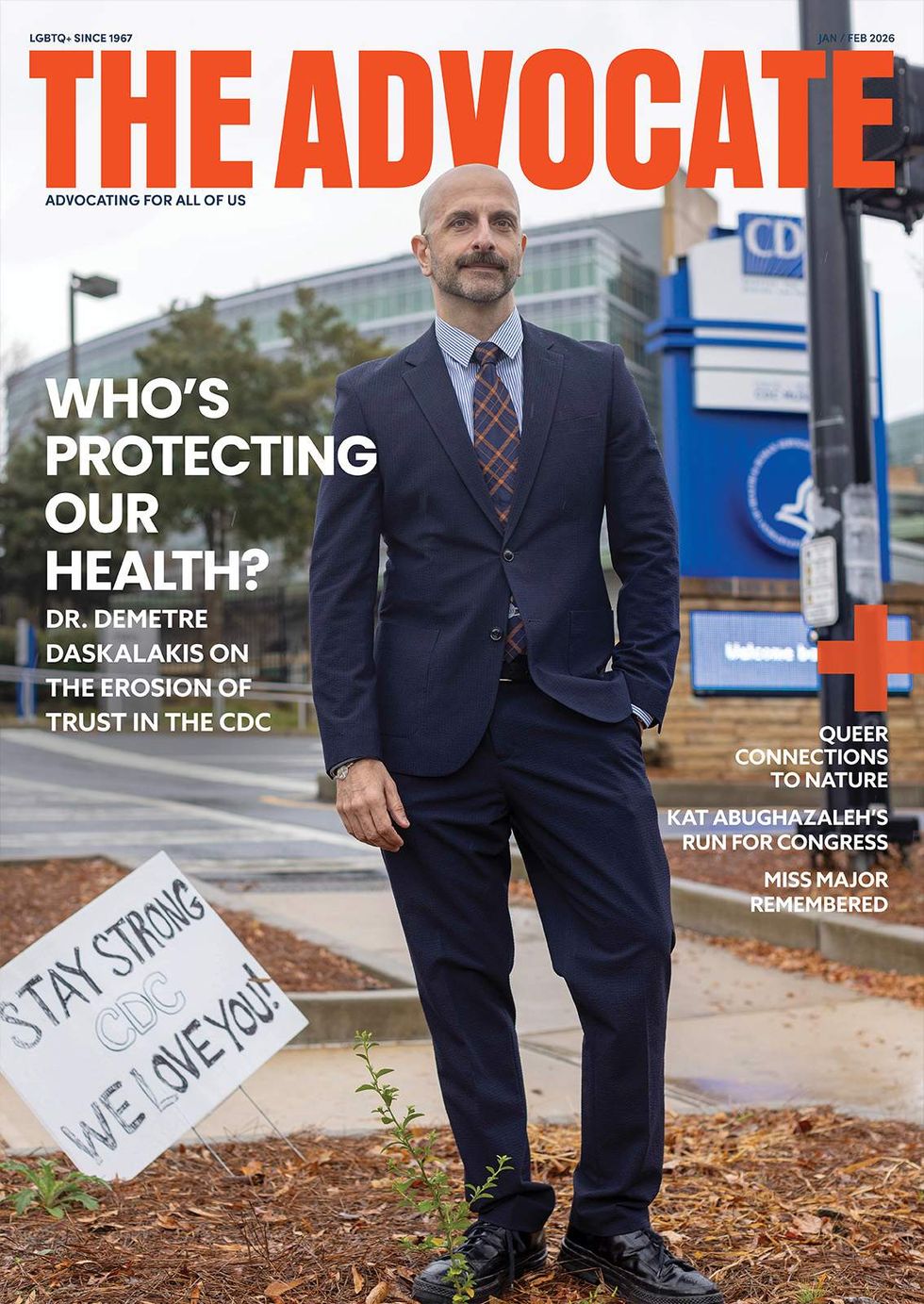
This article is part of The Advocate’s Jan-Feb 2026 print issue, which hits newsstands January 27. Support queer media and subscribe — or download the issue through Apple News+, Zinio, Nook, or PressReader.