'%3E%3Cpath d='M16.3574 35.6519H12.9537L15.0491 18.8873L16.3574 35.6519ZM30.4229 54.0093L22.309 0.994385H7.91795L0 54.0093H10.6634L11.5802 46.3855H17.4014L17.9914 54.0093H30.4229Z' fill='%23971B20'/%3E%3Cpath d='M48.2073 41.8813C48.2073 43.4049 47.4892 44.0011 46.1144 44.0011H43.7595V11.0687H46.1144C47.4892 11.0687 48.2073 11.6636 48.2073 13.1885V41.8813ZM59.5273 43.6695V11.3326C59.5273 3.71323 53.5729 0.994385 47.8157 0.994385H31.7213V54.0093H47.8157C53.5729 54.0093 59.5273 51.29 59.5273 43.6695Z' fill='%23971B20'/%3E%3Cpath d='M90.183 0.994385H78.6039L75.0711 30.6157L71.9955 0.994385H59.4346L69.2474 54.0093H80.373L90.183 0.994385Z' fill='%23971B20'/%3E%3Cpath d='M107.063 42.3448C107.063 43.7359 105.951 44.5974 104.643 44.5974C103.269 44.5974 102.157 43.7359 102.157 42.3448V12.658C102.157 11.2676 103.269 10.4058 104.643 10.4058C105.951 10.4058 107.063 11.2676 107.063 12.658V42.3448ZM119.233 43.2723V11.7312C119.233 6.36384 112.952 -3.8147e-06 104.643 -3.8147e-06C96.2667 -3.8147e-06 89.9867 6.36384 89.9867 11.7312V43.2723C89.9867 48.6393 96.2667 55 104.643 55C112.952 55 119.233 48.6393 119.233 43.2723Z' fill='%23971B20'/%3E%3Cpath d='M150.976 43.9349V33.7309H139.069V42.3448C139.069 43.7359 137.957 44.5974 136.582 44.5974C135.076 44.5974 133.964 43.7359 133.964 42.3448V12.658C133.964 11.2676 135.076 10.4058 136.582 10.4058C137.957 10.4058 139.069 11.2676 139.069 12.658V21.2723H150.976V11.0687C150.976 5.70107 145.283 -3.8147e-06 136.582 -3.8147e-06C127.75 -3.8147e-06 121.796 5.70107 121.796 11.0687V43.9349C121.796 49.3022 127.75 55 136.582 55C145.283 55 150.976 49.3022 150.976 43.9349Z' fill='%23971B20'/%3E%3Cpath d='M167.478 35.6519H164.076L166.17 18.8873L167.478 35.6519ZM181.544 54.0093L173.432 0.994385H159.037L151.123 54.0093H161.785L162.704 46.3855H168.523L169.114 54.0093H181.544Z' fill='%23971B20'/%3E%3Cpath d='M205.412 10.4058V0.994385H177.081V10.4058H185.392V54.0093H197.428V10.4058H205.412Z' fill='%23971B20'/%3E%3Cpath d='M230.002 54.0093V43.9349H218.914V31.8746H226.635V21.8028H218.914V10.4058H230.002V0.994385H206.875V54.0093H230.002Z' fill='%23971B20'/%3E%3C/g%3E%3Cdefs%3E%3CclipPath id='clip0_260_7080'%3E%3Crect width='230' height='55' fill='white'/%3E%3C/clipPath%3E%3C/defs%3E%3C/svg%3E)
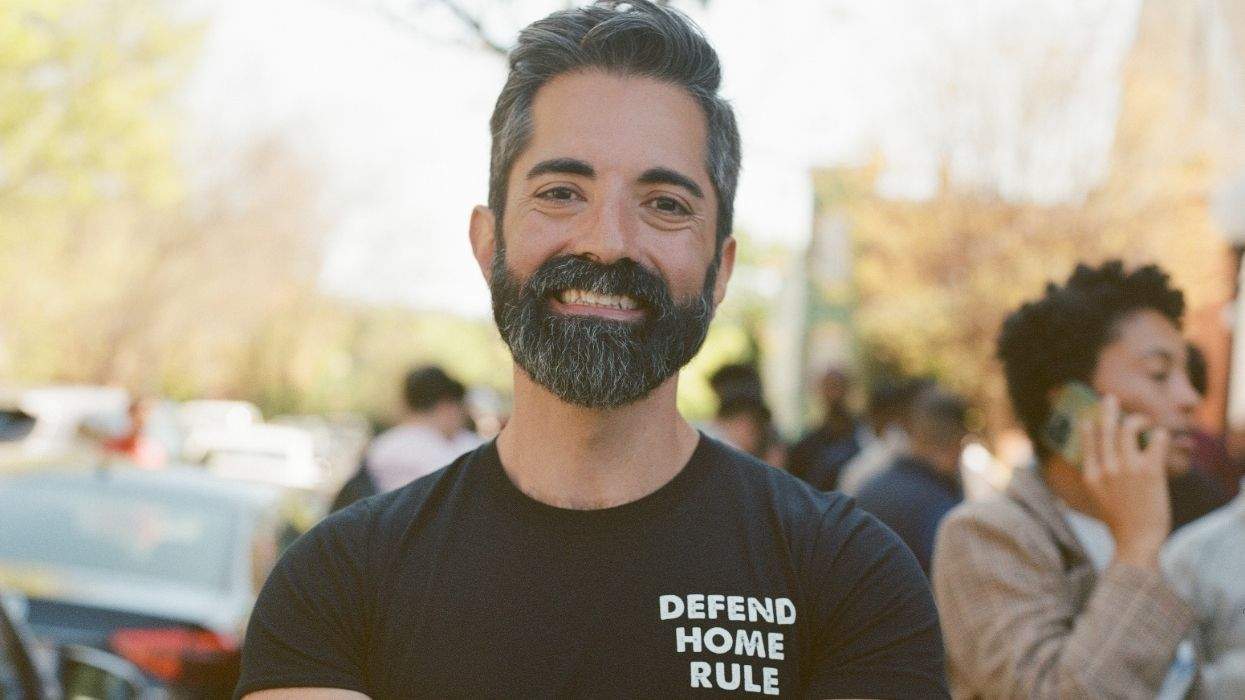
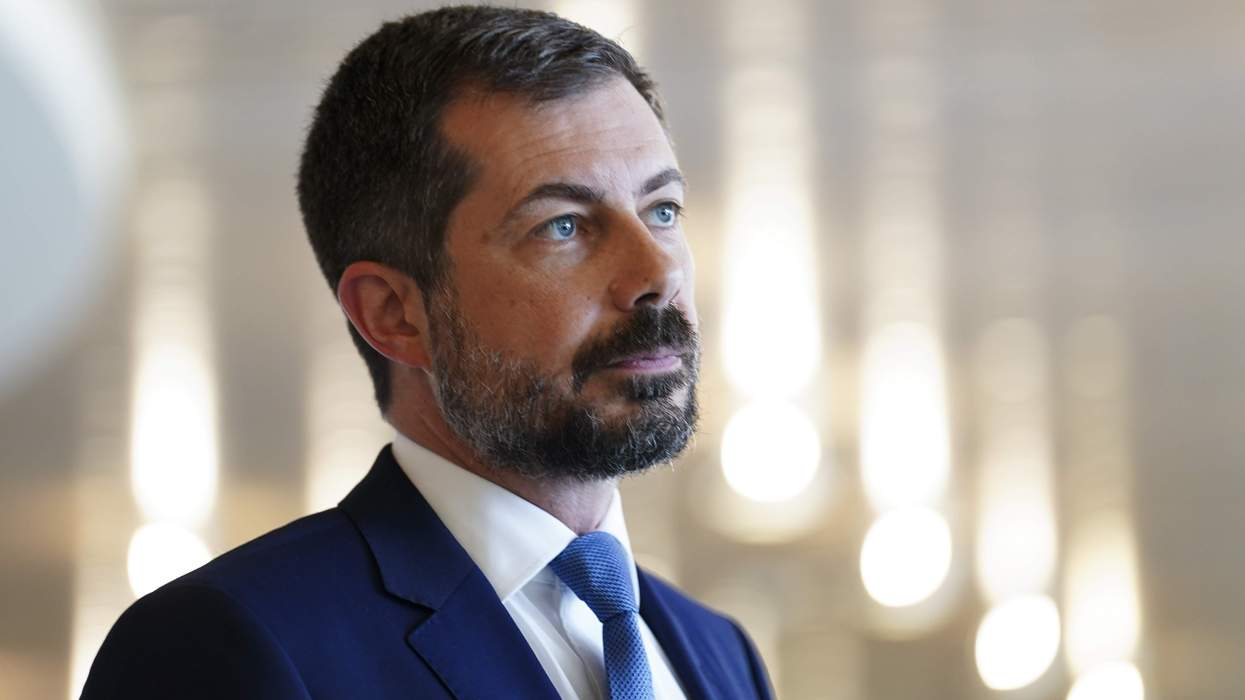
Miguel Trindade Deramo is running for the Washington, D.C., City Council in one of the most politically progressive neighborhoods in America. But the candidate says a year, marked by federal crackdowns, immigration sweeps, armed patrols, and fear spreading through Washington’s queer nightlife corridors, revealed how unprepared the nation’s capital was to protect many of the people who live there.
Washington, D.C., likes to imagine itself as the anti-Donald Trump capital.
It is the city of rainbow crosswalks and embassy receptions, of policy briefings and Pride flags hanging from row houses and lampposts. In the neighborhoods that stretch north from downtown — Shaw, Adams Morgan, Columbia Heights, Mount Pleasant, the U Street corridor — queer nightlife spills onto sidewalks beneath murals commemorating Black history and protest movements. Spanish, English, and Amharic intermingle on crowded sidewalks. Progressive politics is not just an ideology here; it is part of the city’s civic identity.
Related: D.C. bar owners say Trump’s federal law enforcement crackdown is killing their business
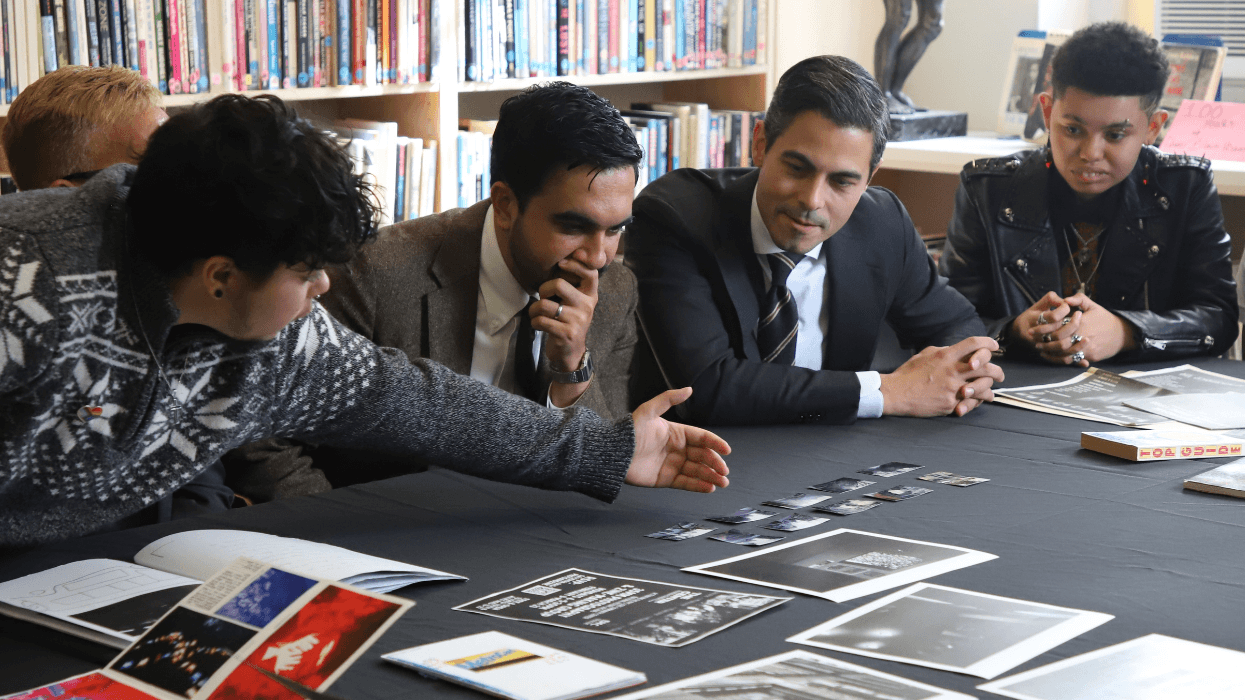
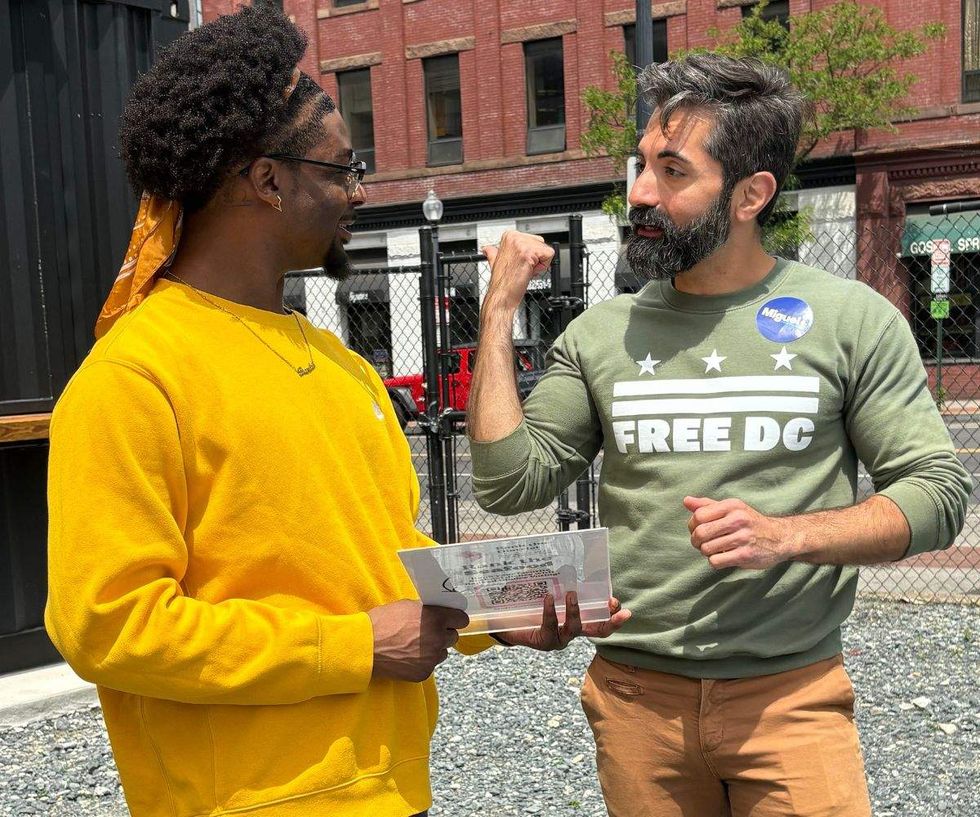 Nathan Barrera-Bunch/Miguel for Ward 1
Related: Inside Grindr’s WHCD party, which was so packed it ran low on alcohol
“The sense of progress is sometimes exhilarating,” the out gay Ward 1 D.C. Council candidate told The Advocate in an interview. “And then the sense of the fragility of that progress can be terrifying.”
Trindade Deramo speaks with the cadence of someone equally comfortable discussing democratic theory, nightlife economics, immigration systems, and zoning disputes. A former consular officer with the U.S. State Department and former Department of Homeland Security employee, he later became an Advisory Neighborhood Commissioner in Ward 1 and helped lead the successful campaign for Initiative 83, a ballot measure that brought ranked-choice voting to Washington.
Now he is running for the D.C. Council seat to represent a politically influential and rapidly changing part of the city, including neighborhoods synonymous with progressive activism, immigrant life, and queer culture.
If elected, Trindade Deramo would become only the second out LGBTQ+ person on the D.C. Council. He would also become the first Latino elected to the body in the city’s history, despite the city’s Latinx population being about 13 percent, recent census data found. The disconnect is striking. According to a 2023 report from the Williams Institute, Washington has the highest percentage of LGBTQ+ adults in the country, with an estimated 14.3 percent of adults identifying as LGBTQ+.
For Trindade Deramo, that disparity reflects something deeper than electoral coincidence.
“I answer this question from a systems structural perspective,” he said.
He believes traditional winner-take-all elections narrow political representation by forcing communities to consolidate behind a single “acceptable” candidate rather than build broader coalitions.
“In the old system, you have one Black candidate or one Latino candidate or one gay candidate, and that’s it because you don’t want to divide your community,” he said. “In this system now, we can combine electoral power and augment each other and build coalitions to win.”
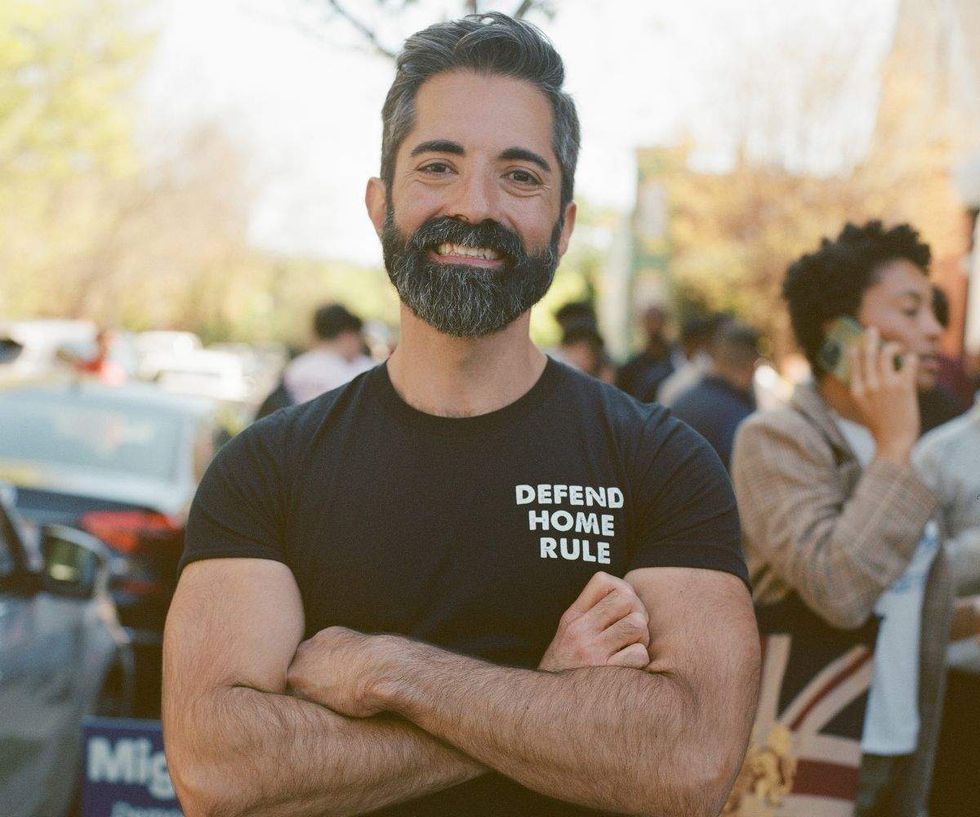 Qaree Draher/Miguel for Ward 1
That philosophy has already reshaped the race. In an unusual move for a competitive Democratic primary, Trindade Deramo and fellow candidate Rashida Brown recently cross-endorsed one another, encouraging voters to rank them first and second under the city’s new ranked-choice voting system rather than attack each other in a traditional zero-sum campaign, according to D.C. CBS affiliate WUSA.
The June 16 Democratic primary is widely expected to determine who ultimately wins the seat in heavily Democratic Ward 1, which is currently represented by Councilmember Brianne Nadeau.
But the issue animating Trindade Deramo most intensely is not the mechanics of the election. It is fear.
His candidacy emerged during a period when Washington’s carefully maintained sense of stability began to fracture amid aggressive federal intervention by the Trump administration. Last year, federal law enforcement deployments and National Guard activity transformed parts of Washington into heavily surveilled zones, particularly in neighborhoods with large immigrant populations and active nightlife economies.
Ward 1 felt the effects immediately.
“People were not going out to bars and restaurants in August and September because nobody knew what was going to happen,” Trindade Deramo said. “You didn’t want to get stopped in a random traffic checkpoint of deeply dubious legality.”
He described an atmosphere where immigrant families became afraid to leave their homes, and local businesses watched customers disappear almost overnight.
“The fear was palpable,” he said. “It caused a huge problem for our nightlife, our food and beverage community.”
The gay business owners running some of Washington’s best-known LGBTQ+ venues described scenes similar to those The Advocate witnessed during the height of the federal crackdown. Mark Rutstein, co-owner of Crush Dance Bar, warned that the administration’s so-called violent crime initiative functioned in practice as “an immigration sweep,” saying heavily visible checkpoints near 14th and U triggered “customer flight.” Rutstein said sales at Crush plunged 75 percent on one night after federal agents saturated the area.
Dave Perruzza, owner of Pitchers and A League of Her Own in Adams Morgan, similarly told The Advocate that one Friday night alone cost his businesses an estimated $7,000 in lost revenue as customers stayed home amid fears of escalating federal activity. Perruzza has announced that he’s selling his bars.
For Trindade Deramo, those downstream effects exposed what he sees as one of Washington’s defining contradictions: a city that performs progressive confidence nationally while often struggling to operationalize its values locally.
“As with so many things in D.C., there’s no shortage of goodwill and good intent,” he said. “The failures come most often in implementation.”
He points to LGBTQ+ youth homelessness, uneven violence prevention efforts, and the lingering distrust between marginalized communities and police as evidence of a city government that frequently embraces progressive rhetoric while failing to build systems capable of delivering durable safety.
Unlike some Democrats who dismiss public safety concerns as conservative fearmongering, Trindade Deramo speaks about violence in Ward 1 as both real and politically manipulable — a dynamic that, in his view, requires responses more nuanced than either denial or militarized policing.
“It is just not acceptable that there were so many shootings,” he said of violence near U Street last summer. “And that can also be true at the same time as throwing the National Guard all over the place is not solving that problem either.”
The anxiety over public safety has unfolded alongside a more complicated statistical reality. Violent crime in Washington has dropped sharply over the past two years after a post-pandemic spike. According to Metropolitan Police Department data, homicides fell from 274 in 2023 to 190 in 2024 and then to 127 in 2025, while robberies and carjackings also declined significantly. Yet even as crime rates fell, fear remained politically potent in neighborhoods like Ward 1, where highly visible federal deployments and recurring incidents of gun violence kept residents on edge.
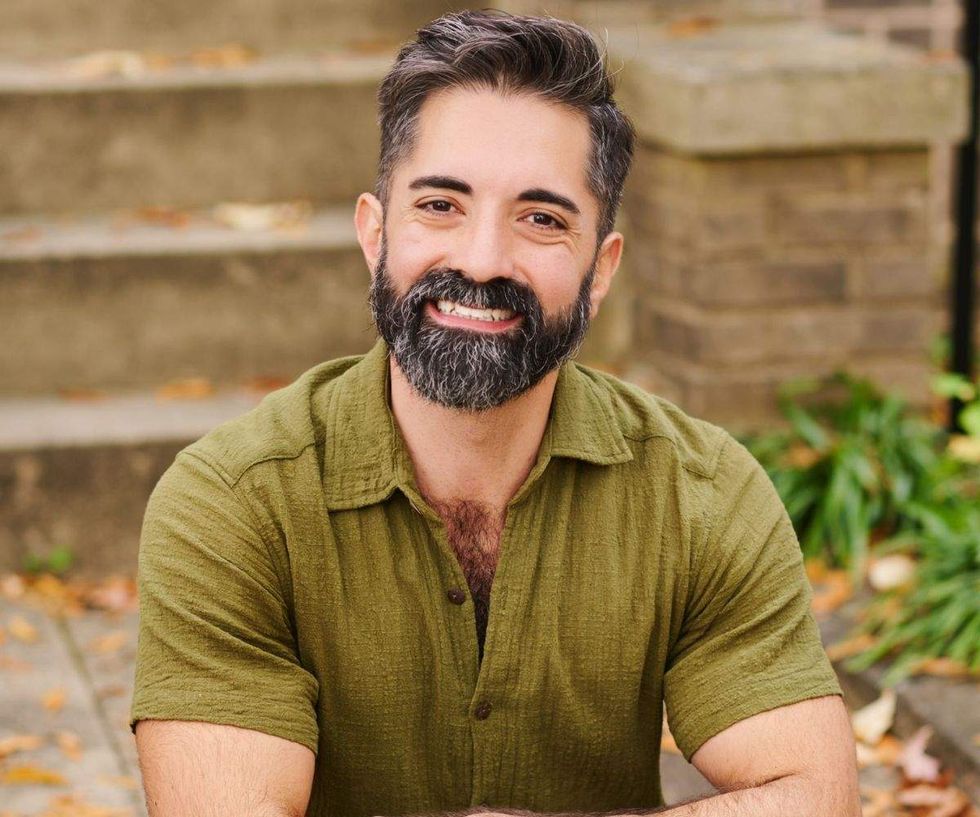 Cedric Terrell/Miguel for Ward 1
Trindade Deramo advocates for expanding violence interruption programs and rebuilding trust-based community policing structures.
“There already was a lot of historical mistrust and skepticism between our communities and the police in D.C.,” he said.
That history runs deep in Washington. During the Lavender Scare of the 1950s, federal officials and D.C. police treated homosexuality as both a moral failing and a national security threat. Metropolitan Police vice squads surveilled gay gathering places near Lafayette Square while federal agencies purged thousands of suspected LGBTQ+ employees from government service, leaving behind a legacy of distrust that still shapes how many queer Washingtonians view law enforcement today.
Trindade Deramo’s worldview was shaped in part by his years working within immigration systems. After serving abroad as a consular officer, he worked at DHS, where he helped train employees in immigration law.
“Nothing that I have seen happen on our streets with ICE and CBP and all this stuff has been a surprise to me,” he said. “I understand that the institutional agency culture is just not very respectful of legalities.”
The experience left him skeptical not only of federal enforcement institutions but also of Washington’s political tendency toward complacency.
Ultimately, he said, his decision to run came after watching residents organize mutual-aid networks while feeling abandoned by city leadership during the federal escalation.
“The people here really rallied,” he said. “They raised tens of thousands of dollars and still continue to walk their immigrant neighbors’ kids to school when the parents are afraid to leave the house.”
In a city built around the machinery of federal power, Trindade Deramo said the most meaningful response often came not from institutions but from ordinary people trying to hold their communities together.
That experience now sits at the center of his campaign.
For all the policy discussions surrounding ranked-choice voting, violence interruption programs, zoning, or nightlife economies, Trindade Deramo’s candidacy is ultimately animated by the question of whether a city that sees itself as a national symbol of liberal governance can actually protect vulnerable people when political pressure intensifies.
The question feels especially urgent in Ward 1, where the contradictions of modern Washington are compressed into a few square miles. Luxury apartment buildings rise beside longtime immigrant businesses. Queer nightlife districts overlap with neighborhoods still grappling with displacement, inequality, and recurring violence.
“To be a cis gay man is a relative position of privilege,” he said earlier in the interview, reflecting on what it means to seek office at a moment when transgender people, immigrants, and other marginalized groups face escalating political attacks. He said public officials have “a moral obligation” to protect people who are “much more vulnerably positioned.”