'%3E%3Cpath d='M16.3574 35.6519H12.9537L15.0491 18.8873L16.3574 35.6519ZM30.4229 54.0093L22.309 0.994385H7.91795L0 54.0093H10.6634L11.5802 46.3855H17.4014L17.9914 54.0093H30.4229Z' fill='%23971B20'/%3E%3Cpath d='M48.2073 41.8813C48.2073 43.4049 47.4892 44.0011 46.1144 44.0011H43.7595V11.0687H46.1144C47.4892 11.0687 48.2073 11.6636 48.2073 13.1885V41.8813ZM59.5273 43.6695V11.3326C59.5273 3.71323 53.5729 0.994385 47.8157 0.994385H31.7213V54.0093H47.8157C53.5729 54.0093 59.5273 51.29 59.5273 43.6695Z' fill='%23971B20'/%3E%3Cpath d='M90.183 0.994385H78.6039L75.0711 30.6157L71.9955 0.994385H59.4346L69.2474 54.0093H80.373L90.183 0.994385Z' fill='%23971B20'/%3E%3Cpath d='M107.063 42.3448C107.063 43.7359 105.951 44.5974 104.643 44.5974C103.269 44.5974 102.157 43.7359 102.157 42.3448V12.658C102.157 11.2676 103.269 10.4058 104.643 10.4058C105.951 10.4058 107.063 11.2676 107.063 12.658V42.3448ZM119.233 43.2723V11.7312C119.233 6.36384 112.952 -3.8147e-06 104.643 -3.8147e-06C96.2667 -3.8147e-06 89.9867 6.36384 89.9867 11.7312V43.2723C89.9867 48.6393 96.2667 55 104.643 55C112.952 55 119.233 48.6393 119.233 43.2723Z' fill='%23971B20'/%3E%3Cpath d='M150.976 43.9349V33.7309H139.069V42.3448C139.069 43.7359 137.957 44.5974 136.582 44.5974C135.076 44.5974 133.964 43.7359 133.964 42.3448V12.658C133.964 11.2676 135.076 10.4058 136.582 10.4058C137.957 10.4058 139.069 11.2676 139.069 12.658V21.2723H150.976V11.0687C150.976 5.70107 145.283 -3.8147e-06 136.582 -3.8147e-06C127.75 -3.8147e-06 121.796 5.70107 121.796 11.0687V43.9349C121.796 49.3022 127.75 55 136.582 55C145.283 55 150.976 49.3022 150.976 43.9349Z' fill='%23971B20'/%3E%3Cpath d='M167.478 35.6519H164.076L166.17 18.8873L167.478 35.6519ZM181.544 54.0093L173.432 0.994385H159.037L151.123 54.0093H161.785L162.704 46.3855H168.523L169.114 54.0093H181.544Z' fill='%23971B20'/%3E%3Cpath d='M205.412 10.4058V0.994385H177.081V10.4058H185.392V54.0093H197.428V10.4058H205.412Z' fill='%23971B20'/%3E%3Cpath d='M230.002 54.0093V43.9349H218.914V31.8746H226.635V21.8028H218.914V10.4058H230.002V0.994385H206.875V54.0093H230.002Z' fill='%23971B20'/%3E%3C/g%3E%3Cdefs%3E%3CclipPath id='clip0_260_7080'%3E%3Crect width='230' height='55' fill='white'/%3E%3C/clipPath%3E%3C/defs%3E%3C/svg%3E)

RV144, an experimental HIV vaccine at the center of the largest human AIDS trial to date, is the first to show a significant result in HIV prevention.
The study, a joint effort between vaccine patent-holders and U.S. and Thai governmental agencies, involved more than 16,000 Thai volunteers -- half who received six doses of the vaccine in 2006, half who received a placebo.
Though RV144 was shown to be only 31% effective against infection, the trial results left researchers stunned and renewed hope that a vaccine against the deadly disease is still possible.
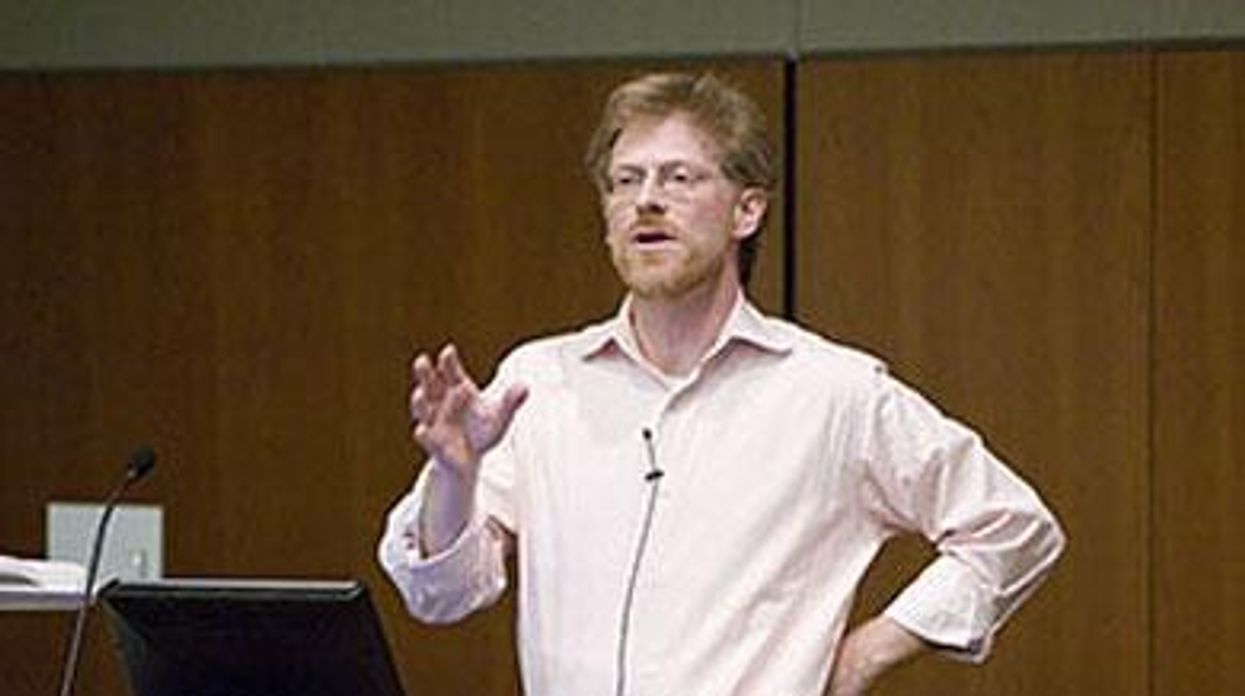
In a brief interview, Advocate.com spoke about the findings with Mitchell Warren, executive director of AIDS Vaccine Advocacy Coalition.
Advocate.com: How does the RV144 study differ from past studies that showed no significant evidence of protection against HIV infection?
Mitchell Warren: Previous efficacy studies looked at either antibody response or a cellular [CD4- or CD8-cell] response. This trial was the first large-scale efficacy trial to try a prime-boost combination vaccine, one meant to stimulate both cellular and antibody responses.
What's the bottom line of this study?
It's the first time we've had any significant positive result for a vaccine. We've always fundamentally believed that a vaccine is possible, but the clues have always come from various animal studies, elite controllers [people who are infected with HIV but never develop symptoms of AIDS], and highly exposed uninfected individuals.
But this is the first real evidence that a vaccine can provide protection from HIV.
It
was an unexpected result by any estimation in a field with so many
setbacks and scientific challenges. And it's pretty damn exciting. But
now the real work begins in trying to understand what happened in the
trial. There's a long road ahead of us in translating a clinical result
into any kind of public health impact. Thirty percent is unprecedented,
but it's not good enough.
What percentage would be a viable threshold for a vaccine to be approved?
That's
a decision to be made by regulatory agencies in each country or region -- in the U.S., it's the FDA. And the regulatory bodies consider a wide
range of data, not just the percent effectiveness coming out of a
trial. But the conventional wisdom is that a vaccine should have no
less than 50% efficacy, though a range of 60 to 70 percent is
more promising.
Where do researchers go from here?
The
scientific, policy, and advocacy communities need to work quickly,
cooperatively, and boldly to translate these results into development of
a scientific action plan, a plan for community engagement in Thailand
and around the world, and a broader communication effort to convey both
the promise and limitations of this result.
We all need to pore
over the data to understand it better, which will take quite a while.
Next month at the AIDS Vaccine Conference more data will be presented.
In the next three to six months, we'll learn more about what this
vaccine actually did.
Those who were given the vaccine and still
seroconverted during the trial [a result of risk behaviors, not the
vaccine itself] were given the option to enroll in another study that
looks at long-term effects of the vaccine on viral load, disease
progression, and drug interaction. Data from this study should give us
even more good information to help understand how the vaccine worked.
Finally,
this vaccine was matched with two subtypes of HIV common in Thailand: subtypes E and B. In the U.S., subtype B is more prevalent. The trial
shows us that when the vaccine is developed and matched with a specific
circulating strain, 30% of people are protected. But how would
the vaccine used in the study affect a mismatched strain? We don't yet
know.