'%3E%3Cpath d='M16.3574 35.6519H12.9537L15.0491 18.8873L16.3574 35.6519ZM30.4229 54.0093L22.309 0.994385H7.91795L0 54.0093H10.6634L11.5802 46.3855H17.4014L17.9914 54.0093H30.4229Z' fill='%23971B20'/%3E%3Cpath d='M48.2073 41.8813C48.2073 43.4049 47.4892 44.0011 46.1144 44.0011H43.7595V11.0687H46.1144C47.4892 11.0687 48.2073 11.6636 48.2073 13.1885V41.8813ZM59.5273 43.6695V11.3326C59.5273 3.71323 53.5729 0.994385 47.8157 0.994385H31.7213V54.0093H47.8157C53.5729 54.0093 59.5273 51.29 59.5273 43.6695Z' fill='%23971B20'/%3E%3Cpath d='M90.183 0.994385H78.6039L75.0711 30.6157L71.9955 0.994385H59.4346L69.2474 54.0093H80.373L90.183 0.994385Z' fill='%23971B20'/%3E%3Cpath d='M107.063 42.3448C107.063 43.7359 105.951 44.5974 104.643 44.5974C103.269 44.5974 102.157 43.7359 102.157 42.3448V12.658C102.157 11.2676 103.269 10.4058 104.643 10.4058C105.951 10.4058 107.063 11.2676 107.063 12.658V42.3448ZM119.233 43.2723V11.7312C119.233 6.36384 112.952 -3.8147e-06 104.643 -3.8147e-06C96.2667 -3.8147e-06 89.9867 6.36384 89.9867 11.7312V43.2723C89.9867 48.6393 96.2667 55 104.643 55C112.952 55 119.233 48.6393 119.233 43.2723Z' fill='%23971B20'/%3E%3Cpath d='M150.976 43.9349V33.7309H139.069V42.3448C139.069 43.7359 137.957 44.5974 136.582 44.5974C135.076 44.5974 133.964 43.7359 133.964 42.3448V12.658C133.964 11.2676 135.076 10.4058 136.582 10.4058C137.957 10.4058 139.069 11.2676 139.069 12.658V21.2723H150.976V11.0687C150.976 5.70107 145.283 -3.8147e-06 136.582 -3.8147e-06C127.75 -3.8147e-06 121.796 5.70107 121.796 11.0687V43.9349C121.796 49.3022 127.75 55 136.582 55C145.283 55 150.976 49.3022 150.976 43.9349Z' fill='%23971B20'/%3E%3Cpath d='M167.478 35.6519H164.076L166.17 18.8873L167.478 35.6519ZM181.544 54.0093L173.432 0.994385H159.037L151.123 54.0093H161.785L162.704 46.3855H168.523L169.114 54.0093H181.544Z' fill='%23971B20'/%3E%3Cpath d='M205.412 10.4058V0.994385H177.081V10.4058H185.392V54.0093H197.428V10.4058H205.412Z' fill='%23971B20'/%3E%3Cpath d='M230.002 54.0093V43.9349H218.914V31.8746H226.635V21.8028H218.914V10.4058H230.002V0.994385H206.875V54.0093H230.002Z' fill='%23971B20'/%3E%3C/g%3E%3Cdefs%3E%3CclipPath id='clip0_260_7080'%3E%3Crect width='230' height='55' fill='white'/%3E%3C/clipPath%3E%3C/defs%3E%3C/svg%3E)

The sudden and violent death of Rob Reiner and his wife, Michele Singer Reiner, in their Brentwood home has shocked Hollywood and communities far beyond. It was one of those news alerts you receive and have to read twice because it just didn’t seem to make any sense.
Reiner’s legacy in the LGBTQ+ movement is profound, and it began early in his life. He cofounded the American Foundation for Equal Rights, the organization that funded the legal challenge against California’s Proposition 8, the ballot measure that sought to rescind marriage equality. AFER’s efforts restored marriage equality in California and contributed to the momentum for nationwide equality a couple of years later.
Related: Rob Reiner Making Film About Marriage Equality
His public support for LGBTQ+ people, long before it was more widely accepted, marked him as more than a celebrity supporter but a genuine ally who understood the importance of equality and dignity for all.
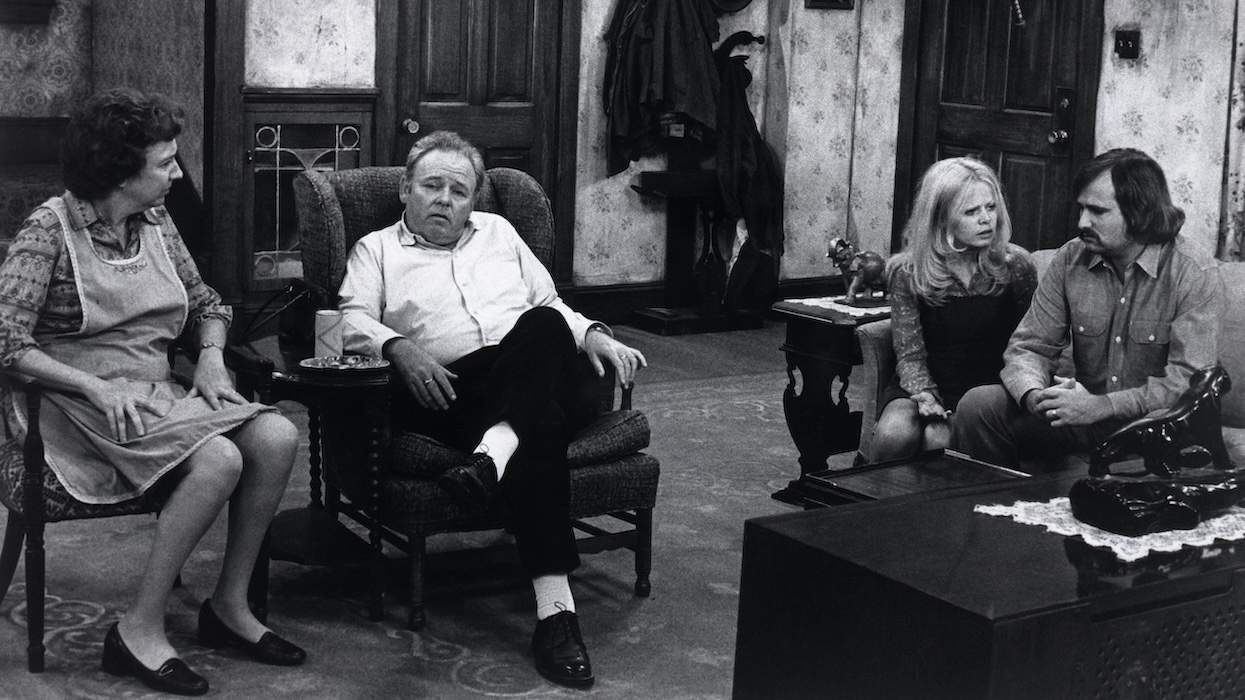
And yet, to many of us who grew up on the safe haven of sanitized network television, Reiner will always be Mike “Meathead” Stivic, the perpetually angry liberal and wildly outspoken son-in-law on All in the Family.
Let me just add that Mike was angry because he had television’s most infamous provocateur.
The show was groundbreaking and unsanitized in its willingness to tackle race, gender, class, and sexuality with a sharpness rarely seen on television, before or since, quite frankly. Growing up, I wasn’t even allowed to watch All in the Family as a preteen because the adult issues it confronted were deemed too much for a kid. Scooby-Doo it was not.
Looking back now, I doubt I would have understood or appreciated its humor and its heart even if I had been allowed to. But I knew the show was special, because my parents and their friends talked about it.
Related: Remembering Norman Lear and His Pioneering LGBTQ-Inclusive Shows
Then, as I got older, and a bit more mature, All in the Family reruns filled after-school time slots, and as I encountered the show and understood it better, in my teens, Mike Stivic’s worldview struck me. He argued relentlessly with Archie Bunker, played brilliantly by Carroll O’Connor. Mike was not so much comic relief as he was an inclusive conscience and arbiter of what was right and fair.
Mike Stivic vehemently defended Black people, Jewish people, Latine people, the environment, and anyone against Richard Nixon. And, perhaps most memorably, he fiercely rejected Archie’s bigoted attitudes toward LGBTQ+ people. Archie’s repeated use of the derogatory term “queers” wasn’t just a stereotype; it was a blatant, offensive label at the time.
And every time Archie said that word, Stivic didn’t flinch, railing against homophobia long before it became a talking point in Democratic politics and, in my experience, long before anyone else was jumping to our defense.
Two years ago, when All in the Family creator Norman Lear died, I wrote about one episode that forever stayed with me, and any queer man of a certain age. It featured legendary soap opera Emmy winner Anthony Geary in a storyline where the audience presumed his character was gay because of stereotypes at the time. (Sadly, Geary also died Sunday, of complications from surgery.)
But what was most striking to me wasn’t the assumption that he was queer, it was the friendship between Geary’s character and Stivic. Mike was straight. His loyalty was not predicated on sexuality, but on humanity and genuine attachment.
When Archie calls Geary’s character “queer as a $4 bill,” Mike retorted, "You know something, Archie, just because a guy is sensitive, and he's an intellectual and he wears glasses, you make him out a queer." This conversation on TV happened in 1971, way before anyone was rushing to speak out against gay stereotypes.
Related: Anthony Geary of 'All in the Family' Remembers Norman Lear Subverting Queer TV Stereotypes
For someone like me, who spent adolescence terrified that coming out would mean losing friends, seeing that portrayal, however imperfect, was a hint of the possibility it offered. It was one of the few times on television I saw a straight man portrayed as a true friend to someone assumed to be queer.
That notion, that you could have friends regardless of sexual orientation, settled somewhere inside of me, and it really mattered.
My fear at 16, 17, 18, that my friends would turn away from me if they knew I was gay, was frightening in its intensity. For a moment, that TV friendship suggested something different, that a world in which acceptance was possible, and where a straight guy could be empathetic toward a gay one. Even when fear took over my mind, that brief glimmer stayed with me.
Mike Stivic was, in many ways, the first queer ally I knew, long before I understood my own identity fully, and long before I knew that there was such a thing as an ally.
Today, it feels like things have come full circle, and back again. As the social climate slides toward the misogyny, xenophobia, and homophobia we’ve seen amplified by Donald Trump that trickles down into the MAGA movement, and even beyond, the spirit embodied by Mike Stivic feels urgently needed again.
He was ahead of his time. I always thought that his character’s nickname of “Meathead,” which is what everyone called him and what he was universally known by, was and remains ironic. He was anything but. His legacy, both as an iconic television actor and as an advocate, is a reminder that a powerful force for change can come when people defend the marginalized until their last breath. That’s what Stivic and Reiner did.
Rob Reiner the filmmaker and activist will be mourned for his films, his passions, and his contributions to social justice. But for many of us, it was Mike Stivic, arguing with Archie Bunker and refusing to look away, who first showed what it looks like to stand on the side of inclusion.
Voices is dedicated to featuring a wide range of inspiring personal stories and impactful opinions from the LGBTQ+ community and its allies. Visit Advocate.com/submit to learn more about submission guidelines. Views expressed in Voices stories are those of the guest writers, columnists, and editors, and do not directly represent the views of The Advocate or our parent company, equalpride.