'%3E%3Cpath d='M16.3574 35.6519H12.9537L15.0491 18.8873L16.3574 35.6519ZM30.4229 54.0093L22.309 0.994385H7.91795L0 54.0093H10.6634L11.5802 46.3855H17.4014L17.9914 54.0093H30.4229Z' fill='%23971B20'/%3E%3Cpath d='M48.2073 41.8813C48.2073 43.4049 47.4892 44.0011 46.1144 44.0011H43.7595V11.0687H46.1144C47.4892 11.0687 48.2073 11.6636 48.2073 13.1885V41.8813ZM59.5273 43.6695V11.3326C59.5273 3.71323 53.5729 0.994385 47.8157 0.994385H31.7213V54.0093H47.8157C53.5729 54.0093 59.5273 51.29 59.5273 43.6695Z' fill='%23971B20'/%3E%3Cpath d='M90.183 0.994385H78.6039L75.0711 30.6157L71.9955 0.994385H59.4346L69.2474 54.0093H80.373L90.183 0.994385Z' fill='%23971B20'/%3E%3Cpath d='M107.063 42.3448C107.063 43.7359 105.951 44.5974 104.643 44.5974C103.269 44.5974 102.157 43.7359 102.157 42.3448V12.658C102.157 11.2676 103.269 10.4058 104.643 10.4058C105.951 10.4058 107.063 11.2676 107.063 12.658V42.3448ZM119.233 43.2723V11.7312C119.233 6.36384 112.952 -3.8147e-06 104.643 -3.8147e-06C96.2667 -3.8147e-06 89.9867 6.36384 89.9867 11.7312V43.2723C89.9867 48.6393 96.2667 55 104.643 55C112.952 55 119.233 48.6393 119.233 43.2723Z' fill='%23971B20'/%3E%3Cpath d='M150.976 43.9349V33.7309H139.069V42.3448C139.069 43.7359 137.957 44.5974 136.582 44.5974C135.076 44.5974 133.964 43.7359 133.964 42.3448V12.658C133.964 11.2676 135.076 10.4058 136.582 10.4058C137.957 10.4058 139.069 11.2676 139.069 12.658V21.2723H150.976V11.0687C150.976 5.70107 145.283 -3.8147e-06 136.582 -3.8147e-06C127.75 -3.8147e-06 121.796 5.70107 121.796 11.0687V43.9349C121.796 49.3022 127.75 55 136.582 55C145.283 55 150.976 49.3022 150.976 43.9349Z' fill='%23971B20'/%3E%3Cpath d='M167.478 35.6519H164.076L166.17 18.8873L167.478 35.6519ZM181.544 54.0093L173.432 0.994385H159.037L151.123 54.0093H161.785L162.704 46.3855H168.523L169.114 54.0093H181.544Z' fill='%23971B20'/%3E%3Cpath d='M205.412 10.4058V0.994385H177.081V10.4058H185.392V54.0093H197.428V10.4058H205.412Z' fill='%23971B20'/%3E%3Cpath d='M230.002 54.0093V43.9349H218.914V31.8746H226.635V21.8028H218.914V10.4058H230.002V0.994385H206.875V54.0093H230.002Z' fill='%23971B20'/%3E%3C/g%3E%3Cdefs%3E%3CclipPath id='clip0_260_7080'%3E%3Crect width='230' height='55' fill='white'/%3E%3C/clipPath%3E%3C/defs%3E%3C/svg%3E)
For Tanya Asapansa-Walker, Christopher Park in New York City has never been just a park.
Sitting across from the Stonewall Inn, the transgender activist remembers gathering there with friends during the height of the AIDS epidemic, long before social media connected LGBTQ+ people across cities and states.
"It was a great place to meet my friends who were dying from AIDS and just to meet up with folks and chat," Asapansa-Walker says in a newly released short film. "This park is a place where we got our gay rights. We got our LGBTQ rights. People fought, bled, and died here just to exist."
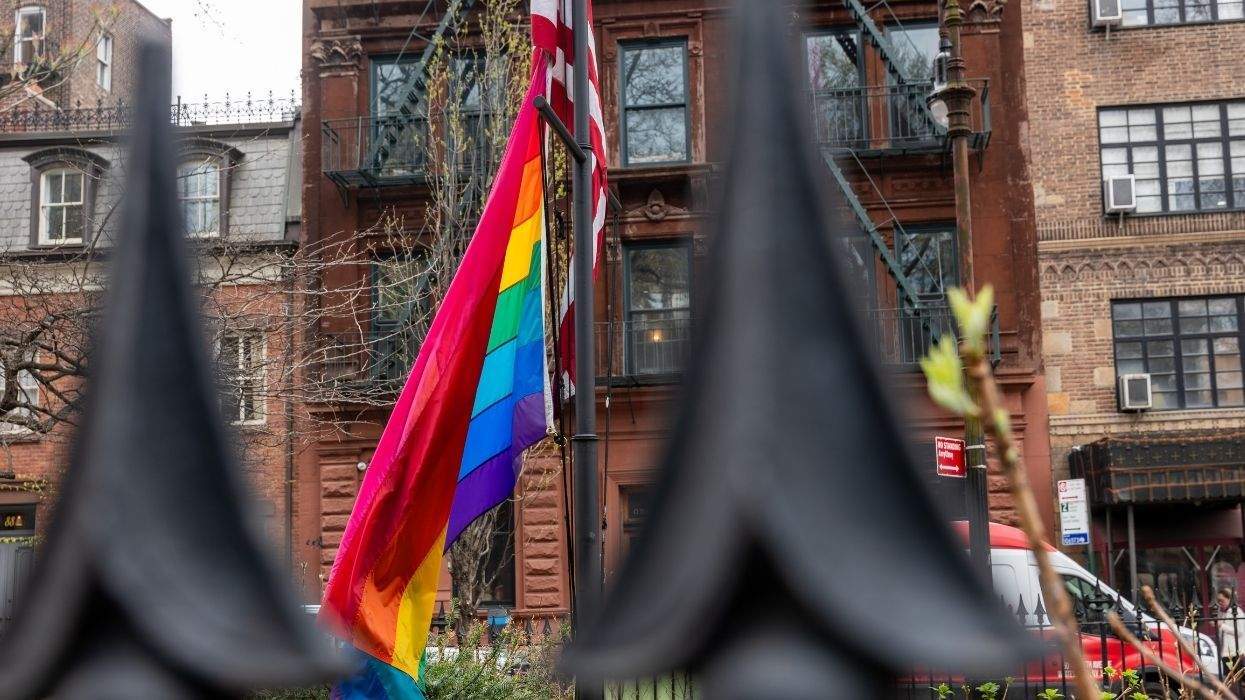
Her reflection opens Stories from Stonewall, a new video series launched Wednesday by Lambda Legal. The project is premiering less than two months after LGBTQ+ advocates secured a legal victory requiring the Trump administration to permanently restore the Pride flag at the Stonewall National Monument, which it had removed earlier this year.
The series is part of a larger project called “Flying Our Flag, Protecting Our History”, a roundtable discussion film scheduled for release on June 28, the anniversary of the Stonewall uprising. Together, the films document the experiences of activists who helped preserve one of the most visible symbols of LGBTQ+ history at a moment when many advocates believe that history itself is under attack.
Related: LGBTQ+ groups score legal victory over Trump, restoring Pride flag at Stonewall National Monument
From outrage to victory
The fight began in February when the National Park Service removed the Pride flag from the Stonewall National Monument, citing federal flag display policies.
The move immediately sparked outrage among LGBTQ+ advocates, elected officials, and historians, who argued that the rainbow flag was not merely a political symbol but also part of the monument's historical context.
Protests erupted at Stonewall, and within days, activists raised the flag again, and Lambda Legal and the Washington Litigation Group filed suit on behalf of the Gilbert Baker Foundation, Equality New York, Village Preservation, and activist Charles Beal. The lawsuit argued that federal officials had ignored an existing exception allowing historically significant displays and had targeted a symbol central to the history that the monument was created to preserve.
The case ended in an unusually swift victory.
In April, the Trump administration agreed to a settlement requiring the Pride flag to be restored within seven days. Under the agreement, the display — consisting of the American flag, the rainbow Pride flag, and the National Park Service flag — must remain in place and may not be removed except for practical reasons, such as maintenance. The federal court retained authority to enforce the settlement.
The agreement also confirmed that the Pride flag falls under federal law and National Park Service policy due to its historical significance to the monument.
For LGBTQ+ advocates, the settlement represented a rare retreat by an administration that has repeatedly targeted LGBTQ+ visibility across federal agencies and institutions.
For Nephetari Smith, the Tyron Garner Legal Fellow at Lambda Legal, who helped litigate the case, the public reaction reflected Stonewall's continuing significance in LGBTQ+ life.
"To attack the literal symbol of the birthrights of the LGBTQ movement and to do it at this place that is this safe haven or this safe space for so many folks," Smith told The Advocate in an interview. "So many people come to New York and come to Stonewall specifically to say, look at this site of where we are, where we're safe and where we were born."
President Barack Obama designated the Stonewall National Monument in 2016, making it the first U.S. national monument dedicated to the history of LGBTQ+ rights. The site encompasses Christopher Park and the area surrounding the Stonewall Inn, where a police raid on June 28, 1969, sparked an uprising that helped launch the modern LGBTQ+ rights movement. The Stonewall Inn is privately owned.
To Smith, the dispute over the flag fit into a broader effort to remove LGBTQ+ people from the historical record.
"LGBTQ history is under attack by the Trump administration," Smith said, pointing to executive actions and agency directives affecting LGBTQ+ visibility in schools, government agencies, and public institutions.
Yet she believes the Stonewall fight demonstrated something equally important.
"When LGBTQ history is under attack, the government is not the main holder of that information," Smith said. "There are so many of us who can come together and make sure that history is not lost."
Preserving memory
That idea sits at the center of the new film project.
Participants include Equality New York members Asapansa-Walker, Melissa Sklarz, Eunic Ortiz, and Eve Ortiz, as well as Gilbert Baker Foundation board member Catherine Marino-Thomas. Their organizations were among the plaintiffs that challenged the flag's removal.
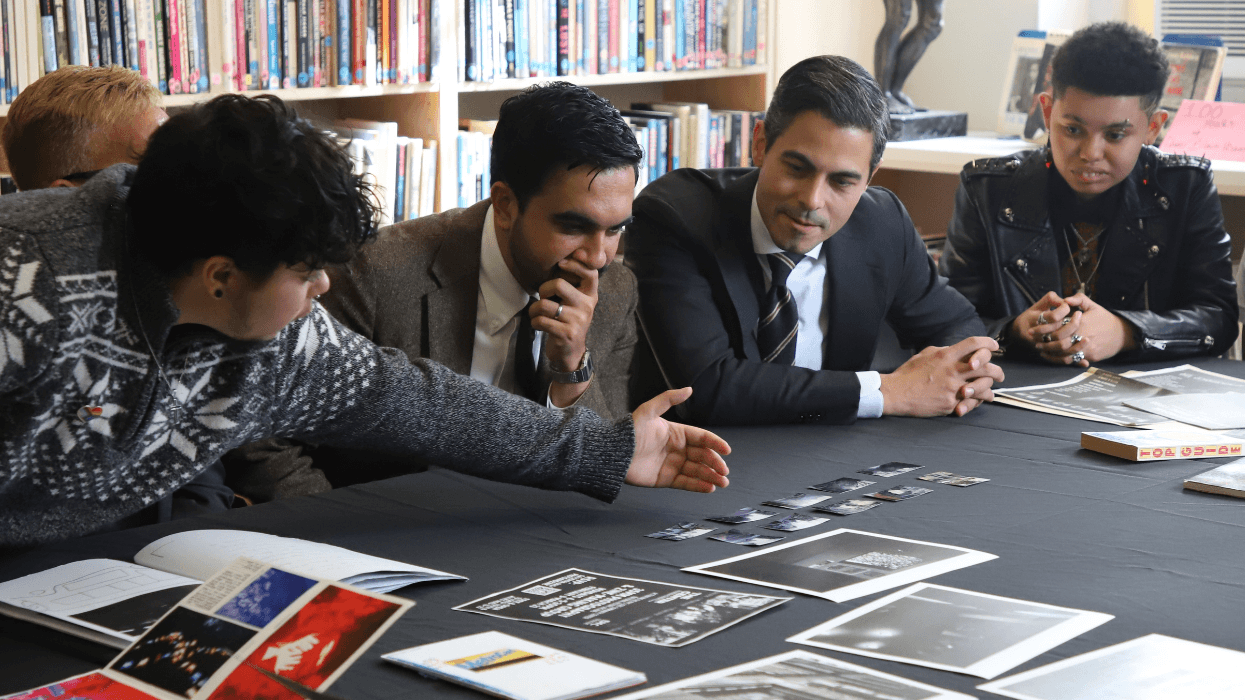
The group gathered at Lambda Legal's New York office in April for a filmed roundtable discussion before traveling to Christopher Park to record personal reflections about Stonewall and the meaning of the Pride flag.
For Smith, who at 29 is a generation removed from many of the activists featured in the project, the conversations felt like a living archive. Some participants helped advocate for Stonewall's designation as a national monument. Others lived through the AIDS crisis. Some watched as the LGBTQ+ rights movement emerged from the margins and entered the mainstream.
"It was really awesome to sit with a lot of our plaintiffs, some of whom knew Marsha P. Johnson personally," Smith said. "It's such a beautiful time capsule of this full breadth of what Stonewall as a moment meant and what Stonewall as a monument means and continues to mean."