'%3E%3Cpath d='M16.3574 35.6519H12.9537L15.0491 18.8873L16.3574 35.6519ZM30.4229 54.0093L22.309 0.994385H7.91795L0 54.0093H10.6634L11.5802 46.3855H17.4014L17.9914 54.0093H30.4229Z' fill='%23971B20'/%3E%3Cpath d='M48.2073 41.8813C48.2073 43.4049 47.4892 44.0011 46.1144 44.0011H43.7595V11.0687H46.1144C47.4892 11.0687 48.2073 11.6636 48.2073 13.1885V41.8813ZM59.5273 43.6695V11.3326C59.5273 3.71323 53.5729 0.994385 47.8157 0.994385H31.7213V54.0093H47.8157C53.5729 54.0093 59.5273 51.29 59.5273 43.6695Z' fill='%23971B20'/%3E%3Cpath d='M90.183 0.994385H78.6039L75.0711 30.6157L71.9955 0.994385H59.4346L69.2474 54.0093H80.373L90.183 0.994385Z' fill='%23971B20'/%3E%3Cpath d='M107.063 42.3448C107.063 43.7359 105.951 44.5974 104.643 44.5974C103.269 44.5974 102.157 43.7359 102.157 42.3448V12.658C102.157 11.2676 103.269 10.4058 104.643 10.4058C105.951 10.4058 107.063 11.2676 107.063 12.658V42.3448ZM119.233 43.2723V11.7312C119.233 6.36384 112.952 -3.8147e-06 104.643 -3.8147e-06C96.2667 -3.8147e-06 89.9867 6.36384 89.9867 11.7312V43.2723C89.9867 48.6393 96.2667 55 104.643 55C112.952 55 119.233 48.6393 119.233 43.2723Z' fill='%23971B20'/%3E%3Cpath d='M150.976 43.9349V33.7309H139.069V42.3448C139.069 43.7359 137.957 44.5974 136.582 44.5974C135.076 44.5974 133.964 43.7359 133.964 42.3448V12.658C133.964 11.2676 135.076 10.4058 136.582 10.4058C137.957 10.4058 139.069 11.2676 139.069 12.658V21.2723H150.976V11.0687C150.976 5.70107 145.283 -3.8147e-06 136.582 -3.8147e-06C127.75 -3.8147e-06 121.796 5.70107 121.796 11.0687V43.9349C121.796 49.3022 127.75 55 136.582 55C145.283 55 150.976 49.3022 150.976 43.9349Z' fill='%23971B20'/%3E%3Cpath d='M167.478 35.6519H164.076L166.17 18.8873L167.478 35.6519ZM181.544 54.0093L173.432 0.994385H159.037L151.123 54.0093H161.785L162.704 46.3855H168.523L169.114 54.0093H181.544Z' fill='%23971B20'/%3E%3Cpath d='M205.412 10.4058V0.994385H177.081V10.4058H185.392V54.0093H197.428V10.4058H205.412Z' fill='%23971B20'/%3E%3Cpath d='M230.002 54.0093V43.9349H218.914V31.8746H226.635V21.8028H218.914V10.4058H230.002V0.994385H206.875V54.0093H230.002Z' fill='%23971B20'/%3E%3C/g%3E%3Cdefs%3E%3CclipPath id='clip0_260_7080'%3E%3Crect width='230' height='55' fill='white'/%3E%3C/clipPath%3E%3C/defs%3E%3C/svg%3E)
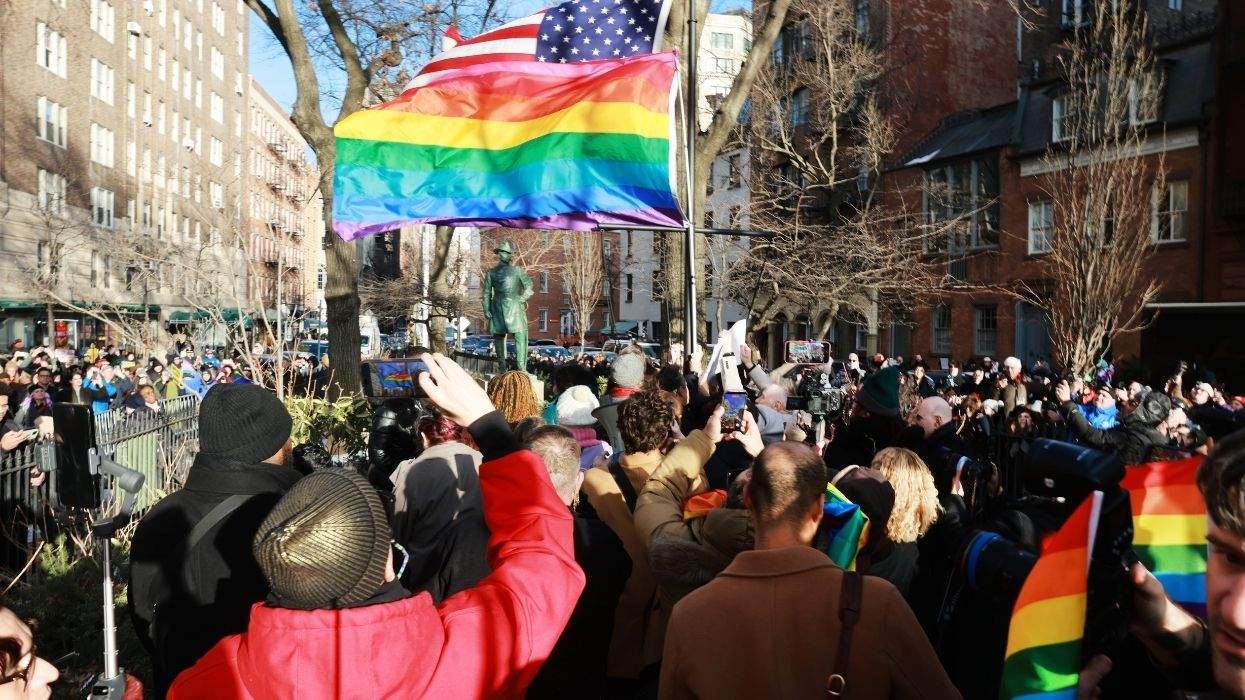
The rainbow Pride flag will return permanently to the Stonewall National Monument after the federal government agreed to reinstall it as part of a legal settlement ending a high-profile lawsuit over its removal.
It began with outrage. It ends, for now, with a guarantee. Created in 1978 by artist Gilbert Baker, the rainbow flag has become a global symbol of LGBTQ+ identity and resistance.
The agreement, filed Monday in the U.S. District Court for the Southern District of New York, settles a case brought by the Gilbert Baker Foundation, Village Preservation, Equality New York, and others, following the National Park Service’s removal of the Pride flag in February. The removal, at the site of the 1969 uprising that ignited the modern LGBTQ+ rights movement, sparked swift backlash from advocates, historians, and elected officials who saw it as an erasure of both symbol and story.
Under the settlement, the federal government agreed the Pride flag will remain at Stonewall and “will not be removed” except for practical reasons such as maintenance, according to the court filing. The agreement requires the National Park Service to reinstall the display within seven days, with the American flag at the top of the pole and the rainbow Pride flag and the agency’s flag flown beneath it.
Related: New York City Council advances resolution opposing Stonewall Pride flag removal
Related: Chuck Schumer drafts bill to protect Pride flags at national park sites like Stonewall memoria
The case is dismissed “with prejudice,” meaning it cannot be refiled, and each side will cover its own legal costs, according to the court documents. A federal judge will retain authority to enforce the agreement.
In a press release, Lambda Legal and the Washington Litigation Group said the settlement confirms the Pride flag falls within federal law and National Park Service policy. The government initially claimed the removal was required under flag rules.
In February, the Trump administration removed the flag, arguing it needed to comply with official policy. Just eight days later, the groups sued, contending the move unlawfully targeted LGBTQ+ expression and ignored an exception allowing historically relevant flags — a category they said includes the Pride flag at Stonewall, according to the release.
“The sudden, arbitrary, and capricious removal of the Pride flag from the Stonewall National Monument was yet another act by this administration to erase the LGBTQ+ community,” said Karen Loewy, senior counsel at Lambda Legal, in a statement to The Advocate.
Related: Gay activist launches Stonewall Monument camera campaign to monitor NYC Pride flag site
“This is a complete victory for our clients and for the LGBTQ+ community,” said Alexander Kristofcak of the Washington Litigation Group in the same release. “The government has acknowledged what we argued from day one: the Pride flag belongs at Stonewall. The flag will be restored, and it will fly officially and permanently.”
In a separate statement, the Gilbert Baker Foundation called the resolution a victory for LGBTQ+ visibility and history.
“This resolution ensures the flag will continue to fly at the monument, affirming its rightful place at the birthplace of the modern LGBTQ+ rights movement,” the foundation said.
“This is a powerful victory for our community and for the legacy of Gilbert Baker, who created the Rainbow Flag,” said Charley Beal, president of the foundation, in the statement.
“The government tried to erase an important symbol of the LGBTQ+ community, and the community said no,” Amanda Babine, executive director of Equality New York, said. “Today’s accomplishment proves that when we stand together and fight back, we win.”
As The Advocate previously reported, the flag’s removal quickly became a flashpoint in a broader effort by the Trump administration to constrain LGBTQ+ visibility across federal spaces, including changes to language on government websites and limits on public-facing symbols.
Community members re-raised the Pride flag after it was removed, temporarily affixing it to the existing flagpole. Monday’s settlement ensures that the flag will fly without interruption.