'%3E%3Cpath d='M16.3574 35.6519H12.9537L15.0491 18.8873L16.3574 35.6519ZM30.4229 54.0093L22.309 0.994385H7.91795L0 54.0093H10.6634L11.5802 46.3855H17.4014L17.9914 54.0093H30.4229Z' fill='%23971B20'/%3E%3Cpath d='M48.2073 41.8813C48.2073 43.4049 47.4892 44.0011 46.1144 44.0011H43.7595V11.0687H46.1144C47.4892 11.0687 48.2073 11.6636 48.2073 13.1885V41.8813ZM59.5273 43.6695V11.3326C59.5273 3.71323 53.5729 0.994385 47.8157 0.994385H31.7213V54.0093H47.8157C53.5729 54.0093 59.5273 51.29 59.5273 43.6695Z' fill='%23971B20'/%3E%3Cpath d='M90.183 0.994385H78.6039L75.0711 30.6157L71.9955 0.994385H59.4346L69.2474 54.0093H80.373L90.183 0.994385Z' fill='%23971B20'/%3E%3Cpath d='M107.063 42.3448C107.063 43.7359 105.951 44.5974 104.643 44.5974C103.269 44.5974 102.157 43.7359 102.157 42.3448V12.658C102.157 11.2676 103.269 10.4058 104.643 10.4058C105.951 10.4058 107.063 11.2676 107.063 12.658V42.3448ZM119.233 43.2723V11.7312C119.233 6.36384 112.952 -3.8147e-06 104.643 -3.8147e-06C96.2667 -3.8147e-06 89.9867 6.36384 89.9867 11.7312V43.2723C89.9867 48.6393 96.2667 55 104.643 55C112.952 55 119.233 48.6393 119.233 43.2723Z' fill='%23971B20'/%3E%3Cpath d='M150.976 43.9349V33.7309H139.069V42.3448C139.069 43.7359 137.957 44.5974 136.582 44.5974C135.076 44.5974 133.964 43.7359 133.964 42.3448V12.658C133.964 11.2676 135.076 10.4058 136.582 10.4058C137.957 10.4058 139.069 11.2676 139.069 12.658V21.2723H150.976V11.0687C150.976 5.70107 145.283 -3.8147e-06 136.582 -3.8147e-06C127.75 -3.8147e-06 121.796 5.70107 121.796 11.0687V43.9349C121.796 49.3022 127.75 55 136.582 55C145.283 55 150.976 49.3022 150.976 43.9349Z' fill='%23971B20'/%3E%3Cpath d='M167.478 35.6519H164.076L166.17 18.8873L167.478 35.6519ZM181.544 54.0093L173.432 0.994385H159.037L151.123 54.0093H161.785L162.704 46.3855H168.523L169.114 54.0093H181.544Z' fill='%23971B20'/%3E%3Cpath d='M205.412 10.4058V0.994385H177.081V10.4058H185.392V54.0093H197.428V10.4058H205.412Z' fill='%23971B20'/%3E%3Cpath d='M230.002 54.0093V43.9349H218.914V31.8746H226.635V21.8028H218.914V10.4058H230.002V0.994385H206.875V54.0093H230.002Z' fill='%23971B20'/%3E%3C/g%3E%3Cdefs%3E%3CclipPath id='clip0_260_7080'%3E%3Crect width='230' height='55' fill='white'/%3E%3C/clipPath%3E%3C/defs%3E%3C/svg%3E)
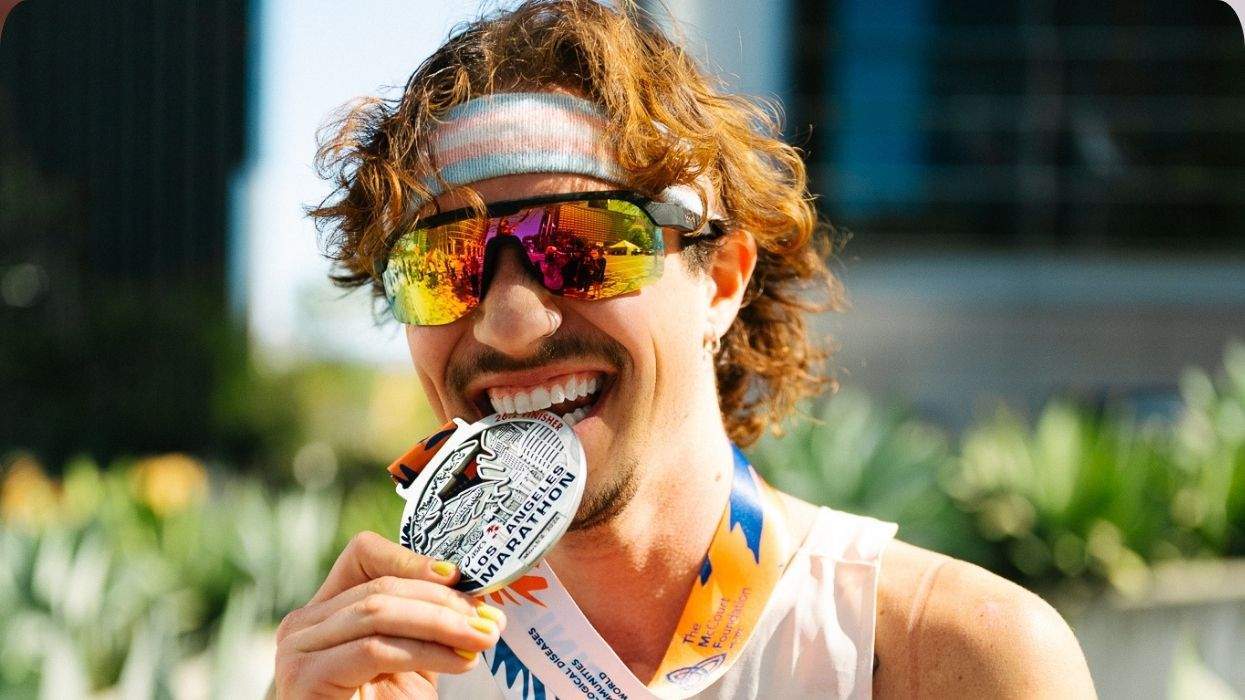
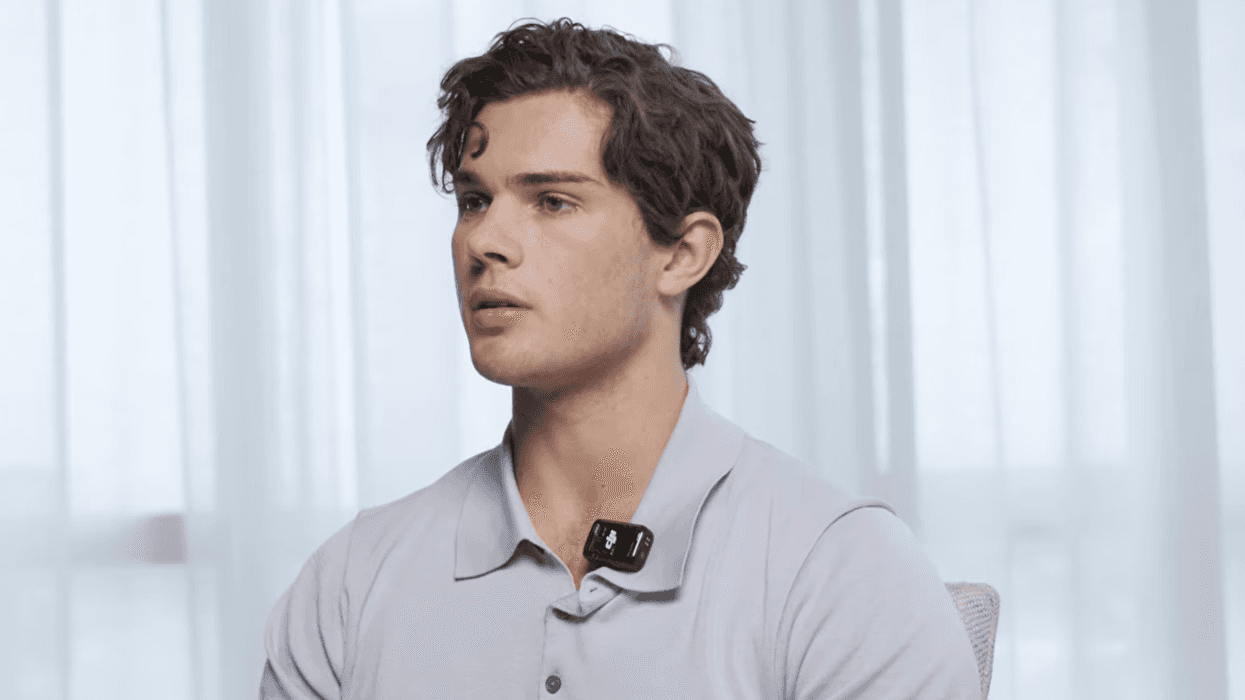
Cal Calamia won the nonbinary division of this year’s Los Angeles Marathon. But unlike the race’s men’s and women’s champions, they received no prize money. Calamia also won the division in 2024 and returned this weekend to claim a second victory in the only category that still offers no financial reward.
Keep up with the latest in LGBTQ+ news and politics. Sign up for The Advocate's email newsletter.
In March, the ASICS Los Angeles Marathon offered a dedicated registration division, allowing nonbinary and gender-nonconforming people to register and appear in results under this category. The top three winners of this division are awarded medals but are not recognized on the main podiums, unlike the winners of the cisgender categories. They also don’t receive prize money because there is no nonbinary category in the elite divisions, according to The McCourt Foundation and the LA Marathon rules.
Related: I didn’t just run the world’s major marathons. I changed them
“I was definitely the only nonbinary person there,” Calamia told The Advocate. “It’s kind of a privilege, but it’s also lonely, because you’re like: ‘Wait, where’s the community?’ I think that through running and advocating for nonbinary divisions, I’m hopeful those numbers continue to grow.”
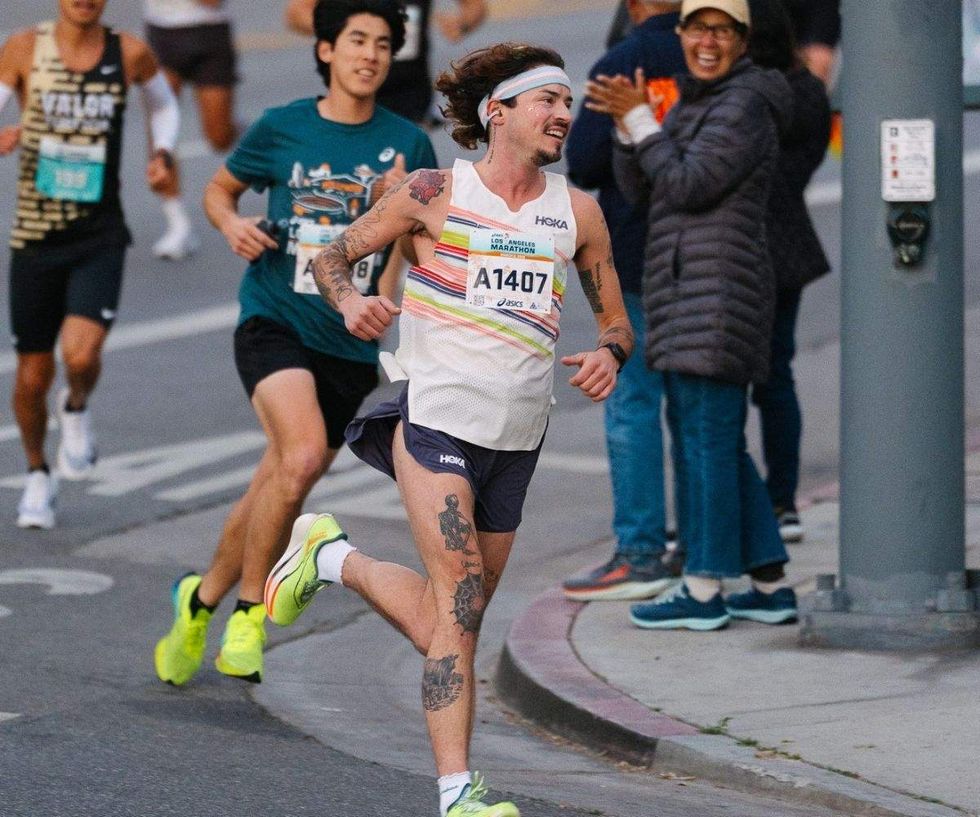 Cal Calamia is a long-distance runner and a nonbinary trailblazer.Brynn Osborn
Calamia, who uses they and he pronouns, says they were thrust into activism through their running career because of the need to advocate for themselves within the running spaces.
“I was sort of thrust into this larger activism role to be one of the people representing all the trans and nonbinary athletes,” they said.
Calamia participated in a 26.2-mile marathon in 90-degree heat, pushing through the urge to give up or slow down, while also aware that there would be no financial reward at the end. Their cisgender peers running alongside them were motivated by a $25,000 cash pot—the most the LA marathon has awarded in recent years.
For Calamia, running has always been a way to escape the norm. At age five, they played soccer, where coaches noticed their endurance. In middle school, they joined cross-country and continued through to high school. Running remained central to their life, but after moving to a new state and beginning their gender transition, Calamia said they returned to marathoning with renewed purpose.
“I started to feel more confident and connected to myself and my body, and I wanted to start exploring my relationship with running again,” they said. “And that’s kind of what brought me back into the world of marathoning.”
On Sunday, more than 27,000 runners geared up and ran the course.
Runners started at Dodger Stadium and traversed the city to the finish line in Century City, raising over $4.5 million for charity through the marathon’s 129 featured charity partners. The event was hosted by The McCourt Foundation.
According to the Los Angeles Times, no nonbinary runners crossed the finish line in 2021. Thirty-eight runners did in 2024, and 267 did in 2025. This year, there were 150 participants in the nonbinary division, with Calamia claiming first place with a 2-hour 49-minute and 17-second finish.
The LA and New York City marathons were the first to introduce nonbinary divisions in 2021, and today all seven Abbott World Marathon Majors include the category.
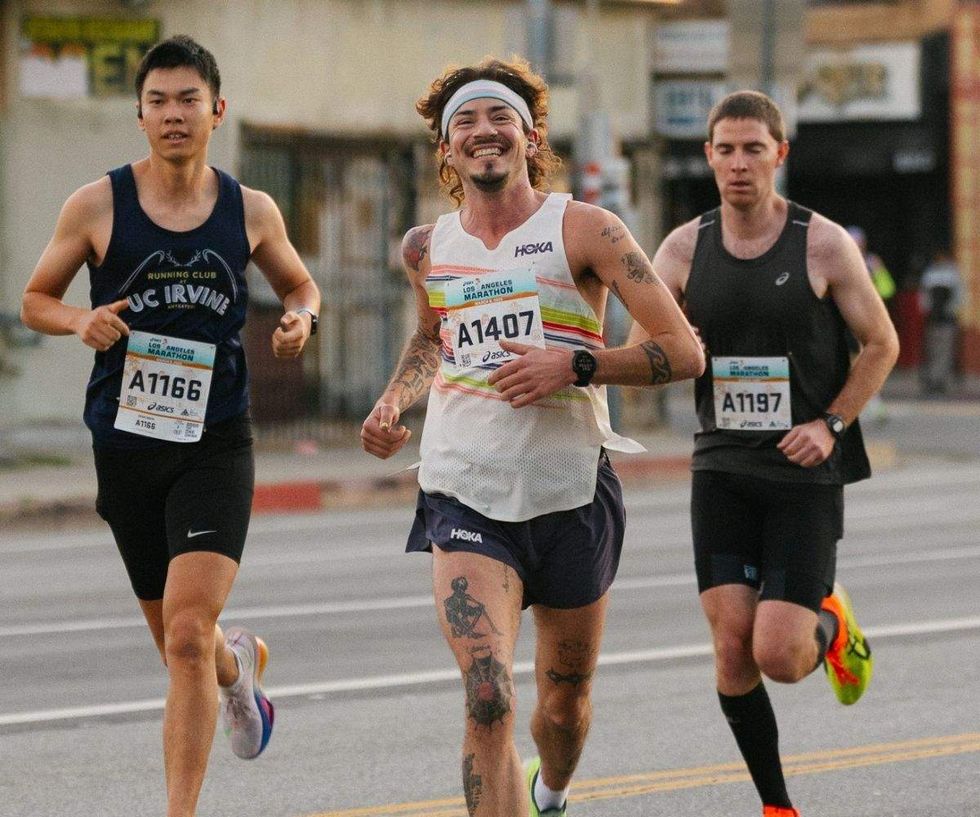 Cal Calamia won the nonbinary division of the Los Angeles Marathon twice.Brynn Osborn
“World Athletics and USA Track & Field set our industry standards, and we look to their regulations,” LA Marathon spokesperson Meg Treat told the Los Angeles Times. “But at the end of the day, the category is small. And while some of the runners will clock fast times, many of them are going to be finishing alongside our everyday athletes as part of the general field. We’re watching how the competitiveness of that category develops and we’ll evaluate potential changes.”
Treat noted that the category represents only 0.54 percent of participants. World Athletics, the Monaco-based governing body, bases elite categorization on sex assigned at birth. “The dispersion of prize money is up to the races,” said spokesperson Maggie Durand in an email to the Los Angeles Times.
Though Calamia says some cash would be nice, they are now involved in advocating for changing the issues trans and nonbinary athletes face on a larger scale.
In 2023, Calamia was granted a landmark exemption for his use of testosterone while competing. One month later, they won the nonbinary division of the New York City Marathon and were later declared ineligible to receive the cash prize because they did not meet the requirement of running sex-specific New York Road Runners races in the year, a rule that was added after they had already registered for the race.
Calamia says that every aspect of their identity is interconnected in a way that pushes them to be an activist and an active role model in the queer community.
“Being thrust into this position to be advocating for trans and nonbinary athletes so regularly, I’ve realized [I have] a lot of other responsibility to advocate for other[s],” they said. “So it’s definitely not just about me being able to be there, but it’s also about the interconnectedness of all of our freedoms.”
This article was written as part of the Future of Queer Media fellowship program at The Advocate, which is underwritten by a generous gift from Morrison Media Group. The program helps support the next generation of LGBTQ+ journalists.