'%3E%3Cpath d='M16.3574 35.6519H12.9537L15.0491 18.8873L16.3574 35.6519ZM30.4229 54.0093L22.309 0.994385H7.91795L0 54.0093H10.6634L11.5802 46.3855H17.4014L17.9914 54.0093H30.4229Z' fill='%23971B20'/%3E%3Cpath d='M48.2073 41.8813C48.2073 43.4049 47.4892 44.0011 46.1144 44.0011H43.7595V11.0687H46.1144C47.4892 11.0687 48.2073 11.6636 48.2073 13.1885V41.8813ZM59.5273 43.6695V11.3326C59.5273 3.71323 53.5729 0.994385 47.8157 0.994385H31.7213V54.0093H47.8157C53.5729 54.0093 59.5273 51.29 59.5273 43.6695Z' fill='%23971B20'/%3E%3Cpath d='M90.183 0.994385H78.6039L75.0711 30.6157L71.9955 0.994385H59.4346L69.2474 54.0093H80.373L90.183 0.994385Z' fill='%23971B20'/%3E%3Cpath d='M107.063 42.3448C107.063 43.7359 105.951 44.5974 104.643 44.5974C103.269 44.5974 102.157 43.7359 102.157 42.3448V12.658C102.157 11.2676 103.269 10.4058 104.643 10.4058C105.951 10.4058 107.063 11.2676 107.063 12.658V42.3448ZM119.233 43.2723V11.7312C119.233 6.36384 112.952 -3.8147e-06 104.643 -3.8147e-06C96.2667 -3.8147e-06 89.9867 6.36384 89.9867 11.7312V43.2723C89.9867 48.6393 96.2667 55 104.643 55C112.952 55 119.233 48.6393 119.233 43.2723Z' fill='%23971B20'/%3E%3Cpath d='M150.976 43.9349V33.7309H139.069V42.3448C139.069 43.7359 137.957 44.5974 136.582 44.5974C135.076 44.5974 133.964 43.7359 133.964 42.3448V12.658C133.964 11.2676 135.076 10.4058 136.582 10.4058C137.957 10.4058 139.069 11.2676 139.069 12.658V21.2723H150.976V11.0687C150.976 5.70107 145.283 -3.8147e-06 136.582 -3.8147e-06C127.75 -3.8147e-06 121.796 5.70107 121.796 11.0687V43.9349C121.796 49.3022 127.75 55 136.582 55C145.283 55 150.976 49.3022 150.976 43.9349Z' fill='%23971B20'/%3E%3Cpath d='M167.478 35.6519H164.076L166.17 18.8873L167.478 35.6519ZM181.544 54.0093L173.432 0.994385H159.037L151.123 54.0093H161.785L162.704 46.3855H168.523L169.114 54.0093H181.544Z' fill='%23971B20'/%3E%3Cpath d='M205.412 10.4058V0.994385H177.081V10.4058H185.392V54.0093H197.428V10.4058H205.412Z' fill='%23971B20'/%3E%3Cpath d='M230.002 54.0093V43.9349H218.914V31.8746H226.635V21.8028H218.914V10.4058H230.002V0.994385H206.875V54.0093H230.002Z' fill='%23971B20'/%3E%3C/g%3E%3Cdefs%3E%3CclipPath id='clip0_260_7080'%3E%3Crect width='230' height='55' fill='white'/%3E%3C/clipPath%3E%3C/defs%3E%3C/svg%3E)


Days after drawing a standing ovation at the Equality PAC National Pride Gala in Washington, Delaware’s sole congresswoman, Sarah McBride, is preparing for another milestone. Friday is the nationwide theatrical release of the documentary State of Firsts, which captured her historic campaign to become the first out transgender member of Congress.
"I hope that people come away believing that there is still a space for grace in our politics," McBride told The Advocate in an interview.
The film arrives at a moment when McBride has become one of the most visible figures in America's battles over transgender rights — a reality that neither she nor the filmmakers could fully have anticipated when production began.
State of Firsts chronicles her rise to Congress and the difficult choices that came with becoming a political first. As the film opens in theaters nationwide on Friday, the message lands in a political environment that feels increasingly hostile to both grace and compromise.
Related: Sarah McBride gets last laugh after Nancy Mace’s devastating election loss: ‘Happy Pride, Nancy’
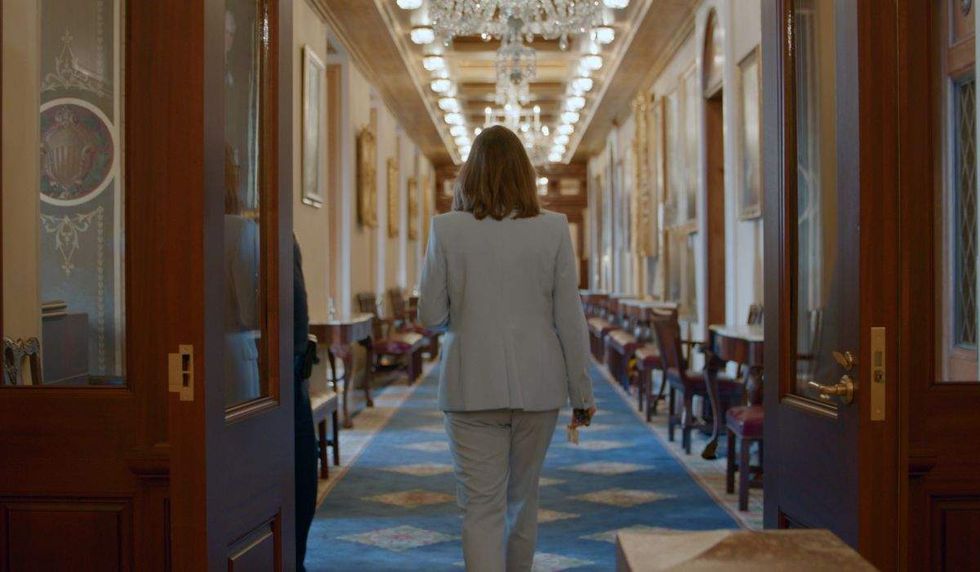 Congresswoman Sarah McBride made history in January 2025, when she became the first out transgender person sworn in as a member of Congress.Melissa Langer
The documentary, directed by Chase Joynt, follows McBride through her groundbreaking congressional campaign and concludes just as she arrives in Washington. It ends before many of the battles that would come to define her first months in office, including Republican efforts to target the transgender lawmaker and the broader escalation of anti-trans politics nationally.
Just three days before the film's release, McBride stood before hundreds of LGBTQ+ leaders, Democratic lawmakers, activists, and donors at the Equality PAC National Pride Gala and reflected on the political downfall of one of her most vocal antagonists and self-described "proud transphobe," South Carolina Republican Rep. Nancy Mace. The crowd erupted as McBride noted Mace's unsuccessful gubernatorial bid after years of making attacks on transgender people — and on McBride specifically — a centerpiece of her political identity.
It was a rare moment of public triumph for a lawmaker who has largely resisted invitations to engage in the sort of performative political combat that dominates social media and cable news.
That tension, between symbolism and governance, visibility and vulnerability, activism and electoral politics, sits at the center of State of Firsts.
"Our film really does exist as a capsule," Joynt told The Advocate ahead of the release. "We stopped shooting after the inauguration and really left her on the doorstep, figuratively and otherwise, of the new job." He said he hopes audiences use the film as an opportunity to "re-engage with the urgency of this time" while gaining enough distance to reflect on how rapidly events have unfolded.
The documentary arrives as the right wing continues a sustained wave of attacks on transgender Americans from the Trump administration and Republican-led states. Federal agencies have rolled back recognition and protections for transgender people. Courts continue weighing challenges to anti-trans policies. Republican politicians routinely invoke transgender people in campaign messaging and legislative debates.
McBride said those developments only reinforce the importance of storytelling.
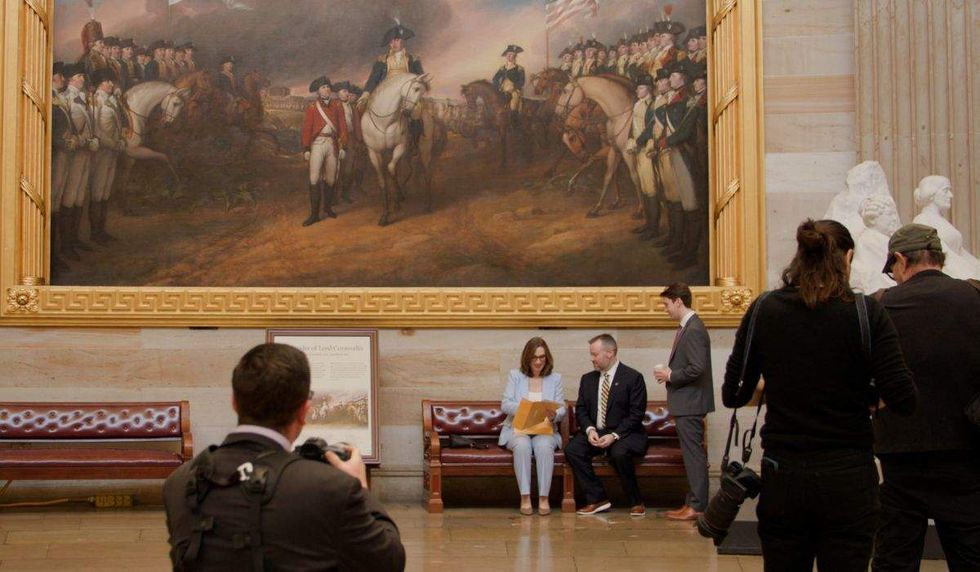 Congresswoman Sarah McBride opens an orientation packet alongside her chief of staff Roddy Flynn after she arrived on Capitol Hill after her historic election.Melissa Langer
"The events of this month, the events of this year, the events of this administration only reinforce the importance of all of us sharing our stories and deepening society's understanding of our humanity," she told The Advocate. "That we are multidimensional people who love and laugh, who hope and dream, who fear and cry, just like everyone else."
One of the reasons she agreed to participate in the documentary, she said, was to help people understand what it means to be a trailblazer.
"One of the reasons why I wanted to participate in this documentary was because I wanted people to understand the opportunities and challenges that come with being a first," McBride said. She described the film as an invitation into "the trade-offs, the joys, the nuances, the challenges, the heartbreak and the hope" that accompany such a role. Those trade-offs have become increasingly visible over the past year and a half.
In one scene, McBride is recognized while running errands in Delaware. Another captures the growing realization that ordinary interactions are becoming less ordinary.
"I'm grateful for it," she said of the attention she gets when people see her and decide to say hello.
Though she describes herself as an introvert who sometimes finds even routine public outings exhausting, she said the loss of anonymity has given her a clearer understanding of the gap between online outrage and real life.
"People come up to me, and I have real conversations with real people in the real world," McBride said. "I see that we aren't as divided as the algorithms make it seem."
Related: Sarah McBride explains how Democrats’ ‘big tent is bisexual’
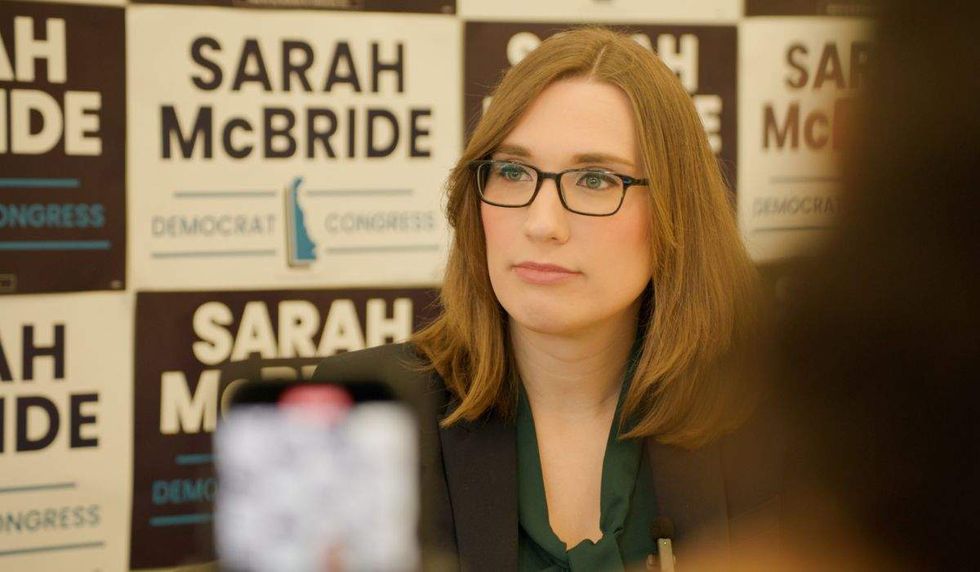 Sarah McBride visits a campaign office during the 2024 election.Melissa Langer
Those interactions, she said, have convinced her that social media often distorts public opinion. "The bots are not reflective of my constituents or people across this country," she said.
That philosophy helps explain why McBride has often resisted pressure to engage in the kind of viral political confrontations that dominate online discourse. Looking back on her first year in Congress, she expressed no regrets about the choices she made during those early, highly scrutinized months.
"I have become even more convinced that, in those early days, I made the right decisions," she said. "I made the right decisions for my constituents, I made the right decisions for myself, and I made the right decisions for the LGBTQ community."
She pointed to what she called the "receipts" of her first term, including bipartisan legislative work and the failure of congressional Republicans to enact major anti-trans legislation. "My priority is not to go viral every week," she said. "My job is to make sure that all of my constituents, including my trans constituents, are defended, protected, and respected."
Joynt said the film was designed to explore those very tensions.
"The goal of the film was to stitch this moment by and through a trans POV," he said. "My hope is that the audience can, through that attachment, through that access, start to build more complicated and nuanced understandings about what it means to be a minoritized subject in this political moment."
The documentary repeatedly returns to questions of visibility, vulnerability, and political strategy. It even includes a moment when McBride asks for greater privacy from the camera crew, an exchange Joynt intentionally left in the film.
"The reason it is in the film is to make explicit to the audiences the negotiation that is ongoing between subject and filmmaker," he said. "We are constantly in a dialogue about how close we can get and how far we need to stay."
For Joynt, the story ultimately extends beyond McBride. "Anytime an administration is focusing on a very small minority group of people, we all have to collectively ask why," he said, arguing that attacks on transgender people often serve as distractions from larger political agendas.
Both the filmmaker and the subject hope audiences leave the theaters with something more than sympathy.
McBride said she hopes some viewers see the film and realize they can run for office themselves. Others, she hopes, will come away understanding that political change often requires strategies that may not immediately satisfy everyone watching from the outside.
Most of all, she hopes viewers leave with a renewed belief in the power of persuasion.
"I hope that there are people who watch this who find themselves driven to cynicism and hopelessness and anger by the algorithms," she said. "That people come away believing that there is still a space for grace in our politics."
Watch the trailer for State of Firsts below.
- YouTube www.youtube.com