'%3E%3Cpath d='M16.3574 35.6519H12.9537L15.0491 18.8873L16.3574 35.6519ZM30.4229 54.0093L22.309 0.994385H7.91795L0 54.0093H10.6634L11.5802 46.3855H17.4014L17.9914 54.0093H30.4229Z' fill='%23971B20'/%3E%3Cpath d='M48.2073 41.8813C48.2073 43.4049 47.4892 44.0011 46.1144 44.0011H43.7595V11.0687H46.1144C47.4892 11.0687 48.2073 11.6636 48.2073 13.1885V41.8813ZM59.5273 43.6695V11.3326C59.5273 3.71323 53.5729 0.994385 47.8157 0.994385H31.7213V54.0093H47.8157C53.5729 54.0093 59.5273 51.29 59.5273 43.6695Z' fill='%23971B20'/%3E%3Cpath d='M90.183 0.994385H78.6039L75.0711 30.6157L71.9955 0.994385H59.4346L69.2474 54.0093H80.373L90.183 0.994385Z' fill='%23971B20'/%3E%3Cpath d='M107.063 42.3448C107.063 43.7359 105.951 44.5974 104.643 44.5974C103.269 44.5974 102.157 43.7359 102.157 42.3448V12.658C102.157 11.2676 103.269 10.4058 104.643 10.4058C105.951 10.4058 107.063 11.2676 107.063 12.658V42.3448ZM119.233 43.2723V11.7312C119.233 6.36384 112.952 -3.8147e-06 104.643 -3.8147e-06C96.2667 -3.8147e-06 89.9867 6.36384 89.9867 11.7312V43.2723C89.9867 48.6393 96.2667 55 104.643 55C112.952 55 119.233 48.6393 119.233 43.2723Z' fill='%23971B20'/%3E%3Cpath d='M150.976 43.9349V33.7309H139.069V42.3448C139.069 43.7359 137.957 44.5974 136.582 44.5974C135.076 44.5974 133.964 43.7359 133.964 42.3448V12.658C133.964 11.2676 135.076 10.4058 136.582 10.4058C137.957 10.4058 139.069 11.2676 139.069 12.658V21.2723H150.976V11.0687C150.976 5.70107 145.283 -3.8147e-06 136.582 -3.8147e-06C127.75 -3.8147e-06 121.796 5.70107 121.796 11.0687V43.9349C121.796 49.3022 127.75 55 136.582 55C145.283 55 150.976 49.3022 150.976 43.9349Z' fill='%23971B20'/%3E%3Cpath d='M167.478 35.6519H164.076L166.17 18.8873L167.478 35.6519ZM181.544 54.0093L173.432 0.994385H159.037L151.123 54.0093H161.785L162.704 46.3855H168.523L169.114 54.0093H181.544Z' fill='%23971B20'/%3E%3Cpath d='M205.412 10.4058V0.994385H177.081V10.4058H185.392V54.0093H197.428V10.4058H205.412Z' fill='%23971B20'/%3E%3Cpath d='M230.002 54.0093V43.9349H218.914V31.8746H226.635V21.8028H218.914V10.4058H230.002V0.994385H206.875V54.0093H230.002Z' fill='%23971B20'/%3E%3C/g%3E%3Cdefs%3E%3CclipPath id='clip0_260_7080'%3E%3Crect width='230' height='55' fill='white'/%3E%3C/clipPath%3E%3C/defs%3E%3C/svg%3E)
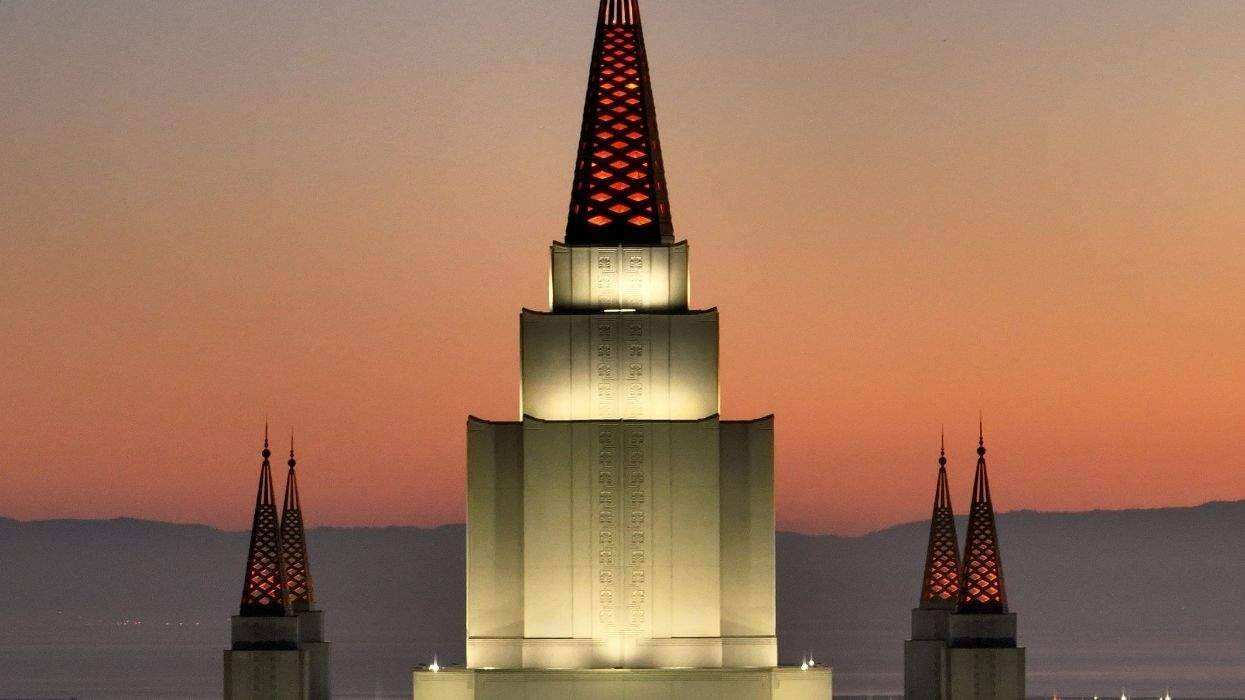

The Mormon church updated its official principles to remind transgender members they will only be recognized in rituals by their “biological sex at birth.”
Keep up with the latest in LGBTQ+ news and politics. Sign up for The Advocate's email newsletter.
The update to the General Handbook of The Church of Jesus Christ of Latter-day Saints does not mark a formal change in doctrine, but it offers more detailed guidance on how gender transition affects eligibility for temple participation.
“Worthy members who do not pursue surgical, medical, or social transition away from their biological sex at birth may receive a temple recommend and temple ordinances,” the handbook reads. That follows a prior update to church doctrine in 2020 that reflected a crackdown on transgender identity. It’s a doubling down that has offended ex-Mormons, already driven from positions in the church based on their identity.
Related: Mormon Church cracks down on trans members, may group them with child abusers
Related: From contradictions to compassion, the LDS Church struggles with LGBTQ+ inclusion
“This is specifically focusing on a very narrow exception to the point of vindictiveness, codifying the exception to the exception,” Laurie Lee Hall, a former stake president excommunicated from the church, told The Salt Lake Tribune.
Church leaders have continued to emphasize that transgender people are welcome in regular worship services. “All of Heavenly Father’s children are welcome at church,” the church says on its website.
The handbook also outlines a pathway for those who detransition. “Members who have taken steps to transition and then transition back to their biological sex at birth and are worthy and committed to keeping God’s commandments may receive [temple rituals],” the update states.
The change to the official text of the organization comes as the LDS Church has wrestled openly with LGBTQ+ tolerance. The update reflects the church’s broader approach to LGBTQ+ members: encouraging participation in congregational life while restricting access to certain rites. The faith allows gay and lesbian members to attend and serve in some capacities, but continues to teach that same-sex marriages are a sin.
The handbook also encourages bishops to work with members on a case-by-case basis with “sensitivity and Christlike love,” and advises those experiencing questions about gender identity to seek guidance from church leaders.