'%3E%3Cpath d='M16.3574 35.6519H12.9537L15.0491 18.8873L16.3574 35.6519ZM30.4229 54.0093L22.309 0.994385H7.91795L0 54.0093H10.6634L11.5802 46.3855H17.4014L17.9914 54.0093H30.4229Z' fill='%23971B20'/%3E%3Cpath d='M48.2073 41.8813C48.2073 43.4049 47.4892 44.0011 46.1144 44.0011H43.7595V11.0687H46.1144C47.4892 11.0687 48.2073 11.6636 48.2073 13.1885V41.8813ZM59.5273 43.6695V11.3326C59.5273 3.71323 53.5729 0.994385 47.8157 0.994385H31.7213V54.0093H47.8157C53.5729 54.0093 59.5273 51.29 59.5273 43.6695Z' fill='%23971B20'/%3E%3Cpath d='M90.183 0.994385H78.6039L75.0711 30.6157L71.9955 0.994385H59.4346L69.2474 54.0093H80.373L90.183 0.994385Z' fill='%23971B20'/%3E%3Cpath d='M107.063 42.3448C107.063 43.7359 105.951 44.5974 104.643 44.5974C103.269 44.5974 102.157 43.7359 102.157 42.3448V12.658C102.157 11.2676 103.269 10.4058 104.643 10.4058C105.951 10.4058 107.063 11.2676 107.063 12.658V42.3448ZM119.233 43.2723V11.7312C119.233 6.36384 112.952 -3.8147e-06 104.643 -3.8147e-06C96.2667 -3.8147e-06 89.9867 6.36384 89.9867 11.7312V43.2723C89.9867 48.6393 96.2667 55 104.643 55C112.952 55 119.233 48.6393 119.233 43.2723Z' fill='%23971B20'/%3E%3Cpath d='M150.976 43.9349V33.7309H139.069V42.3448C139.069 43.7359 137.957 44.5974 136.582 44.5974C135.076 44.5974 133.964 43.7359 133.964 42.3448V12.658C133.964 11.2676 135.076 10.4058 136.582 10.4058C137.957 10.4058 139.069 11.2676 139.069 12.658V21.2723H150.976V11.0687C150.976 5.70107 145.283 -3.8147e-06 136.582 -3.8147e-06C127.75 -3.8147e-06 121.796 5.70107 121.796 11.0687V43.9349C121.796 49.3022 127.75 55 136.582 55C145.283 55 150.976 49.3022 150.976 43.9349Z' fill='%23971B20'/%3E%3Cpath d='M167.478 35.6519H164.076L166.17 18.8873L167.478 35.6519ZM181.544 54.0093L173.432 0.994385H159.037L151.123 54.0093H161.785L162.704 46.3855H168.523L169.114 54.0093H181.544Z' fill='%23971B20'/%3E%3Cpath d='M205.412 10.4058V0.994385H177.081V10.4058H185.392V54.0093H197.428V10.4058H205.412Z' fill='%23971B20'/%3E%3Cpath d='M230.002 54.0093V43.9349H218.914V31.8746H226.635V21.8028H218.914V10.4058H230.002V0.994385H206.875V54.0093H230.002Z' fill='%23971B20'/%3E%3C/g%3E%3Cdefs%3E%3CclipPath id='clip0_260_7080'%3E%3Crect width='230' height='55' fill='white'/%3E%3C/clipPath%3E%3C/defs%3E%3C/svg%3E)
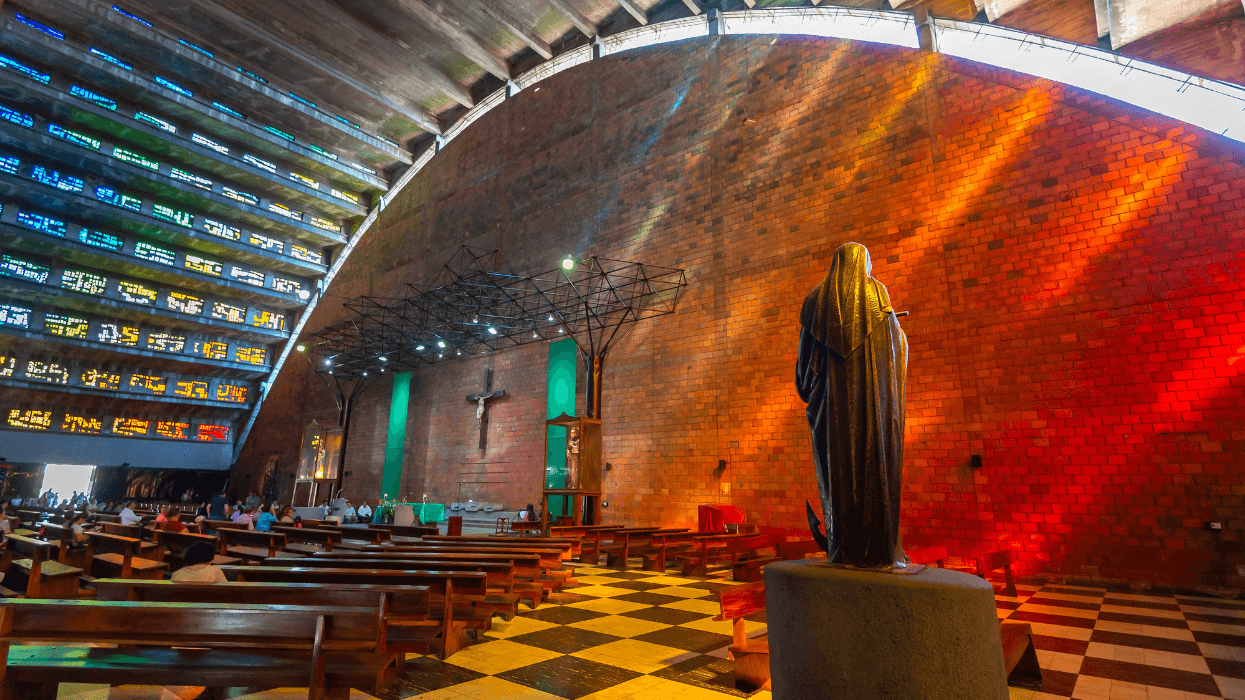

I was raised Catholic, and that’s never been something I could or wanted to shake. Faith was the first language I learned. Before I could read, I knew how to kneel, how to whisper a prayer, how to trace the sign of the cross over my chest. I loved the rhythm of it all — the rise and fall of the hymns, the smell of incense curling through sunlight, the soft echo of the priest’s voice in the sanctuary.
Catholicism was my foundation. It gave me a sense of order, of meaning. It made the world feel sacred, as if every act — lighting a candle, dipping your fingers in holy water, saying grace before a meal — was part of something larger.
But woven into that beauty was a quieter thread: guilt.
Catholic guilt isn’t loud or dramatic. It’s subtle, almost tender. It hums beneath everything, a reminder that there is always something to confess, always ways to fall short. I learned early that there were two things people said not to speak about — religion and sexuality. The first was too sacred to question. The second, too scandalous to name.
I didn’t know it then, but those two things would become the biggest parts of me.
When I began to understand that I was queer, I didn’t have a word for it. I just knew that I felt things differently — that my heart tilted toward girls the way it was supposed to tilt toward boys. I told myself it was just admiration, that I wanted to be like them, not “with” them. But deep down, I knew.
And with that knowing came a quiet fear.
At church, I’d sit in the pew and wonder if God could see right through me, if He knew about the thoughts I tried to bury, the prayers I whispered without words. I prayed for forgiveness, though I couldn’t say what for. Maybe He’d just know. Maybe He’d fix me, make me pure again, make me “right.”
But He never did. Instead, He met me there — in the confusion, the guilt, the quiet corners of my faith where I didn’t have answers. I like to think now that He was never trying to change me. He was just waiting for me to see that I didn’t need to.
Still, reconciling the two — my queerness and my faith — wasn’t easy. They felt like two forces pulling me in opposite directions. In one world, I was told to be proud, to live boldly, to love without shame. In the other, I was taught humility, restraint, silence. To be queer felt like breaking a rule; to be faithful felt like betraying myself.
I remember sitting in the dim booth during confession, the smell of old wood and candle wax thick in the air. I didn’t know how to say it. How to tell a priest that I might love differently. How to explain that I wasn’t sorry, just scared. So instead, I confessed small things — impatience, envy, doubt. The real sin, if there was one, stayed between me and God.
As I grew older, I realized that faith is not about fear; it’s about relationship. It’s about showing up. And despite everything, I kept showing up — to church, to prayer, to myself.
My faith taught me about forgiveness, sacrifice, and grace — concepts that look different now but feel even truer. My queerness taught me the same things in another language. Both are ways of reaching for love, for truth, for belonging.
People sometimes tell me that you can’t mix the two, that queerness and Catholicism are oil and water. But they coexist in me like two notes of the same hymn — one trembling, one strong — neither complete without the other. My belief in God isn’t in spite of who I am; it’s because of who I am. Because I know what it means to wrestle with identity, to question and still believe, to love through conflict and find peace in paradox.
Yes, Catholic guilt still lingers. It rises up like incense after Mass — sweet and suffocating, impossible to ignore. But so does the beauty of my faith: the rituals, the reverence, the quiet conversations I still have with God when no one is watching.
I’m still Catholic. I’m still queer. And I’m still learning how to hold both with tenderness.
Sometimes I think about all the prayers I said when I was younger — the desperate, whispered ones asking God to make me different. If I could go back, I’d tell that version of myself something simple: You’re not broken. You’re beloved.
I don’t know if the Church will ever fully embrace people like me. But I do know this: My faith doesn’t depend on the Church’s acceptance. It depends on the quiet, unshakable belief that God is bigger than any doctrine, more merciful than any judgment, and more loving than we can imagine.
Maybe that’s what faith really is — not certainty, but the decision to keep showing up. To keep believing that even in contradiction, there is grace. To trust that the same God who hung the stars also made me exactly as I am.
My faith is my anchor. My queerness is my freedom. Both are holy. Both are mine.
Madalyn Goff is a self-described "curious, observant writer exploring life, love, and identity through intimate storytelling that centers honesty, connection, and empathy."
Opinion is dedicated to featuring a wide range of inspiring personal stories and impactful opinions from the LGBTQ+ community and its allies. Visit Advocate.com/submit to learn more about submission guidelines. We welcome your thoughts and feedback on any of our stories. Email us at voices@equalpride.com. Views expressed in Voices stories are those of the guest writers, columnists, and editors, and do not directly represent the views of The Advocate or our parent company, equalpride.