'%3E%3Cpath d='M16.3574 35.6519H12.9537L15.0491 18.8873L16.3574 35.6519ZM30.4229 54.0093L22.309 0.994385H7.91795L0 54.0093H10.6634L11.5802 46.3855H17.4014L17.9914 54.0093H30.4229Z' fill='%23971B20'/%3E%3Cpath d='M48.2073 41.8813C48.2073 43.4049 47.4892 44.0011 46.1144 44.0011H43.7595V11.0687H46.1144C47.4892 11.0687 48.2073 11.6636 48.2073 13.1885V41.8813ZM59.5273 43.6695V11.3326C59.5273 3.71323 53.5729 0.994385 47.8157 0.994385H31.7213V54.0093H47.8157C53.5729 54.0093 59.5273 51.29 59.5273 43.6695Z' fill='%23971B20'/%3E%3Cpath d='M90.183 0.994385H78.6039L75.0711 30.6157L71.9955 0.994385H59.4346L69.2474 54.0093H80.373L90.183 0.994385Z' fill='%23971B20'/%3E%3Cpath d='M107.063 42.3448C107.063 43.7359 105.951 44.5974 104.643 44.5974C103.269 44.5974 102.157 43.7359 102.157 42.3448V12.658C102.157 11.2676 103.269 10.4058 104.643 10.4058C105.951 10.4058 107.063 11.2676 107.063 12.658V42.3448ZM119.233 43.2723V11.7312C119.233 6.36384 112.952 -3.8147e-06 104.643 -3.8147e-06C96.2667 -3.8147e-06 89.9867 6.36384 89.9867 11.7312V43.2723C89.9867 48.6393 96.2667 55 104.643 55C112.952 55 119.233 48.6393 119.233 43.2723Z' fill='%23971B20'/%3E%3Cpath d='M150.976 43.9349V33.7309H139.069V42.3448C139.069 43.7359 137.957 44.5974 136.582 44.5974C135.076 44.5974 133.964 43.7359 133.964 42.3448V12.658C133.964 11.2676 135.076 10.4058 136.582 10.4058C137.957 10.4058 139.069 11.2676 139.069 12.658V21.2723H150.976V11.0687C150.976 5.70107 145.283 -3.8147e-06 136.582 -3.8147e-06C127.75 -3.8147e-06 121.796 5.70107 121.796 11.0687V43.9349C121.796 49.3022 127.75 55 136.582 55C145.283 55 150.976 49.3022 150.976 43.9349Z' fill='%23971B20'/%3E%3Cpath d='M167.478 35.6519H164.076L166.17 18.8873L167.478 35.6519ZM181.544 54.0093L173.432 0.994385H159.037L151.123 54.0093H161.785L162.704 46.3855H168.523L169.114 54.0093H181.544Z' fill='%23971B20'/%3E%3Cpath d='M205.412 10.4058V0.994385H177.081V10.4058H185.392V54.0093H197.428V10.4058H205.412Z' fill='%23971B20'/%3E%3Cpath d='M230.002 54.0093V43.9349H218.914V31.8746H226.635V21.8028H218.914V10.4058H230.002V0.994385H206.875V54.0093H230.002Z' fill='%23971B20'/%3E%3C/g%3E%3Cdefs%3E%3CclipPath id='clip0_260_7080'%3E%3Crect width='230' height='55' fill='white'/%3E%3C/clipPath%3E%3C/defs%3E%3C/svg%3E)

In the 1950s, TV screens beamed out a single picture of “family”: a married straight white couple, two biological kids, and a neat white picket fence. That socially sanctioned image never told the whole story, and it certainly doesn’t reflect reality for many today. Less than 18 percent of U.S. households resemble that so-called nuclear family, yet our laws continue to be built around it.
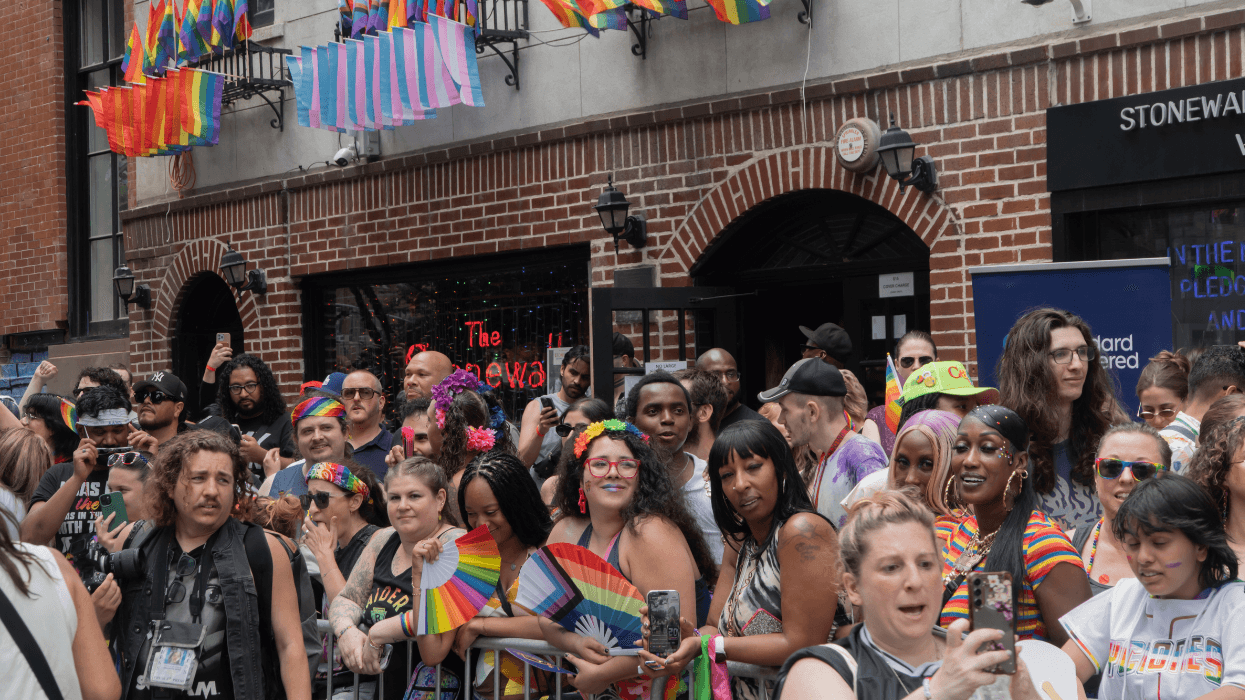
In our hometown of West Hollywood, LGBTQ+ residents—including bi+, trans, and nonbinary people—build chosen families that remain legally unrecognized under current state law. It’s time for California laws to reflect the diverse ways people live, love, and care for one another. Our city is already leading the way with two historic actions.
The Golden State has long been a trailblazer in LGBTQ+ rights. In 2004, Gov. Gavin Newsom, then mayor of San Francisco, issued marriage licenses to same-sex couples in defiance of the then-federal ban. Two decades later in 2024, California wiped discriminatory language from the state constitution and cemented the right to same-sex marriage with Prop 3, passed just months before the U.S. Supreme Court declined to hear a case that could have threatened federal marriage rights.
Despite significant progress in our state and country, people in multi-partner families still face legal barriers when co-parenting, sharing health benefits, or accessing family leave. Without legal protections, they remain vulnerable to housing and employment discrimination. A recent study found that less than 1 in 6 people in diverse relationship structures feel safe being out at work. While some company policies prohibit this form of discrimination, no state or federal laws prevent employees from being fired solely because of their family or relationship structure.
With 15 percent of Gen Z reporting they are in—or interested in—relationships with more than one partner, these gaps in the law are becoming harder to ignore.
That’s one reason why West Hollywood recently moved to update its nondiscrimination and domestic partnership ordinances to explicitly include protections for diverse family and relationship structures. The City Council voted 5-0 last month to become the first city in California to advance implementation of a plural domestic partnership registry, building on the city’s legacy as the first city in the nation to establish a domestic partnership registry for same sex couples four decades ago.
Legally recognizing plural domestic partnerships acknowledges the realities of how people live today without diminishing other family structures. For generations, legal and social norms around gender, race, sexuality, and relationship structure have determined which families are visible and which are not. West Hollywood’s inclusive policies will help to correct that imbalance.
West Hollywood also outlawed discrimination based on family or relationship structure in housing, public accommodations, and city contracting. This includes protections for multi-partner and multi-parent families, multi-generational households, step-families, and chosen families. Any company contracting with the City can no longer discriminate in employment decisions based on this newly protected class.
Research by Rewrite the BiLine shows that these advancements in local law are practical, feasible, and fiscally neutral. Last year, the cities of Oakland and Berkeley amended their non-discrimination ordinances to cover non-nuclear families. And in Massachusetts, Somerville, Cambridge, and Arlington revised their domestic partnership ordinances to include partnerships of three or more; none of these municipalities reported any financial burden from expanding their ordinances.
Local laws like these offer a glimpse of a fairer future, one in which the full diversity of families is celebrated. Other cities should follow West Hollywood’s lead, and employers—especially entertainment companies that help define our cultural norms—should update their workplace policies to reflect the realities of family life.
Above all, California must act. The state has long been a bellwether for civil rights, expanding the promise of equality through hard-won anti-discrimination laws. Lawmakers should carry this progress forward by enacting statewide protections that guarantee every family is afforded the same rights, security and dignity under the law.
Chelsea Lee Byers is a Councilmember in the City of West Hollywood and served as Mayor in 2025. Christina Fialho is an attorney and the founder/president of Rewrite the BiLine.
Opinion is dedicated to featuring a wide range of inspiring personal stories and impactful opinions from the LGBTQ+ community and its allies. Visit Advocate.com/submit to learn more about submission guidelines. We welcome your thoughts and feedback on any of our stories. Email us at voices@equalpride.com. Views expressed in Voices stories are those of the guest writers, columnists, and editors, and do not directly represent the views of The Advocate or our parent company, equalpride.