'%3E%3Cpath d='M16.3574 35.6519H12.9537L15.0491 18.8873L16.3574 35.6519ZM30.4229 54.0093L22.309 0.994385H7.91795L0 54.0093H10.6634L11.5802 46.3855H17.4014L17.9914 54.0093H30.4229Z' fill='%23971B20'/%3E%3Cpath d='M48.2073 41.8813C48.2073 43.4049 47.4892 44.0011 46.1144 44.0011H43.7595V11.0687H46.1144C47.4892 11.0687 48.2073 11.6636 48.2073 13.1885V41.8813ZM59.5273 43.6695V11.3326C59.5273 3.71323 53.5729 0.994385 47.8157 0.994385H31.7213V54.0093H47.8157C53.5729 54.0093 59.5273 51.29 59.5273 43.6695Z' fill='%23971B20'/%3E%3Cpath d='M90.183 0.994385H78.6039L75.0711 30.6157L71.9955 0.994385H59.4346L69.2474 54.0093H80.373L90.183 0.994385Z' fill='%23971B20'/%3E%3Cpath d='M107.063 42.3448C107.063 43.7359 105.951 44.5974 104.643 44.5974C103.269 44.5974 102.157 43.7359 102.157 42.3448V12.658C102.157 11.2676 103.269 10.4058 104.643 10.4058C105.951 10.4058 107.063 11.2676 107.063 12.658V42.3448ZM119.233 43.2723V11.7312C119.233 6.36384 112.952 -3.8147e-06 104.643 -3.8147e-06C96.2667 -3.8147e-06 89.9867 6.36384 89.9867 11.7312V43.2723C89.9867 48.6393 96.2667 55 104.643 55C112.952 55 119.233 48.6393 119.233 43.2723Z' fill='%23971B20'/%3E%3Cpath d='M150.976 43.9349V33.7309H139.069V42.3448C139.069 43.7359 137.957 44.5974 136.582 44.5974C135.076 44.5974 133.964 43.7359 133.964 42.3448V12.658C133.964 11.2676 135.076 10.4058 136.582 10.4058C137.957 10.4058 139.069 11.2676 139.069 12.658V21.2723H150.976V11.0687C150.976 5.70107 145.283 -3.8147e-06 136.582 -3.8147e-06C127.75 -3.8147e-06 121.796 5.70107 121.796 11.0687V43.9349C121.796 49.3022 127.75 55 136.582 55C145.283 55 150.976 49.3022 150.976 43.9349Z' fill='%23971B20'/%3E%3Cpath d='M167.478 35.6519H164.076L166.17 18.8873L167.478 35.6519ZM181.544 54.0093L173.432 0.994385H159.037L151.123 54.0093H161.785L162.704 46.3855H168.523L169.114 54.0093H181.544Z' fill='%23971B20'/%3E%3Cpath d='M205.412 10.4058V0.994385H177.081V10.4058H185.392V54.0093H197.428V10.4058H205.412Z' fill='%23971B20'/%3E%3Cpath d='M230.002 54.0093V43.9349H218.914V31.8746H226.635V21.8028H218.914V10.4058H230.002V0.994385H206.875V54.0093H230.002Z' fill='%23971B20'/%3E%3C/g%3E%3Cdefs%3E%3CclipPath id='clip0_260_7080'%3E%3Crect width='230' height='55' fill='white'/%3E%3C/clipPath%3E%3C/defs%3E%3C/svg%3E)
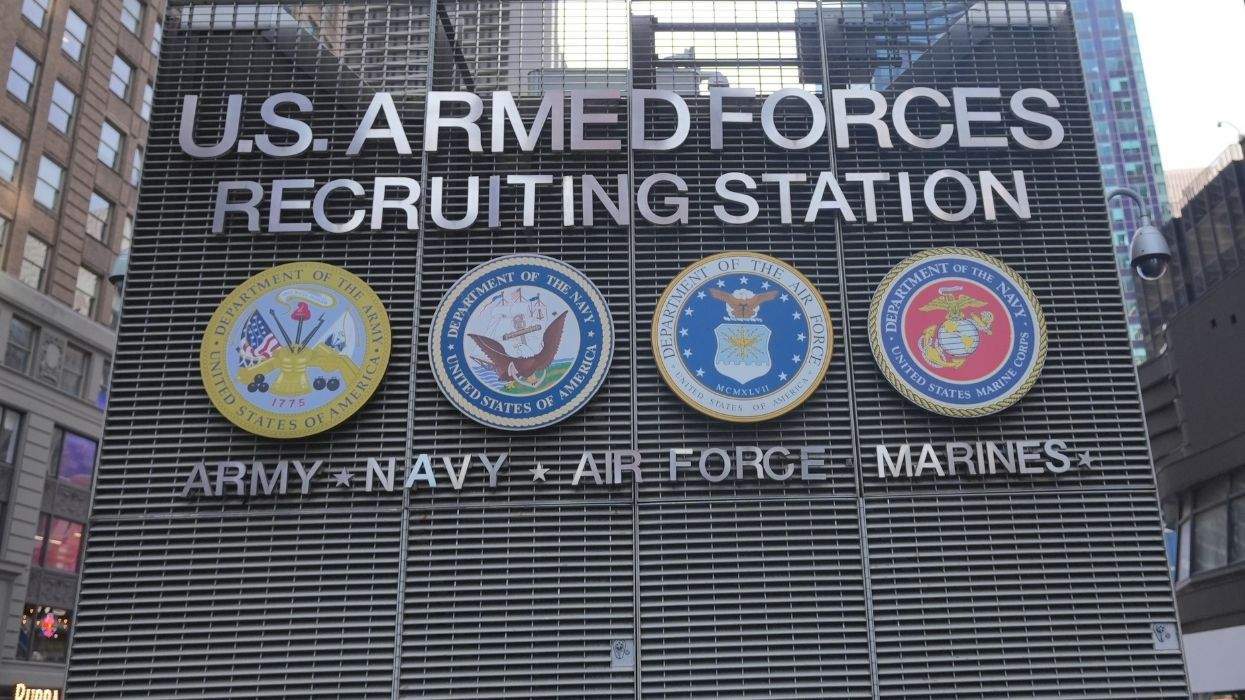
A federal appeals court has revived a major challenge to the U.S. military’s HIV enlistment ban, reopening a closely watched case that could determine whether people living with HIV can continue to be categorically barred from serving.
In an order issued May 18, the full U.S. Court of Appeals for the Fourth Circuit agreed to rehear Wilkins v. Hegseth, vacating a February ruling by a three-judge panel that upheld the Pentagon’s restrictions on recruits living with HIV. The rare move resets the case and gives advocates another opportunity to dismantle one of the military’s last remaining HIV-specific exclusions.
Oral arguments before all active judges on the Richmond-based court are tentatively scheduled for September.
The case centers on Isaiah Wilkins, a former Army reservist who was accepted into the U.S. Military Academy Preparatory School before being disenrolled after testing positive for HIV. Wilkins, alongside two additional plaintiffs and Minority Veterans of America, sued the Defense Department over policies that prevent people living with HIV from joining or rejoining military service.
Related: Two military members denied promotions for having HIV just won their lawsuit
“The decision came in February, and it felt like the end of the line,” Wilkins said Thursday in a statement. “But Peter and Scott saw one last chance, however remote, to turn things around — and we did. I couldn’t be more thrilled to still have a chance at serving my country.”
“The now-vacated panel opinion was an aberration,” attorney Peter Perkowski said Thursday in a statement. “Every other legal ruling across seven plus years of litigation has acknowledged that the evidentiary record demonstrates that people living with well-managed HIV can perform in any capacity as capably and safely as anyone else.”
Attorney Scott Schoettes, who argued the earlier appeal, said the rehearing “wipes the slate clean.”
“We are excited to argue this appeal to the full Court, and we are confident a fair hearing and decision that keeps faith with Roe will result in an affirmance of the district court’s ruling and injunction requiring the DoD to stop discriminating against qualified people living with HIV who simply want to serve their country,” Schoettes said.
Related: Court strikes down last barrier to military service by people living with HIV
Both Schoettes and Perkowski openly live with HIV, which advocates say marks the first time plaintiffs in HIV-rights litigation have been represented entirely by attorneys who are themselves living with HIV.
The Fourth Circuit’s February ruling marked a major setback for HIV advocates and LGBTQ+ legal groups. In that decision, a unanimous three-judge panel reversed a 2024 lower court ruling that struck down the enlistment ban as discriminatory and medically outdated.
Writing for the panel, Judge Paul Niemeyer said courts should give broad deference to military decision-making, describing the armed forces as “a specialized society separate from civilian society” whose judgments were “reasonably related to its military mission.”
The panel concluded the Pentagon had a “rational basis” for maintaining the ban, accepting government arguments that recruits living with HIV could create logistical and diplomatic complications overseas, require ongoing medical monitoring, and impose additional treatment costs on the military.
Related: Military ban on HIV-positive enlistees could set dangerous precedent, experts warn
Niemeyer also distinguished the case from earlier Fourth Circuit rulings that blocked the military from discharging or restricting service members already serving with HIV, arguing that enlistment standards presented different legal and operational questions.
During oral arguments in December, judges repeatedly questioned whether courts should override military judgments about troop readiness standards. Attorneys for the plaintiffs countered that the policy rested on outdated assumptions about HIV rather than modern science.
They pointed to decades of medical advances showing that people with well-managed HIV and undetectable viral loads can safely serve in all military roles without transmitting the virus sexually. They also argued that the Pentagon had already acknowledged those realities after earlier court losses forced the military to end deployment restrictions on current service members living with HIV.
In August 2024, U.S. District Judge Leonie Brinkema ruled that the military’s HIV enlistment ban was “irrational, arbitrary, and capricious,” finding that the policy perpetuated stigma while undermining military recruitment goals.
Editors note: A previous version of this story incorrectly stated that Lambda Legal and Winston & Strawn LLP represent the plaintiffs in this case. They no longer do.