'%3E%3Cpath d='M16.3574 35.6519H12.9537L15.0491 18.8873L16.3574 35.6519ZM30.4229 54.0093L22.309 0.994385H7.91795L0 54.0093H10.6634L11.5802 46.3855H17.4014L17.9914 54.0093H30.4229Z' fill='%23971B20'/%3E%3Cpath d='M48.2073 41.8813C48.2073 43.4049 47.4892 44.0011 46.1144 44.0011H43.7595V11.0687H46.1144C47.4892 11.0687 48.2073 11.6636 48.2073 13.1885V41.8813ZM59.5273 43.6695V11.3326C59.5273 3.71323 53.5729 0.994385 47.8157 0.994385H31.7213V54.0093H47.8157C53.5729 54.0093 59.5273 51.29 59.5273 43.6695Z' fill='%23971B20'/%3E%3Cpath d='M90.183 0.994385H78.6039L75.0711 30.6157L71.9955 0.994385H59.4346L69.2474 54.0093H80.373L90.183 0.994385Z' fill='%23971B20'/%3E%3Cpath d='M107.063 42.3448C107.063 43.7359 105.951 44.5974 104.643 44.5974C103.269 44.5974 102.157 43.7359 102.157 42.3448V12.658C102.157 11.2676 103.269 10.4058 104.643 10.4058C105.951 10.4058 107.063 11.2676 107.063 12.658V42.3448ZM119.233 43.2723V11.7312C119.233 6.36384 112.952 -3.8147e-06 104.643 -3.8147e-06C96.2667 -3.8147e-06 89.9867 6.36384 89.9867 11.7312V43.2723C89.9867 48.6393 96.2667 55 104.643 55C112.952 55 119.233 48.6393 119.233 43.2723Z' fill='%23971B20'/%3E%3Cpath d='M150.976 43.9349V33.7309H139.069V42.3448C139.069 43.7359 137.957 44.5974 136.582 44.5974C135.076 44.5974 133.964 43.7359 133.964 42.3448V12.658C133.964 11.2676 135.076 10.4058 136.582 10.4058C137.957 10.4058 139.069 11.2676 139.069 12.658V21.2723H150.976V11.0687C150.976 5.70107 145.283 -3.8147e-06 136.582 -3.8147e-06C127.75 -3.8147e-06 121.796 5.70107 121.796 11.0687V43.9349C121.796 49.3022 127.75 55 136.582 55C145.283 55 150.976 49.3022 150.976 43.9349Z' fill='%23971B20'/%3E%3Cpath d='M167.478 35.6519H164.076L166.17 18.8873L167.478 35.6519ZM181.544 54.0093L173.432 0.994385H159.037L151.123 54.0093H161.785L162.704 46.3855H168.523L169.114 54.0093H181.544Z' fill='%23971B20'/%3E%3Cpath d='M205.412 10.4058V0.994385H177.081V10.4058H185.392V54.0093H197.428V10.4058H205.412Z' fill='%23971B20'/%3E%3Cpath d='M230.002 54.0093V43.9349H218.914V31.8746H226.635V21.8028H218.914V10.4058H230.002V0.994385H206.875V54.0093H230.002Z' fill='%23971B20'/%3E%3C/g%3E%3Cdefs%3E%3CclipPath id='clip0_260_7080'%3E%3Crect width='230' height='55' fill='white'/%3E%3C/clipPath%3E%3C/defs%3E%3C/svg%3E)
A federal judge in Texas has paused consideration of an emergency request in the Trump administration’s lawsuit against the World Professional Association for Transgender Health after an unusual confrontation between two federal courts over where the fight should proceed, Law Dork first reported.
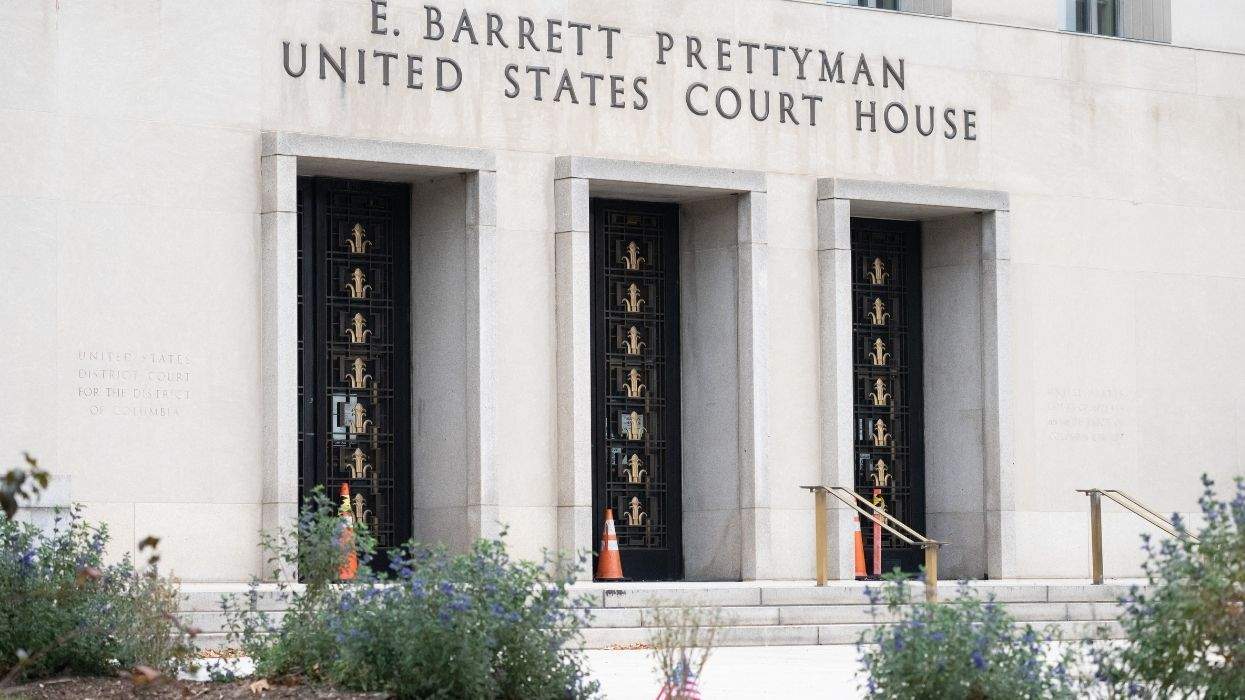
U.S. District Judge Reed O’Connor, a George W. Bush appointee in the Northern District of Texas, canceled a July 7 hearing on the Federal Trade Commission’s request and said he would wait for Chief Judge James Boasberg of the U.S. District Court for the District of Columbia to rule first in WPATH’s related D.C. lawsuit challenging the FTC’s earlier investigative demand.
The move is striking because O’Connor has been receptive to conservative legal challenges, including cases targeting LGBTQ+ protections and federal health policy. This time, however, he slowed the administration’s attempt to limit WPATH’s ability to seek relief in another federal court.
Related: Republican states join Trump FTC in lawsuit against world’s leading transgender health care group
The FTC, joined by attorneys general for Texas and Iowa, asked O’Connor late Thursday to bar WPATH from seeking relief in any court other than O’Connor’s court, the Fifth Circuit Court of Appeals or the U.S. Supreme Court, according to Law Dork. The request would have effectively stopped WPATH from pursuing relief before Boasberg, who had already issued a major ruling against the FTC in May.
At the time, Boasberg granted preliminary injunctions to WPATH and the Endocrine Society, temporarily halting FTC investigations that the groups argued were politically motivated and unconstitutional. As The Advocate previously reported, the FTC had issued civil investigative demands seeking years of internal records, communications, financial information, conference materials, and documents related to medical guidance on transgender care.
Boasberg was sharply critical of the administration’s motives. In the WPATH case, he wrote that the record “strongly suggests that the CID was issued at least in part because of hostility toward WPATH’s viewpoint and advocacy regarding transgender care.” He also cited “extensive evidence of animus” and “wafer-thin justifications lacking evidentiary support.”
Related: Federal judge blocks FTC probes into trans medicine groups, citing ‘extensive evidence of animus’
In the parallel Endocrine Society case, Boasberg warned that the FTC’s actions raised “serious concerns that the agency’s investigatory power is being used not to police commercial fraud, but to target disfavored speech and advocacy.”
The FTC and Republican attorneys general of Alaska, Iowa, Nebraska and Texas sued WPATH on June 17 in federal court in Texas. The 123-page complaint names WPATH’s Texas and Illinois corporations and the United States Professional Association for Transgender Health, WPATH’s U.S. affiliate.
The lawsuit accuses WPATH of making deceptive or unsubstantiated claims about the safety, effectiveness, medical necessity and evidence base for puberty blockers, hormone therapy and surgeries for young people. The suit targets the organization whose Standards of Care have helped shape the medical, legal and insurance landscape surrounding transgender health care for decades.
WPATH rejected the allegations when the lawsuit was filed, accusing the administration of abusing federal power to attack transgender patients and the medical professionals who care for them.
“This is the second time this year the Trump Administration has abused the authority of its agencies to interfere with Americans’ rights to seek and obtain the healthcare that should be decided between a patient and their physician,” WPATH said in a statement to The Advocate at the time.
WPATH also said the FTC “is not a medical provider and has no place interfering with the process of individualized medical decision-making.”
Related: FTC hosts anti-trans workshop LGBTQ+ advocates call ‘government-sponsored disinformation’
FTC Chairman Andrew N. Ferguson has framed the case as a consumer-protection matter, saying that parents need “complete and truthful information” when making medical decisions for their children. WPATH has defended its work, saying that for more than 50 years it has developed guidelines “informed by established scientific standards, expert consensus, and patient-centered values.”
“WPATH supports individualized patient care, not a ‘one size fits all’ approach,” the organization said in its earlier statement to The Advocate. “Transgender and gender-diverse patients deserve the highest level of care from their medical professionals, and the Standards of Care are designed to promote this through open dialogue and clear communication.”
The latest procedural fight began after WPATH asked Boasberg on June 30 to stop the FTC from litigating the Texas case except as a mandatory counterclaim in the D.C. case. Boasberg set a briefing schedule Thursday. Hours later, the FTC went to O’Connor seeking an order blocking WPATH from pursuing relief before Boasberg.
WPATH’s lawyers then alerted Boasberg and sought emergency relief in D.C. They also informed O’Connor of the D.C. filing, Law Dork reported.
By Friday, O’Connor had stepped back. In an order issued after “consultation” with Boasberg, he canceled the Texas hearing and said he would wait until after Boasberg rules. Boasberg then denied WPATH’s emergency request as moot because O’Connor had agreed to pause consideration of the FTC’s request.
Boasberg is scheduled to hear WPATH’s earlier request Thursday. His ruling could determine whether the FTC’s Texas case proceeds before O’Connor.
The dispute is the latest courtroom fight over the Trump administration’s escalating campaign against gender-affirming care. Federal agencies have used subpoenas, investigations and civil enforcement theories to target hospitals, medical organizations and providers involved in care for transgender minors. Several judges have recently blocked parts of those efforts, including subpoenas seeking private medical records from hospitals that treated transgender young people.