'%3E%3Cpath d='M16.3574 35.6519H12.9537L15.0491 18.8873L16.3574 35.6519ZM30.4229 54.0093L22.309 0.994385H7.91795L0 54.0093H10.6634L11.5802 46.3855H17.4014L17.9914 54.0093H30.4229Z' fill='%23971B20'/%3E%3Cpath d='M48.2073 41.8813C48.2073 43.4049 47.4892 44.0011 46.1144 44.0011H43.7595V11.0687H46.1144C47.4892 11.0687 48.2073 11.6636 48.2073 13.1885V41.8813ZM59.5273 43.6695V11.3326C59.5273 3.71323 53.5729 0.994385 47.8157 0.994385H31.7213V54.0093H47.8157C53.5729 54.0093 59.5273 51.29 59.5273 43.6695Z' fill='%23971B20'/%3E%3Cpath d='M90.183 0.994385H78.6039L75.0711 30.6157L71.9955 0.994385H59.4346L69.2474 54.0093H80.373L90.183 0.994385Z' fill='%23971B20'/%3E%3Cpath d='M107.063 42.3448C107.063 43.7359 105.951 44.5974 104.643 44.5974C103.269 44.5974 102.157 43.7359 102.157 42.3448V12.658C102.157 11.2676 103.269 10.4058 104.643 10.4058C105.951 10.4058 107.063 11.2676 107.063 12.658V42.3448ZM119.233 43.2723V11.7312C119.233 6.36384 112.952 -3.8147e-06 104.643 -3.8147e-06C96.2667 -3.8147e-06 89.9867 6.36384 89.9867 11.7312V43.2723C89.9867 48.6393 96.2667 55 104.643 55C112.952 55 119.233 48.6393 119.233 43.2723Z' fill='%23971B20'/%3E%3Cpath d='M150.976 43.9349V33.7309H139.069V42.3448C139.069 43.7359 137.957 44.5974 136.582 44.5974C135.076 44.5974 133.964 43.7359 133.964 42.3448V12.658C133.964 11.2676 135.076 10.4058 136.582 10.4058C137.957 10.4058 139.069 11.2676 139.069 12.658V21.2723H150.976V11.0687C150.976 5.70107 145.283 -3.8147e-06 136.582 -3.8147e-06C127.75 -3.8147e-06 121.796 5.70107 121.796 11.0687V43.9349C121.796 49.3022 127.75 55 136.582 55C145.283 55 150.976 49.3022 150.976 43.9349Z' fill='%23971B20'/%3E%3Cpath d='M167.478 35.6519H164.076L166.17 18.8873L167.478 35.6519ZM181.544 54.0093L173.432 0.994385H159.037L151.123 54.0093H161.785L162.704 46.3855H168.523L169.114 54.0093H181.544Z' fill='%23971B20'/%3E%3Cpath d='M205.412 10.4058V0.994385H177.081V10.4058H185.392V54.0093H197.428V10.4058H205.412Z' fill='%23971B20'/%3E%3Cpath d='M230.002 54.0093V43.9349H218.914V31.8746H226.635V21.8028H218.914V10.4058H230.002V0.994385H206.875V54.0093H230.002Z' fill='%23971B20'/%3E%3C/g%3E%3Cdefs%3E%3CclipPath id='clip0_260_7080'%3E%3Crect width='230' height='55' fill='white'/%3E%3C/clipPath%3E%3C/defs%3E%3C/svg%3E)
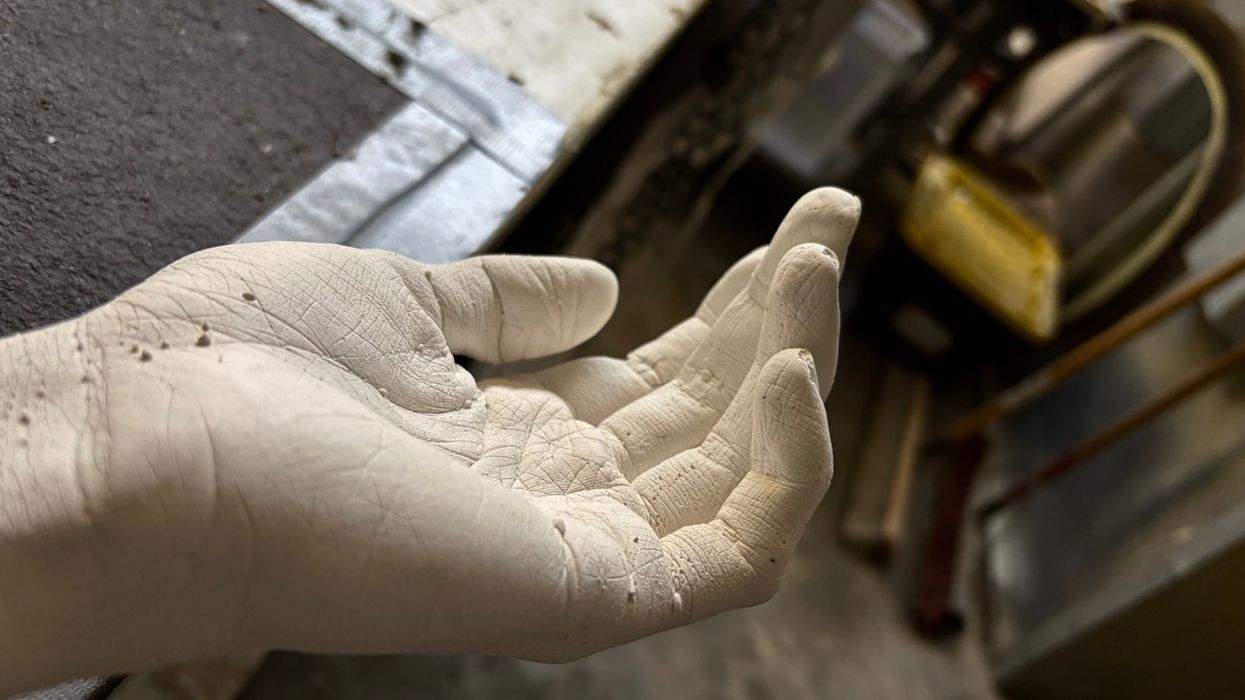

On Transgender Day of Visibility in 2026, I find myself reflecting not only as an artist but as a witness to a moment in history that feels increasingly urgent. I did not create Passion of the Crust to provoke for the sake of provocation. I created it because the world we are living in demanded it.
Keep up with the latest in LGBTQ+ news and politics. Sign up for The Advocate's email newsletter.
We are in a time where political forces are actively attempting to divide, to marginalize, and to erase the existence of transgender people—people who have fought tirelessly for visibility, dignity, and basic human rights. Across the United States, lawmakers are advancing restrictions on health care, education, and public life that directly target transgender people, reshaping how and whether they can exist openly. There is a deliberate effort to push this community back into silence, to strip away hard-won recognition, and to frame identity itself as something dangerous or invalid. This is not just policy; it is exclusion. It is a systematic attempt to make people disappear.
I could not stay silent in the face of that.
Passion of the Crust began as a call: persistent, unsettling, impossible to ignore. My work has always lived in the space between suffering and transcendence, between what is seen and what is denied. And today, that tension feels sharper than ever.
Years ago, I believed I had completed my exploration of Jesus through my Chocolate Jesus series. But something remained unresolved. The body remembers what the mind tries to close. I began to feel pulled back, compelled to revisit this figure, not as he has been historically confined, but as he exists beyond the limits we place on him.
This time, the vision was clear. Jesus could not belong to one identity, one gender, one interpretation—not now, not in this climate.
To present Jesus as transgender is not to redefine him; it is to reclaim him. It is to recognize a divinity that refuses confinement and reflects those most often pushed to the margins.
This Jesus is not divided. This Jesus is whole.
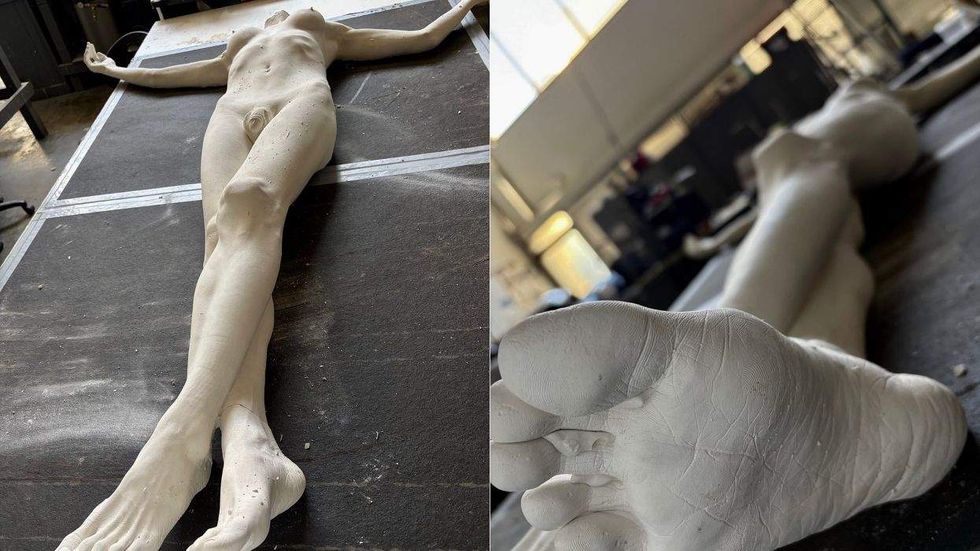 A transgender Jesus statue, created by artist Cosimo Cavallaro.Courtesty Cosimo Cavallaro
In this work, Jesus is understood through a transgender lens—not as a symbol of ambiguity, but as a lived reality that challenges rigid definitions of body, identity, and belonging. And in that truth, there is no room for exclusion—only recognition.
Because if Jesus represents divine love, then that love cannot be selectively applied. It cannot exclude transgender people. It cannot deny their existence. It cannot erase them.
And yet, that is exactly what we are witnessing in today’s political climate. That is why this work had to happen now.
The sculpture will be unveiled on May 17 and placed on a heated plate, where it will slowly melt over three hours. This is not destruction—it is transformation. The form dissolves, but the essence remains. What appears fixed begins to shift, revealing the fragility of imposed definitions. Identity, as we try to fix it, disappears, but what is true, what is human, what is divine, endures.
The melting becomes a metaphor for what is happening in our society. Systems may try to reshape or suppress identity, but they cannot erase the core of who we are. The transgender community will not be erased. Not now. Not ever.
This work exists because of Rain Batingana, who did not simply model for this piece; she embodied it. A transgender woman whose presence shaped the work itself, she represents transformation not as conflict, but as truth. In her presence, there is grace, generosity, and undeniable humanity. She does not ask for acceptance—she exists as proof of it.
Some will say this piece challenges religion. That is not my intention. What it challenges is limitation—within religion, within politics, within ourselves.
What it confronts is the idea that divinity can be controlled, categorized, or used as a tool to exclude.
If anything, this work asks a simple question: Who gets to belong? Because the answer should be: everyone.
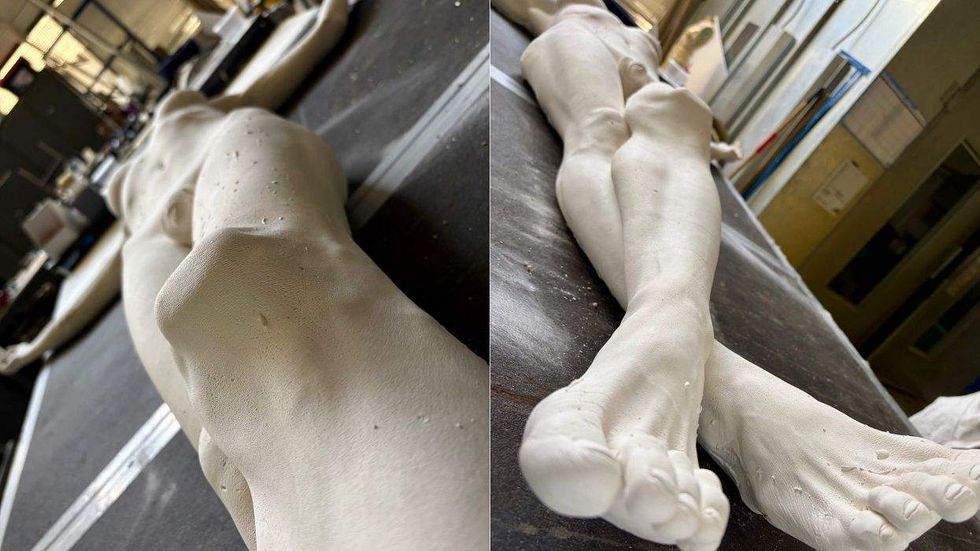 Artist Cosimo Cavallaro explains the meaning behind his transgender Jesus statue.Courtesy Cosimo Cavallaro
We are at a crossroads where silence becomes complicity. When policies and rhetoric seek to narrow who is deemed fully human, neutrality carries consequences. Where art must step forward and speak when others cannot or will not.
This piece is not an answer. It is an insistence—an insistence that transgender lives are real, valuable, and sacred. An insistence that no political movement can erase what is fundamentally human. An insistence that Jesus, if he represents anything, represents all of us.
As the sculpture melts, I will stand there with everyone else, watching it transform in real time. There is no script. No control. Only truth unfolding.
The body softens. The edges collapse. What remains is not the form we tried to fix, but the presence we cannot erase.
And perhaps that is the point.
Cosimo Cavallaro is an Italian Canadian contemporary artist whose work explores religion, identity, and the human body through provocative materials and large-scale installations.
Opinion is dedicated to featuring a wide range of inspiring personal stories and impactful opinions from the LGBTQ+ community and its allies. Visit Advocate.com/submit to learn more about submission guidelines. We welcome your thoughts and feedback on any of our stories. Email us at voices@equalpride.com. Views expressed in Voices stories are those of the guest writers, columnists, and editors, and do not directly represent the views of The Advocate or our parent company, equalpride.