'%3E%3Cpath d='M16.3574 35.6519H12.9537L15.0491 18.8873L16.3574 35.6519ZM30.4229 54.0093L22.309 0.994385H7.91795L0 54.0093H10.6634L11.5802 46.3855H17.4014L17.9914 54.0093H30.4229Z' fill='%23971B20'/%3E%3Cpath d='M48.2073 41.8813C48.2073 43.4049 47.4892 44.0011 46.1144 44.0011H43.7595V11.0687H46.1144C47.4892 11.0687 48.2073 11.6636 48.2073 13.1885V41.8813ZM59.5273 43.6695V11.3326C59.5273 3.71323 53.5729 0.994385 47.8157 0.994385H31.7213V54.0093H47.8157C53.5729 54.0093 59.5273 51.29 59.5273 43.6695Z' fill='%23971B20'/%3E%3Cpath d='M90.183 0.994385H78.6039L75.0711 30.6157L71.9955 0.994385H59.4346L69.2474 54.0093H80.373L90.183 0.994385Z' fill='%23971B20'/%3E%3Cpath d='M107.063 42.3448C107.063 43.7359 105.951 44.5974 104.643 44.5974C103.269 44.5974 102.157 43.7359 102.157 42.3448V12.658C102.157 11.2676 103.269 10.4058 104.643 10.4058C105.951 10.4058 107.063 11.2676 107.063 12.658V42.3448ZM119.233 43.2723V11.7312C119.233 6.36384 112.952 -3.8147e-06 104.643 -3.8147e-06C96.2667 -3.8147e-06 89.9867 6.36384 89.9867 11.7312V43.2723C89.9867 48.6393 96.2667 55 104.643 55C112.952 55 119.233 48.6393 119.233 43.2723Z' fill='%23971B20'/%3E%3Cpath d='M150.976 43.9349V33.7309H139.069V42.3448C139.069 43.7359 137.957 44.5974 136.582 44.5974C135.076 44.5974 133.964 43.7359 133.964 42.3448V12.658C133.964 11.2676 135.076 10.4058 136.582 10.4058C137.957 10.4058 139.069 11.2676 139.069 12.658V21.2723H150.976V11.0687C150.976 5.70107 145.283 -3.8147e-06 136.582 -3.8147e-06C127.75 -3.8147e-06 121.796 5.70107 121.796 11.0687V43.9349C121.796 49.3022 127.75 55 136.582 55C145.283 55 150.976 49.3022 150.976 43.9349Z' fill='%23971B20'/%3E%3Cpath d='M167.478 35.6519H164.076L166.17 18.8873L167.478 35.6519ZM181.544 54.0093L173.432 0.994385H159.037L151.123 54.0093H161.785L162.704 46.3855H168.523L169.114 54.0093H181.544Z' fill='%23971B20'/%3E%3Cpath d='M205.412 10.4058V0.994385H177.081V10.4058H185.392V54.0093H197.428V10.4058H205.412Z' fill='%23971B20'/%3E%3Cpath d='M230.002 54.0093V43.9349H218.914V31.8746H226.635V21.8028H218.914V10.4058H230.002V0.994385H206.875V54.0093H230.002Z' fill='%23971B20'/%3E%3C/g%3E%3Cdefs%3E%3CclipPath id='clip0_260_7080'%3E%3Crect width='230' height='55' fill='white'/%3E%3C/clipPath%3E%3C/defs%3E%3C/svg%3E)

This article was written by Daniel Max, co-owner of JP Centre Yoga
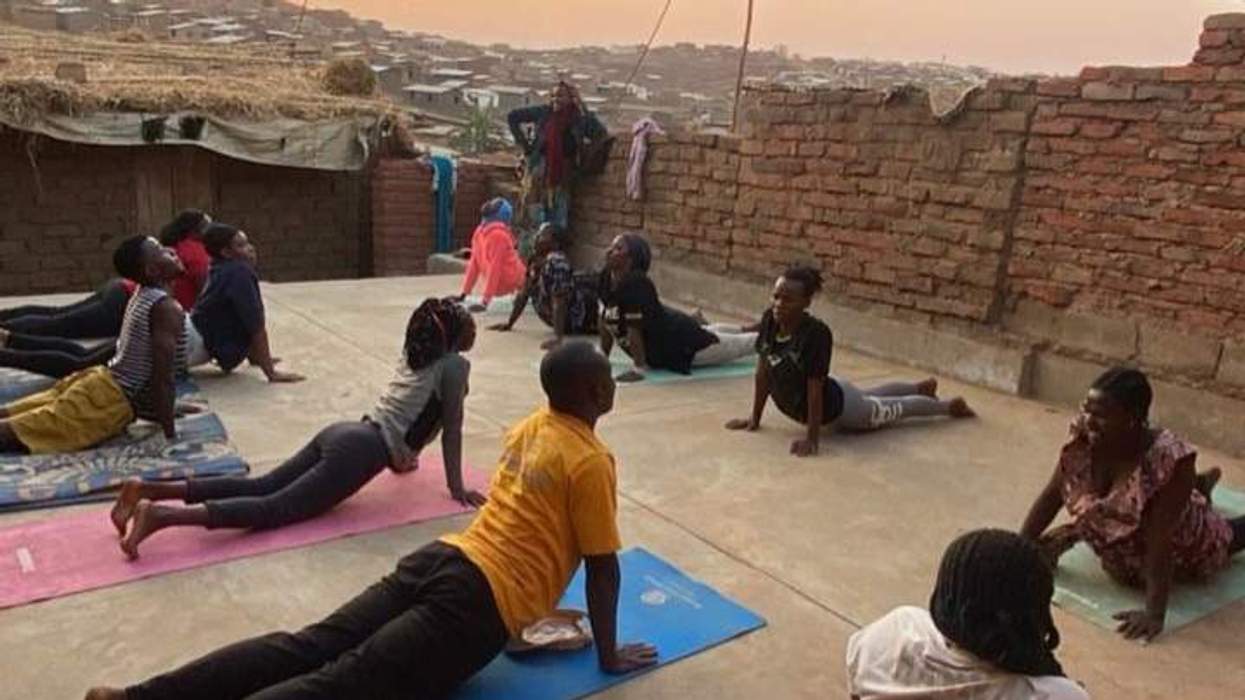
Yoga is often marketed through images of boutique studios, designer mats, and luxury wellness retreats. But in Dzaleka Refugee Camp in Malawi on the continent of Africa, home to more than 60,000 people disrupted by war and political violence, yoga looks very different.
There are no spa packages or high-end memberships. Instead, yoga classes are free for participants in a modest studio built through grassroots donations. The teachers are refugees themselves and certified yogis. And the purpose is simple: to help people heal, breathe, and self-regulate as they rebuild their lives.
Today, a team of refugees trained and compensated through a collaboration with JP Centre Yoga in Boston teaches more than 30 yoga classes each week inside the camp. Thousands of refugees participate every month in sessions designed to support physical and mental well-being in a community navigating trauma, poverty, food insecurity, and the long uncertainty of displacement.
Our story is a powerful reminder that, long after wars fade from headlines, ordinary people bound by the guiding principles of yoga are quietly helping people around the world rebuild their lives. The partnership began in 2023 when Donatien Fundi, a refugee living in Dzaleka, wrote to our Boston studio about the scholarship and fellowship programs that help disadvantaged people become certified yoga instructors. Fundi had discovered yoga on his own and found it deeply healing while coping with the trauma of war and forced migration. He thought that becoming certified in yoga would help him further support many fellow refugees in rebuilding their lives, starting with their own health and well-being.
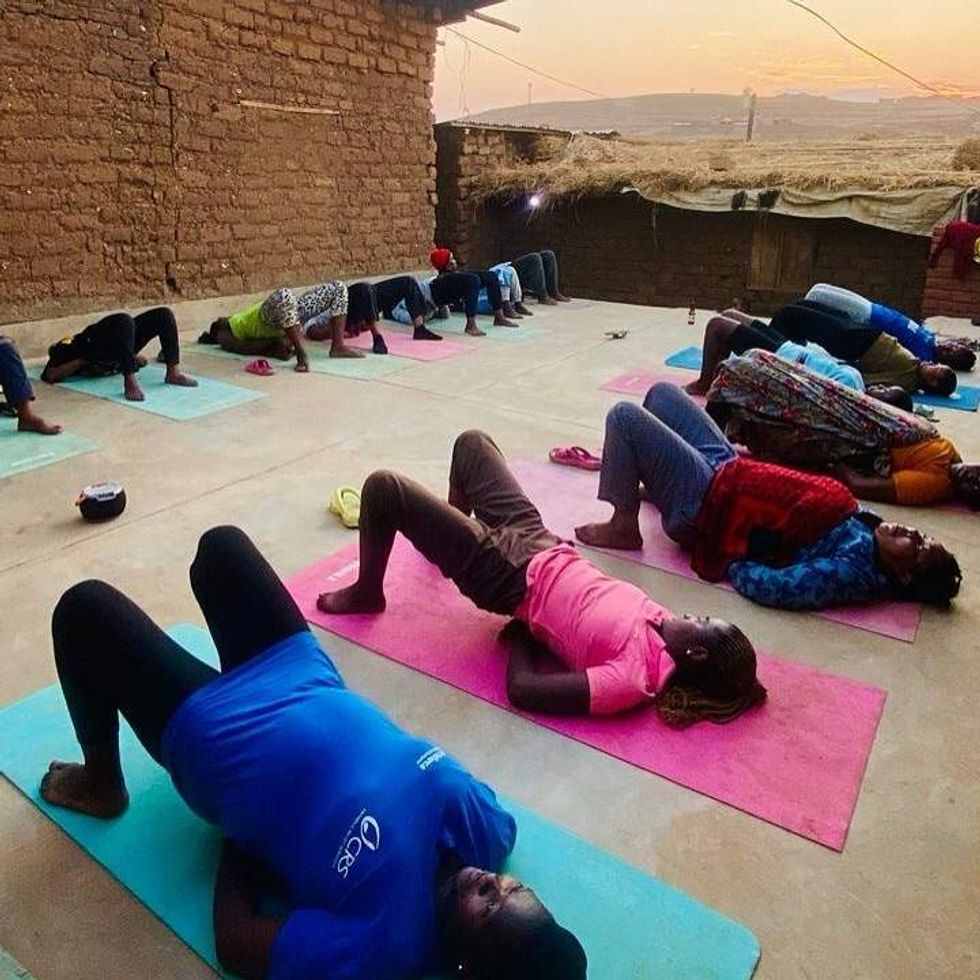 In the early days of the yoga program, participants often practiced outdoors. The program now has dedicated studio, thanks to donations.Facebook/JP Centre Yoga
But geography and infrastructure posed major challenges. The camp’s limited internet access and a seven-hour time difference made it nearly impossible to participate in a traditional online training program. As an owner of JP Centre Yoga and the program's overseer, I improvised with Fundi to make it happen. Instead of scheduled virtual classes, we began meeting one-on-one through WhatsApp video calls. Week by week, thousands of miles apart, we built Fundi’s practice and teaching skills.
What began as a single mentorship slowly expanded. More refugees joined the sessions. The weekly calls evolved into a full teacher-training program meeting twice a week online, with the goal of training instructors who could bring yoga throughout the camp. As the program grew, so did the vision and the involvement of financial benefactors who were connected to our yoga studio in Boston. Overwhelmed by the support, we went to work expanding the program.
Classes that once took place on dusty ground beneath the hot African sun now happen inside a dedicated yoga studio — built through small donations from members of the Boston community. Equipped with mats and props, the space offers trauma-informed practices and free community classes for refugees of all ages.
After completing the yoga studio space in 2025, I traveled to Dzaleka alongside mindfulness teacher Abraham Dejene to complete the training in person over two visits spaced six months apart. The immersion allowed for deeper instruction and for us to witness life inside the camp firsthand and the impact the yoga program was having. Each day included hours of study, practice, and discussion. It also offered something participants rarely experience: reliable meals. During training, participants received two daily meals of protein-rich foods, which many refugees in the camp can afford only once or twice a year due to high food costs. Since then, the program has graduated 14 internationally certified yoga teachers leading classes that positively impact thousands.
Today, those teachers offer classes in the studio and in schools throughout the camp, including specialized programs for children, adults, and people with disabilities. All refugees attend free of charge. Teachers receive monthly salaries funded by individual donors from the Boston yoga community, who sponsor both staff compensation and weekly meals for the teaching team.
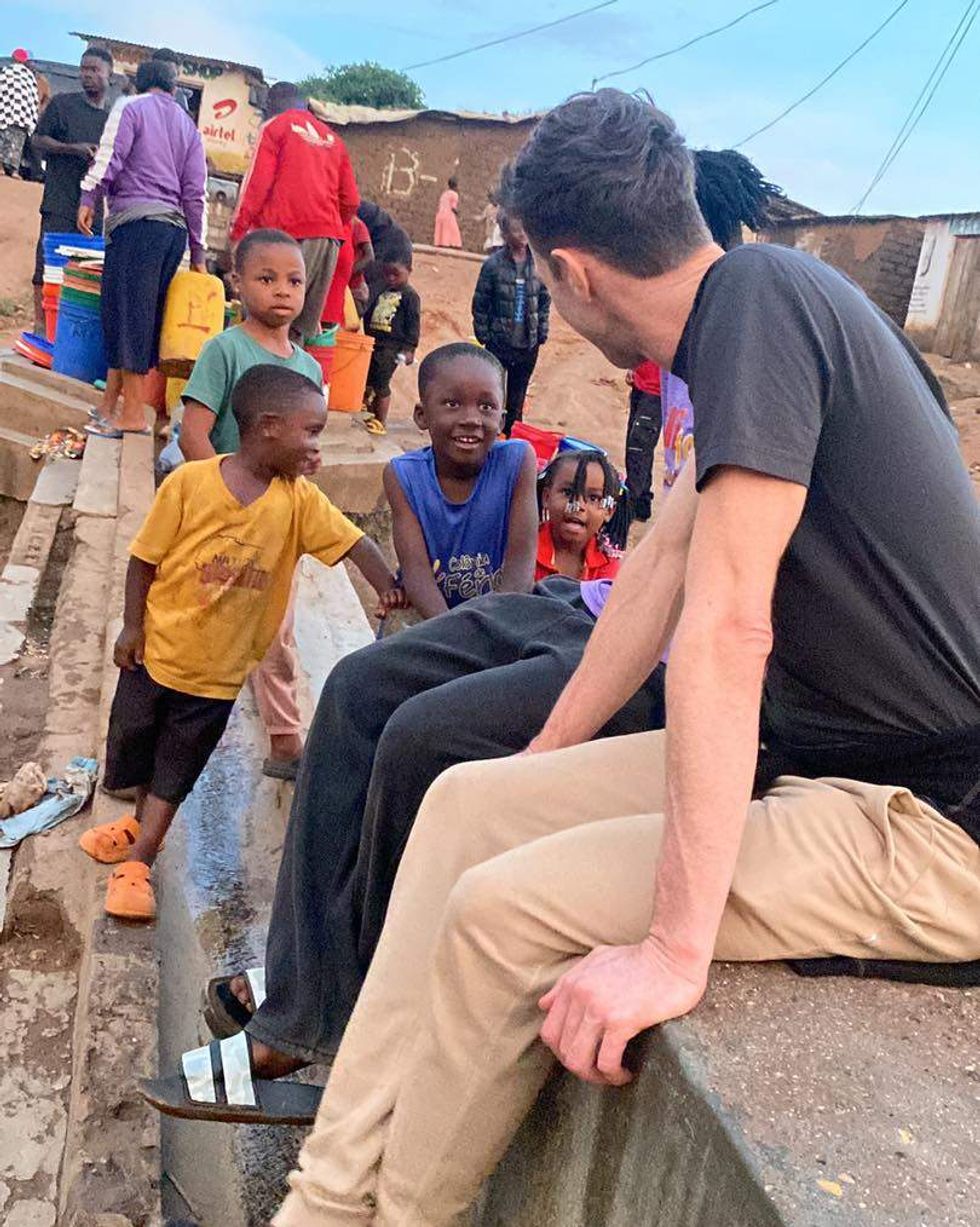 Daniel Max chats with some of the children living at Dzaleka Refugee CampFacebook/JP Centre Yoga
To understand why the program matters so much, it helps to understand Dzaleka itself.
Originally built for about 10,000 residents, the camp now holds nearly six times that number. Refugees come from across the region, including the Democratic Republic of the Congo, Burundi, and Rwanda. Many families have lived there for decades.
Under Malawi’s refugee policies, residents are not legally permitted to work outside the camp. Most survive on small stipends and whatever opportunities they can create internally. That makes locally led initiatives like the yoga program particularly meaningful. While international donors provide financial support, the classes, operations, and programming are entirely organized and led by refugees themselves.
Community sessions regularly draw more than fifty participants. Sometimes the room fills so completely that the teacher stands outside the doorway so everyone else can fit inside.
And the project continues to grow.
Construction is now underway to expand the building with a mental health counseling room, a community kitchen that will serve meals to those in need, and a small office with computers where staff can learn practical skills like email communication and spreadsheets — tools that could help open doors to opportunities beyond the camp.
In Dzaleka, care often appears in quiet, everyday ways. Teachers volunteered long before salaries were possible. Families share food even when resources are scarce. And the relationships sustaining the yoga program reflect that same spirit — sponsors supporting teachers, teachers supporting their neighbors, and a community committed to lifting one another up. These circles of support echo something familiar to me within the LGBTQIA+ community: the idea of chosen family. When traditional systems fail, people can and do build their own networks of care.
Amid global conflicts and divisive debates, stories like this remind us of something quieter but just as powerful: people — both within and outside communities affected by war — are helping others rebuild their lives in small, meaningful ways. And sometimes, that rebuilding begins with something as simple as a yoga mat and a shared commitment to helping people overcome and thrive in circumstances they did not create.
Daniel Max has been teaching yoga for over two decades. He is co-owner of JP Centre Yoga, a queer-owned, nationally recognized, award-winning studio in Boston, known for lifting social and structural barriers to make yoga more accessible and inclusive.