'%3E%3Cpath d='M16.3574 35.6519H12.9537L15.0491 18.8873L16.3574 35.6519ZM30.4229 54.0093L22.309 0.994385H7.91795L0 54.0093H10.6634L11.5802 46.3855H17.4014L17.9914 54.0093H30.4229Z' fill='%23971B20'/%3E%3Cpath d='M48.2073 41.8813C48.2073 43.4049 47.4892 44.0011 46.1144 44.0011H43.7595V11.0687H46.1144C47.4892 11.0687 48.2073 11.6636 48.2073 13.1885V41.8813ZM59.5273 43.6695V11.3326C59.5273 3.71323 53.5729 0.994385 47.8157 0.994385H31.7213V54.0093H47.8157C53.5729 54.0093 59.5273 51.29 59.5273 43.6695Z' fill='%23971B20'/%3E%3Cpath d='M90.183 0.994385H78.6039L75.0711 30.6157L71.9955 0.994385H59.4346L69.2474 54.0093H80.373L90.183 0.994385Z' fill='%23971B20'/%3E%3Cpath d='M107.063 42.3448C107.063 43.7359 105.951 44.5974 104.643 44.5974C103.269 44.5974 102.157 43.7359 102.157 42.3448V12.658C102.157 11.2676 103.269 10.4058 104.643 10.4058C105.951 10.4058 107.063 11.2676 107.063 12.658V42.3448ZM119.233 43.2723V11.7312C119.233 6.36384 112.952 -3.8147e-06 104.643 -3.8147e-06C96.2667 -3.8147e-06 89.9867 6.36384 89.9867 11.7312V43.2723C89.9867 48.6393 96.2667 55 104.643 55C112.952 55 119.233 48.6393 119.233 43.2723Z' fill='%23971B20'/%3E%3Cpath d='M150.976 43.9349V33.7309H139.069V42.3448C139.069 43.7359 137.957 44.5974 136.582 44.5974C135.076 44.5974 133.964 43.7359 133.964 42.3448V12.658C133.964 11.2676 135.076 10.4058 136.582 10.4058C137.957 10.4058 139.069 11.2676 139.069 12.658V21.2723H150.976V11.0687C150.976 5.70107 145.283 -3.8147e-06 136.582 -3.8147e-06C127.75 -3.8147e-06 121.796 5.70107 121.796 11.0687V43.9349C121.796 49.3022 127.75 55 136.582 55C145.283 55 150.976 49.3022 150.976 43.9349Z' fill='%23971B20'/%3E%3Cpath d='M167.478 35.6519H164.076L166.17 18.8873L167.478 35.6519ZM181.544 54.0093L173.432 0.994385H159.037L151.123 54.0093H161.785L162.704 46.3855H168.523L169.114 54.0093H181.544Z' fill='%23971B20'/%3E%3Cpath d='M205.412 10.4058V0.994385H177.081V10.4058H185.392V54.0093H197.428V10.4058H205.412Z' fill='%23971B20'/%3E%3Cpath d='M230.002 54.0093V43.9349H218.914V31.8746H226.635V21.8028H218.914V10.4058H230.002V0.994385H206.875V54.0093H230.002Z' fill='%23971B20'/%3E%3C/g%3E%3Cdefs%3E%3CclipPath id='clip0_260_7080'%3E%3Crect width='230' height='55' fill='white'/%3E%3C/clipPath%3E%3C/defs%3E%3C/svg%3E)
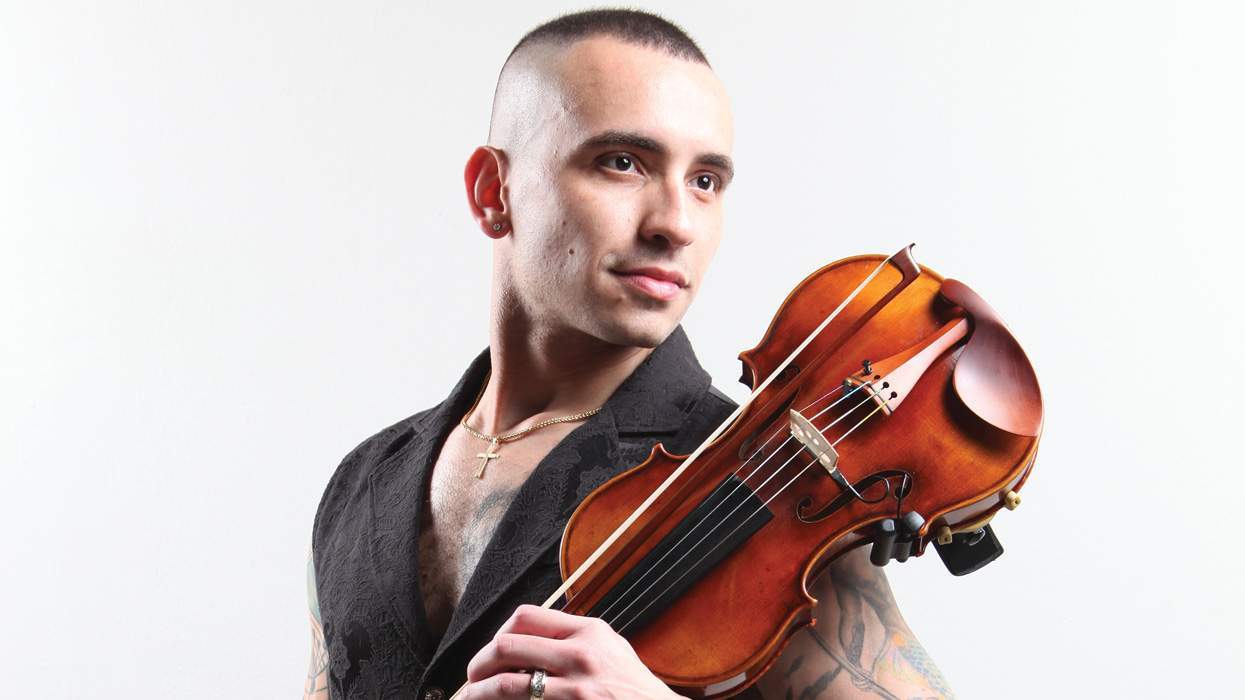

Marcos Aycox is an acclaimed musician who’s played at Carnegie Hall, shared the stage with Broadway stars like Tituss Burgess, Jonathan Groff, and Nina West, and collaborated with artistic legends like Sir James Galway, Deborah Voigt, and Natasha Trethewey. But life for Aycox, known professionally as The Tatted Violinist, hasn’t always been easy. In fact, his story is one of amazing perseverance through often brutal circumstances. However, music, he says, has been a guiding light throughout.
Aycox grew up in São Paulo where he says life was simply about “survival.” But discovering his love for music, particularly playing the violin, gave him the strength and determination to keep pushing forward. Music became his “sanctuary.”
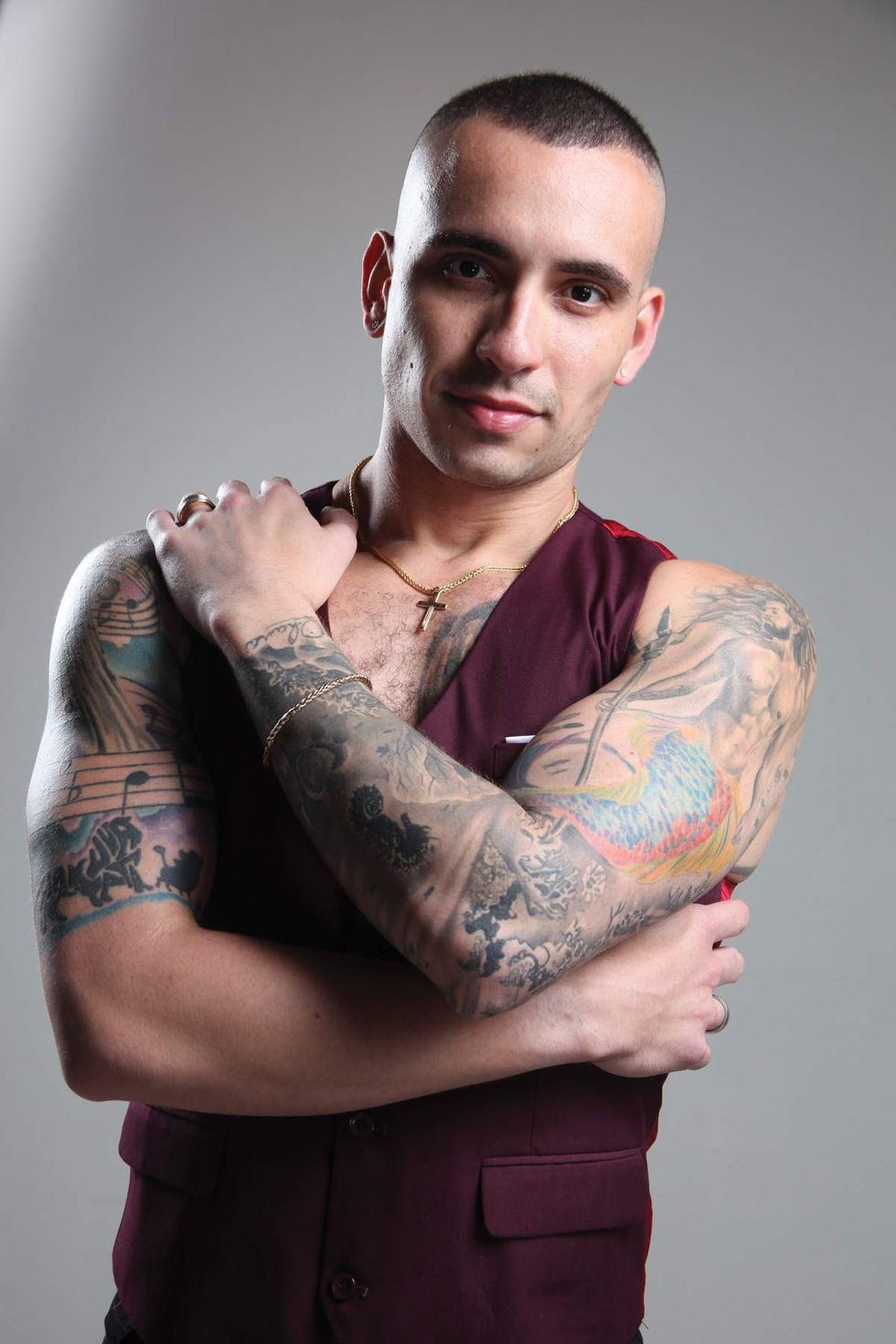 Marcos Aycox, aka The Tatted Violinistcourtesy The Tatted Violinist
“I was born and raised in Bauru, a city of [around] 300,000 people in the state of São Paulo. Life there was about survival,” Aycox says. “It was loud, fast, and full of contrast — beauty and struggle living side by side.”
He explains that the “deeply religious environment” he was raised in made things even more complicated. “I didn’t really have the luxury of discovering myself freely as a child.… So I learned how to shrink. How to edit myself. How to exist in a way that wouldn’t get me in trouble.”
In addition to the challenges he faced at home, Aycox says the streets of Bauru often proved to be more difficult. And violent.
“I was bullied,” he recalls. “Not just teased — bullied in a way that leaves marks. I was called gay before I even understood what that meant. I was beaten. I had my teeth knocked out. It was physical. It was emotional. It was constant.”
Again, music acted as his savior. Aycox says he kept at it and “started advancing,” and even began teaching music at the city’s symphony orchestra in his early teens. That’s when he says “things began to shift.”
“Music was the one place I didn’t have to lie,” says Aycox. “It became my sanctuary — the only place where I felt free from everything else. I actually started with piano, then wanted to play the flute, but somehow ended up with the violin. And that instrument…it changed everything. The violin felt like a voice I wasn’t allowed to have out loud. It cried for me. It screamed for me. It told the truth when I couldn’t.… You don’t perform emotion — you live it first.”
 Marcos and his violin.courtesy The Tatted Violinist
At 17, Aycox decided to flee his troubled life in Brazil and migrate to the U.S., following in the footsteps of a cousin who’d already done so on a musical scholarship. A year later, he was accepted into the University of Southern Mississippi with a full scholarship.
“I landed in the U.S. at the age of 18 thinking I had this incredible opportunity — and immediately realized I was still broke,” he says. “Still responsible for bills I didn’t understand, in a language I didn’t speak, in a place I had never been.”
It was in Mississippi that he met his now-husband, Michael Aycox (who also happens to be the first out gay man to run for Congress in the state). While his own inner strength and love for music had carried him this far, Aycox says it was Michael who ultimately brought the love, support, and humanity he’d largely been lacking in his life.
“When I met Michael, I had nothing,” he says. “I was homeless. I was living in my car. I hadn’t eaten a real meal in days. I was showering at a friend’s house to hold myself together. So, when people talk about love like it’s this polished, perfect thing…that’s not my story.”
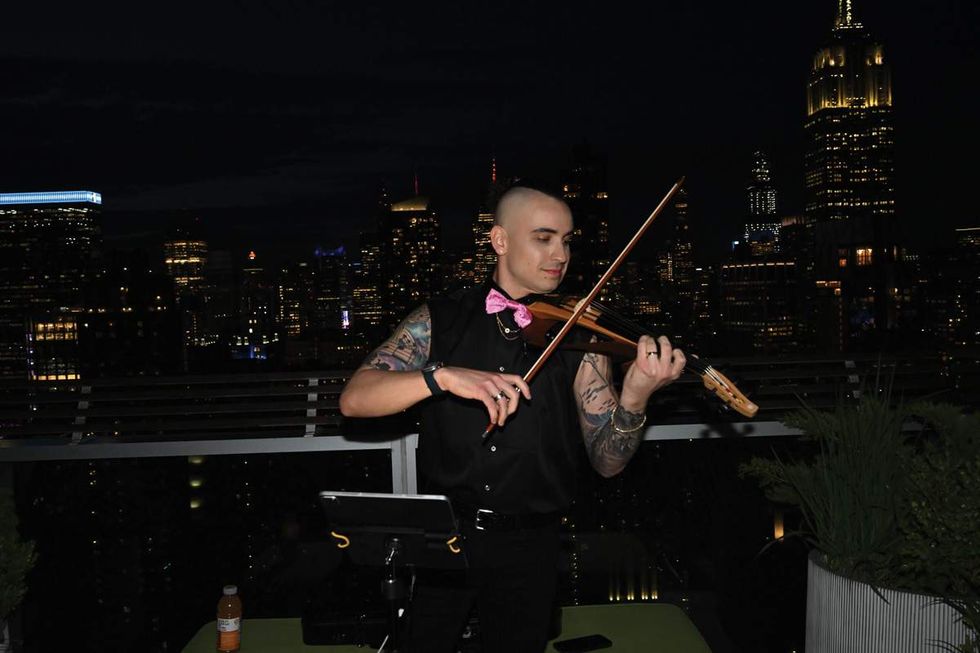 Marcos performs at Out and The Advocate’s 'Pride of Broadway' gala in NYC, June 2024.Slaven Vlasic/Getty Images
“We met in the middle of survival,” Aycox continues. “And what’s crazy is, he didn’t see me as broken. He saw me. Not the situation. Not the struggle. Not the instability. Me. And I will never forget what he said to me after our first date: ‘Tonight, you’re coming home with me. And when you get there, you never have to leave. No matter what happens between us — relationship or not — you have a home.’ Who does that? Who shows up like that? In a world where people are so quick to judge, to discard, to look away — he chose to show up.… And I never left.”
“Michael is my biggest cheerleader, my harshest critic, the biggest pain in my ass — and the person who believes in me more than anyone else ever has,” he adds. “But more than that, he gave me something I didn’t even realize I was missing: safety. Not the kind that makes you small — the kind that lets you expand. He didn’t try to control me. He didn’t try to reshape me. He pushed me. He challenged me. He forced me to see something bigger in myself when I wasn’t ready to.”
As both an immigrant and queer person now living in the U.S., Aycox expresses his disappointment with the far-right extremism of the current administration.
“It’s heavy. There’s no way to soften that. Because I’ve lived both sides of it,” he says solemnly. “On May 24, 2024, I became a United States citizen. And I remember that day so clearly — it felt like everything I had fought for finally meant something. It felt like it was OK to be gay. It was OK to be married. It was OK to exist freely. It felt like hope. And now…it feels different.”
“And I don’t say that lightly,” he adds, noting that it’s not even about politics at this point. “This is about humanity.… The moment we start deciding which humans matter more than others, something is broken. The moment we take children away from their families, remove people from the only homes they’ve known, erase the dignity of people who have spent years building a life here — we have lost the plot.”
“We’ve forgotten what it means to look at another human being and just say, You matter,” he adds. “Not because of where you were born. Not because of who you love. Not because of what you contribute. Just because you exist.”
Aycox shares his current plea to the world: “Be the person who shows up. Be the person who chooses kindness when it’s not convenient. Be the person who sees someone else — fully — and doesn’t turn away. Because that’s where change starts.”
This article is part of The Advocate’s May-June 2026 print issue, which hits newsstands May 26. Support queer media and subscribe — or download the issue through Apple News+, Zinio, Nook, or PressReader.