'%3E%3Cpath d='M16.3574 35.6519H12.9537L15.0491 18.8873L16.3574 35.6519ZM30.4229 54.0093L22.309 0.994385H7.91795L0 54.0093H10.6634L11.5802 46.3855H17.4014L17.9914 54.0093H30.4229Z' fill='%23971B20'/%3E%3Cpath d='M48.2073 41.8813C48.2073 43.4049 47.4892 44.0011 46.1144 44.0011H43.7595V11.0687H46.1144C47.4892 11.0687 48.2073 11.6636 48.2073 13.1885V41.8813ZM59.5273 43.6695V11.3326C59.5273 3.71323 53.5729 0.994385 47.8157 0.994385H31.7213V54.0093H47.8157C53.5729 54.0093 59.5273 51.29 59.5273 43.6695Z' fill='%23971B20'/%3E%3Cpath d='M90.183 0.994385H78.6039L75.0711 30.6157L71.9955 0.994385H59.4346L69.2474 54.0093H80.373L90.183 0.994385Z' fill='%23971B20'/%3E%3Cpath d='M107.063 42.3448C107.063 43.7359 105.951 44.5974 104.643 44.5974C103.269 44.5974 102.157 43.7359 102.157 42.3448V12.658C102.157 11.2676 103.269 10.4058 104.643 10.4058C105.951 10.4058 107.063 11.2676 107.063 12.658V42.3448ZM119.233 43.2723V11.7312C119.233 6.36384 112.952 -3.8147e-06 104.643 -3.8147e-06C96.2667 -3.8147e-06 89.9867 6.36384 89.9867 11.7312V43.2723C89.9867 48.6393 96.2667 55 104.643 55C112.952 55 119.233 48.6393 119.233 43.2723Z' fill='%23971B20'/%3E%3Cpath d='M150.976 43.9349V33.7309H139.069V42.3448C139.069 43.7359 137.957 44.5974 136.582 44.5974C135.076 44.5974 133.964 43.7359 133.964 42.3448V12.658C133.964 11.2676 135.076 10.4058 136.582 10.4058C137.957 10.4058 139.069 11.2676 139.069 12.658V21.2723H150.976V11.0687C150.976 5.70107 145.283 -3.8147e-06 136.582 -3.8147e-06C127.75 -3.8147e-06 121.796 5.70107 121.796 11.0687V43.9349C121.796 49.3022 127.75 55 136.582 55C145.283 55 150.976 49.3022 150.976 43.9349Z' fill='%23971B20'/%3E%3Cpath d='M167.478 35.6519H164.076L166.17 18.8873L167.478 35.6519ZM181.544 54.0093L173.432 0.994385H159.037L151.123 54.0093H161.785L162.704 46.3855H168.523L169.114 54.0093H181.544Z' fill='%23971B20'/%3E%3Cpath d='M205.412 10.4058V0.994385H177.081V10.4058H185.392V54.0093H197.428V10.4058H205.412Z' fill='%23971B20'/%3E%3Cpath d='M230.002 54.0093V43.9349H218.914V31.8746H226.635V21.8028H218.914V10.4058H230.002V0.994385H206.875V54.0093H230.002Z' fill='%23971B20'/%3E%3C/g%3E%3Cdefs%3E%3CclipPath id='clip0_260_7080'%3E%3Crect width='230' height='55' fill='white'/%3E%3C/clipPath%3E%3C/defs%3E%3C/svg%3E)

The LGBTQ+ Victory Institute’s International Leaders Conference in Washington, D.C., opened its second day with a rare scene: Three of the nation’s top law enforcement officials detailed what it means to confront a federal government they describe as destabilizing democratic norms in real time.
Keep up with the latest in LGBTQ+ news and politics. Sign up for The Advocate's email newsletter.
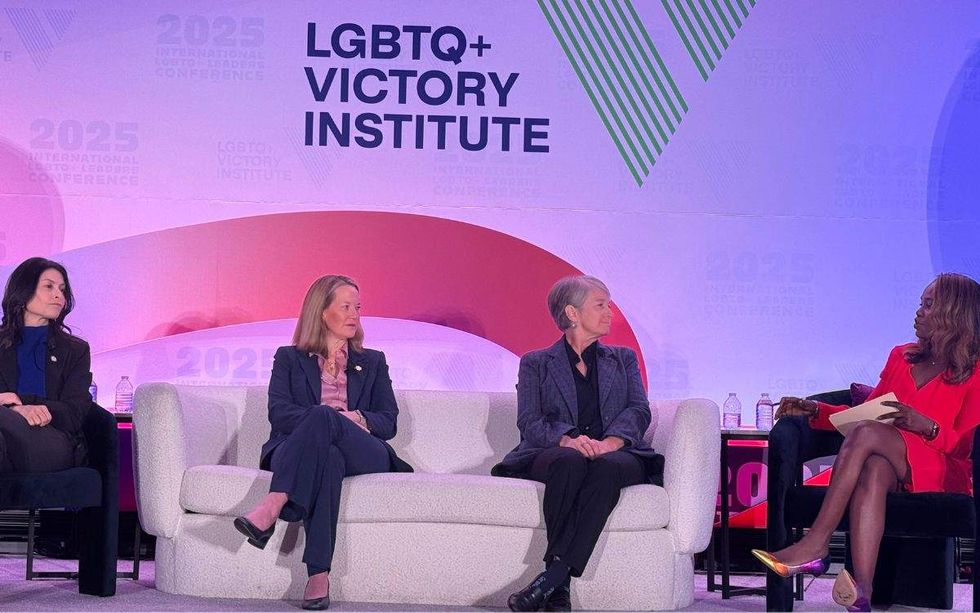
The Friday plenary, titled “Women + Power: Attorneys General Defending Equality and Justice,” brought Hawaii Attorney General Anne Lopez, Arizona Attorney General Kris Mayes, and Michigan Attorney General Dana Nessel to the stage of the JW Marriott’s grand ballroom. Moderated by former White House Press Secretary Karine Jean-Pierre, the session evolved into an unvarnished assessment of the country’s political trajectory, the fragility of civil rights, and the unprecedented coalition of Democratic attorneys general now serving as the legal spine of the resistance to Trump-era federal power.
In one of the starkest public assessments yet from state leaders on the front lines of the legal battles against the second Trump administration, the three out lesbian attorneys general warned that marriage equality, once considered settled constitutional law, is now in peril as federal attacks on civil rights accelerate nationwide. Their message: The next phase of the fight for LGBTQ+ equality may be more volatile than anything the movement has confronted in a generation.
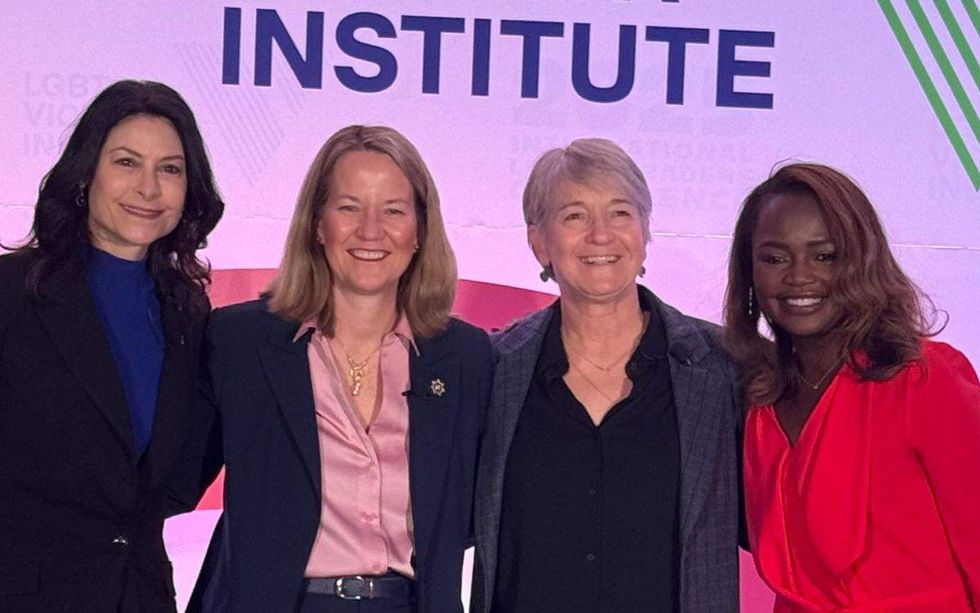 From left: Michigan Attorney General Dana Nessel, Arizona Attorney General Kris Mayes, Hawaii Attorney General Anne Lopez, and former White House Press Secretary Karine Jean-Pierre at the 2025 International LGBTQ+ Leadership Conference.Christopher Wiggins for The Advocate
Jean-Pierre opened the conversation by returning to a theme she emphasized in earlier remarks to The Advocate: LGBTQ+ women remain dramatically underrepresented in public office, yet those who do hold power are shaping some of the most consequential frontline democratic battles in the country, from defending elections to protecting civil rights to keeping vulnerable communities from being targeted by the federal government.
Related: Number of LGBTQ+ elected officials continues to grow, but more needed for equitable representation
“This is not just policy, not just politics,” she said. “It is about navigating high-stakes challenges in a volatile national landscape.”
“Fighting for democracy” has become the job description
Lopez, who leads Hawaii’s justice system as an appointed and Senate-confirmed attorney general, described the profound shift in her office’s mission. She said the Democratic attorneys general — now 24, with Virginia’s addition — had been preparing for the current legal environment before the president was even sworn in.
“I never thought I would be a leader of an office that is actually fighting for democracy,” Lopez said. “What I want everybody to hear is that on January 20, the Democratic attorneys general were already prepared, already collaborating, and already dedicated to this fight.”
Related: Joe Biden to receive top honor at LGBTQ+ leadership conference for his contributions to equality
Her blue state’s challenges differ from those in more polarized regions, she noted, but the national implications are impossible to ignore. Hawaii’s civil rights fight manifests in health care, housing, and education, areas where federal overreach can be devastating, she explained.
Mayes: “If all I ever do with the rest of my life is fight for democracy, I’ll be OK”
Mayes, whose 280-vote victory in 2022 became a symbol of just how thin the nation’s Democratic margins have become, was simultaneously blunt and wry. She referred to herself, jokingly, as “landslide Mayes,” a reminder that the entire legal posture of a frontline swing state can hinge on a few hundred votes.
Mayes has sued the administration more than 30 times. When reporters ask whether she fears political retaliation or worries about reelection, she tells them, “I’m a 54-year-old woman, and if all I ever do with the rest of my life is spend the next year and a half standing up for American democracy, I’ll be OK,” she told the audience.
Courtroom battles are only the visible part of the work, she said. Behind the scenes, the Democratic AGs meet by Zoom every other day — and sometimes daily — to coordinate litigation, share intel, and divide responsibilities. “We check our egos at the door,” she said. “Maybe it’s because none of us are running for president.” She added, “yet,” to chuckles in the room.
That strategy, Mayes argued, is succeeding. The group has won roughly 80 percent of its cases at the district court level, victories that have returned millions, and in some states, billions — in federal funds that would otherwise have been lost.
But Mayes’s deepest concerns lie ahead: attempts to commandeer state election processes, federal interference at polling places, and what she described as “very difficult waters” for marriage equality. “They are going to attempt to chip away at marriage rights at the federal level,” she said.
'The only thing a bully understands is fighting back'
Nessel, a longtime civil rights litigator who helped win the state’s marriage equality case before the U.S. Supreme Court consolidated it into Obergefell, delivered some of the morning’s most impassioned remarks.
The threats to democratic governance, she said, have seeped into every corner of her office. Michigan faces constant lawsuits designed to suppress votes, especially in cities with large Democratic populations. The state is still prosecuting individuals involved in the fake electors scheme, and her office must regularly confront threats against election officials, judges, and even county canvassers, she explained.
“It is now a feature of the job,” she said. “If we do not have Democratic attorneys general in the swing states, I don’t know what shot we’re going to have at making sure the real winners of our elections get their electoral votes.”
Nessel issued the morning’s clearest imperative: “Appeasement does not work. The only thing a bully like Donald Trump and his administration understands is fighting back with everything that you have.”
LGBTQ+ identity as ethical compass, not political liability
When Jean-Pierre asked how their identities as LGBTQ+ women shape their leadership, Lopez said that the experience of introspection and vulnerability that comes with being queer has translated into a leadership style rooted in respect and compassion.
Mayes said voters simply want “a fighter” and that being LGBTQ+ often means learning that resilience early. Nessel, true to form, took a more comedic but unapologetically political angle, noting her pride in her wife and kids and delighting the room with one of her most quoted lines about drag queens: “People love their drag queens,” she said. “I’ll run on that platform all day.”
The path forward: courts, crowds, courage
As the session drew to a close, Mayes offered the three forces she believes will determine whether democracy survives the current era: the courts, the crowds, and courage.
“I believe that previous generations who fought and sacrificed for this country are speaking to us across the ages,” she said. “They are saying: fight. Fight for your country — and do it now, because two years from now is too late.”