'%3E%3Cpath d='M16.3574 35.6519H12.9537L15.0491 18.8873L16.3574 35.6519ZM30.4229 54.0093L22.309 0.994385H7.91795L0 54.0093H10.6634L11.5802 46.3855H17.4014L17.9914 54.0093H30.4229Z' fill='%23971B20'/%3E%3Cpath d='M48.2073 41.8813C48.2073 43.4049 47.4892 44.0011 46.1144 44.0011H43.7595V11.0687H46.1144C47.4892 11.0687 48.2073 11.6636 48.2073 13.1885V41.8813ZM59.5273 43.6695V11.3326C59.5273 3.71323 53.5729 0.994385 47.8157 0.994385H31.7213V54.0093H47.8157C53.5729 54.0093 59.5273 51.29 59.5273 43.6695Z' fill='%23971B20'/%3E%3Cpath d='M90.183 0.994385H78.6039L75.0711 30.6157L71.9955 0.994385H59.4346L69.2474 54.0093H80.373L90.183 0.994385Z' fill='%23971B20'/%3E%3Cpath d='M107.063 42.3448C107.063 43.7359 105.951 44.5974 104.643 44.5974C103.269 44.5974 102.157 43.7359 102.157 42.3448V12.658C102.157 11.2676 103.269 10.4058 104.643 10.4058C105.951 10.4058 107.063 11.2676 107.063 12.658V42.3448ZM119.233 43.2723V11.7312C119.233 6.36384 112.952 -3.8147e-06 104.643 -3.8147e-06C96.2667 -3.8147e-06 89.9867 6.36384 89.9867 11.7312V43.2723C89.9867 48.6393 96.2667 55 104.643 55C112.952 55 119.233 48.6393 119.233 43.2723Z' fill='%23971B20'/%3E%3Cpath d='M150.976 43.9349V33.7309H139.069V42.3448C139.069 43.7359 137.957 44.5974 136.582 44.5974C135.076 44.5974 133.964 43.7359 133.964 42.3448V12.658C133.964 11.2676 135.076 10.4058 136.582 10.4058C137.957 10.4058 139.069 11.2676 139.069 12.658V21.2723H150.976V11.0687C150.976 5.70107 145.283 -3.8147e-06 136.582 -3.8147e-06C127.75 -3.8147e-06 121.796 5.70107 121.796 11.0687V43.9349C121.796 49.3022 127.75 55 136.582 55C145.283 55 150.976 49.3022 150.976 43.9349Z' fill='%23971B20'/%3E%3Cpath d='M167.478 35.6519H164.076L166.17 18.8873L167.478 35.6519ZM181.544 54.0093L173.432 0.994385H159.037L151.123 54.0093H161.785L162.704 46.3855H168.523L169.114 54.0093H181.544Z' fill='%23971B20'/%3E%3Cpath d='M205.412 10.4058V0.994385H177.081V10.4058H185.392V54.0093H197.428V10.4058H205.412Z' fill='%23971B20'/%3E%3Cpath d='M230.002 54.0093V43.9349H218.914V31.8746H226.635V21.8028H218.914V10.4058H230.002V0.994385H206.875V54.0093H230.002Z' fill='%23971B20'/%3E%3C/g%3E%3Cdefs%3E%3CclipPath id='clip0_260_7080'%3E%3Crect width='230' height='55' fill='white'/%3E%3C/clipPath%3E%3C/defs%3E%3C/svg%3E)
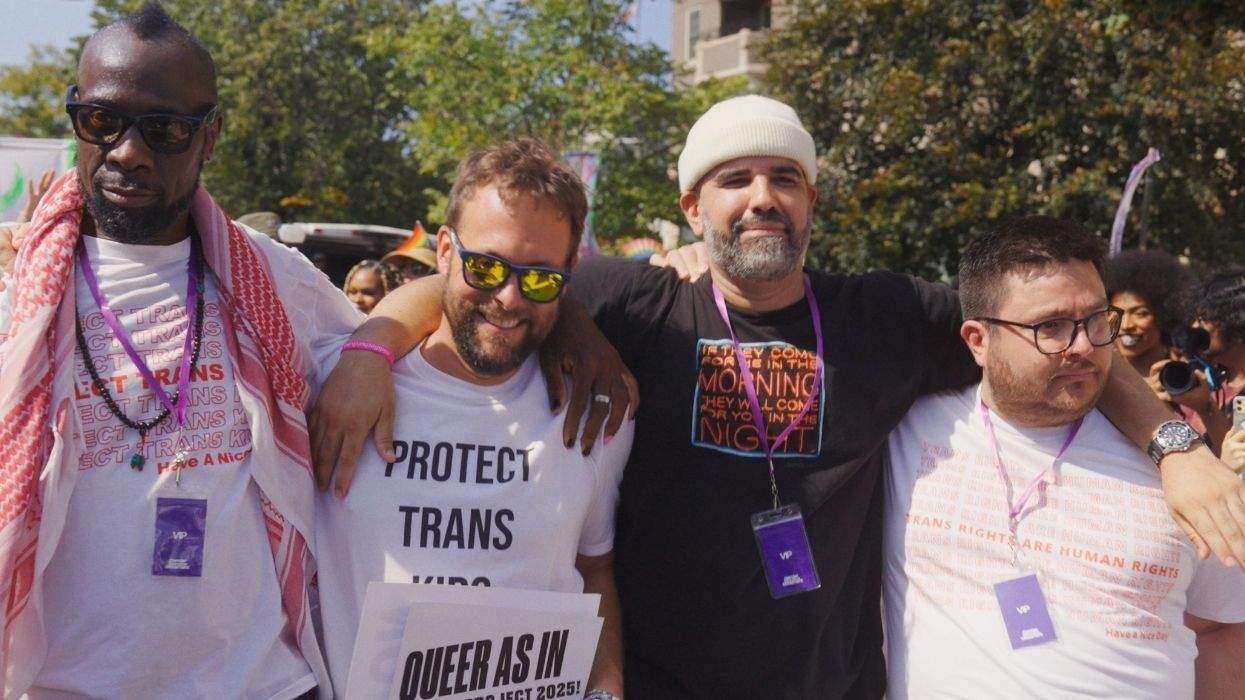

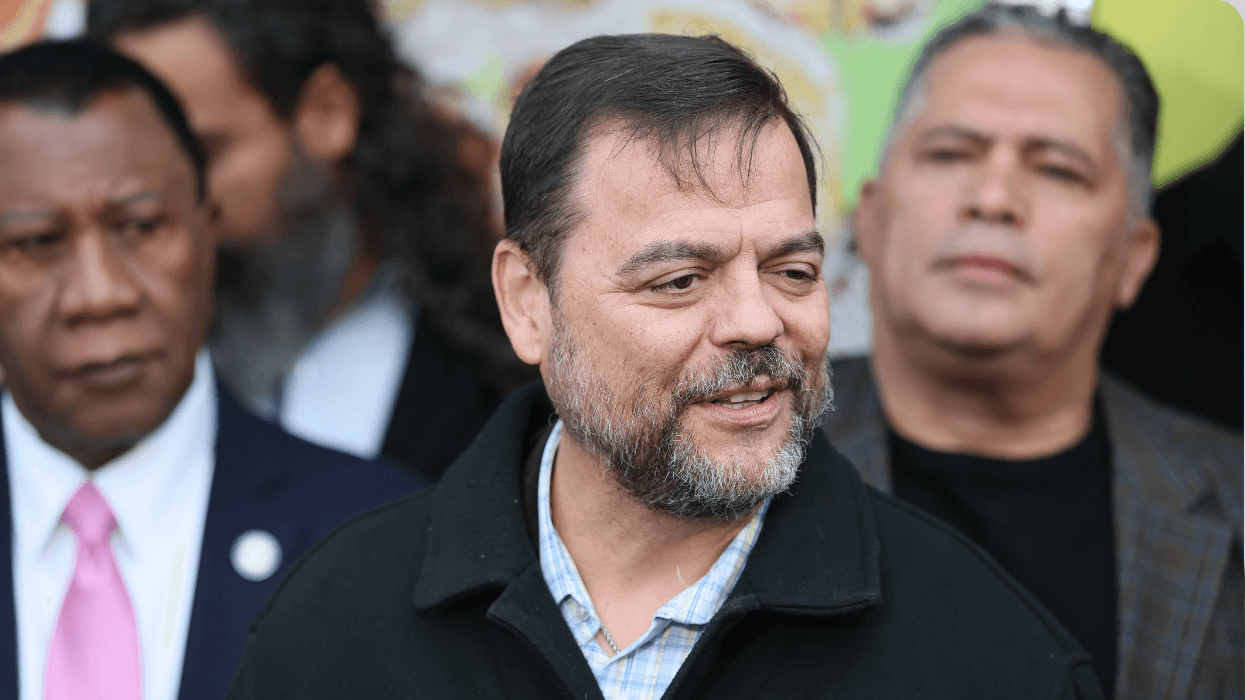
For most of his life, Jose Trujillo believed the United States was where his family would build its future.
A naturalized citizen born in Mexico, Trujillo spent years advocating for his transgender son, Daniel, now 17. He attended legislative hearings. He spoke publicly. He joined other parents fighting to preserve access to gender-affirming care and basic legal protections for transgender young people.
By the end of The Dads, the new feature documentary executive produced by NBA Hall of Famer Dwyane Wade, the Trujillos are gone — among the first families in the film to leave the country altogether.
"We came to a point where we realized it wasn't going to be safe for our family anymore," Trujillo says in the film. "It wasn't going to be safe for Daniel anymore."
His wife, Lizette, names the fear that finally pushed them out: that gender-affirming care could be criminalized retroactively, and that her husband's citizenship could be weaponized against him. "What if they criminalize care and then they tell my husband, well, your child has received gender-affirming care, and so therefore you've committed a crime, and now this crime gives us reason to denaturalize you?" she asks. "But then what happens to my child?"
Directed by Emmy Award-winning filmmaker Luchina Fisher, The Dads expands on her Emmy-winning 2023 Netflix short of the same name. The film, which premiered at SXSW in March to strong reviews, follows a community of fathers of transgender and nonbinary children over the course of a single, whiplash-inducing year: from cautiously optimistic retreats in rural Maine and Minnesota, through the 2024 election, a cascade of executive orders under President Donald Trump, the collapse of gender-affirming care at hospitals even in blue states, and the U.S. Supreme Court's decision in Skrmetti, upholding Tennessee's ban on care for minors.
Related: Dwyane Wade and transgender daughter Zaya launch new resource for trans youth and families
"We were never trying to make it about fleeing the country," producer Stephen Chukumba told The Advocate. "That's just what happened as we were filming."
Chukumba, a widowed New Jersey father whose trans son, Hobbes, 19, appears prominently in the documentary, said the original vision was far less political. After audiences responded to the short film with demands for more — "They had just watched a trailer as opposed to a full short movie," he said — the filmmakers wanted to follow the dads home from the woods and show ordinary family life, including homework, doctor's appointments, and soccer practice.
Then the political ground shifted beneath them.
"What we thought was going to happen after we left the retreat in June and went back to our lives was that Kamala Harris was going to be elected," Chukumba said. "We definitely thought that the federal government was going to stop at all this foolishness."
Instead, the filmmakers kept the cameras rolling through the aftermath. "We had the opportunity, and really the responsibility, to keep filming so that people could see what was happening," Chukumba said. "There was a historical record of this time, that people couldn't go back and be like, 'Oh, that never happened.' It did happen, and we know it happened because we filmed the whole thing as it was happening."
"We just don't feel like it's really safe for her here anymore"
The film's most quietly devastating sequence may be a Zoom court hearing.
Ed Diaz, a residential general contractor in San Antonio, spent years fighting for his transgender daughter, Charli, 13, testifying at the Texas Capitol and joining a lawsuit against SB 14, the state's ban on gender-affirming care for minors. The families won at trial. Then the Texas Supreme Court let the ban take effect anyway.
"We had everything set up here in Texas. We were receiving good medical care. It was easy, affordable, accessible," Diaz says in the film. "And that was just taken away."
After the 2024 election, Diaz and his Canadian wife, Tim, decided that she would legally adopt Charli — with the blessing of Charli's mother, who attended the hearing — to fast-track the girl's path to Canadian citizenship. The camera watches as a judge grants the adoption and, with it, an exit route.
"My plan is to go and visit when I can, until I can permanently leave," Diaz says. "We just don't feel like it's really safe for her here anymore."
Charli, for her part, understands what’s happening. "I am a little bit sad because most of my family's here. Most of my friends are too. My hope is that I can just exist and be free,” she says.
A movement built around campfires
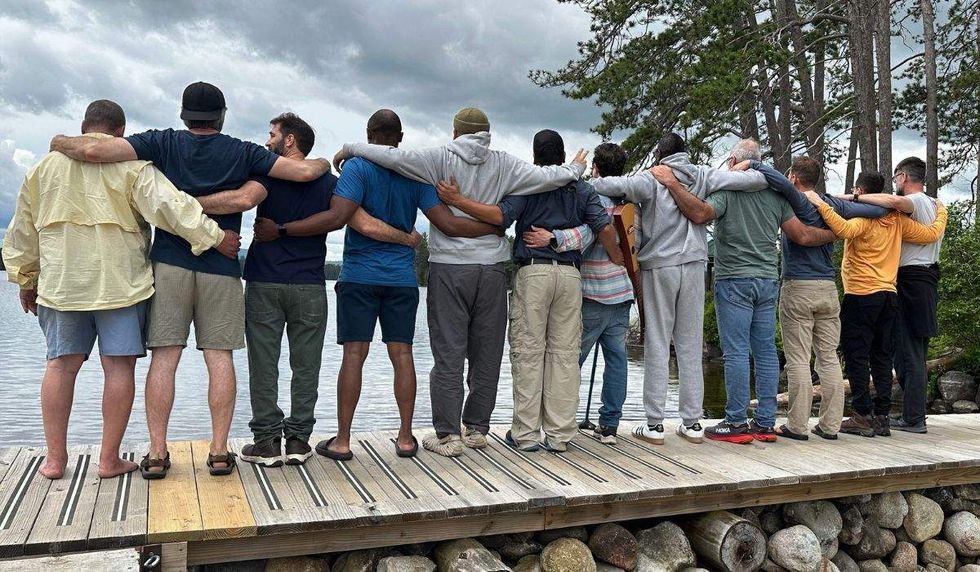
The film’s hear heart is the retreats — gatherings in the woods where fathers of trans and gender-expansive kids fish, climb, rib each other, and say things many of them have never said aloud.
The men are hunters, contractors, military veterans, and immigrants. Wayne Maines, an Air Force veteran who founded the retreats, became a prominent advocate after his daughter, Nicole, won a landmark transgender rights case in Maine. Nicole Maines is now an actress known for Supergirl and Yellowjackets.
"We thought, okay, we're on the right path, and we were for a while," Maines says in the film. "But it's a different kind of danger now. People are emboldened. These families they're getting attacked more than we did. It is a war zone."
Rethinking fatherhood
For decades, fathers have been portrayed as the parent most likely to struggle when a child comes out as transgender. Chukumba confirms it.
"I absolutely know for a fact that fathers struggle more than mothers when it comes to accepting their children's gender identity," he said. When he began advocacy work after Hobbes came out, he entered rooms that were "literally a sea of mothers, nary a father among them."
"Dads were ashamed, dads were afraid," he said. "Dads were more concerned about what people would say about them and their parenting than being there for their children."
Chukumba's own circumstances left him no room to hedge. His wife, Chanel, died of cancer the year before Hobbes came out to him at age 10, sitting on her bed in tears. "I didn't have a choice," Chukumba said. "I thought, what would Chanel do? And Chanel would embrace this dude and just support him till the cows came home. And so that's what I did."
"There is no better ambassador"
Chukumba argues that much of the public debate over transgender youth rests on a misunderstanding of gender-affirming care.
"People need to stop thinking when they hear gender-affirming care that it means surgical intervention," he said.
Related: Dwyane Wade and Family Forced to Leave Florida Due to Anti-LGBTQ+ Legislation
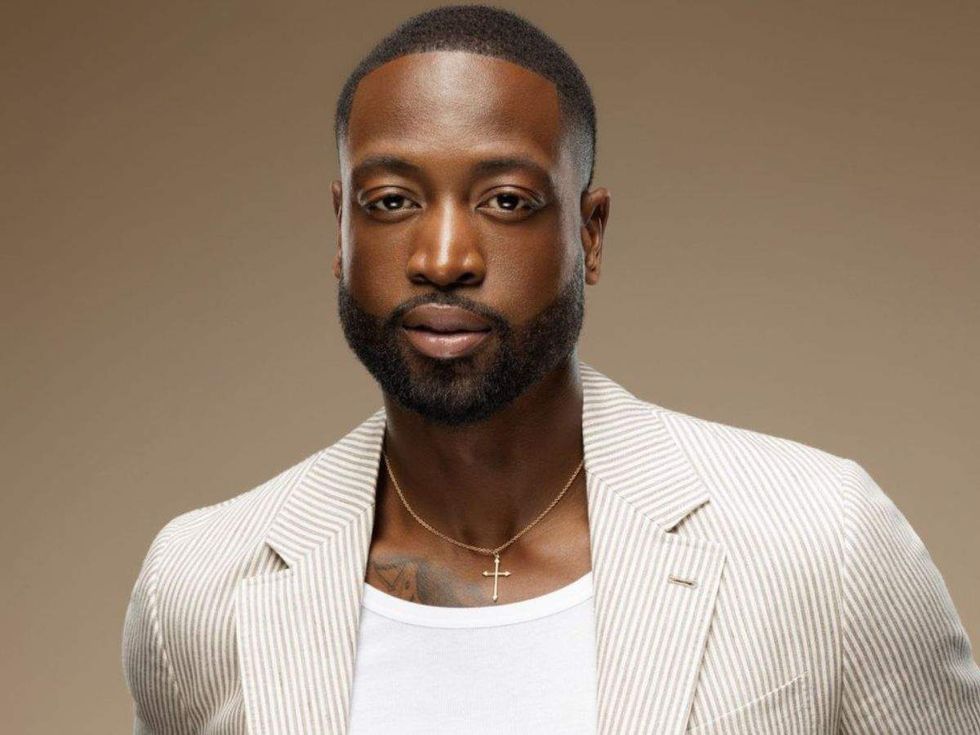 Dwyane Wade is an executive producer on the film The Dads and an outspoken supporter of his transgender daughter.Bob Metelus
Hovering over the project is Wade, whose support for his daughter, Zaya, has made him one of the most visible advocates for transgender youth in America. Wade, whose family fled Florida when that state became dangerous for trans kids, does not appear as a subject but executive-produces through his company, 59th & Prairie Entertainment.
For Chukumba, Wade's involvement carries significance beyond celebrity.
"Dwyane Wade is a manly man," he said. "He is what is stereotypically perceived as male in this society... There is no better ambassador of allyship than this successful, accomplished Black man standing publicly with his child."
"Love your kid"
The film's official nonprofit partner is the Ali Forney Center, the nation's largest organization serving LGBTQ+ youth experiencing homelessness — young people, Chukumba notes, who are on the street precisely because their parents did not do what the dads in this film do. The center has served more than 20,000 youth in its history, some as young as nine.
For Alex Roque, the Ali Forney Center's president and executive director and a previous winner of the Elevate Prize, whose storytelling arm, Elevate Studios, executive-produced the film, the partnership goes to the heart of the organization’s mission.
"The Ali Forney Center exists because family rejection driven by homophobia and transphobia remains a global crisis," Roque said in a statement to The Advocate. "We are thrilled to be partnering on The Dads, as fathers remain underrepresented in this work, and this film helps create visibility while inspiring more fathers and parents to fully embrace and support their transgender and non-binary children."
Roque said his organization witnesses the stakes of that support every day. "We so often see the consequences of family rejection firsthand — many young people who come to us are just beginning the difficult journey of rebuilding their lives after being rejected by those closest to them," he said. "Parental support is vital, transformative, and often lifesaving for transgender and non-binary youth."
"Together, with the filmmakers, we're working to ignite a movement of allyship and acceptance, each of which requires unwavering courage," he added. "We urge all parents to find the courage to love and support their children for exactly who they are."
Asked what he would say to parents of trans kids watching the film and fearing for their family's future, Chukumba said it’s simple.
"Love your kid, love your kid, love your kid. That's it," he said. "There is nothing stronger. There's nothing more powerful. There's nothing more affirming than the love of a parent for their child — and that is life-saving advice."
Watch a trailer for The Dads below.
- YouTube youtu.be