'%3E%3Cpath d='M16.3574 35.6519H12.9537L15.0491 18.8873L16.3574 35.6519ZM30.4229 54.0093L22.309 0.994385H7.91795L0 54.0093H10.6634L11.5802 46.3855H17.4014L17.9914 54.0093H30.4229Z' fill='%23971B20'/%3E%3Cpath d='M48.2073 41.8813C48.2073 43.4049 47.4892 44.0011 46.1144 44.0011H43.7595V11.0687H46.1144C47.4892 11.0687 48.2073 11.6636 48.2073 13.1885V41.8813ZM59.5273 43.6695V11.3326C59.5273 3.71323 53.5729 0.994385 47.8157 0.994385H31.7213V54.0093H47.8157C53.5729 54.0093 59.5273 51.29 59.5273 43.6695Z' fill='%23971B20'/%3E%3Cpath d='M90.183 0.994385H78.6039L75.0711 30.6157L71.9955 0.994385H59.4346L69.2474 54.0093H80.373L90.183 0.994385Z' fill='%23971B20'/%3E%3Cpath d='M107.063 42.3448C107.063 43.7359 105.951 44.5974 104.643 44.5974C103.269 44.5974 102.157 43.7359 102.157 42.3448V12.658C102.157 11.2676 103.269 10.4058 104.643 10.4058C105.951 10.4058 107.063 11.2676 107.063 12.658V42.3448ZM119.233 43.2723V11.7312C119.233 6.36384 112.952 -3.8147e-06 104.643 -3.8147e-06C96.2667 -3.8147e-06 89.9867 6.36384 89.9867 11.7312V43.2723C89.9867 48.6393 96.2667 55 104.643 55C112.952 55 119.233 48.6393 119.233 43.2723Z' fill='%23971B20'/%3E%3Cpath d='M150.976 43.9349V33.7309H139.069V42.3448C139.069 43.7359 137.957 44.5974 136.582 44.5974C135.076 44.5974 133.964 43.7359 133.964 42.3448V12.658C133.964 11.2676 135.076 10.4058 136.582 10.4058C137.957 10.4058 139.069 11.2676 139.069 12.658V21.2723H150.976V11.0687C150.976 5.70107 145.283 -3.8147e-06 136.582 -3.8147e-06C127.75 -3.8147e-06 121.796 5.70107 121.796 11.0687V43.9349C121.796 49.3022 127.75 55 136.582 55C145.283 55 150.976 49.3022 150.976 43.9349Z' fill='%23971B20'/%3E%3Cpath d='M167.478 35.6519H164.076L166.17 18.8873L167.478 35.6519ZM181.544 54.0093L173.432 0.994385H159.037L151.123 54.0093H161.785L162.704 46.3855H168.523L169.114 54.0093H181.544Z' fill='%23971B20'/%3E%3Cpath d='M205.412 10.4058V0.994385H177.081V10.4058H185.392V54.0093H197.428V10.4058H205.412Z' fill='%23971B20'/%3E%3Cpath d='M230.002 54.0093V43.9349H218.914V31.8746H226.635V21.8028H218.914V10.4058H230.002V0.994385H206.875V54.0093H230.002Z' fill='%23971B20'/%3E%3C/g%3E%3Cdefs%3E%3CclipPath id='clip0_260_7080'%3E%3Crect width='230' height='55' fill='white'/%3E%3C/clipPath%3E%3C/defs%3E%3C/svg%3E)
A decade ago, Giovonni Santiago asked the Department of Veterans Affairs for something groundbreaking: a place where transgender veterans, like him, could see doctors who understood them.
The government listened. Now, Santiago says, it is dismantling the system he helped build.
“It’s frustrating, but not surprising,” Santiago tells The Advocate. “We did all of this hard work to get here, and she’s done all of this hard work sustaining it, to see it possibly start to crumble.”
The “she” is Dr. Megan McNamara, Santiago’s primary care physician of 13 years and the lead doctor at the Gender Identity Veterans Experience, or G.I.V.E., Clinic at the Louis Stokes Cleveland VA Medical Center.
Santiago served as an Air Force police officer from 2006 to 2010, while “don’t ask, don’t tell” still forced gay, lesbian, and bisexual troops to conceal who they were. Santiago identified as a lesbian then. A back injury led to his medical discharge, and he began transitioning through the VA in 2013.
Related: Trump ends care network for LGBTQ+ veterans, internal email shows. Providers condemn 'cruel erasure'
He says he was the first patient to tell McNamara that he was transgender. Because she worked from the women’s clinic, Santiago’s appointments could become small public spectacles. The masculine-presenting veteran would sit among women who assumed he was waiting for someone else. Then a nurse would call his name.
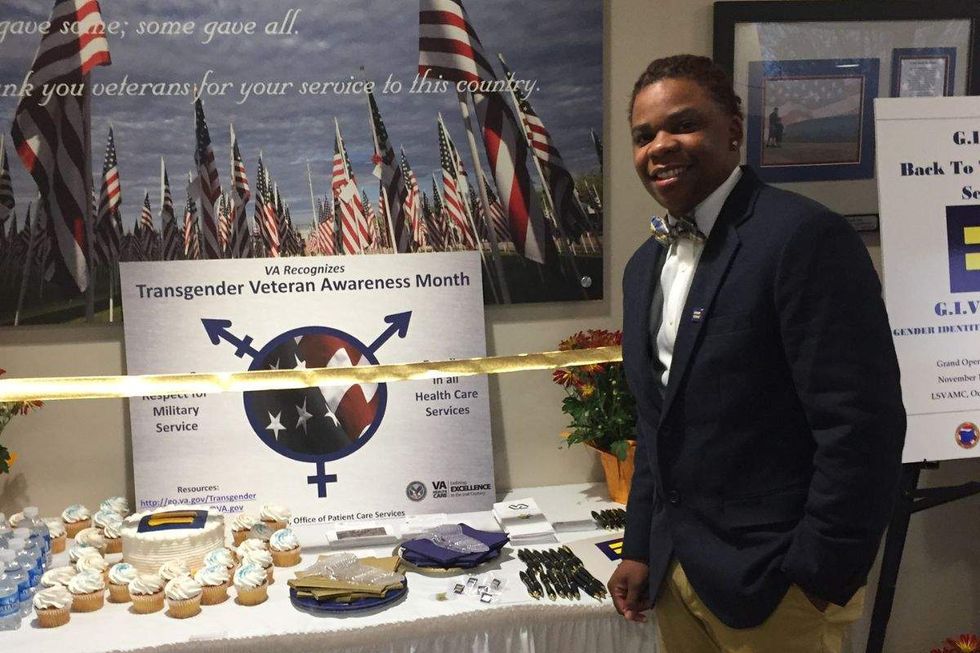 Gio Santiago celebrates Transgender Veteran Awareness Month at a VA facility before the Trump administration returned.Courtesy Gio Santiago
McNamara began treating more transgender veterans. Santiago referred people to her, helped form support groups and eventually addressed a room containing about 100 doctors. The Cleveland hospital had the patients and clinicians. It needed to put them together.
“Just give us a wing, give us some space to do this,” Santiago recalled saying.
They did. The G.I.V.E. Clinic opened in November 2015 and was described at the time as the first transgender-specific clinic in the VA system. It brought primary care, hormone therapy, mental health treatment, and social services together. The following year, Santiago founded META Center Inc., an Ohio nonprofit supporting transgender youth and adults.
Related: Trump administration announces end to gender-affirming care for transgender veterans
The clinic’s work continues, Santiago says, but no longer from a dedicated space. He saw McNamara in June and confirmed that another appointment remained scheduled for September.
“We weren’t even able to celebrate the 10-year anniversary last year because all of the conversation about anything LGBTQ at the VA, any DE&I, has been kiboshed,” he says.
That erasure has unfolded in stages. In March 2025, the Trump administration rescinded the VA directive establishing standards for the respectful treatment of transgender and intersex veterans, including their use of gender-aligned facilities. Days later, the department stopped new hormone prescriptions for most transgender veterans and eliminated services including voice training and prosthetics. Major medical organizations recognize gender-affirming care as medically necessary for many transgender patients.
Veterans already receiving hormones from the VA, or receiving them from the military when they separated, were allowed to continue. The VA maintained that transgender veterans could still obtain general and mental healthcare.
The department said it would redirect any savings to paralyzed veterans and amputees. But it conceded that it lacked records showing how much it spent on transgender care. Transgender people accounted for less than one-tenth of 1 percent of the 9.1 million veterans enrolled in its health system.
The restrictions kept accumulating. The VA prohibited clinicians from writing letters supporting gender-affirming surgery even when veterans would obtain and pay for it elsewhere.
Then the administration widened its target. A June 2026 memorandum obtained by The Advocate ordered facilities to eliminate gender identity-based initiatives and remove “LGBTQ+” from the Veteran Care Coordinator program. A July email ended specialized meetings, training, communications, and shared resources, converting LGBTQ+ coordinators into general care coordinators.
For Santiago, who has a 100 percent VA disability rating, losing access would reorder his life. “It would look exponentially different because it would cost so much more,” he says. Private insurance would mean smaller paychecks, followed by bills for hormones, primary care, glasses, and services his military service earned him.
Related: Trump's VA rescinds policy treating transgender vets with dignity (exclusive)
He also fears for clinicians forced to weigh their patients against their livelihoods.
“I would never want my healthcare to cause her to lose her job,” Santiago says of McNamara. “But I know that she’s the type of physician who’s going to go right up to the line as far as she can to do the right thing.”
The danger reaches nurses, social workers, and schedulers, he says. “They care, but now they’re put in a position to lose their livelihood for caring.”
Santiago warns lesbian, gay, and bisexual veterans not to mistake the destruction of transgender care for somebody else’s emergency. The coordinator network served them, too.
“You think in this moment it’s not in your face, but you’re always going to be affected,” he said. “What we need is for those who, again, are the L and the G to stand up, because their healthcare is being put under scrutiny at the VA also.”