'%3E%3Cpath d='M16.3574 35.6519H12.9537L15.0491 18.8873L16.3574 35.6519ZM30.4229 54.0093L22.309 0.994385H7.91795L0 54.0093H10.6634L11.5802 46.3855H17.4014L17.9914 54.0093H30.4229Z' fill='%23971B20'/%3E%3Cpath d='M48.2073 41.8813C48.2073 43.4049 47.4892 44.0011 46.1144 44.0011H43.7595V11.0687H46.1144C47.4892 11.0687 48.2073 11.6636 48.2073 13.1885V41.8813ZM59.5273 43.6695V11.3326C59.5273 3.71323 53.5729 0.994385 47.8157 0.994385H31.7213V54.0093H47.8157C53.5729 54.0093 59.5273 51.29 59.5273 43.6695Z' fill='%23971B20'/%3E%3Cpath d='M90.183 0.994385H78.6039L75.0711 30.6157L71.9955 0.994385H59.4346L69.2474 54.0093H80.373L90.183 0.994385Z' fill='%23971B20'/%3E%3Cpath d='M107.063 42.3448C107.063 43.7359 105.951 44.5974 104.643 44.5974C103.269 44.5974 102.157 43.7359 102.157 42.3448V12.658C102.157 11.2676 103.269 10.4058 104.643 10.4058C105.951 10.4058 107.063 11.2676 107.063 12.658V42.3448ZM119.233 43.2723V11.7312C119.233 6.36384 112.952 -3.8147e-06 104.643 -3.8147e-06C96.2667 -3.8147e-06 89.9867 6.36384 89.9867 11.7312V43.2723C89.9867 48.6393 96.2667 55 104.643 55C112.952 55 119.233 48.6393 119.233 43.2723Z' fill='%23971B20'/%3E%3Cpath d='M150.976 43.9349V33.7309H139.069V42.3448C139.069 43.7359 137.957 44.5974 136.582 44.5974C135.076 44.5974 133.964 43.7359 133.964 42.3448V12.658C133.964 11.2676 135.076 10.4058 136.582 10.4058C137.957 10.4058 139.069 11.2676 139.069 12.658V21.2723H150.976V11.0687C150.976 5.70107 145.283 -3.8147e-06 136.582 -3.8147e-06C127.75 -3.8147e-06 121.796 5.70107 121.796 11.0687V43.9349C121.796 49.3022 127.75 55 136.582 55C145.283 55 150.976 49.3022 150.976 43.9349Z' fill='%23971B20'/%3E%3Cpath d='M167.478 35.6519H164.076L166.17 18.8873L167.478 35.6519ZM181.544 54.0093L173.432 0.994385H159.037L151.123 54.0093H161.785L162.704 46.3855H168.523L169.114 54.0093H181.544Z' fill='%23971B20'/%3E%3Cpath d='M205.412 10.4058V0.994385H177.081V10.4058H185.392V54.0093H197.428V10.4058H205.412Z' fill='%23971B20'/%3E%3Cpath d='M230.002 54.0093V43.9349H218.914V31.8746H226.635V21.8028H218.914V10.4058H230.002V0.994385H206.875V54.0093H230.002Z' fill='%23971B20'/%3E%3C/g%3E%3Cdefs%3E%3CclipPath id='clip0_260_7080'%3E%3Crect width='230' height='55' fill='white'/%3E%3C/clipPath%3E%3C/defs%3E%3C/svg%3E)
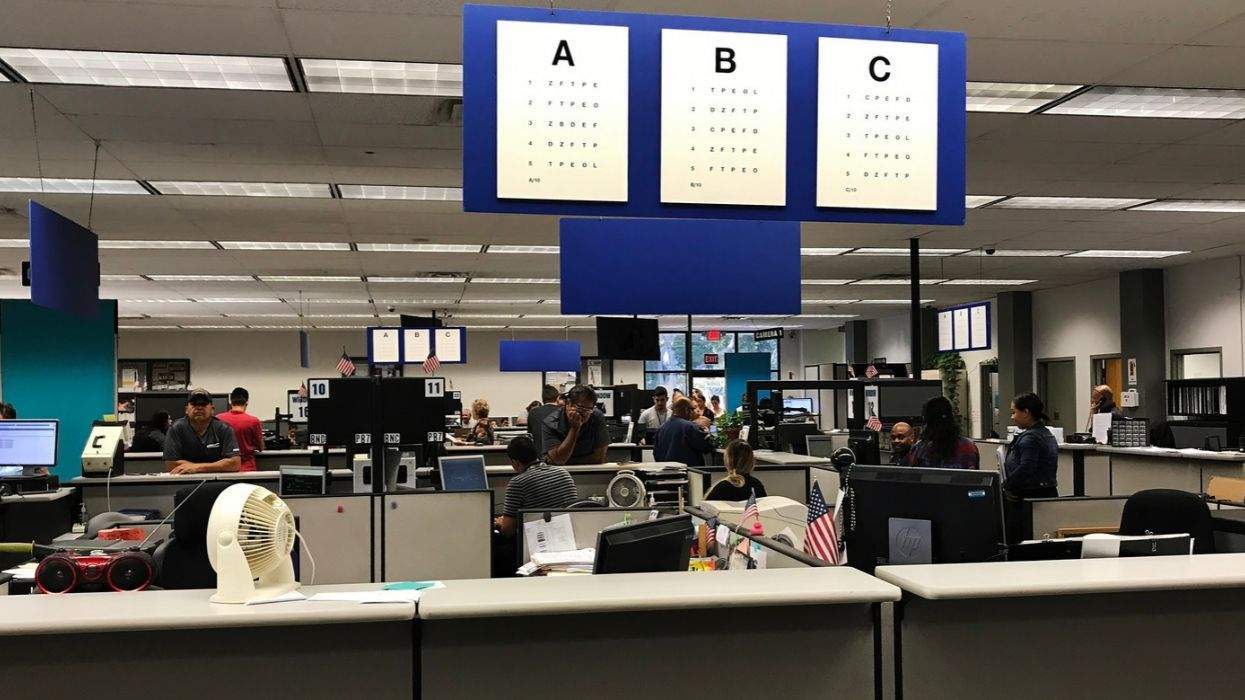

Intersex and transgender Kansans are taking their challenge to the state’s driver’s license and restroom restrictions to court this week.
In a lawsuit backed by the ACLU of Kansas, plaintiffs seek to block a sweeping law that invalidated driver’s licenses bearing gender markers that differ from a person’s sex assigned at birth and restricts restroom use in government buildings. As plaintiffs told The Washington Post, the ID requirement has exposed them to scrutiny in ordinary interactions, even after they complied with the law.
Dakota West had held a driver’s license identifying her as female for just five months when the state told her in February that it was invalid. West is an intersex woman who was born with XY chromosomes but whose body does not respond to male hormones. She never went through male puberty.
Related: Kansas anti-trans law forced her license to say male. Then a cop questioned it and she was charged
“I really felt targeted, which I think was the intention of the Kansas state legislature,” West told the Post.
West is among the plaintiffs challenging the law. State officials said roughly 1,700 intersex and transgender Kansans received notices that their licenses were invalid.
The law has also produced confusion during traffic stops. Kris Ripper, a transgender woman who obtained a license listing her as male to comply with the law, said an officer questioned whether the ID was real. A charge of driving without a valid license was later dismissed. In a separate case, a judge temporarily restored transgender driver Jamie Miller’s driving privileges, finding that the state likely denied her due process when it invalidated her license. That ruling did not decide whether Miller must change its gender marker.
The challenge to the law is being heard this week in Lawrence. Kansas Attorney General Kris Kobach, a Republican, has argued that the state can require its identification documents to reflect a person’s sex assigned at birth.
Related: Kansas law voided her license because she’s transgender. The state’s chaos helped her win it back
Questions about the restroom provision have reached Kobach’s office, too. In an opinion earlier this year, he said the restrictions do not apply to certain private spaces in government facilities and urged lawmakers to clarify the statute. “If your answer relies on finding an ambiguity in Senate Bill 244 with the term ‘facilities,’ we ask that you work with the Legislature in the 2027 session to clarify this ambiguity,” he wrote to Democratic Gov. Laura Kelly’s office. Kelly vetoed the law, but Republican lawmakers overrode her veto.
Plaintiffs say the requirements intrude on their family lives. Cameron Broyles, a transgender man, said the restroom restriction complicates outings with his 4-year-old son, who is too young to use a restroom alone.
“I’m not going to take my kids’ childhood from them just because Kansas wants to make something hard,” Broyles told the newspaper.