'%3E%3Cpath d='M16.3574 35.6519H12.9537L15.0491 18.8873L16.3574 35.6519ZM30.4229 54.0093L22.309 0.994385H7.91795L0 54.0093H10.6634L11.5802 46.3855H17.4014L17.9914 54.0093H30.4229Z' fill='%23971B20'/%3E%3Cpath d='M48.2073 41.8813C48.2073 43.4049 47.4892 44.0011 46.1144 44.0011H43.7595V11.0687H46.1144C47.4892 11.0687 48.2073 11.6636 48.2073 13.1885V41.8813ZM59.5273 43.6695V11.3326C59.5273 3.71323 53.5729 0.994385 47.8157 0.994385H31.7213V54.0093H47.8157C53.5729 54.0093 59.5273 51.29 59.5273 43.6695Z' fill='%23971B20'/%3E%3Cpath d='M90.183 0.994385H78.6039L75.0711 30.6157L71.9955 0.994385H59.4346L69.2474 54.0093H80.373L90.183 0.994385Z' fill='%23971B20'/%3E%3Cpath d='M107.063 42.3448C107.063 43.7359 105.951 44.5974 104.643 44.5974C103.269 44.5974 102.157 43.7359 102.157 42.3448V12.658C102.157 11.2676 103.269 10.4058 104.643 10.4058C105.951 10.4058 107.063 11.2676 107.063 12.658V42.3448ZM119.233 43.2723V11.7312C119.233 6.36384 112.952 -3.8147e-06 104.643 -3.8147e-06C96.2667 -3.8147e-06 89.9867 6.36384 89.9867 11.7312V43.2723C89.9867 48.6393 96.2667 55 104.643 55C112.952 55 119.233 48.6393 119.233 43.2723Z' fill='%23971B20'/%3E%3Cpath d='M150.976 43.9349V33.7309H139.069V42.3448C139.069 43.7359 137.957 44.5974 136.582 44.5974C135.076 44.5974 133.964 43.7359 133.964 42.3448V12.658C133.964 11.2676 135.076 10.4058 136.582 10.4058C137.957 10.4058 139.069 11.2676 139.069 12.658V21.2723H150.976V11.0687C150.976 5.70107 145.283 -3.8147e-06 136.582 -3.8147e-06C127.75 -3.8147e-06 121.796 5.70107 121.796 11.0687V43.9349C121.796 49.3022 127.75 55 136.582 55C145.283 55 150.976 49.3022 150.976 43.9349Z' fill='%23971B20'/%3E%3Cpath d='M167.478 35.6519H164.076L166.17 18.8873L167.478 35.6519ZM181.544 54.0093L173.432 0.994385H159.037L151.123 54.0093H161.785L162.704 46.3855H168.523L169.114 54.0093H181.544Z' fill='%23971B20'/%3E%3Cpath d='M205.412 10.4058V0.994385H177.081V10.4058H185.392V54.0093H197.428V10.4058H205.412Z' fill='%23971B20'/%3E%3Cpath d='M230.002 54.0093V43.9349H218.914V31.8746H226.635V21.8028H218.914V10.4058H230.002V0.994385H206.875V54.0093H230.002Z' fill='%23971B20'/%3E%3C/g%3E%3Cdefs%3E%3CclipPath id='clip0_260_7080'%3E%3Crect width='230' height='55' fill='white'/%3E%3C/clipPath%3E%3C/defs%3E%3C/svg%3E)

In court this week to challenge the state’s driver’s license and restroom restrictions, intersex and transgender Kansans are having to explain some of their social media posts as the state’s defense turns to them as part of its strategy.
As The Advocate has reported, plaintiffs in Doe v. Kansas are seeking to block Senate Bill 244, a sweeping law that invalidated driver’s licenses bearing gender markers that differ from a person’s sex assigned at birth and restricts restroom use in government buildings. The ID requirement has exposed them to scrutiny in ordinary interactions, even after they complied with the law, plaintiffs told The Washington Post.
Related: Kansas voided 1,700 licenses. Now its anti-trans law is being tested in court
The ACLU of Kansas is backing the lawsuit.
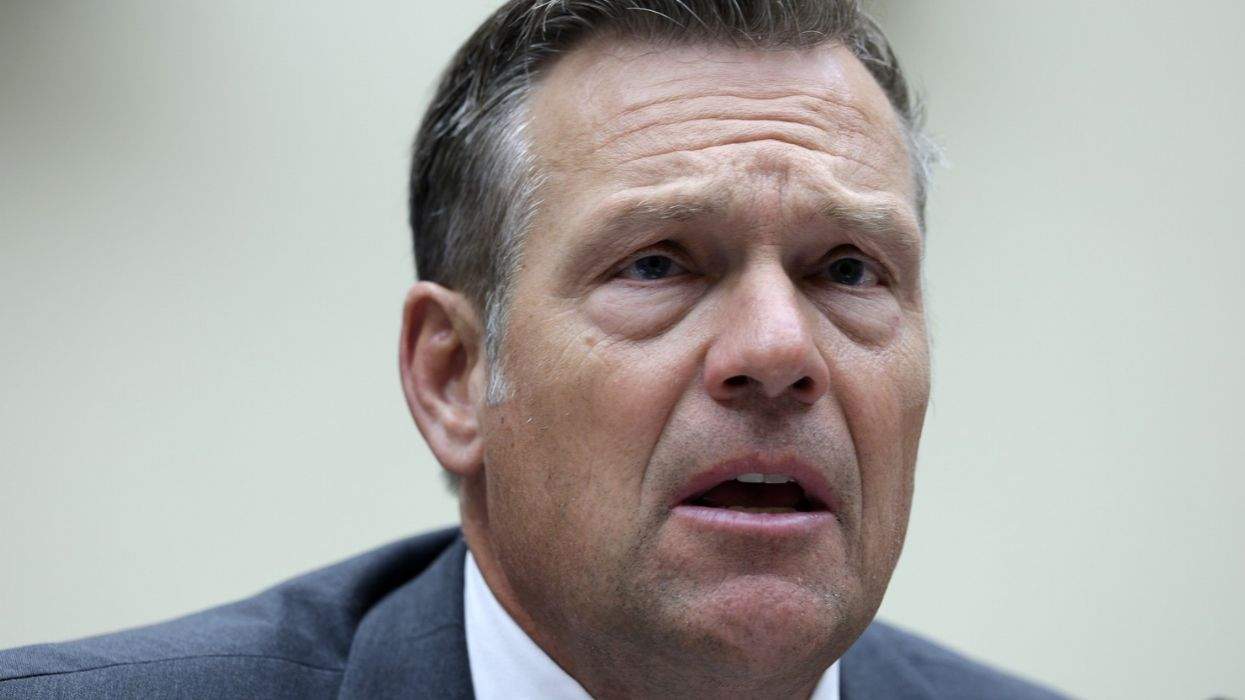
Republican Attorney General Kris Kobach, who has a history of supporting anti-LGBTQ+ views and legislation, argues that the plaintiffs have not shown the law harmed them. To challenge their claims that the law could effectively out them as transgender or intersex, state attorneys have turned to the plaintiffs’ own social media posts, some of them years old, arguing that public disclosures undermine their expectation of privacy.
The Topeka Capital-Journal reports Kobach cross-examined one of the plaintiffs challenging the law – Dakota West, an intersex woman who previously lived in Reno County and is now a resident in Tennessee – about a Facebook post where West spoke about being intersex.
“Why would you post something that’s had 2 million views?” Kobach said, questioning her concern about being outed while having a public figure profile. West said she considered the post a “situational difference” from encountering someone in real life. “I’ve never seen anyone in person that’s followed me,” she said. “Sometimes, I think of it as numbers on a page.”
West, who was born with XY chromosomes but whose body does not respond to male hormones, had held a driver’s license identifying her as female for just five months when the state told her in February that it was invalid. She never went through male puberty.
Related: Kansas anti-trans law forced her license to say male. Then a cop questioned it and she was charged
Daniel Doe, another plaintiff in the case, testified that his social media posts are now archived, emphasizing the distinction between choosing to disclose his identity and being compelled to do so. “I made all of these posts on my own terms,” they said. “I can’t necessarily control when I have to produce my identification.”
State attorneys, however, pointed to the reach of some of Doe’s posts, including their view counts, and questioned how widely screenshots may have circulated or how many people may have seen them.
In an interview with The Capital-Journal, Harper Seldin, staff attorney for the ACLU, said the posts were not relevant to the ongoing case.
“I think the only relevance here is that the state is trying to use that to create pressure on anonymous Kansans who have been brave enough to show up in person and in court to tell their stories,” he said. “There’s no reason for this.”
Kobach disagreed, giving reporters a look into the state’s strategy.
"The way they define their right is the right not to disclose to anyone the fact that they are trans. But when one has published thousands of times on social media that one is trans, that undermines one’s claim that you have a constitutional right to privacy to keep that information private,” Kobach said. “If you are proclaiming something to the world, that indicates you don’t have an expectation of privacy on what you just proclaimed.”
Related: Kansas AG says schools must out trans kids to their parents — even without a law requiring it
While three of the five plaintiffs are under pseudonyms and the court agreed to keep their names private, the state is seeking to reveal their faces.
“Our plaintiffs’ primary harm in this case is being forcibly outed against their will,” Seldin told the Capital-Journal. “This is again a continuation of the state’s campaign to intimidate transgender Kansans who are trying to advocate for their freedoms without incurring the very harms that taking away those freedoms causes them."
Kansas legislators passed Senate Bill 244 along party lines in January, and it remained in place after Republicans overrode Democratic Gov. Laura Kelly’s veto in February. State officials said roughly 1,700 intersex and transgender Kansans received notices that their licenses were invalid.
The law has also produced confusion for lawmakers and during traffic stops. Kris Ripper, a transgender woman who obtained a license listing her as male to comply with the law, said an officer questioned whether the ID was real. Law enforcement later dismissed a charge of driving without a valid license. In a separate case, a judge temporarily restored transgender driver Jamie Miller’s driving privileges, finding that the state likely denied her due process when it invalidated her license.