'%3E%3Cpath d='M16.3574 35.6519H12.9537L15.0491 18.8873L16.3574 35.6519ZM30.4229 54.0093L22.309 0.994385H7.91795L0 54.0093H10.6634L11.5802 46.3855H17.4014L17.9914 54.0093H30.4229Z' fill='%23971B20'/%3E%3Cpath d='M48.2073 41.8813C48.2073 43.4049 47.4892 44.0011 46.1144 44.0011H43.7595V11.0687H46.1144C47.4892 11.0687 48.2073 11.6636 48.2073 13.1885V41.8813ZM59.5273 43.6695V11.3326C59.5273 3.71323 53.5729 0.994385 47.8157 0.994385H31.7213V54.0093H47.8157C53.5729 54.0093 59.5273 51.29 59.5273 43.6695Z' fill='%23971B20'/%3E%3Cpath d='M90.183 0.994385H78.6039L75.0711 30.6157L71.9955 0.994385H59.4346L69.2474 54.0093H80.373L90.183 0.994385Z' fill='%23971B20'/%3E%3Cpath d='M107.063 42.3448C107.063 43.7359 105.951 44.5974 104.643 44.5974C103.269 44.5974 102.157 43.7359 102.157 42.3448V12.658C102.157 11.2676 103.269 10.4058 104.643 10.4058C105.951 10.4058 107.063 11.2676 107.063 12.658V42.3448ZM119.233 43.2723V11.7312C119.233 6.36384 112.952 -3.8147e-06 104.643 -3.8147e-06C96.2667 -3.8147e-06 89.9867 6.36384 89.9867 11.7312V43.2723C89.9867 48.6393 96.2667 55 104.643 55C112.952 55 119.233 48.6393 119.233 43.2723Z' fill='%23971B20'/%3E%3Cpath d='M150.976 43.9349V33.7309H139.069V42.3448C139.069 43.7359 137.957 44.5974 136.582 44.5974C135.076 44.5974 133.964 43.7359 133.964 42.3448V12.658C133.964 11.2676 135.076 10.4058 136.582 10.4058C137.957 10.4058 139.069 11.2676 139.069 12.658V21.2723H150.976V11.0687C150.976 5.70107 145.283 -3.8147e-06 136.582 -3.8147e-06C127.75 -3.8147e-06 121.796 5.70107 121.796 11.0687V43.9349C121.796 49.3022 127.75 55 136.582 55C145.283 55 150.976 49.3022 150.976 43.9349Z' fill='%23971B20'/%3E%3Cpath d='M167.478 35.6519H164.076L166.17 18.8873L167.478 35.6519ZM181.544 54.0093L173.432 0.994385H159.037L151.123 54.0093H161.785L162.704 46.3855H168.523L169.114 54.0093H181.544Z' fill='%23971B20'/%3E%3Cpath d='M205.412 10.4058V0.994385H177.081V10.4058H185.392V54.0093H197.428V10.4058H205.412Z' fill='%23971B20'/%3E%3Cpath d='M230.002 54.0093V43.9349H218.914V31.8746H226.635V21.8028H218.914V10.4058H230.002V0.994385H206.875V54.0093H230.002Z' fill='%23971B20'/%3E%3C/g%3E%3Cdefs%3E%3CclipPath id='clip0_260_7080'%3E%3Crect width='230' height='55' fill='white'/%3E%3C/clipPath%3E%3C/defs%3E%3C/svg%3E)


There may be a few public restrooms in Kansas where the state’s expansive anti-trans bathroom law won’t apply.
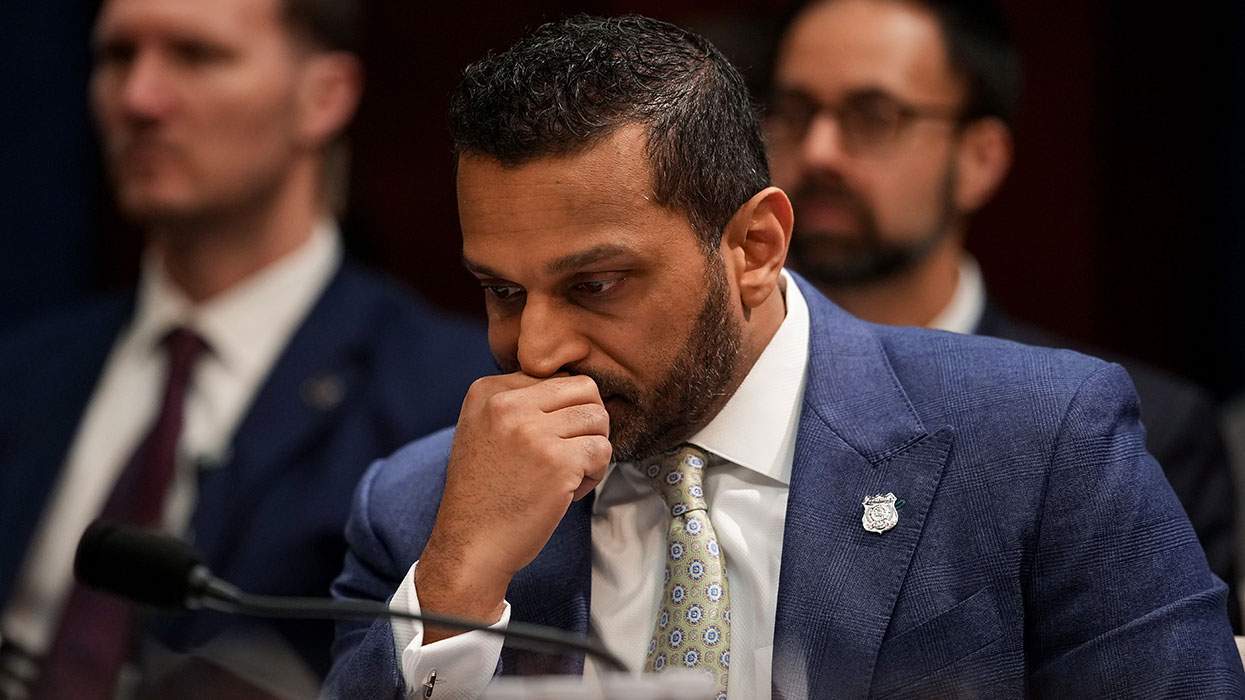
Kansas Attorney General Kris Kobach issued an opinion exempting certain spaces from the requirement that restroom facilities be segregated based on gender assigned at birth. The Republican issued an opinion in response to a request from Democratic Gov. Laura Kelly’s office, according to the Kansas Reflector.
Kelly’s office said the law was overly vague and wanted clarity on whether it would apply even to restrooms used in Kansas Department of Wildlife and Parks cabins or to skilled nursing rooms at the Kansas Office of Veterans’ Services.
Related: Kansas immediately revokes transgender residents’ driver’s licenses
Kobach said the law should be interpreted to apply in places where people may find themselves in the same space as someone of the opposite sex assigned at birth. Restrictions on bathroom access in government-owned facilities, he said, generally don’t apply to private spaces.
“The debate surrounding SB 244 focused on the types of rooms listed in the statute — restrooms, locker rooms, changing rooms, and shower rooms — and the risks to safety and privacy when individuals of one biological sex use facilities designated for individuals of the opposite biological sex,” Kobach wrote.
That means there is no restriction, for example, on married couples sharing a space at a nursing home, no requirement to have separate bathrooms at park cabins, and no expectation that facilities impose limits on skilled nursing rooms.
Related: Transgender woman defies Kansas bathroom law inside state Capitol
Related: Kansas lawmakers override governor's veto of anti-trans 'bathroom bounty' bill
He did say, however, that state prisons must adhere to restroom restrictions, including in multi-occupancy cells. Kobach, who has a controversial record of anti-transgender interpretations of state law, said Kelly should work with the legislature on putting any clarifications into statute.
“If your answer relies on finding an ambiguity in Senate Bill 244 with the term ‘facilities,’ we ask that you work with the Legislature in the 2027 session to clarify this ambiguity,” he wrote.
Kelly notably vetoed the bill enacting sweeping restrictions on trans rights last year, but the Legislature overrode that action.
Her office said the law, as written, remains deeply vague.
“SB 244 makes no distinction based on a ‘facility’s’ purpose and instead focuses on the existence of a mere possibility of whether an individual may be in a state of undress in front of another individual,” read a letter from Justin Whitten, Gov. Laura Kelly’s chief counsel, seeking an official opinion from Kobach’s office.