'%3E%3Cpath d='M16.3574 35.6519H12.9537L15.0491 18.8873L16.3574 35.6519ZM30.4229 54.0093L22.309 0.994385H7.91795L0 54.0093H10.6634L11.5802 46.3855H17.4014L17.9914 54.0093H30.4229Z' fill='%23971B20'/%3E%3Cpath d='M48.2073 41.8813C48.2073 43.4049 47.4892 44.0011 46.1144 44.0011H43.7595V11.0687H46.1144C47.4892 11.0687 48.2073 11.6636 48.2073 13.1885V41.8813ZM59.5273 43.6695V11.3326C59.5273 3.71323 53.5729 0.994385 47.8157 0.994385H31.7213V54.0093H47.8157C53.5729 54.0093 59.5273 51.29 59.5273 43.6695Z' fill='%23971B20'/%3E%3Cpath d='M90.183 0.994385H78.6039L75.0711 30.6157L71.9955 0.994385H59.4346L69.2474 54.0093H80.373L90.183 0.994385Z' fill='%23971B20'/%3E%3Cpath d='M107.063 42.3448C107.063 43.7359 105.951 44.5974 104.643 44.5974C103.269 44.5974 102.157 43.7359 102.157 42.3448V12.658C102.157 11.2676 103.269 10.4058 104.643 10.4058C105.951 10.4058 107.063 11.2676 107.063 12.658V42.3448ZM119.233 43.2723V11.7312C119.233 6.36384 112.952 -3.8147e-06 104.643 -3.8147e-06C96.2667 -3.8147e-06 89.9867 6.36384 89.9867 11.7312V43.2723C89.9867 48.6393 96.2667 55 104.643 55C112.952 55 119.233 48.6393 119.233 43.2723Z' fill='%23971B20'/%3E%3Cpath d='M150.976 43.9349V33.7309H139.069V42.3448C139.069 43.7359 137.957 44.5974 136.582 44.5974C135.076 44.5974 133.964 43.7359 133.964 42.3448V12.658C133.964 11.2676 135.076 10.4058 136.582 10.4058C137.957 10.4058 139.069 11.2676 139.069 12.658V21.2723H150.976V11.0687C150.976 5.70107 145.283 -3.8147e-06 136.582 -3.8147e-06C127.75 -3.8147e-06 121.796 5.70107 121.796 11.0687V43.9349C121.796 49.3022 127.75 55 136.582 55C145.283 55 150.976 49.3022 150.976 43.9349Z' fill='%23971B20'/%3E%3Cpath d='M167.478 35.6519H164.076L166.17 18.8873L167.478 35.6519ZM181.544 54.0093L173.432 0.994385H159.037L151.123 54.0093H161.785L162.704 46.3855H168.523L169.114 54.0093H181.544Z' fill='%23971B20'/%3E%3Cpath d='M205.412 10.4058V0.994385H177.081V10.4058H185.392V54.0093H197.428V10.4058H205.412Z' fill='%23971B20'/%3E%3Cpath d='M230.002 54.0093V43.9349H218.914V31.8746H226.635V21.8028H218.914V10.4058H230.002V0.994385H206.875V54.0093H230.002Z' fill='%23971B20'/%3E%3C/g%3E%3Cdefs%3E%3CclipPath id='clip0_260_7080'%3E%3Crect width='230' height='55' fill='white'/%3E%3C/clipPath%3E%3C/defs%3E%3C/svg%3E)
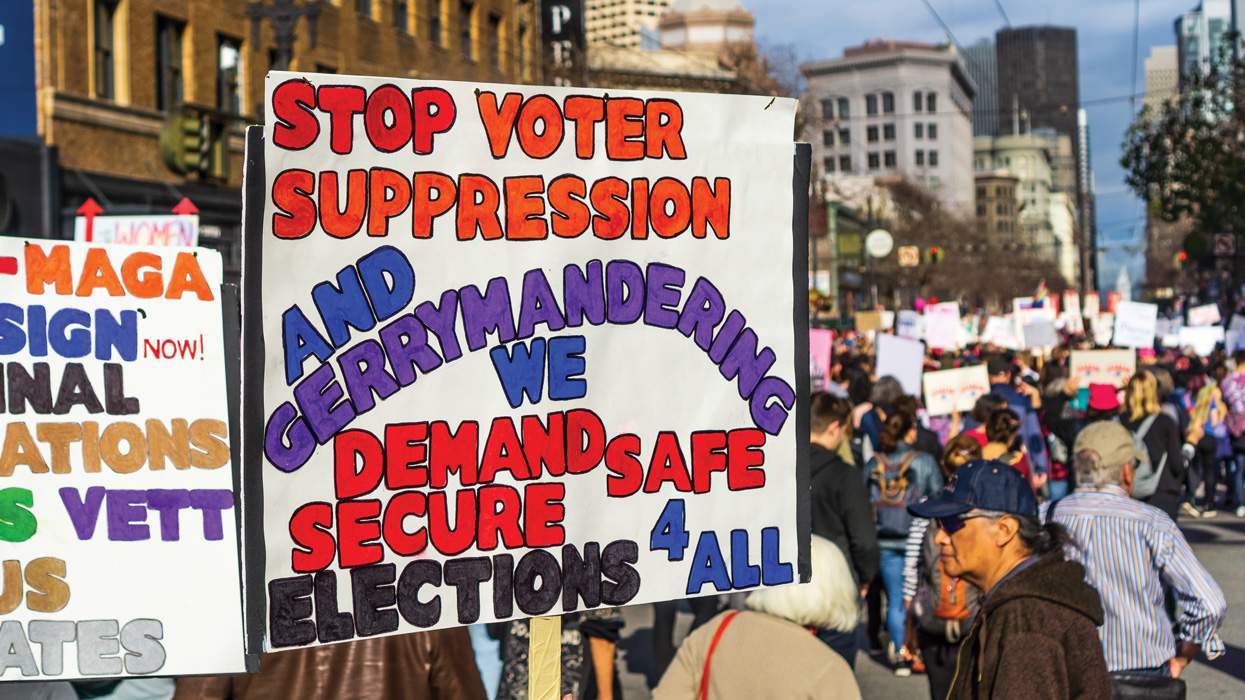

Gerrymandering is often discussed as if it were a technical nuisance, a strange geometry problem tucked inside politics. Lines on a map. Districts on a page. A process often framed as being so procedural that it alienates voters from engaging.
But a map is not just a map; it is the architecture of power. It decides the strength of a community’s voice and can influence whose community is fragmented, whose neighborhood is buried inside someone else’s political design, and whose ballot is made less impactful before Election Day ever arrives.
Gerrymandering is designed to erase the voice of the most marginalized. There are three key ways this is achieved:
Packing: Cram them together.
Cracking: Split them apart.
Stacking: Drown them out.
That is why this midterm year and this moment matter.
Voting rights are not being attacked by a single dramatic act. They are being eroded through accumulation and over time. Redrawn districts, mass voter purges, new identity document requirements, and court decisions that narrow civil rights protections. Gerrymandering is more than suppression of the vote; it’s the suppression of the voices of a district and of those who lead with the people’s needs in mind.
We’re now seeing a rise in congressional proposals dressed up as “election integrity” even when the true goal is to make eligible voters more afraid, confused, and burdened.
According to the U.S. Election Assistance Commission, more than 19 million voters were removed from the rolls between 2020 and 2022. This was not routine maintenance. Sure, people move, people pass away, and records are bound to change. But when purges are aggressive, imprecise, or politically weaponized, eligible voters can be swept out of democracy’s doorway without realizing it until it’s too late.
This is not a small administration problem; it’s civic abuse and displacement. The same lines can be drawn to the latest waves of fearmongering around noncitizens voting.
Let me be clear: Federal law already prohibits noncitizens from voting in federal elections. This is not new or ambiguous; it’s been established for decades. Some politicians obsessively invoke paranoia around election integrity as though it were an unchecked crisis, creating panic and fear for their own ends and at our expense.
Fear aimed at immigrants. Fear aimed at communities of color. Fear aimed at anyone pushing against the status quo.
Our community knows far too well how fear has been the tool of choice in oppressing LGBTQ+ people. We also know elections always matter, and the next few — local, state, and national — will need all of us to participate.
So, what’s at play now as we approach a midterm election cycle with so much on the line?
This is the sinister plan for modern voter suppression: Purge the rolls more often, pass state-based laws that invoke fear, like the inability to give out water in line, or gerrymander maps that push out the most vocal members of Congress. The intention is clear and does not always loudly say “you cannot vote.” Sometimes, it simply makes the process more intimidating, brittle, and bureaucratically hostile, so that people begin to doubt whether showing up is worth the risk.
The attacks don’t stop there; key pieces of legislation like the SAVE Act are part of the broader terrain. This legislation is framed by conservatives as an election protection bill, but it is really about alienating and erasing voter power. Those who truly believe in the Constitution and the freedom to access the ballot box would not support barriers to eligible citizens voting. Anyone with staunch moral integrity would not side with efforts that make lawful voters feel hunted by their own democracy or agree to manipulate maps that circumvent the will of the people.
And I know many people have faith in the courts — and the courts do matter — but they’ve proven to be unreliable under the current regime. In April’s Louisiana v. Callais ruling, which gutted the Voting Rights Act, the highest court of the land dealt a serious blow to voting rights by weakening one of the most important tools communities have used to challenge discriminatory maps: the ability to contest racial gerrymandering. That decision did not happen in isolation. It belongs to a larger pattern of attacks that narrow civil rights protections at both the state and federal levels. States like Texas, Florida, Alabama, North Carolina, and Louisiana are all testing grounds for how far they can go and how much of Project 2025 — the right-wing wish list that includes severe voting restrictions — can be achieved.
This is how our rights are erased over time. Not always through blatant attacks or a spectacle. Sometimes, it’s through federal rulemaking or procedure, paperwork, a map, firing the staff on a bipartisan election commission, or a court opinion written in bloodless language that still lands heavily on the bodies of real people.
But this is not a hopeless moment.
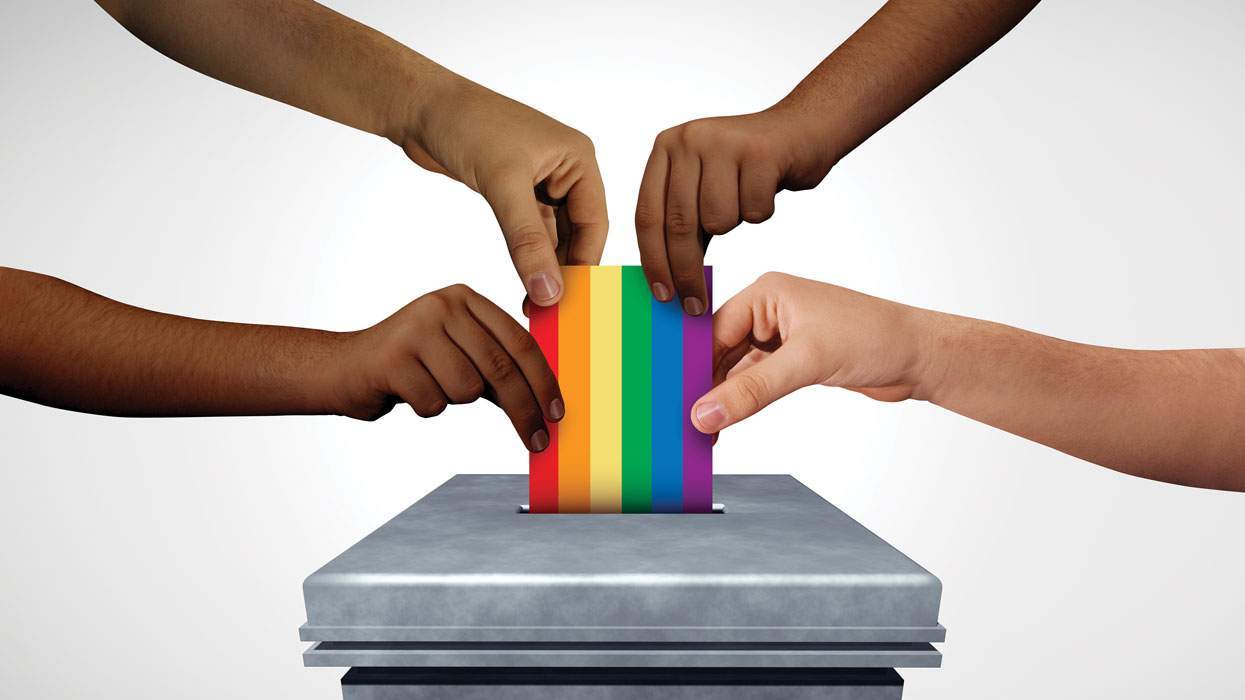
Yes, they want LGBTQ+ people to feel beaten down and as though we lack power. At the core of this is a truth we must all take in, one that should inspire us to action: If our vote did not matter or have power, they would not spend so much time, energy, and money to dilute, steal, or remove it.
If our presence were irrelevant, they would not redraw lines around it. If our participation were powerless, they would not manufacture fear to suppress it. The ballot is not merely a piece of paper. It is a refusal. A refusal to let lawmakers praise democracy while excavating its foundation. A refusal to let immigrant and trans communities become scapegoats for political insecurity. A refusal to let civil rights be treated as ornamental when they are, in truth, load-bearing. Gerrymandering wants us to believe the map benefits democracy, even when the crack in the foundation is clear. The lines may be drawn by those in power, but the future is still shaped by people who refuse to abandon the field.
So, lock in, twin. Check your registration. Know your district and who represents you. Vote in every election, not just the ones with the loudest headlines. Ask questions. Help someone else understand the power of their civic duty before the consequences of failing to show up arrive at their door.
Democracy does not survive because we admire it; it survives because we participate in it. Freedom does not belong to those who manipulate the lines. It belongs to the people who keep showing up — even when the lines are drawn to make them disappear.
This article is part of The Advocate's Sept-Oct 2026 print issue, on newsstands September 1. Support queer media and subscribe — or download the issue through Apple News+, Zinio, Nook, or PressReader starting August 20.
 Nancy Pelosi photographed for The Advocate's September-October cover.Photography by Mike Nelson