'%3E%3Cpath d='M16.3574 35.6519H12.9537L15.0491 18.8873L16.3574 35.6519ZM30.4229 54.0093L22.309 0.994385H7.91795L0 54.0093H10.6634L11.5802 46.3855H17.4014L17.9914 54.0093H30.4229Z' fill='%23971B20'/%3E%3Cpath d='M48.2073 41.8813C48.2073 43.4049 47.4892 44.0011 46.1144 44.0011H43.7595V11.0687H46.1144C47.4892 11.0687 48.2073 11.6636 48.2073 13.1885V41.8813ZM59.5273 43.6695V11.3326C59.5273 3.71323 53.5729 0.994385 47.8157 0.994385H31.7213V54.0093H47.8157C53.5729 54.0093 59.5273 51.29 59.5273 43.6695Z' fill='%23971B20'/%3E%3Cpath d='M90.183 0.994385H78.6039L75.0711 30.6157L71.9955 0.994385H59.4346L69.2474 54.0093H80.373L90.183 0.994385Z' fill='%23971B20'/%3E%3Cpath d='M107.063 42.3448C107.063 43.7359 105.951 44.5974 104.643 44.5974C103.269 44.5974 102.157 43.7359 102.157 42.3448V12.658C102.157 11.2676 103.269 10.4058 104.643 10.4058C105.951 10.4058 107.063 11.2676 107.063 12.658V42.3448ZM119.233 43.2723V11.7312C119.233 6.36384 112.952 -3.8147e-06 104.643 -3.8147e-06C96.2667 -3.8147e-06 89.9867 6.36384 89.9867 11.7312V43.2723C89.9867 48.6393 96.2667 55 104.643 55C112.952 55 119.233 48.6393 119.233 43.2723Z' fill='%23971B20'/%3E%3Cpath d='M150.976 43.9349V33.7309H139.069V42.3448C139.069 43.7359 137.957 44.5974 136.582 44.5974C135.076 44.5974 133.964 43.7359 133.964 42.3448V12.658C133.964 11.2676 135.076 10.4058 136.582 10.4058C137.957 10.4058 139.069 11.2676 139.069 12.658V21.2723H150.976V11.0687C150.976 5.70107 145.283 -3.8147e-06 136.582 -3.8147e-06C127.75 -3.8147e-06 121.796 5.70107 121.796 11.0687V43.9349C121.796 49.3022 127.75 55 136.582 55C145.283 55 150.976 49.3022 150.976 43.9349Z' fill='%23971B20'/%3E%3Cpath d='M167.478 35.6519H164.076L166.17 18.8873L167.478 35.6519ZM181.544 54.0093L173.432 0.994385H159.037L151.123 54.0093H161.785L162.704 46.3855H168.523L169.114 54.0093H181.544Z' fill='%23971B20'/%3E%3Cpath d='M205.412 10.4058V0.994385H177.081V10.4058H185.392V54.0093H197.428V10.4058H205.412Z' fill='%23971B20'/%3E%3Cpath d='M230.002 54.0093V43.9349H218.914V31.8746H226.635V21.8028H218.914V10.4058H230.002V0.994385H206.875V54.0093H230.002Z' fill='%23971B20'/%3E%3C/g%3E%3Cdefs%3E%3CclipPath id='clip0_260_7080'%3E%3Crect width='230' height='55' fill='white'/%3E%3C/clipPath%3E%3C/defs%3E%3C/svg%3E)

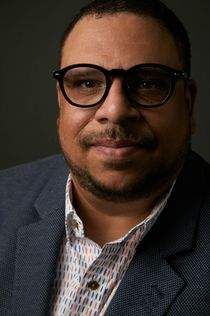
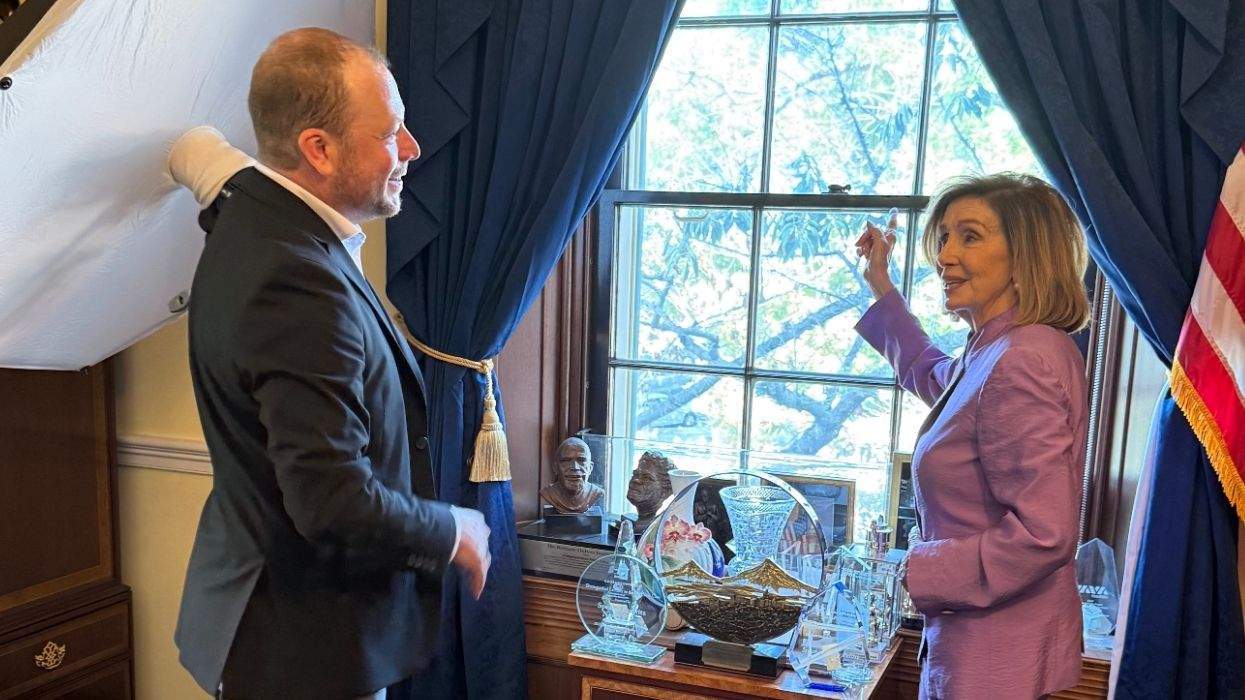
Tourists are already taking photographs outside Nancy Pelosi’s office when I arrive at the Longworth House Office Building at 10:30 on a Thursday morning with photographer Mike Nelson.
Inside, a staff member conducting a Zoom job interview asks an applicant, “Why are you interested in working in this office specifically?”
One possible answer hangs nearby.
A framed display shows the men who had served as speaker of the House before Pelosi, their portraits arranged around the woman who broke the sequence.
“Speaker Pelosi, Christopher Wiggins with The Advocate is here to see you,” communications director Ian Krager says as he invites us inside her spacious office with a view of the Capitol dome.
Pelosi would speak with me for more than an hour, and would then keep talking through the photo session. She dislikes having her picture taken but had agreed to sit for a portrait.
Before my first question, Pelosi describes the tributes accompanying her final year in Congress. That morning, she had told Krager she wanted to discuss the future. But there is no talking to Pelosi about the future without touching on the recent past, if only so she can redistribute the credit. She announced in November that she would retire after nearly four decades in the House and two separate stints as speaker.
“I’ve got so many accolades, I’m embarrassed by it,” she confesses.
A month earlier, I had watched her at the Equality PAC National Pride Gala as a tribute video to her allyship played. Pelosi stood facing the screen, absorbed.
“Yes, I am,” she says when asked whether she is allowing herself a victory lap. “As long as it shows collaboration,” and “the courage of the members, the activism of outside groups,” she adds.
“It’s fun to see,” she admits. “But it is kind of embarrassing. Like, come on, all right, enough.”
Pelosi has spent her career in superlatives: the first woman speaker and one of her generation’s most effective legislative tacticians. Her job, as she sees it, is to make the government machinery answer the movement’s demand.
That understanding was forged in death.
“BECAUSE I DID”
Pelosi entered Congress in June 1987 after winning a special election to succeed Democratic Rep. Sala Burton, a San Francisco organizer who took office after the 1983 death of her husband, the liberal power broker Phillip Burton. The widow-turned-congresswoman died of colon cancer on February 1, 1987, but not before urging Pelosi to seek the seat.
Pelosi, then 47, faced Harry Britt, a gay former San Francisco supervisor and Harvey Milk ally, in a fierce runoff during the AIDS catastrophe. She won on June 2.
One week later, in her first House floor speech, she said she had come to Congress to fight AIDS.
“Why’d you say you came here to fight AIDS?” Pelosi recalled people asking.
“Because I did,” she answered.
Pelosi, now 86, speaks of those years not as distant policy history, but as an emergency she can still enter at will. People were dying. Activists were accused of being too aggressive.
“Too aggressive when people are dying?” she asks, her voice sharpening.
“When we talk about HIV/AIDS, this was a matter of life and death,” Pelosi says. “I saw my role as one that could say to people: ‘You’re wrong. This is appropriate.’”
The AIDS movement became a model. People learned they could not wait quietly for institutions to notice them. They had to organize and make inaction politically impossible.
Conceived by activist Cleve Jones, the AIDS Memorial Quilt transformed an epidemic into individual lives rendered in fabric, photographs, lettering, and love.
However, Pelosi initially doubted Jones’s vision.
“Who sews anymore?” she remembers thinking. People did. They sewed by the thousands.
Once the quilt came alive, Pelosi fought to place the full display on the National Mall. The National Park Service had proposed only a few panels along a street.
“They didn’t know,” she says, smiling.
“Don’t mess with Nancy Pelosi,” I offer.
“The grassroots,” she corrects gently.
Pelosi also recalls the effort to bring the 1984 Democratic National Convention to San Francisco, when competing cities exploited fears of gay people and the emerging epidemic. Some warned that delegates could not safely eat the city’s food.
When members from the DNC site selection committee visited, Pelosi hosted them alongside representatives from the city’s Black, Asian, Latino, and gay and lesbian communities at her home. She instructed her children to make antigay prejudice visible — then disarm it.
“On the table, there’ll be the guacamole and the dip and all this stuff,” she recalls telling them. “When these people come up to the table, make sure — and I did myself — that you have a gay person right with you and both of you dip into the stuff at the same time.”
This act challenged fears that AIDS spread through shared food or casual contact. Pelosi also remembered physicians touching patients without gloves in front of reporters, turning human contact into an intervention against panic.
Pelosi helped secure billions of dollars of federal support for research, treatment, housing, and prevention. “We’re not talking about money,” she says. “We’re talking about saving lives.” She remembers monthly meetings in which people with AIDS initially asked for help making wills or finding medicine overseas. Then science advanced, and the requests changed.
“I need a job,” she recalls people saying. “That was beautiful,” Pelosi says. People who had prepared to die were planning to live.
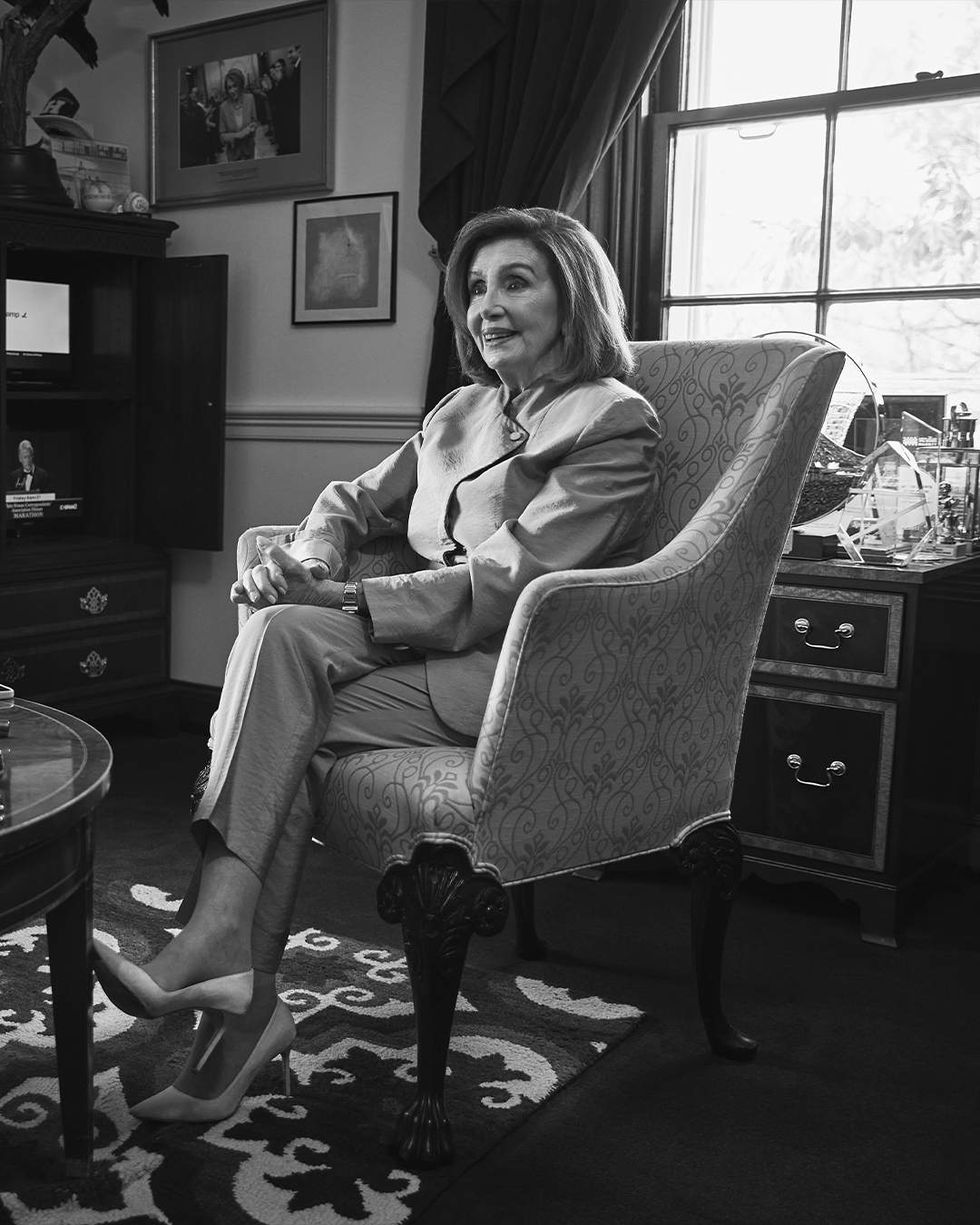 Nancy Pelosi photographed in her office for The Advocate.Photography by Mike Nelson
THE RULES ARE YOUR PROTECTION
Pelosi’s reverence for mobilization is only matched by her institutional competence.
As chair of the California Democratic Party, she urged activists to attend meetings where rules were written — and to learn those rules before declaring themselves mistreated.
“You were out of order,” she remembers telling people who complained that a chair had ruled against them. “The rules are your best protection.”
In Congress, that meant understanding procedure and legislation’s full path. A triumphant floor amendment could disappear in conference. “Anticipation, anticipation, anticipation,” she says.
Pelosi distinguishes the power she once held from the influence she retains. Power, in her telling, is executive and urgent. A speaker must balance competing concerns and act within the available window.
“If you hesitate, you’ll lose your opportunities,” she says.
Influence is a suggestion, a “gentler touch,” wisdom exercised by someone who no longer controls the votes or calendar.
“I have given up power,” Pelosi says, “but I have not given up influence.”
As if to illustrate the point, her cellphone rings. Rahm Emanuel — the former congressman, Obama White House chief of staff, Chicago mayor, and U.S. ambassador to Japan — was calling. Pelosi chuckles and hands the phone to Krager, who silences it. Later, it rings again, though I could not see the caller. Even without the gavel, the political world still has Nancy Pelosi on speed dial.
Her mentorship follows a simple principle. She asks younger people to identify their “why,” devise a strategy, and show why the objective serves others.
“It has to be their thing,” she says. “What is your passion? What is your mission?”
That philosophy will shape the Nancy Pelosi Institute for Representative Democracy at the University of California, Berkeley, scheduled to launch in January. Pelosi is expected to help teach a course there on Congress.
“THEY PICK TRANS”
Pelosi’s LGBTQ+ record includes the passage of the Matthew Shepard and James Byrd Jr. Hate Crimes Prevention Act, the rescinding of a ban on gay people serving openly in the military through the Don’t Ask, Don’t Tell Repeal Act of 2010, the federal recognition of same-sex marriage through the Respect for Marriage Act, and the repeated House passage of the Equality Act.
She uses those victories to explain the right’s fixation on transgender people.
“They know that there’s no argument about LGBT,” she says. “So they pick trans.”
Decades of organizing, she argues, made broad attacks on gay and lesbian people less useful. Republicans identified transgender people — and bathrooms, sports, and military service — as terrain where unfamiliarity could become fear.
“They lost the battle on HIV/AIDS, on anti-discrimination and everything,” Pelosi says. “Now what they’re doing to the military is harmful to our national security.”
Since returning to office, the Trump administration has sought to exclude transgender people from military service, restricted passport gender markers, and targeted federal support for gender-affirming care.
“It’s heartbreaking,” Pelosi says. “These are people’s children.”
She has a transgender grandniece whom she loves dearly. She has met homeless transgender youth rejected by their relatives, and families who embraced their children “and took pride” in them.
“That’s where we want everyone to be,” she says. Pelosi rejects the idea that San Francisco is merely tolerant.
“That’s a condescending word,” she says as she often does. “We have respect, and we take pride.”
In 2019, during Trump’s first attempt to restrict transgender military service, Pelosi invited transgender Army officers Jennifer Peace and Ian Brown to the State of the Union. When I call them her guests, she corrects me.
“They’re my friends,” she says.
The current policy is a bitter reversal after “don’t ask, don’t tell” — another demand that some people serve by concealing themselves. Pelosi sees unfinished work as proof that progress creates new expectations.
“The successes have bred more challenges,” she says.
“I’M NOT AN INCREMENTALIST”
Pelosi bristles when I ask what she had learned about incrementalism.
“I’m not an incrementalist,” she says. “It’s just not my thing.”
The assertion collides with a defining dispute. In 2007, Pelosi supported an Employment Non-Discrimination Act protecting sexual orientation but not gender identity. It passed the House but died in the Senate. Many transgender people remember the exclusion as a betrayal.
When pressed, she points to her approach to passing the Hate Crimes Prevention Act just two years later. During that fight, she says, members warned that the bill could not advance with gender identity protections intact.
“They came back to me and said, ‘We can’t get it out of committee with trans in there,’” Pelosi recalls. “‘But you could pass it in a minute if you take out trans.’”
Her answer, she says, was categorical. “We won’t pass it in a hundred years if we take out trans,” she remembers saying. “We’re never bringing that bill to the floor. It’s all-inclusive.”
The legislation remained inclusive and became law in 2009. Judy Shepard came to Washington to lobby for it, accompanied, Pelosi recalls, by the sheriff from the Wyoming county where her son, Matthew, was murdered. He told lawmakers he might once have opposed them but had “seen the light.”
The following year, Congress repealed “don’t ask, don’t tell.” Pelosi remembers promising at a Harvey Milk commemoration that the work would be finished by Christmas. President Barack Obama signed the repeal on December 22, 2010.
In 2022, Congress passed the Respect for Marriage Act, requiring federal and interstate recognition of valid same-sex and interracial marriages. It became the final enrolled bill Pelosi signed as speaker.
When I ask whether she ever sits alone and thinks, Damn, look at what I’ve done, Pelosi permits herself a moment.
“I may soon do that,” she says with a smile.
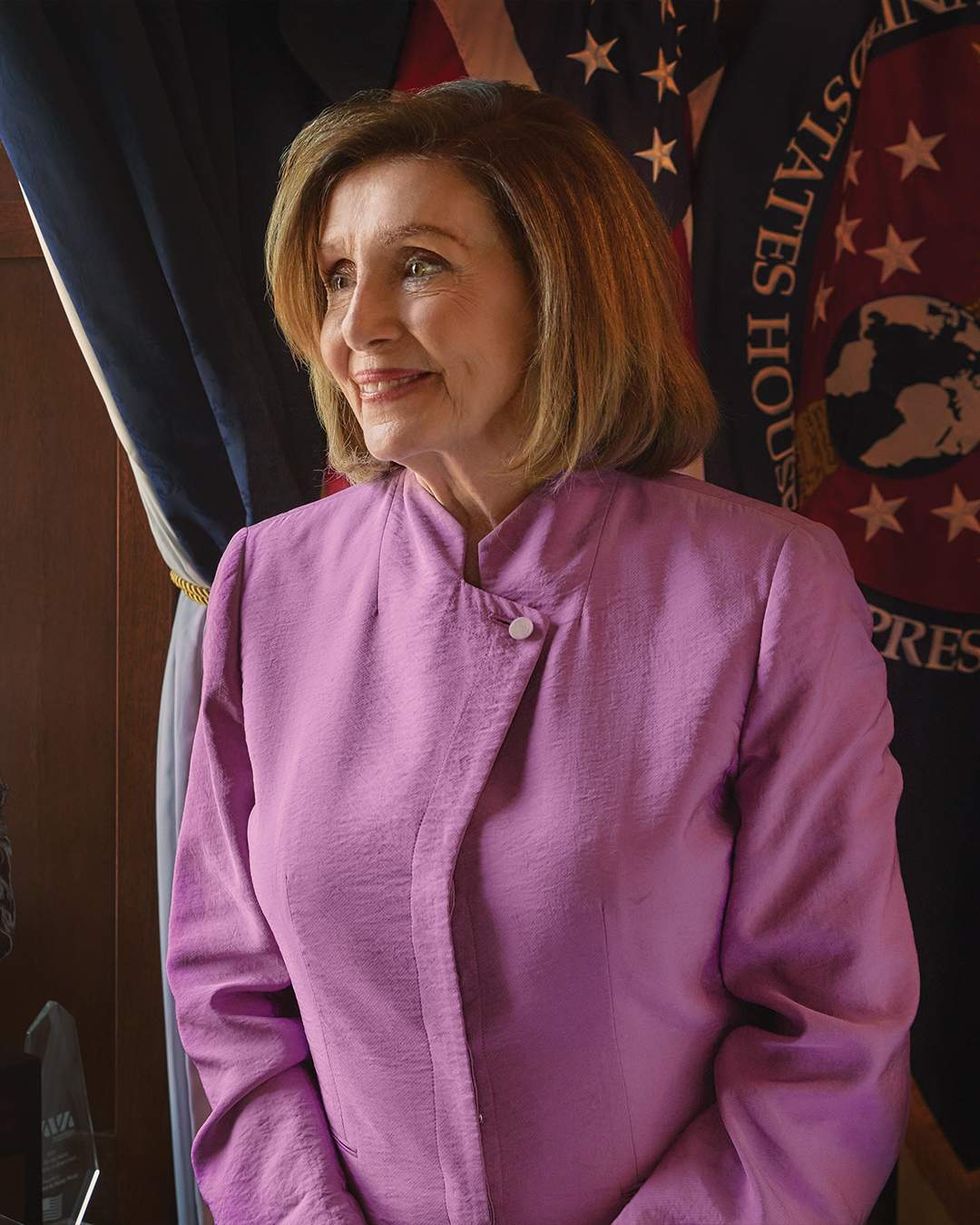 Nancy Pelosi photographed in her office for The Advocate.Photography by Mike Nelson
A SPARK OF DIVINITY
When I ask what she hopes the LGBTQ+ community would remember about her, Pelosi resists the premise.
“I don’t really think it’s about me,” she says.
I ask her to indulge me. “I would be glad it is not the opposite — that I stood in the way of anything,” she says. “Because of everything we did, I would want the story to be that I was part of something. That it was a collaboration, a wedding of inside maneuvering, outside mobilization, and respect.”
Then she remembers an awards ceremony honoring Jones, who had opposed her in her first congressional campaign before becoming a close friend. The activist told the audience that in 100 years, nobody would remember the people in the room or what they had done — with one exception.
He turned and bowed toward Pelosi.
“Oh my God,” she recalls thinking. “Why did he do that?”
It brought her to tears.
Pelosi wants history to remember a movement, while history insists on assigning a face. Accepting her place in it seems perilously close to diminishing everyone else’s.
Pelosi describes herself as a devout Catholic. San Francisco Archbishop Salvatore Cordileone directed priests in 2022 not to admit her to communion because she supported abortion rights. The archdiocese said the action was not excommunication, though Pelosi uses that word colloquially in our conversation.
“That’s the archbishop’s problem, not mine,” she says.
Her faith begins with the belief that every person carries a “spark of divinity.” Christ’s participation in humanity, she says, lets people participate in the divine. Dignity cannot depend on nationality, housing status, sexual orientation, or gender identity.
“How can they not believe that if they have the spark of divinity, so does everybody else, no matter how different we may be?” she asks.
Pelosi, who takes issue with “un-Christian Christians,” searches for a description of religious figures who claim faith while excluding whole categories of people.
“Partners in inhumanity,” she says.
“All God’s children,” she adds, describing their apparent creed, “except we’ll decide who.”
She connects the idea to civil rights icon John Lewis, whose moral authority ended a caucus dispute over adding LGBTQ+ protections to the Civil Rights Act via the Equality Act.
“John Lewis just said, ‘This is what we’re doing,’” Pelosi recalls. That ended the discussion.
“A MOBILIZATION OF LOVE”
Pelosi is leaving Congress amid a second Trump administration she regards with disgust. She avoids saying the president’s name whenever possible, referring to him as “you know who.”
“Any time spent on him is just repulsive to me,” she says.
She accuses congressional Republicans of surrendering the legislative branch’s independence. “They have surrendered Article One,” Pelosi says.
She lists what she believes is under strain: free and fair elections, an independent judiciary, the rule of law, due process, and freedom of the press.
“All of these things chilled, if not destroyed,” she says, then retreats slightly. “Chilled.”
Pelosi predicts Democrats will win the House in November and hopes they will capture the Senate. But she returns to the source of political change: public sentiment awakened by personal connection.
People are busy with work and family, she says. Movements must pierce that noise and make the stakes legible.
She remembers people who questioned her AIDS work changing when someone in their family became sick or came out. “It was a mobilization of love too,” she says.
Movements, in Pelosi’s telling, turn the person labeled “other” into someone already loved. They make abstraction impossible. The same process, she believes, will undermine anti-transgender attacks.
Near the end of our conversation, Pelosi distills the legacy she has spent nearly the entire interview trying not to claim.
“If I’m remembered,” she says, she hopes HIV and AIDS advocacy would be “one of the main reasons.”
Her service, she says, was grounded in “respect for the dignity and worth of every person.” And that she was “especially honored to be associated with the LGBTQ community.”
Then come the photographs.
She says she has disliked taking pictures since childhood when her father was the mayor of Baltimore. Nelson coaxes her toward the window.
“They usually say to me, ‘Don’t smile,’” she tells him. “That’s impossible.”
Even during the photo session, she returns to the next generation. The victories of her era, Pelosi says, should already be “in the dustbin of history” — settled questions rather than recurring emergencies. Instead, transgender people remain targets.
Nelson asks her to look toward the window, where the early-afternoon light falls across the former speaker, who has spent a career recognizing openings.
The camera clicks.
As the office resumes its schedule, Pelosi prepares to travel again. New York. Missouri. Chicago. More politics. The midterm elections loom.
And the woman at the center of the frame — the one surrounded in the reception room by all the men who came before her — is still thinking about what comes next.
“We have to win,” she says. “We have to win big.”
Go behind the scenes of our Nancy Pelosi interview, with exclusive quotes and photos, by becoming an Advocate member. For as little as $5 / month, you can support The Advocate's journalism and get access to our members-only email newsletter. Join by Friday, August 21, to get this special members-only coverage in your inbox!
This cover story is part of OUT’s Sept-Oct 2026 print issue, on newsstands Sept 1. Support queer media and subscribe — or download the issue through Apple News+, Zinio, Nook, or PressReader starting Aug 20.
 Nancy Pelosi photographed for The Advocate's September-October cover.Photography by Mike Nelson
talent Nancy Pelosi @speakerpelosi
photographer Mike Nelson @mknlsn