'%3E%3Cpath d='M16.3574 35.6519H12.9537L15.0491 18.8873L16.3574 35.6519ZM30.4229 54.0093L22.309 0.994385H7.91795L0 54.0093H10.6634L11.5802 46.3855H17.4014L17.9914 54.0093H30.4229Z' fill='%23971B20'/%3E%3Cpath d='M48.2073 41.8813C48.2073 43.4049 47.4892 44.0011 46.1144 44.0011H43.7595V11.0687H46.1144C47.4892 11.0687 48.2073 11.6636 48.2073 13.1885V41.8813ZM59.5273 43.6695V11.3326C59.5273 3.71323 53.5729 0.994385 47.8157 0.994385H31.7213V54.0093H47.8157C53.5729 54.0093 59.5273 51.29 59.5273 43.6695Z' fill='%23971B20'/%3E%3Cpath d='M90.183 0.994385H78.6039L75.0711 30.6157L71.9955 0.994385H59.4346L69.2474 54.0093H80.373L90.183 0.994385Z' fill='%23971B20'/%3E%3Cpath d='M107.063 42.3448C107.063 43.7359 105.951 44.5974 104.643 44.5974C103.269 44.5974 102.157 43.7359 102.157 42.3448V12.658C102.157 11.2676 103.269 10.4058 104.643 10.4058C105.951 10.4058 107.063 11.2676 107.063 12.658V42.3448ZM119.233 43.2723V11.7312C119.233 6.36384 112.952 -3.8147e-06 104.643 -3.8147e-06C96.2667 -3.8147e-06 89.9867 6.36384 89.9867 11.7312V43.2723C89.9867 48.6393 96.2667 55 104.643 55C112.952 55 119.233 48.6393 119.233 43.2723Z' fill='%23971B20'/%3E%3Cpath d='M150.976 43.9349V33.7309H139.069V42.3448C139.069 43.7359 137.957 44.5974 136.582 44.5974C135.076 44.5974 133.964 43.7359 133.964 42.3448V12.658C133.964 11.2676 135.076 10.4058 136.582 10.4058C137.957 10.4058 139.069 11.2676 139.069 12.658V21.2723H150.976V11.0687C150.976 5.70107 145.283 -3.8147e-06 136.582 -3.8147e-06C127.75 -3.8147e-06 121.796 5.70107 121.796 11.0687V43.9349C121.796 49.3022 127.75 55 136.582 55C145.283 55 150.976 49.3022 150.976 43.9349Z' fill='%23971B20'/%3E%3Cpath d='M167.478 35.6519H164.076L166.17 18.8873L167.478 35.6519ZM181.544 54.0093L173.432 0.994385H159.037L151.123 54.0093H161.785L162.704 46.3855H168.523L169.114 54.0093H181.544Z' fill='%23971B20'/%3E%3Cpath d='M205.412 10.4058V0.994385H177.081V10.4058H185.392V54.0093H197.428V10.4058H205.412Z' fill='%23971B20'/%3E%3Cpath d='M230.002 54.0093V43.9349H218.914V31.8746H226.635V21.8028H218.914V10.4058H230.002V0.994385H206.875V54.0093H230.002Z' fill='%23971B20'/%3E%3C/g%3E%3Cdefs%3E%3CclipPath id='clip0_260_7080'%3E%3Crect width='230' height='55' fill='white'/%3E%3C/clipPath%3E%3C/defs%3E%3C/svg%3E)

Robert Redford was 89 years old, but if I’m honest, I never thought of him as old. Not once, even when I read about him in recent years and saw his picture, usually at the opening of the Sundance Film Festival he founded.
Keep up with the latest in LGBTQ+ news and politics. Sign up for The Advocate's email newsletter.
To me, and I suspect to many gay men of my generation, he was eternally golden. Someone like Redford never really gets “old.”
The blond hair, the chiseled chin, the kind of hypnotic blue eyes that were always mesmerizing. Back in the day, I usually described Redford like this: “It was as if God paused for a moment before he created Redford and said, ‘How can I outdo myself with this guy?’”
I don’t think there’s anyone above a certain age who didn’t carry some kind of crush on Robert Redford, no matter who they were. He was impossibly handsome, yet he never seemed untouchable. I don’t think I’m the only one who felt that way.
There was a softness to him, a gentleness that stood out in an era of swaggering, gruff movie stars like Charles Bronson, Lee Marvin, and Charlton Heston, who seemed too harsh. At least to me. Redford could play a cowboy or an outlaw with all the virility in the world, but he always gave off this aura of kindness. It was masculinity without cruelty. He might have shot some guns and beat up people, but he didn’t exude fear.
That might explain why, at 29, he was cast in Inside Daisy Clover as Wade Lewis, a character with clear gay undertones. Redford himself said Wade was “mysterious, charming, attractive to both sexes.”
You could take that exact description and apply it to Redford himself. For a young gay man watching back then, that was a revelation, and a big risk for a young straight actor. It was highly provocative for the mid-1960s, to say the least. For that role, he won the Golden Globe new star of the year award.
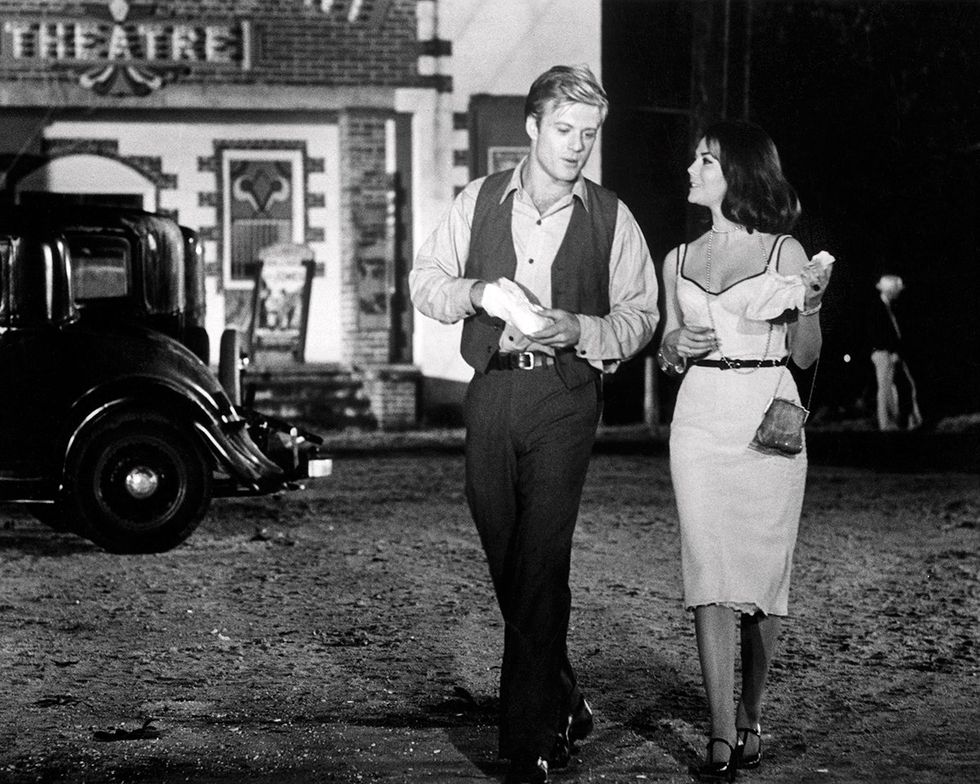 Actors Robert Redford and Natalie Wood during filming of 'Inside Daisy Clover', 1965Silver Screen Collection/Getty Images
Of course, his career exploded after that, proving that he could take on a diverse set of characters. He starred in classics like Butch Cassidy and the Sundance Kid, The Sting, The Candidate, and most poignantly, with The Way We Were, a movie with a gay backstory.
Redford portrayed Hubbell Gardiner, a character whose gentile background and romantic involvement with Katie (Barbara Streisand) underscores a contrast with the screenwriter Arthur Laurents’s own life and desires.
Though Laurents long maintained that Katie was inspired by a college acquaintance, he later revealed she was “mainly me,” suggesting that his attractions and identity subtly shaped the love triangle that Redford’s character inhabits.
For a time, Redford was everywhere and larger than life. For many, he’ll always be remembered alongside Paul Newman, but for me, it was always The Natural where I most remember and appreciate Redford.
As a lifelong baseball fan, I’ve watched that film more times than I can count. Roy Hobbs, stepping up to the plate with the game on the line, shattering the lights with one perfect swing. It was mythical. It’s every boy’s dream come true. Even today, when phenoms like Shohei Ohtani or Aaron Judge spring up, the comparison isn’t so much to Babe Ruth or Mickey Mantle, it’s to Roy Hobbs.
And yet to me, his greatest gift wasn’t just in front of the camera. When Redford directed Ordinary People, he created a film that I return to again and again. It is a delicate, devastating, and honest look at mental illness. Donald Sutherland, Timothy Hutton, and Mary Tyler Moore gave the performances of their lives, and it was Redford who brought that out of them.
As someone who has struggled with mental illness and lived through suicide attempts, I can say Ordinary People gets it right. It understands how the pain doesn’t just stay locked inside one person, it seeps into the family and friends of the person affected. Redford didn’t exploit that pain. He gave it dignity, and he gave it truth.
Every time I watch that film, I think that Redford had to know someone very close to him who suffered from the fallout of suicide and depression.
That dignity and truth carried into the rest of his life. He stood up for LGBTQ+ equality when so many others stayed quiet. He spoke out for marriage rights back in 2013, lending his name and his voice to our fight.
And as someone who worked for the United Nations and climate change for a time, Redford poured his soul into climate activism decades before it became fashionable. He didn’t just make movies, he tried to make the world a better place.
Including Sundance, which is his great gift to independent film. The festival wasn’t about flashy and splashy cinema, at least when Redford birthed it.. It was about giving new voices a chance, about opening the door for people who had never been invited in.
But what I’ll carry with me is the way he made me feel. Yes, I can remember being astonished at how utterly handsome he was. I know I’m not alone. There are gay men everywhere today, hearing the news of his death and feeling that same tingle, and now sharing an ache that he died.
He may not have belonged to us in the literal sense, but he gave us a vision of masculinity that included beauty, softness, and possibility.
Robert Redford lived nearly 90 years. He changed movies, he arguably changed lives, and I think he changed the way we saw men. But I’ll always remember him the way he was burned into my mind decades ago, the Greek god of a man with that understated yet radiant smile, forever youthful, forever handsome, and forever sincere.
God may have taken a little extra time in creating him. And I am so grateful that he did.
Voices is dedicated to featuring a wide range of inspiring personal stories and impactful opinions from the LGBTQ+ community and its allies. Visit Advocate.com/submit to learn more about submission guidelines. Views expressed in Voices stories are those of the guest writers, columnists, and editors, and do not directly represent the views of The Advocate or our parent company, equalpride.