'%3E%3Cpath d='M16.3574 35.6519H12.9537L15.0491 18.8873L16.3574 35.6519ZM30.4229 54.0093L22.309 0.994385H7.91795L0 54.0093H10.6634L11.5802 46.3855H17.4014L17.9914 54.0093H30.4229Z' fill='%23971B20'/%3E%3Cpath d='M48.2073 41.8813C48.2073 43.4049 47.4892 44.0011 46.1144 44.0011H43.7595V11.0687H46.1144C47.4892 11.0687 48.2073 11.6636 48.2073 13.1885V41.8813ZM59.5273 43.6695V11.3326C59.5273 3.71323 53.5729 0.994385 47.8157 0.994385H31.7213V54.0093H47.8157C53.5729 54.0093 59.5273 51.29 59.5273 43.6695Z' fill='%23971B20'/%3E%3Cpath d='M90.183 0.994385H78.6039L75.0711 30.6157L71.9955 0.994385H59.4346L69.2474 54.0093H80.373L90.183 0.994385Z' fill='%23971B20'/%3E%3Cpath d='M107.063 42.3448C107.063 43.7359 105.951 44.5974 104.643 44.5974C103.269 44.5974 102.157 43.7359 102.157 42.3448V12.658C102.157 11.2676 103.269 10.4058 104.643 10.4058C105.951 10.4058 107.063 11.2676 107.063 12.658V42.3448ZM119.233 43.2723V11.7312C119.233 6.36384 112.952 -3.8147e-06 104.643 -3.8147e-06C96.2667 -3.8147e-06 89.9867 6.36384 89.9867 11.7312V43.2723C89.9867 48.6393 96.2667 55 104.643 55C112.952 55 119.233 48.6393 119.233 43.2723Z' fill='%23971B20'/%3E%3Cpath d='M150.976 43.9349V33.7309H139.069V42.3448C139.069 43.7359 137.957 44.5974 136.582 44.5974C135.076 44.5974 133.964 43.7359 133.964 42.3448V12.658C133.964 11.2676 135.076 10.4058 136.582 10.4058C137.957 10.4058 139.069 11.2676 139.069 12.658V21.2723H150.976V11.0687C150.976 5.70107 145.283 -3.8147e-06 136.582 -3.8147e-06C127.75 -3.8147e-06 121.796 5.70107 121.796 11.0687V43.9349C121.796 49.3022 127.75 55 136.582 55C145.283 55 150.976 49.3022 150.976 43.9349Z' fill='%23971B20'/%3E%3Cpath d='M167.478 35.6519H164.076L166.17 18.8873L167.478 35.6519ZM181.544 54.0093L173.432 0.994385H159.037L151.123 54.0093H161.785L162.704 46.3855H168.523L169.114 54.0093H181.544Z' fill='%23971B20'/%3E%3Cpath d='M205.412 10.4058V0.994385H177.081V10.4058H185.392V54.0093H197.428V10.4058H205.412Z' fill='%23971B20'/%3E%3Cpath d='M230.002 54.0093V43.9349H218.914V31.8746H226.635V21.8028H218.914V10.4058H230.002V0.994385H206.875V54.0093H230.002Z' fill='%23971B20'/%3E%3C/g%3E%3Cdefs%3E%3CclipPath id='clip0_260_7080'%3E%3Crect width='230' height='55' fill='white'/%3E%3C/clipPath%3E%3C/defs%3E%3C/svg%3E)


A few years ago, an older lesbian couple in Richmond, California, sold their house and moved to a nursing home. One woman was confined to a wheelchair, I was told. They had purchased the home in the 1970s, and when they moved out, I bought an unusual garden implement at their estate sale. I also bought their old rototiller, but this story isn't about rototillers.
The garden tool I purchased was leaning against the back wall of their basement, alongside an assortment of garden paraphernalia commonly found at estate sales. But this tool was one-of-a-kind. I'd never seen anything like it, but I appreciate old things, so it practically leapt into my hands. I couldn't tell you how much I paid for it, but I would have paid more if asked. It is a savage-looking thing. Manufactured before I was born, I am sure. A five-pronged trident. Its five spikes curve into a claw, identifying it as something other than a trident. Made of steel, it is used for cultivating soil. The original hardwood handle is intact and worn smooth by the hands of the two women who used it. It was built to endure, and tools aren't constructed that way anymore. On my farm, we find it cumbersome to refer to it as the "old five-pronged cultivator tool," so we have named it the "lesbian tool."
I do not know the names of either woman who previously owned it. Perhaps names were mentioned at their estate sale, but I wasn't paying attention. Their names were typical for their generation. One might have been "Ruth." The other, "Betty," maybe. We could refer to it as "Betty's tool" if we knew her name, but we don't, so we won't. It seems more respectful to name the implement after its origin—the lesbian tool.
Estate sales are intended for emptying houses of perfectly usable items that are beyond a reasonable state of wear. This one was selling the women's furniture, circa 1970s. Old dishware and Tupperware were laid out across their kitchen counters. Estate sales always have pieces of Tupperware, and often without lids.
Backed up against a Richmond hillside, the front of their home was small, tidy, level, and unremarkable. The rear yard was anything but. It swooped and swaled against the hillside, such that no patch of ground might have been described as level. From a gardener's perspective, the terrain would have been challenging. Limiting. Intimidating, if you intended to grow your own food. Under challenging circumstances, these women created something to be proud of.
Handmade trellises brought vegetable vines up into the sun. Their citrus trees were expertly pruned. An established peach tree crowded a path that curved against an east-sloping swale. A persimmon tree was loaded with fruit. When people plant fruit trees in their backyard, they intend to stick around for a while.
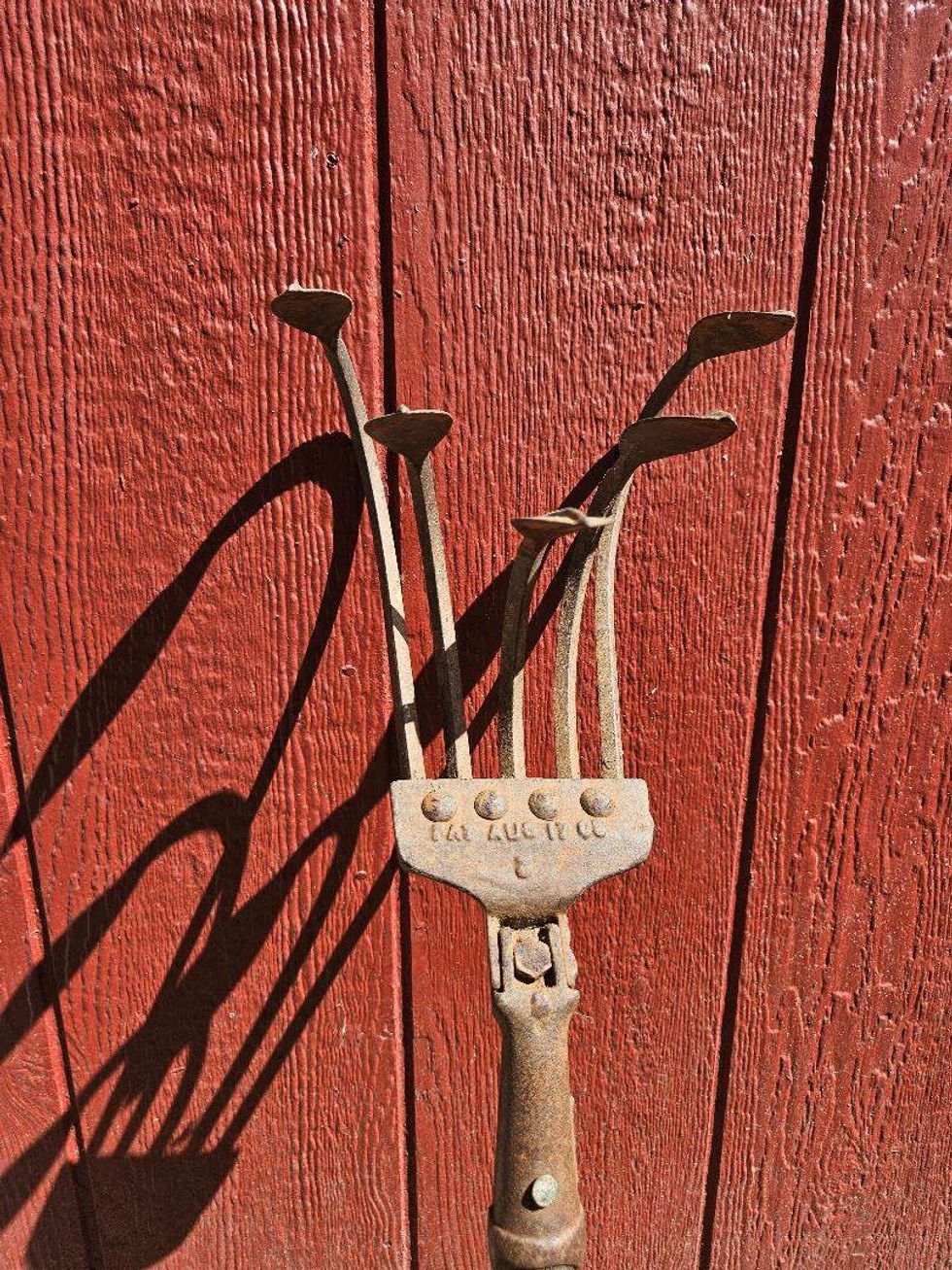 The "lesbian tool"Courtesy of author.
The tool I purchased from them is now in regular use on my farm. It was not meant for the timid. You could kill someone with this thing, though I don't suspect it was ever used for that purpose. "Ruth" and "Betty" didn't strike me as being that sort of people, but I sometimes think of them today, and wonder what their lives were like. Same-sex couples are usually free to live openly these days, but I don't think that would have been true for them in the 1970s. When my husband and I moved to our farm on a rural road in 2013, we didn't give it much thought. Unlike other parts of the country, the San Francisco Bay Area is not a hotbed of homophobia, so we didn't think to survey the opinions of our new neighbors before we moved in. We didn't expect trouble.
The circumstances for these two women would have been very different fifty years ago. I am sure of that. Their lives would have required some bravery. As our country regresses to intolerance, I hope that the LGBTQ+ community is prepared to exhibit that same bravery.
I suspect that these two women are no longer alive, but our visit to their garden has stuck with us. I don't think they intended that. They might have just been two determined women who quietly staked out their ground and put down roots in a little Richmond neighborhood. I hope their fruit trees are still standing.
When I use their five-pronged cultivator tool today, I think of them. I imagine that we will always refer to it as the lesbian tool. It will outlive us.
Scott Terry is a prolific writer and gay cowboy/farmer in California.
Opinion is dedicated to featuring a wide range of inspiring personal stories and impactful opinions from the LGBTQ+ community and its allies. Visit Advocate.com/submit to learn more about submission guidelines. We welcome your thoughts and feedback on any of our stories. Email us at voices@equalpride.com. Views expressed in Voices stories are those of the guest writers, columnists, and editors, and do not directly represent the views of The Advocate or our parent company, equalpride.