'%3E%3Cpath d='M16.3574 35.6519H12.9537L15.0491 18.8873L16.3574 35.6519ZM30.4229 54.0093L22.309 0.994385H7.91795L0 54.0093H10.6634L11.5802 46.3855H17.4014L17.9914 54.0093H30.4229Z' fill='%23971B20'/%3E%3Cpath d='M48.2073 41.8813C48.2073 43.4049 47.4892 44.0011 46.1144 44.0011H43.7595V11.0687H46.1144C47.4892 11.0687 48.2073 11.6636 48.2073 13.1885V41.8813ZM59.5273 43.6695V11.3326C59.5273 3.71323 53.5729 0.994385 47.8157 0.994385H31.7213V54.0093H47.8157C53.5729 54.0093 59.5273 51.29 59.5273 43.6695Z' fill='%23971B20'/%3E%3Cpath d='M90.183 0.994385H78.6039L75.0711 30.6157L71.9955 0.994385H59.4346L69.2474 54.0093H80.373L90.183 0.994385Z' fill='%23971B20'/%3E%3Cpath d='M107.063 42.3448C107.063 43.7359 105.951 44.5974 104.643 44.5974C103.269 44.5974 102.157 43.7359 102.157 42.3448V12.658C102.157 11.2676 103.269 10.4058 104.643 10.4058C105.951 10.4058 107.063 11.2676 107.063 12.658V42.3448ZM119.233 43.2723V11.7312C119.233 6.36384 112.952 -3.8147e-06 104.643 -3.8147e-06C96.2667 -3.8147e-06 89.9867 6.36384 89.9867 11.7312V43.2723C89.9867 48.6393 96.2667 55 104.643 55C112.952 55 119.233 48.6393 119.233 43.2723Z' fill='%23971B20'/%3E%3Cpath d='M150.976 43.9349V33.7309H139.069V42.3448C139.069 43.7359 137.957 44.5974 136.582 44.5974C135.076 44.5974 133.964 43.7359 133.964 42.3448V12.658C133.964 11.2676 135.076 10.4058 136.582 10.4058C137.957 10.4058 139.069 11.2676 139.069 12.658V21.2723H150.976V11.0687C150.976 5.70107 145.283 -3.8147e-06 136.582 -3.8147e-06C127.75 -3.8147e-06 121.796 5.70107 121.796 11.0687V43.9349C121.796 49.3022 127.75 55 136.582 55C145.283 55 150.976 49.3022 150.976 43.9349Z' fill='%23971B20'/%3E%3Cpath d='M167.478 35.6519H164.076L166.17 18.8873L167.478 35.6519ZM181.544 54.0093L173.432 0.994385H159.037L151.123 54.0093H161.785L162.704 46.3855H168.523L169.114 54.0093H181.544Z' fill='%23971B20'/%3E%3Cpath d='M205.412 10.4058V0.994385H177.081V10.4058H185.392V54.0093H197.428V10.4058H205.412Z' fill='%23971B20'/%3E%3Cpath d='M230.002 54.0093V43.9349H218.914V31.8746H226.635V21.8028H218.914V10.4058H230.002V0.994385H206.875V54.0093H230.002Z' fill='%23971B20'/%3E%3C/g%3E%3Cdefs%3E%3CclipPath id='clip0_260_7080'%3E%3Crect width='230' height='55' fill='white'/%3E%3C/clipPath%3E%3C/defs%3E%3C/svg%3E)
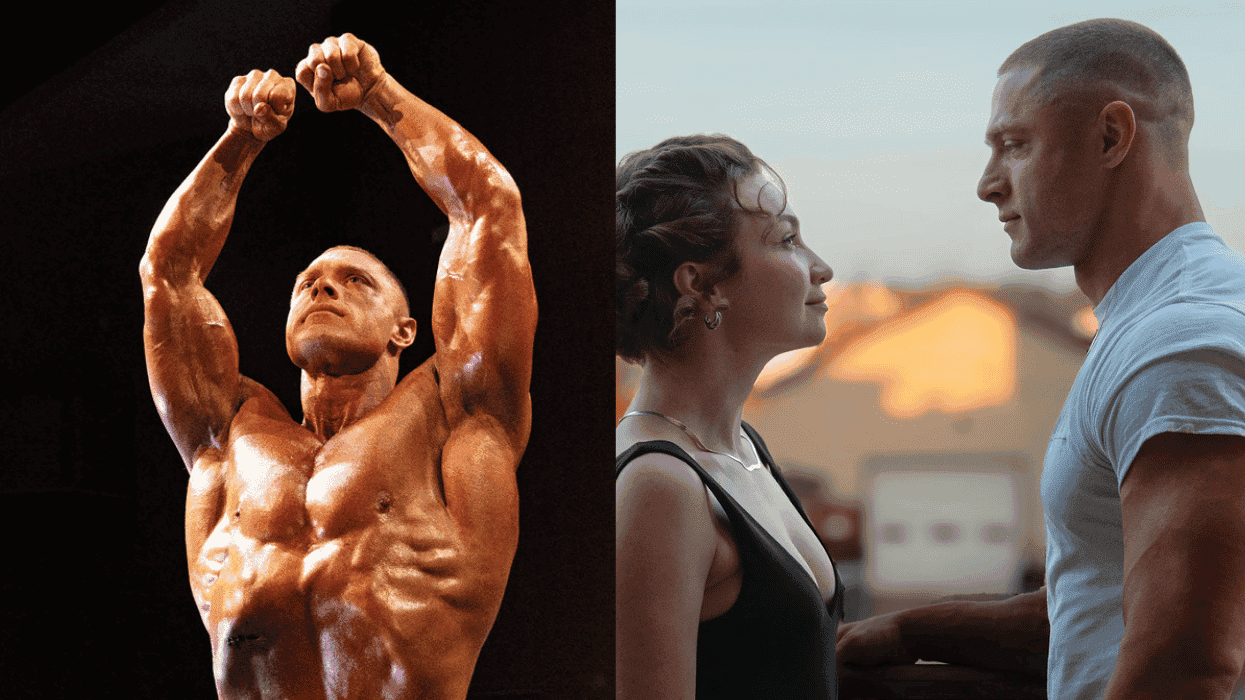

“Bodybuilding is super gay!” declared Brock Yurich, the screenwriter and star of Test, at the film’s Outfest premiere in July.
Yurich is speaking from experience. His father was a bodybuilder, and he himself competed in the sport as a young queer man before turning his aspirations to Hollywood. When Yurich struggled as an actor, a mentor gave him the time-tested advice, “Write what you know.” And after nearly a decade in the making, Test, directed by Sam McConnell (Camp RicStar, The Trans List), is the well-defined result.
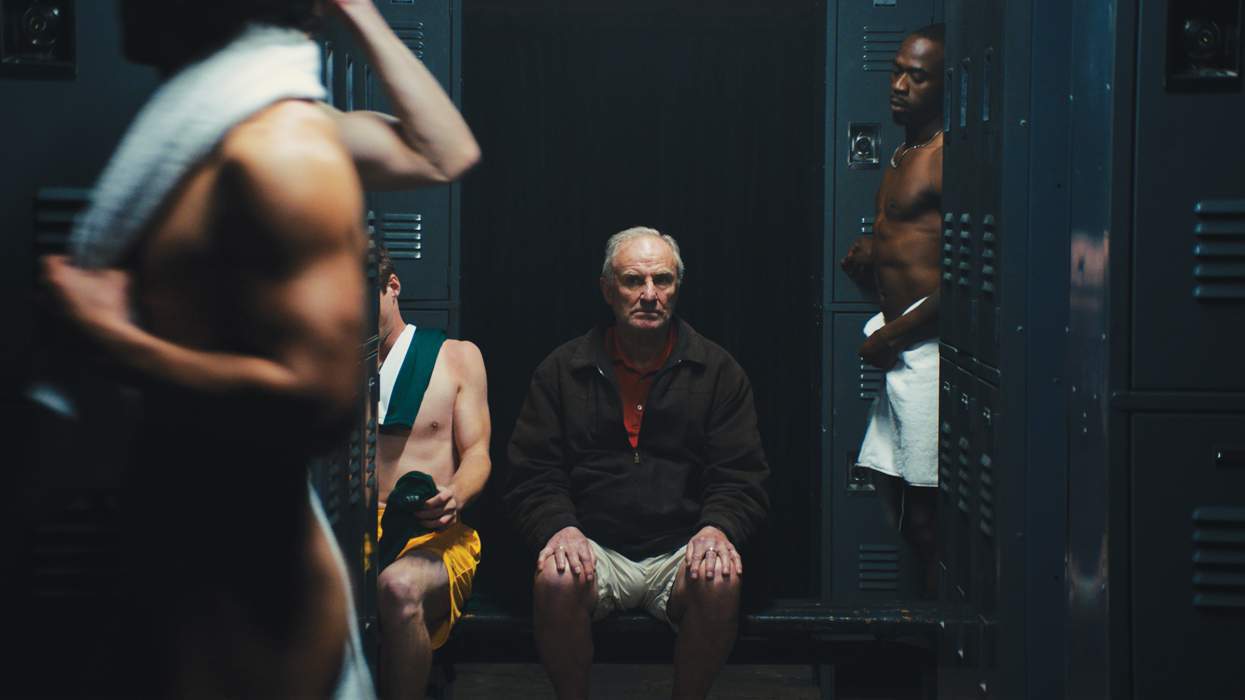
The innate queerness of bodybuilding is apparent from the film’s opening scene, when Joanne (The Invitation’s Tammy Blanchard) paints the muscled torso of her son Eddie (Yurich) with tanning product prior to a competition in their native Ohio — while singing a variation of the gospel hymn, “Are You Washed in the Blood?” With deftness and notes of humor, the film toggles between scenes of flexing abs, biceps, and glutes to church pews monitored by Pastor Gregg (Matthew Morrison, far from his Glee role as an inclusive choir director).
As Eddie strives for both salvation and a pro card — obtained after winning a bodybuilding competition — he also wrestles with his sexuality. He helps his mother pay the rent (and himself fund performance-enhancing drugs) through online donations from male admirers via video chat. And a relationship with a new coach, Mike (Mike Edward), may be more than just about muscle.
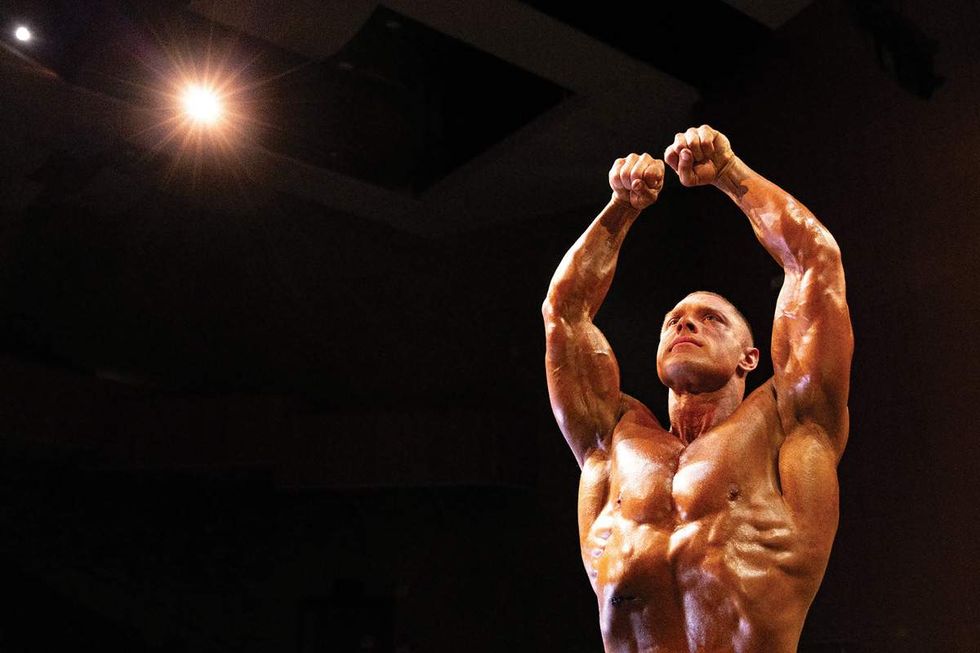 Brock Yurich as Eddie in 'Test.'Tandem Pictures/Hardball Entertainment
Yurich attests that, while the desire to pursue bodybuilding is already complex, queerness adds “a big burst of chemical flames to this entire pot.”
“Like, am I attracted to this person, do I want to look like them, or is it both?” he says. “I didn’t want to answer that question, I just wanted to examine it, because I know a lot of people who have that same question. Is it nature versus nurture, right? Are we conditioned, or is it really who we are?”
Despite the queer appeal of bodybuilding — and notable pioneers like Bob Paris, the 1983 Mr. Universe Winner who came out in 1989 — the sport does not have many prominent out competitors. Test shows the tension between homoeroticism and homophobia in this world, which is a key part of what drew McConnell to this story.
“It’s something I have never really seen on film that has been told at least with this kind of emotional complexity,” McConnell says. “It is a sport, but it is also in a lot of ways the performance of gender. It’s the performance of the most extreme form of masculinity.”
In Test, this toxic masculinity finds a balance in part through Abby (West Side Story’s Paloma Garcia-Lee), a former girlfriend of Eddie’s who had previously moved to New York to pursue a career as a dancer. Fate found her temporarily moving back to Ohio to teach ballet to young girls — and also, to Eddie, who believes dance can help in his training. It turns out a supportive friend can help even more.
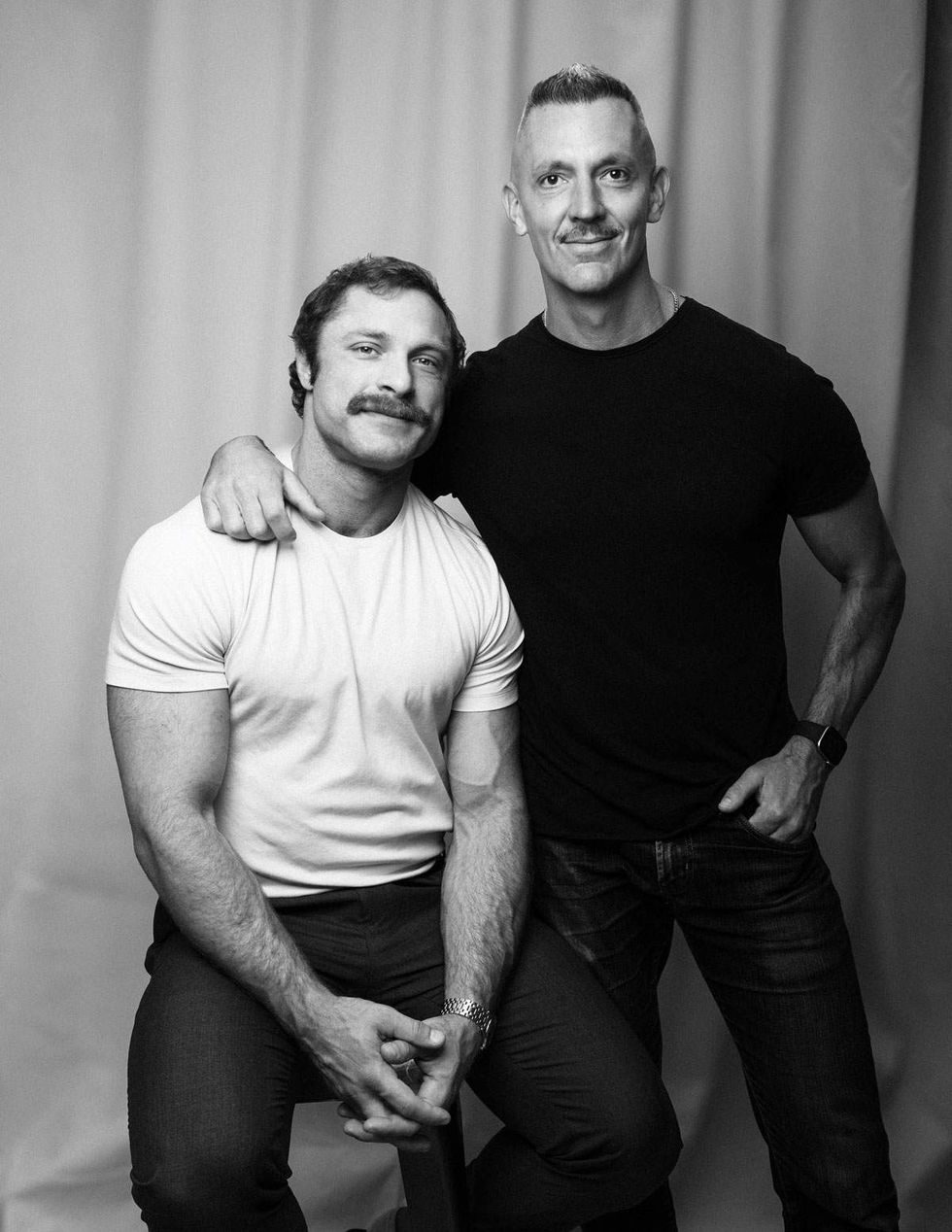 'Test' star and screenwriter Brock Yurich with director Sam McConnell.Tandem Pictures/Hardball Entertainment
“It is an ultimate irony that within this hypermasculine world, it is embracing the feminine, the vulnerable, the soft that ultimately makes all the difference,” McConnell says.
The film arrives at a pivotal time in culture, as men and boys grapple with algorithm-enhanced body insecurities and pressures of “looksmaxxing” — the act of trying to achieve physical perfection, often to a dangerous degree. Notoriously, the influencer Clavicular smashed facial bones to refine his features and claims to be infertile after unsupervised steroid and testosterone injections.
Test and its themes matter in this landscape. “We have so many films and so many projects that explore the feminine version of this, with women not feeling enough in their bodies and what that struggle is. So I think it’s very, very important to put the male perspective forward in this,” Garcia-Lee says.
“What a man is supposed to be, what a man is expected to be or look like or provide or show up as, is something that we’re really examining as a society, and I hope Test allows people to ask themselves those questions — and also allow men to experience more softness within themselves, and maybe more grace within themselves about things that they’re feeling,” she adds.
Yurich attests to the struggles he felt in his early 20s that overlapped with his character’s. “I was very lost, I was very confused. I had a really horrible relationship with a lot of people around me. It was the end of college stepping into the real world, and I was relying on substances like that to sort of build this armor and to protect myself,” he says. “So that’s really where I pulled a lot of Eddie’s mindset from, was this really dark place in my life that I knew personally.”
 Paloma Garcia-Lee as Abby and Brock Yurich as Eddie in 'Test.'Tandem Pictures/Hardball Entertainment
Yurich, now 37, had to undergo a grueling routine to reattain an Olympian physique to film the project and has now found some grace through the experience. “I have been much more forgiving with myself and much more lenient with my outer appearance,” he says. To the Eddies of the world still struggling with their body image, he advises to “find an Abby,” a support network of people who “see your heart and don’t care about what you look like.”
What began as a star-making vehicle for Yurich (it is) has also rekindled his desire to create impactful storytelling. He was deeply moved by the experience of bonding with and hugging audience members on the film festival circuit. “Remember why you started, Brock,” he tells himself. “It wasn’t just to make a movie for yourself, it was to tell a story and to connect with people.”
One of those impacted was Blanchard. At the Outfest screening, the Emmy-winning Life with Judy Garland actress shared how portraying a mother with addiction helped her reconnect with her teen daughter. “Through Brock’s vulnerable, awesome, fucking honest performance, I was able to see my daughter for the first time, what I had put her through, and I cried like a baby,” she said. That revelation became part of their “healing process” — she later apologized to her daughter and was able to find “forgiveness and mercy for myself.”
These stories speak to the power of the film, says McConnell.
“Eddie is trying to perfect this exterior, but it’s at a time where his interior is falling apart,” he says. “He has to go on this journey to learn and to discover where his worth lies and where his value lies. I hope that this encourages people to be able to look a little deeper and not place so much value on the exterior.”
This article is part of OUT’s Sept-Oct 2026 print issue, on newsstands September 1. Support queer media and subscribe — or download the issue now through Apple News+, Zinio, Nook, or PressReader starting August 20.