'%3E%3Cpath d='M16.3574 35.6519H12.9537L15.0491 18.8873L16.3574 35.6519ZM30.4229 54.0093L22.309 0.994385H7.91795L0 54.0093H10.6634L11.5802 46.3855H17.4014L17.9914 54.0093H30.4229Z' fill='%23971B20'/%3E%3Cpath d='M48.2073 41.8813C48.2073 43.4049 47.4892 44.0011 46.1144 44.0011H43.7595V11.0687H46.1144C47.4892 11.0687 48.2073 11.6636 48.2073 13.1885V41.8813ZM59.5273 43.6695V11.3326C59.5273 3.71323 53.5729 0.994385 47.8157 0.994385H31.7213V54.0093H47.8157C53.5729 54.0093 59.5273 51.29 59.5273 43.6695Z' fill='%23971B20'/%3E%3Cpath d='M90.183 0.994385H78.6039L75.0711 30.6157L71.9955 0.994385H59.4346L69.2474 54.0093H80.373L90.183 0.994385Z' fill='%23971B20'/%3E%3Cpath d='M107.063 42.3448C107.063 43.7359 105.951 44.5974 104.643 44.5974C103.269 44.5974 102.157 43.7359 102.157 42.3448V12.658C102.157 11.2676 103.269 10.4058 104.643 10.4058C105.951 10.4058 107.063 11.2676 107.063 12.658V42.3448ZM119.233 43.2723V11.7312C119.233 6.36384 112.952 -3.8147e-06 104.643 -3.8147e-06C96.2667 -3.8147e-06 89.9867 6.36384 89.9867 11.7312V43.2723C89.9867 48.6393 96.2667 55 104.643 55C112.952 55 119.233 48.6393 119.233 43.2723Z' fill='%23971B20'/%3E%3Cpath d='M150.976 43.9349V33.7309H139.069V42.3448C139.069 43.7359 137.957 44.5974 136.582 44.5974C135.076 44.5974 133.964 43.7359 133.964 42.3448V12.658C133.964 11.2676 135.076 10.4058 136.582 10.4058C137.957 10.4058 139.069 11.2676 139.069 12.658V21.2723H150.976V11.0687C150.976 5.70107 145.283 -3.8147e-06 136.582 -3.8147e-06C127.75 -3.8147e-06 121.796 5.70107 121.796 11.0687V43.9349C121.796 49.3022 127.75 55 136.582 55C145.283 55 150.976 49.3022 150.976 43.9349Z' fill='%23971B20'/%3E%3Cpath d='M167.478 35.6519H164.076L166.17 18.8873L167.478 35.6519ZM181.544 54.0093L173.432 0.994385H159.037L151.123 54.0093H161.785L162.704 46.3855H168.523L169.114 54.0093H181.544Z' fill='%23971B20'/%3E%3Cpath d='M205.412 10.4058V0.994385H177.081V10.4058H185.392V54.0093H197.428V10.4058H205.412Z' fill='%23971B20'/%3E%3Cpath d='M230.002 54.0093V43.9349H218.914V31.8746H226.635V21.8028H218.914V10.4058H230.002V0.994385H206.875V54.0093H230.002Z' fill='%23971B20'/%3E%3C/g%3E%3Cdefs%3E%3CclipPath id='clip0_260_7080'%3E%3Crect width='230' height='55' fill='white'/%3E%3C/clipPath%3E%3C/defs%3E%3C/svg%3E)
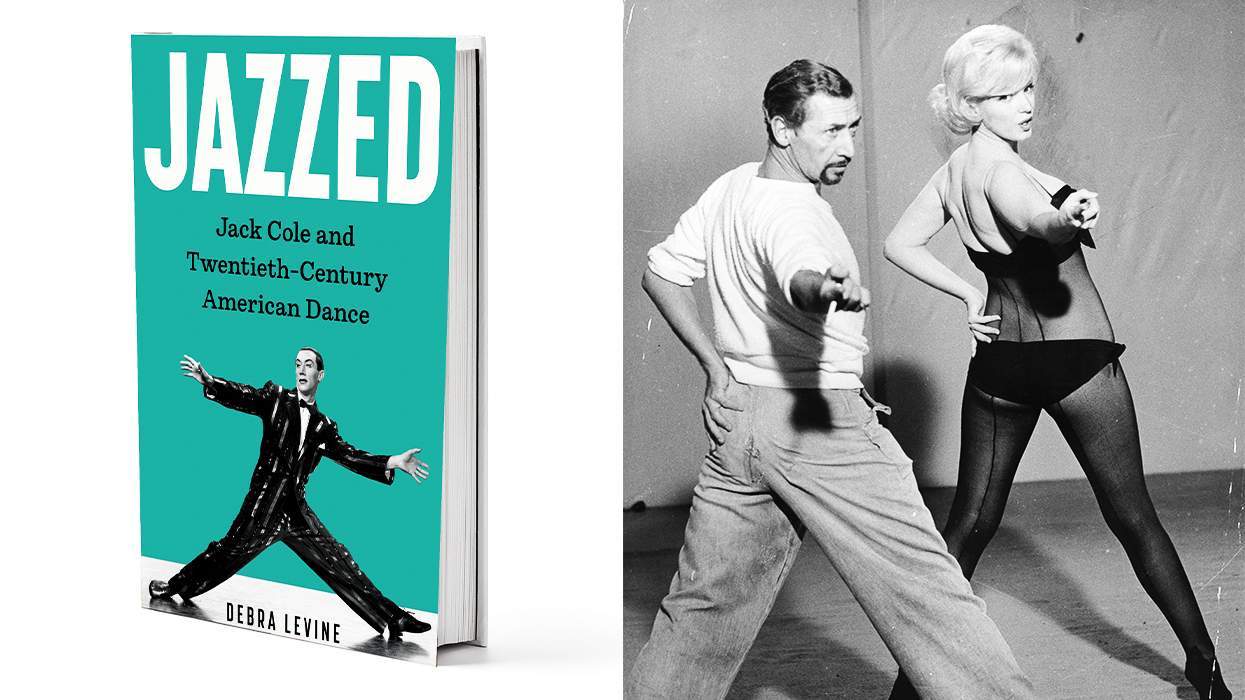

Even if you’ve never seen a Marilyn Monroe movie, you’ve probably, at some point in your life, viewed vintage film clips of the star’s iconic “Diamonds Are a Girl’s Best Friend” performance from 1953’s Gentlemen Prefer Blondes. In addition to Madonna paying homage to it decades later in her “Material Girl” video, that image of Monroe — dressed in skin-tight pink satin, drenched in jewels, and surrounded by gorgeous male dancers — might be one of the most famous pop-culture moments in history. But many don’t know the renowned queer choreographer behind the legendary number, Jack Cole.
Fortunately, “Hollywood-fascinated” dance critic Debra Levine’s new, heavily researched biography, Jazzed: Jack Cole and Twentieth-Century American Dance, dives deep into the life and legacy of this brilliant but complicated man.
“I had just seen Gentlemen Prefer Blondes in the summer of 2008 on the big screen at the Los Angeles Theatre in downtown L.A., and even I, a longtime dance critic, did not question who did the dance numbers,” Levine admits. “There’s the feeling that actors just break into dances on their own, and you rarely stop and think that a choreographer authored the movement.”
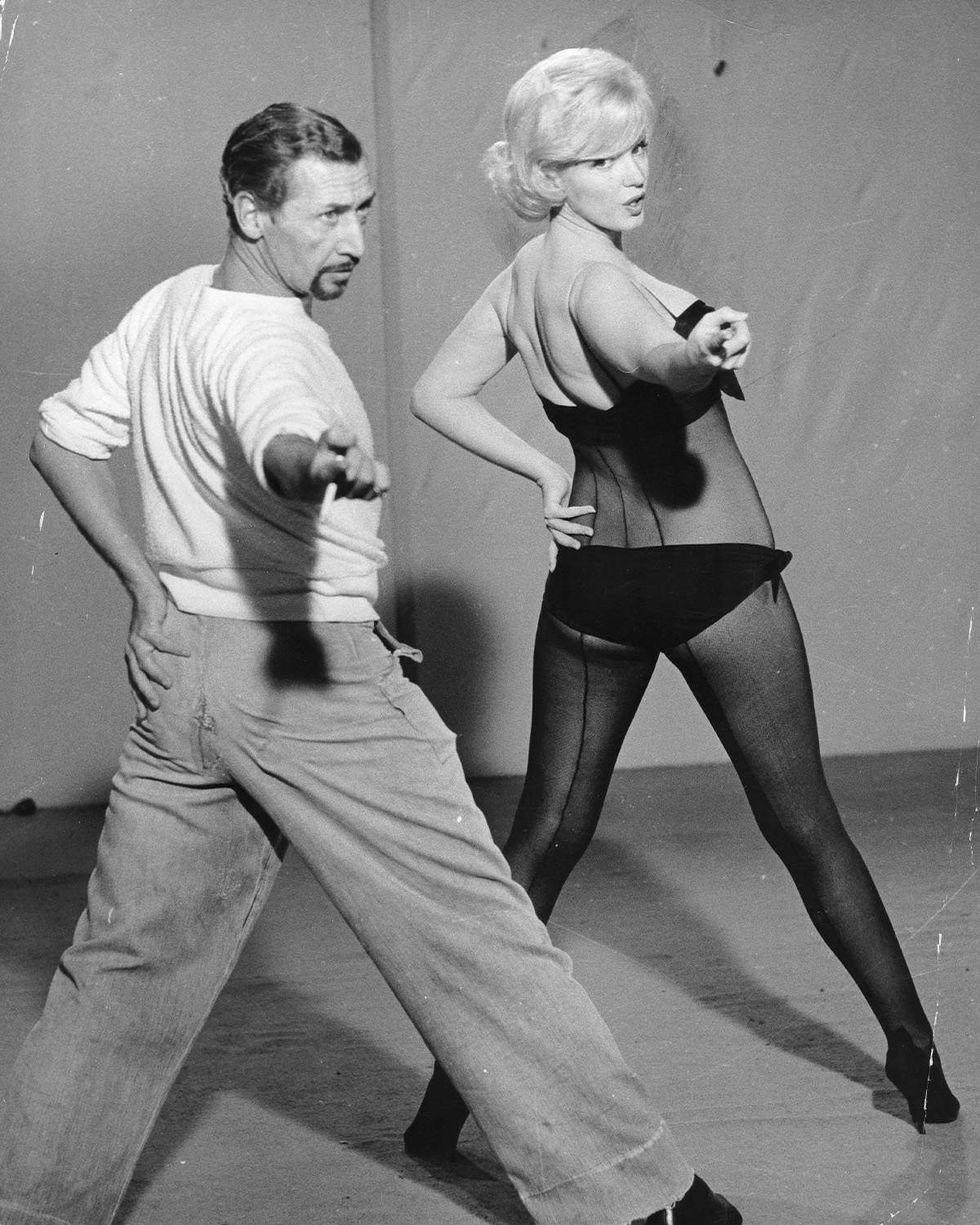 Jack Cole and Marylin MonroeReinhard Archive-Ullstein Bild via Getty Images
But in a serendipitous moment soon after, Levine met experimental filmmaker Kenneth Anger, who told her, “Someone needs to write about Jack Cole.” She says that once she “connected the dots” and realized Cole was Marilyn’s exclusive choreographer who shared a six-picture canon with her, “I was fascinated — no, hooked!”
Indeed, Cole went on to choreograph some of Monroe’s other most iconic performances on film, including scenes in There’s No Business Like Show Business and Some Like It Hot. And while dance legends like Bob Fosse, Gene Kelly, and Jerome Robbins cite Cole as an inspiration, his impact has been largely ignored by mainstream culture and Hollywood historians.
Because so little was known about Cole, especially his personal life, Levine admits that the research component of writing Jazzed was a long, arduous journey. But a big breakthrough came in 2019, when she visited the Victoria & Albert Museum Archives in London, where she knew some of Cole’s scrapbooks were stored. “For some reason, one day I decided to make the trip. It was fabulous, a dream. Six months later, COVID struck, and the V&A was closed for years of renovation. During COVID, I had all that research to work with and, frankly, without it, my book may still have been incomplete today.”
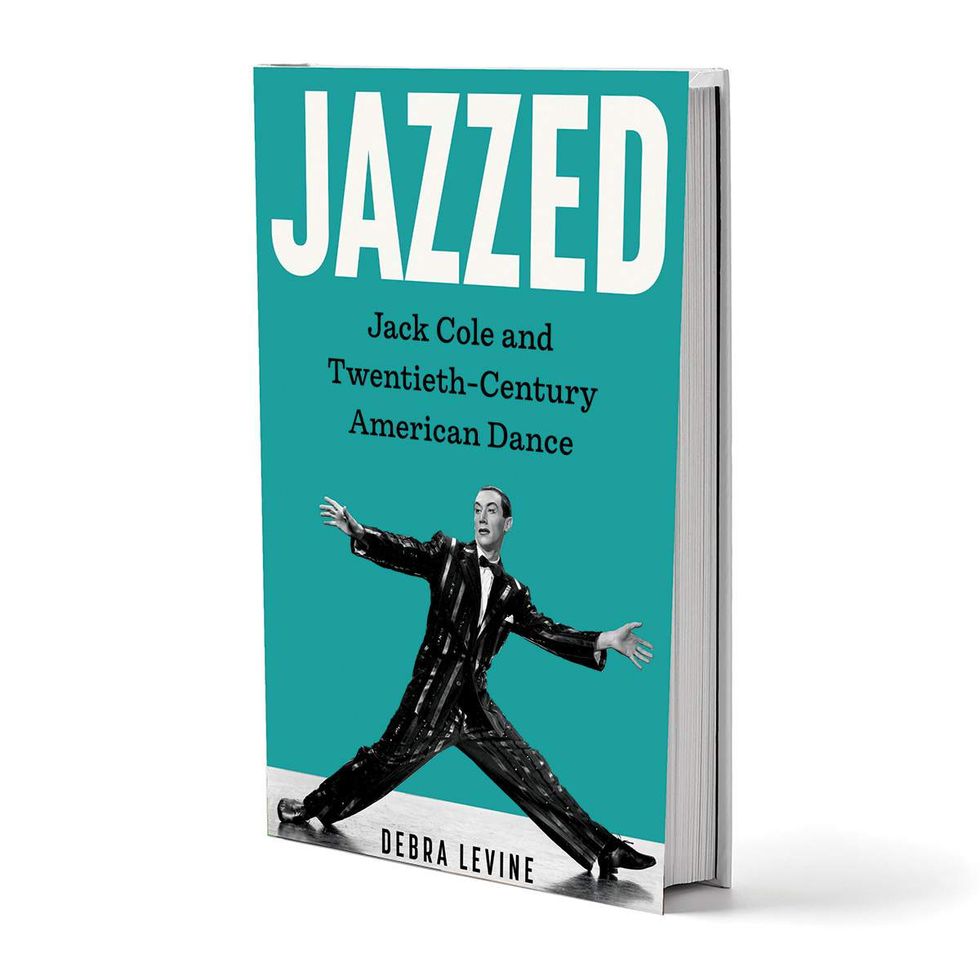 University Press of Kentucky
While Levine’s book highlights the choreographer’s amazing talent and the innovations he made in his field, it also doesn’t shy away from detailing some of the darker aspects of Cole’s life. Struggles with mental health, addiction, homophobia, and even violence often plagued the artist’s life.
“Peeling the onion on a complex personality like Jack Cole’s, who could be generous and caring, but could also be really awful — cutting, insulting, and tremendously unkind — is a very big challenge for a biographer,” she says. “Rather than psychoanalyze or draw conclusions, I felt my job was to, as best as possible, lay out his actions stemming from his many inner conflicts and let readers draw their own conclusions. I write about Jack Cole’s forlorn childhood of neglect and the shortcomings of both of his parents. I write about how he arrived at his homosexuality and what defense mechanisms he had in place to cope with the era’s view that gayness was a perversion, if not a curable disease.”
Upon further contemplation, Levine adds, “In my view, Jack Cole was a profile in courage for the gay community and remains so. Using dance as his vehicle, Cole was dedicated to expanding the horizons of very homogeneous, predominantly heteronormative audiences. He challenged audiences to acknowledge, even celebrate, social and cultural differences. That is a lesson in tolerance. He put viewers out of their comfort zone. And he did so with excellence. I would not have written this book unless I thought he was excellent.”
This article is part of The Advocate's July-Aug 2026 print issue, on newsstands July 7. Support queer media and subscribe — or download the issue now through Apple News+, Zinio, Nook, or PressReader.