'%3E%3Cpath d='M16.3574 35.6519H12.9537L15.0491 18.8873L16.3574 35.6519ZM30.4229 54.0093L22.309 0.994385H7.91795L0 54.0093H10.6634L11.5802 46.3855H17.4014L17.9914 54.0093H30.4229Z' fill='%23971B20'/%3E%3Cpath d='M48.2073 41.8813C48.2073 43.4049 47.4892 44.0011 46.1144 44.0011H43.7595V11.0687H46.1144C47.4892 11.0687 48.2073 11.6636 48.2073 13.1885V41.8813ZM59.5273 43.6695V11.3326C59.5273 3.71323 53.5729 0.994385 47.8157 0.994385H31.7213V54.0093H47.8157C53.5729 54.0093 59.5273 51.29 59.5273 43.6695Z' fill='%23971B20'/%3E%3Cpath d='M90.183 0.994385H78.6039L75.0711 30.6157L71.9955 0.994385H59.4346L69.2474 54.0093H80.373L90.183 0.994385Z' fill='%23971B20'/%3E%3Cpath d='M107.063 42.3448C107.063 43.7359 105.951 44.5974 104.643 44.5974C103.269 44.5974 102.157 43.7359 102.157 42.3448V12.658C102.157 11.2676 103.269 10.4058 104.643 10.4058C105.951 10.4058 107.063 11.2676 107.063 12.658V42.3448ZM119.233 43.2723V11.7312C119.233 6.36384 112.952 -3.8147e-06 104.643 -3.8147e-06C96.2667 -3.8147e-06 89.9867 6.36384 89.9867 11.7312V43.2723C89.9867 48.6393 96.2667 55 104.643 55C112.952 55 119.233 48.6393 119.233 43.2723Z' fill='%23971B20'/%3E%3Cpath d='M150.976 43.9349V33.7309H139.069V42.3448C139.069 43.7359 137.957 44.5974 136.582 44.5974C135.076 44.5974 133.964 43.7359 133.964 42.3448V12.658C133.964 11.2676 135.076 10.4058 136.582 10.4058C137.957 10.4058 139.069 11.2676 139.069 12.658V21.2723H150.976V11.0687C150.976 5.70107 145.283 -3.8147e-06 136.582 -3.8147e-06C127.75 -3.8147e-06 121.796 5.70107 121.796 11.0687V43.9349C121.796 49.3022 127.75 55 136.582 55C145.283 55 150.976 49.3022 150.976 43.9349Z' fill='%23971B20'/%3E%3Cpath d='M167.478 35.6519H164.076L166.17 18.8873L167.478 35.6519ZM181.544 54.0093L173.432 0.994385H159.037L151.123 54.0093H161.785L162.704 46.3855H168.523L169.114 54.0093H181.544Z' fill='%23971B20'/%3E%3Cpath d='M205.412 10.4058V0.994385H177.081V10.4058H185.392V54.0093H197.428V10.4058H205.412Z' fill='%23971B20'/%3E%3Cpath d='M230.002 54.0093V43.9349H218.914V31.8746H226.635V21.8028H218.914V10.4058H230.002V0.994385H206.875V54.0093H230.002Z' fill='%23971B20'/%3E%3C/g%3E%3Cdefs%3E%3CclipPath id='clip0_260_7080'%3E%3Crect width='230' height='55' fill='white'/%3E%3C/clipPath%3E%3C/defs%3E%3C/svg%3E)
The leader of the NMAC, a national HIV advocacy organization focused on communities disproportionately impacted by the epidemic, is forcefully disputing claims that the organization is in turmoil, insisting it remains financially sound even as recent reporting and internal concerns raise questions about leadership decisions, staffing, and workplace culture.
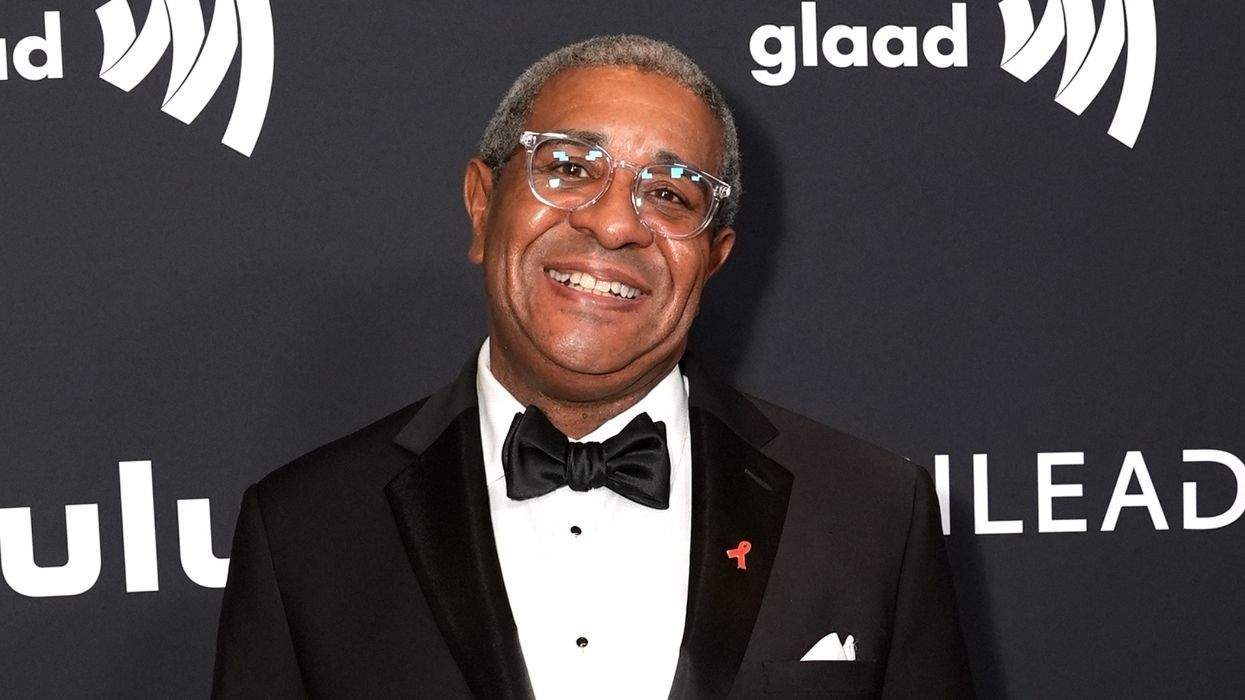
In an interview with The Advocate on Tuesday, CEO Harold Phillips rejected the characterization of NMAC as “unstable” or “in crisis” and denied allegations of financial misconduct, including claims involving federal grant funds.
“NMAC as an organization…we continue to deliver,” Phillips said. “Nothing that I have done has been unethical or illegal, and [I am] really working to strengthen our organization,” he said.
His remarks come in response to an April 15 report by the Washington Blade that cited anonymous sources describing internal instability and financial concerns at the longtime HIV advocacy nonprofit.
Related: Trump admin moves to end federal HIV prevention programs. ‘Catastrophic’ consequences, experts say
Related: Former Biden HHS leaders hail syphilis breakthrough as Trump dismantles the system behind it
The Advocate also received correspondence from an individual identifying themselves as a current staff member, the same source who wrote to the Blade, outlining additional allegations about leadership decisions, financial management, and workplace culture. Phillips was asked to respond directly to those claims.
He said the Blade’s reporting “did not really reflect who NMAC is” and was based on anonymous claims that failed to capture “the strength of our work” or the organization’s financial footing. “I felt like the Blade article did not characterize it in that way and really made it look like the organization was weak or crumbling, which is not true and which is misleading,” he said.
Pressed on the organization’s finances, Phillips said NMAC is “financially strong,” though he declined to provide detailed figures. He described the organization as stable and supported by a mix of public and private partnerships.
Public filings offer a partial snapshot of the organization’s past finances, though they predate Phillips’ tenure. NMAC’s most recent publicly available Form 990 covers the fiscal year ending December 31, 2024, before he assumed leadership. The filing reports approximately $9.8 million in total revenue and about $10.1 million in total expenses, resulting in a modest operating deficit of roughly $300,000 for that year, and total assets of about $15 million.
Related: Trump quietly purges presidential HIV advisory council, sparking public health fears (exclusive)
Phillips, who took over as CEO in October 2025 following the 36-year tenure of longtime leader Paul Kawata, came to the role after decades in federal public health. During the Biden administration, he served as director of the White House Office of National AIDS Policy from 2021 to early 2024, where he coordinated implementation of the federal government’s National HIV and AIDS Strategy and advised the president on domestic HIV policy. Before that, he held senior roles at the U.S. Department of Health and Human Services, including work on the Ending the HIV Epidemic initiative and within the Ryan White HIV/AIDS Program, helping shape national prevention and care efforts.
Some of the concerns raised about NMAC’s direction include criticism of a large contract with an outside firm to support conference operations. The anonymous source questioned the cost, described as roughly $600,000, and the rationale for outsourcing work that had previously been handled in-house.
Asked about using outside vendors, Phillips said the decision was driven by the growth of NMAC’s conferences.
“Our conference staff has been really stretched in implementing the conferences as they’ve both grown in size, and they’ve grown in complexity. Conferences have also grown in cost,” he said, “So bringing in the contracted expertise to help us both negotiate contracts with hotels, food and beverage, and also helping to ensure that our conferences are using appropriate technology when it comes to implementing conferences has been part of the work that we've been able to do with acuity.”
He pointed to the organization’s recent Biomedical HIV Prevention Summit in Chicago as an example of those practice changes. The conference, which drew more than 1,200 participants, according to the Windy City Times, expanded beyond a focus on PrEP to include treatment as prevention, sexually transmitted infections, and mental and behavioral health — a broader “syndemic” approach that reflects the organization’s evolving strategy.
“I think it’s an outgrowth of several things,” Phillips said, citing both the expanded scope of the conference and the added capacity provided by outside support.
Phillips described his first six months as a period of deliberate restructuring, shaped by internal review and external pressures. He said leadership changes and new senior roles were introduced after assessing the organization’s capacity and hearing from funders and community stakeholders about the need to “meet this moment” as public health infrastructure faces increasing political and policy challenges.
“So the senior-level positions that were added…include individuals who are helping us both focus on our strategic priorities and in response to meeting this moment where public health is under attack, HIV prevention is under attack, access to health care is under attack for communities of color,” Phillips said.
Related: Biden Seeks $267 Million Increase in HIV Prevention Funds
He said those additions were intended to bring specialized expertise and expand the organization’s ability to respond not only to HIV, but to broader threats to health equity and access to care.
Phillips also framed staffing changes and concerns raised by some employees as part of a broader organizational transition rather than evidence of systemic problems. “When there is a leadership change and an organization is setting new priorities and the leadership is setting a new direction, there are often staff who are not aligned with that new mission, vision, or direction,” he said.
In a follow-up statement, NMAC Chief of Staff Travis Brookes said the organization has also been adding staff under Phillips’ leadership. “Since October 7, NMAC has hired seven new team members across the organization, bringing our current staff to 33,” Brookes said, adding that the group is recruiting for three open roles and expects to post additional positions in the coming months. He said NMAC’s longer-term strategy includes building out 13 additional roles over the next five years as part of what he described as a broader “strategic alignment” under new leadership.
Brookes said those hires span multiple parts of the organization, including programmatic, operational, and administrative roles, but declined to provide more detailed breakdowns. “Out of respect for our team members’ privacy and standard personnel practice, we’re not sharing role-level or individual-level detail,” he said.
The organization’s board has also expressed support for Phillips’ leadership. In a statement to The Advocate, board chair Lance Toma said the board “stands firmly behind CEO Harold Phillips and the leadership team” and is “confident in its financial position, strategic direction, and continued impact.” He added that the board remains engaged in oversight and takes seriously the concerns raised in recent reporting.
Related: President Biden to host AIDS Memorial Quilt on White House South Lawn for World AIDS Day
Phillips said leadership is working to ensure that employees can raise concerns. “Absolutely,” he said when asked whether staff can voice concerns without fear of retaliation, adding that the organization has been putting in place “outlets for staff as well as communications for staff to help them understand the changes, as well as provide input.”
He said that communication has not always been perfect during the transition. “I think as we’ve gone through this last six months, there are opportunities for us to make improvements in how we communicate to staff and how we try to ensure that they are knowledgeable about what’s going on,” he said. Phillips also emphasized his accessibility as a leader, noting that throughout his career, including his time in the federal government, he has made himself available to staff and stakeholders.
At the same time, he suggested that some criticism may stem from individuals dissatisfied with the organization’s direction or recent personnel decisions. Phillips suggested some of the criticism may come from current or former employees unhappy with personnel decisions, or from those who departed after concluding the organization no longer aligned with their mission and values.
Still, he insisted that the timing of the scrutiny has added pressure during what he views as a critical moment for the communities NMAC serves.
“I feel like it’s unfortunate at this time that we’re having to go through this when there are so many external forces attacking communities,” he said.