'%3E%3Cpath d='M16.3574 35.6519H12.9537L15.0491 18.8873L16.3574 35.6519ZM30.4229 54.0093L22.309 0.994385H7.91795L0 54.0093H10.6634L11.5802 46.3855H17.4014L17.9914 54.0093H30.4229Z' fill='%23971B20'/%3E%3Cpath d='M48.2073 41.8813C48.2073 43.4049 47.4892 44.0011 46.1144 44.0011H43.7595V11.0687H46.1144C47.4892 11.0687 48.2073 11.6636 48.2073 13.1885V41.8813ZM59.5273 43.6695V11.3326C59.5273 3.71323 53.5729 0.994385 47.8157 0.994385H31.7213V54.0093H47.8157C53.5729 54.0093 59.5273 51.29 59.5273 43.6695Z' fill='%23971B20'/%3E%3Cpath d='M90.183 0.994385H78.6039L75.0711 30.6157L71.9955 0.994385H59.4346L69.2474 54.0093H80.373L90.183 0.994385Z' fill='%23971B20'/%3E%3Cpath d='M107.063 42.3448C107.063 43.7359 105.951 44.5974 104.643 44.5974C103.269 44.5974 102.157 43.7359 102.157 42.3448V12.658C102.157 11.2676 103.269 10.4058 104.643 10.4058C105.951 10.4058 107.063 11.2676 107.063 12.658V42.3448ZM119.233 43.2723V11.7312C119.233 6.36384 112.952 -3.8147e-06 104.643 -3.8147e-06C96.2667 -3.8147e-06 89.9867 6.36384 89.9867 11.7312V43.2723C89.9867 48.6393 96.2667 55 104.643 55C112.952 55 119.233 48.6393 119.233 43.2723Z' fill='%23971B20'/%3E%3Cpath d='M150.976 43.9349V33.7309H139.069V42.3448C139.069 43.7359 137.957 44.5974 136.582 44.5974C135.076 44.5974 133.964 43.7359 133.964 42.3448V12.658C133.964 11.2676 135.076 10.4058 136.582 10.4058C137.957 10.4058 139.069 11.2676 139.069 12.658V21.2723H150.976V11.0687C150.976 5.70107 145.283 -3.8147e-06 136.582 -3.8147e-06C127.75 -3.8147e-06 121.796 5.70107 121.796 11.0687V43.9349C121.796 49.3022 127.75 55 136.582 55C145.283 55 150.976 49.3022 150.976 43.9349Z' fill='%23971B20'/%3E%3Cpath d='M167.478 35.6519H164.076L166.17 18.8873L167.478 35.6519ZM181.544 54.0093L173.432 0.994385H159.037L151.123 54.0093H161.785L162.704 46.3855H168.523L169.114 54.0093H181.544Z' fill='%23971B20'/%3E%3Cpath d='M205.412 10.4058V0.994385H177.081V10.4058H185.392V54.0093H197.428V10.4058H205.412Z' fill='%23971B20'/%3E%3Cpath d='M230.002 54.0093V43.9349H218.914V31.8746H226.635V21.8028H218.914V10.4058H230.002V0.994385H206.875V54.0093H230.002Z' fill='%23971B20'/%3E%3C/g%3E%3Cdefs%3E%3CclipPath id='clip0_260_7080'%3E%3Crect width='230' height='55' fill='white'/%3E%3C/clipPath%3E%3C/defs%3E%3C/svg%3E)

There is a certain kind of song that doesn't just play. It marks you.
It pins a memory to a moment so precisely that decades later, you can still feel the strobe lights and smell the fog machine. "Boy," by the synth-pop pioneers Book of Love, is that kind of song. Nearly four decades after its release, an extraordinary number of people will tell you the same thing: They remember exactly where they were the first time they heard it.
That kind of staying power doesn't happen by accident. It happens when a song is built on something true. To understand what Book of Love were doing, you have to understand where they were doing it.
New York City's East Village of the early 1980s was not yet a destination. It was a refuge.
Artists, musicians, drag queens, and queer kids moved between clubs and coffee shops. The neighborhood was rough around the edges and alive with opportunity. People arrived looking for freedom, reinvention, or simply a place where they might belong.
It was also a neighborhood formed by contradictions. The same community that accepted outsiders could still draw lines around who was welcome.
Related: The history of the circuit party: Transforming LGBTQ+ political pain into power
Dancing through the AIDS crisis
Book of Love emerged from that world. The Philadelphia-formed synth-pop quartet consists of Susan Ottaviano, Ted Ottaviano, Jade Lee, and Lauren Roselli. Susan and Ted, although sharing a surname and growing up in the same Connecticut town, are not related.
The group caught the attention of legendary Sire Records founder Seymour Stein, whose roster included Madonna, Talking Heads, The Ramones, and Depeche Mode. Book of Love helped establish an American counterpart to the British synth-pop explosion.
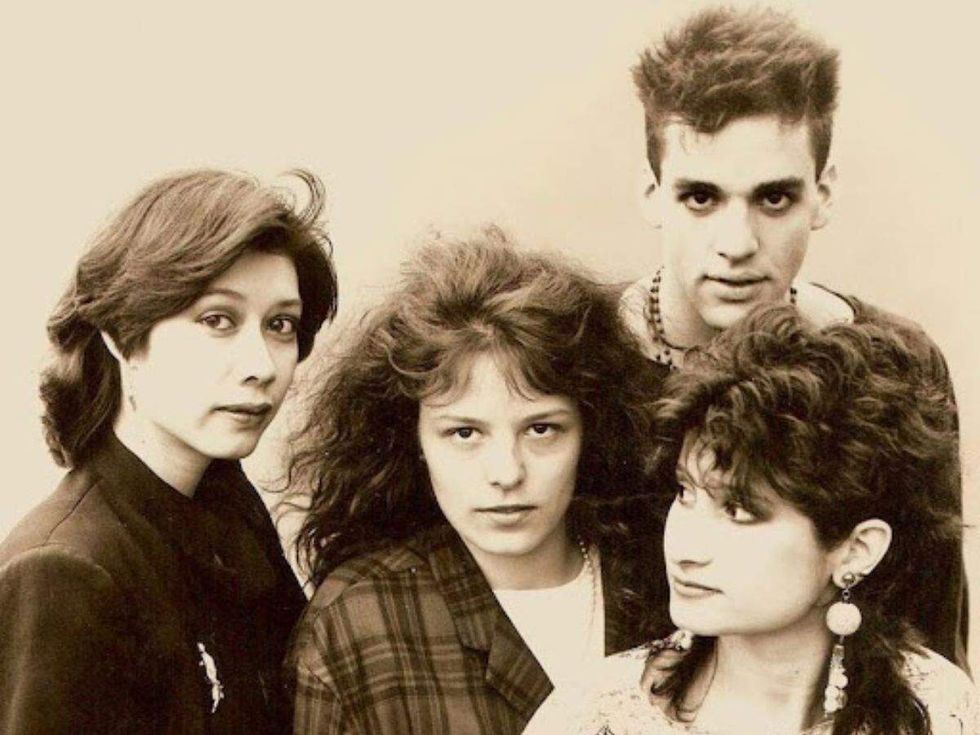 Jade Lee (left), Lauren Roselli, Susan Ottaviano and Ted Ottaviano (back), are Book of Love.Michael Halsband
Their self-titled debut album arrived on April 1, 1986. But even before its release, the band had begun building a devoted following, opening for Depeche Mode on multiple tours and introducing audiences across the country to songs rooted in longing, identity, and belonging.
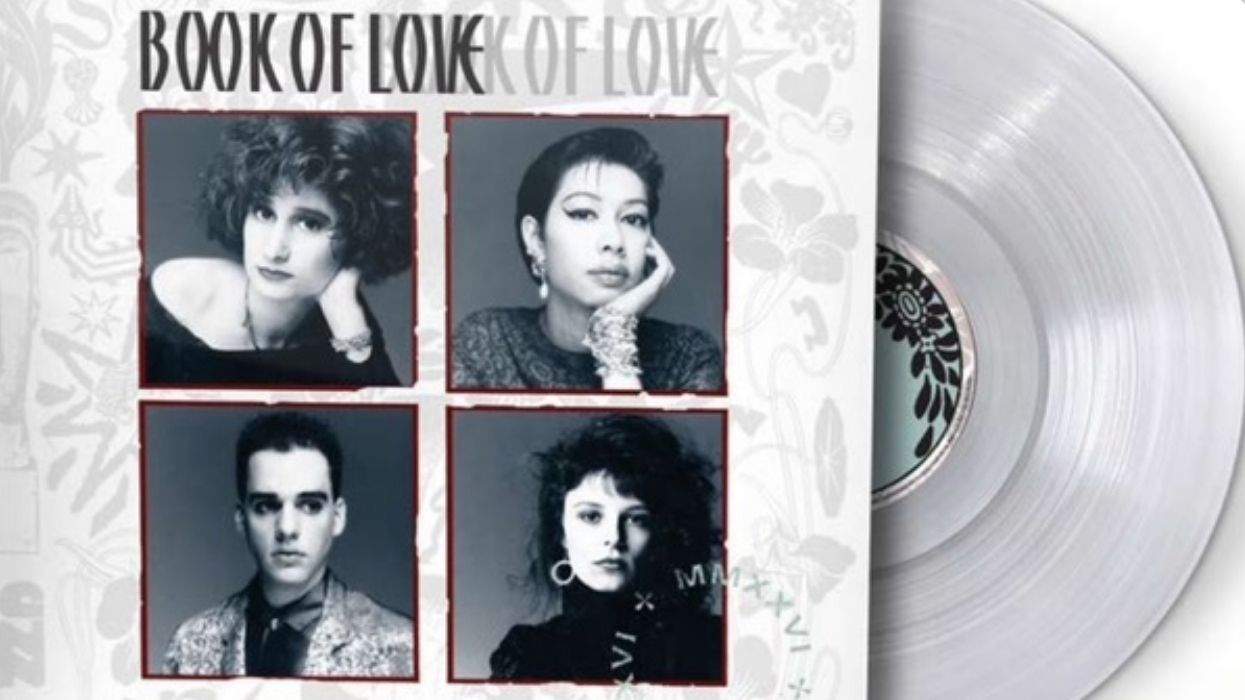
Now, Rhino Records is celebrating the album’s 40th anniversary with a remastered clear vinyl with refreshed artwork, archival photographs, and new liner notes. There is also a reunion tour featuring all four original members. Yet the real story of the anniversary may be the remarkable afterlife of one song.
First released as a single in 1985 and later included on the band's debut album, "Boy" remains one of the most beloved songs in queer nightlife. Its longevity is remarkable, given that it was never intended to be an anthem.
Related: Ketamine’s journey from club drug to promising depression treatment
A song born outside the velvet rope
"There was a gay bar called The Boy Bar," songwriter Ted Ottaviano recalled in an interview with The Advocate. "Our community was very gay, but it was mostly downtown artists. And they came in all walks of life, in all shapes, sizes, and colors. And for some reason, the Boy Bar didn't allow women in."
The exclusion bothered him. "It just seemed antithetical to the environment that we were in in the East Village," he said. What emerged was anything but simple.
At its heart, the song’s narrator, Susan Ottaviano, declares, “I want to be where the boys are, but I'm not allowed." And underneath that longing sits an even starker statement of identity. "I'm not a boy."
Today, those lyrics land differently than they did in 1985. What began as a song about a gay bar's exclusionary policy evolved into a meditation on who gets admitted, who gets left outside, and what it means to search for belonging. For many listeners, it has also become a larger reflection on identity itself.
The song carried more, Ted admits, than he consciously intended.
"I had no idea that it had the message that basically people have found in it," he said. "It was embedded in it. It just came out naturally."
He even questioned the lyrics at one point. "I said to Susan, 'Should we change these lyrics?'" he recalled. "She was like, 'No, no, they're just perfect the way they are.' So I wasn't even aware of the power of the song myself until we got it out to its audience."
Book of Love emerged during one of the most consequential periods in LGBTQ+ history. The same clubs where people danced to synth-pop records were also places where absence grew impossible to ignore. The dance floor and the epidemic existed side by side.
"It came out right as the AIDS crisis was really starting to heat up," Ted said. "People were all of a sudden missing that we would see normally out all the time."
Communities that had only recently begun to imagine a freer future found themselves confronting extraordinary loss.
"We felt very isolated with it as well," he said, "and misunderstood."
Their second album later addressed the crisis directly with "Pretty Boys and Pretty Girls,” a song Ted describes as dealing with the dangers and uncertainty surrounding sex and survival during the AIDS crisis.
"Being either gay or being female, you would think that in this genre you would be accepted," Ted reflected. "But it's still kind of a bit of a boys club."
Related: What is Daddyland, the gay circuit party evicted from a Dallas hotel?
Why "Boy" still resonates
Over the decades, listeners continued to discover themselves inside "Boy."
For some, "I want to be where the boys are, but I'm not allowed" captured the experience of entering queer nightlife for the first time. For others, it raised broader questions about acceptance and belonging.
And for many listeners today, the line “I'm not a boy” lands differently in 2026 than it did in 1985. One of those listeners is Liam, a 31-year-old IT specialist in New Jersey who discovered the song decades after its original release.
'It speaks to me as a trans guy who just wanted to be accepted for myself during a time when I was really struggling with who I was,' he told The Advocate.
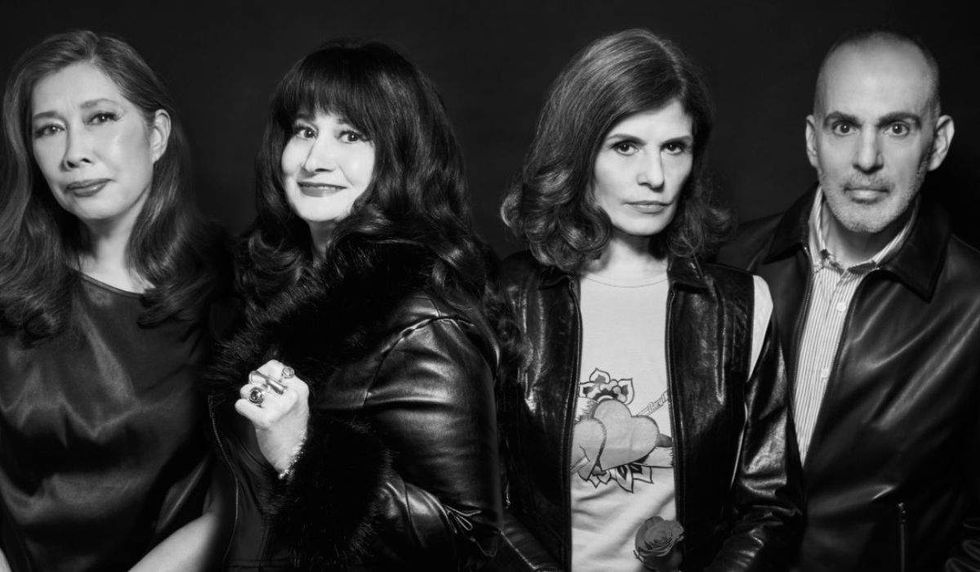 Book of LoveNoah Fecks
Ted welcomes those interpretations.
"It's really about not feeling a part of something and wanting to be included," he said. "The idea of exclusion and inclusiveness."
"If any community has really had to grapple with that issue in their life, they have," he added of transgender people.
Susan is not surprised.
"I think we were always political from our point of view," she said. "That's why it overlapped into queer and women and artists and things that we were experiencing in our lives in lower Manhattan in the early '80s."
The new liner notes call the band "too queer and too femme for the mainstream,” Susan said. "I think that always kind of got in our way, and we were always being ourselves."
Dave Audé’s remix of "Boy"
The anniversary release includes a new remix of “Boy” by Grammy-winning producer Dave Audé, whose credits include U2, Beyoncé, Lady Gaga, Katy Perry, Rihanna, Britney Spears, Coldplay, and dozens of other major artists. Audé holds a record 132 No. 1 remixes on Billboard’s Dance Club Songs chart and won a Grammy in 2016 for his remix of Mark Ronson and Bruno Mars’s hit "Uptown Funk."
For an artist whose career has been built on reimagining familiar songs, "Boy" presented an unusual challenge. "I felt it was so iconic, I didn't want to mess it up," Audé told The Advocate in an interview.
Before beginning work on the remix, Audé called Ted Ottaviano from the back of a tour bus while traveling with Andy Bell of Erasure. He wanted to know how far he should go.
Ted's answer surprised him. "He basically said, 'Have fun with it. Bring it to 2026.'"
Audé took that as permission to modernize the production without disturbing the song's emotional core. What he discovered was that the original record already contained much of what makes great dance music endure. "The vocals really are what make this song," he said. "The way Susan sings it and the way she delivers the vocal."
Audé said feedback from DJs has been roughly double what he normally receives for a remix, from listeners flooding him with messages about the memories the song still evokes decades later.
One message in particular stuck with him. "The gays are coming over Saturday night. This is on repeat!”
For Audé, that reaction explains why "Boy" has survived while thousands of other club records have faded away. "It's one of those super iconic songs where you remember where you were the first time you heard it," he said.
The best songs, Audé believes, become attached to life events. A first love. A breakup. A first night out. A revelation about who you are. For generations of LGBTQ+ listeners, "Boy" has been all of those things.
If anything, Audé said, working on the remix reinforced how far ahead of their time Book of Love had been. The song, he suggested, never really stopped being contemporary. The culture simply caught up to it.
"I'm very excited about the music that's happening," Susan said. "Especially the new generation. Especially the pop girlies." She paused. "I don't know if they remember us or know us or anything, but I definitely feel like we would've fit in."
Then she smiled. "We did it first."
Listen to the original Book of Love song "Boy" below.
- YouTube www.youtube.com