'%3E%3Cpath d='M16.3574 35.6519H12.9537L15.0491 18.8873L16.3574 35.6519ZM30.4229 54.0093L22.309 0.994385H7.91795L0 54.0093H10.6634L11.5802 46.3855H17.4014L17.9914 54.0093H30.4229Z' fill='%23971B20'/%3E%3Cpath d='M48.2073 41.8813C48.2073 43.4049 47.4892 44.0011 46.1144 44.0011H43.7595V11.0687H46.1144C47.4892 11.0687 48.2073 11.6636 48.2073 13.1885V41.8813ZM59.5273 43.6695V11.3326C59.5273 3.71323 53.5729 0.994385 47.8157 0.994385H31.7213V54.0093H47.8157C53.5729 54.0093 59.5273 51.29 59.5273 43.6695Z' fill='%23971B20'/%3E%3Cpath d='M90.183 0.994385H78.6039L75.0711 30.6157L71.9955 0.994385H59.4346L69.2474 54.0093H80.373L90.183 0.994385Z' fill='%23971B20'/%3E%3Cpath d='M107.063 42.3448C107.063 43.7359 105.951 44.5974 104.643 44.5974C103.269 44.5974 102.157 43.7359 102.157 42.3448V12.658C102.157 11.2676 103.269 10.4058 104.643 10.4058C105.951 10.4058 107.063 11.2676 107.063 12.658V42.3448ZM119.233 43.2723V11.7312C119.233 6.36384 112.952 -3.8147e-06 104.643 -3.8147e-06C96.2667 -3.8147e-06 89.9867 6.36384 89.9867 11.7312V43.2723C89.9867 48.6393 96.2667 55 104.643 55C112.952 55 119.233 48.6393 119.233 43.2723Z' fill='%23971B20'/%3E%3Cpath d='M150.976 43.9349V33.7309H139.069V42.3448C139.069 43.7359 137.957 44.5974 136.582 44.5974C135.076 44.5974 133.964 43.7359 133.964 42.3448V12.658C133.964 11.2676 135.076 10.4058 136.582 10.4058C137.957 10.4058 139.069 11.2676 139.069 12.658V21.2723H150.976V11.0687C150.976 5.70107 145.283 -3.8147e-06 136.582 -3.8147e-06C127.75 -3.8147e-06 121.796 5.70107 121.796 11.0687V43.9349C121.796 49.3022 127.75 55 136.582 55C145.283 55 150.976 49.3022 150.976 43.9349Z' fill='%23971B20'/%3E%3Cpath d='M167.478 35.6519H164.076L166.17 18.8873L167.478 35.6519ZM181.544 54.0093L173.432 0.994385H159.037L151.123 54.0093H161.785L162.704 46.3855H168.523L169.114 54.0093H181.544Z' fill='%23971B20'/%3E%3Cpath d='M205.412 10.4058V0.994385H177.081V10.4058H185.392V54.0093H197.428V10.4058H205.412Z' fill='%23971B20'/%3E%3Cpath d='M230.002 54.0093V43.9349H218.914V31.8746H226.635V21.8028H218.914V10.4058H230.002V0.994385H206.875V54.0093H230.002Z' fill='%23971B20'/%3E%3C/g%3E%3Cdefs%3E%3CclipPath id='clip0_260_7080'%3E%3Crect width='230' height='55' fill='white'/%3E%3C/clipPath%3E%3C/defs%3E%3C/svg%3E)
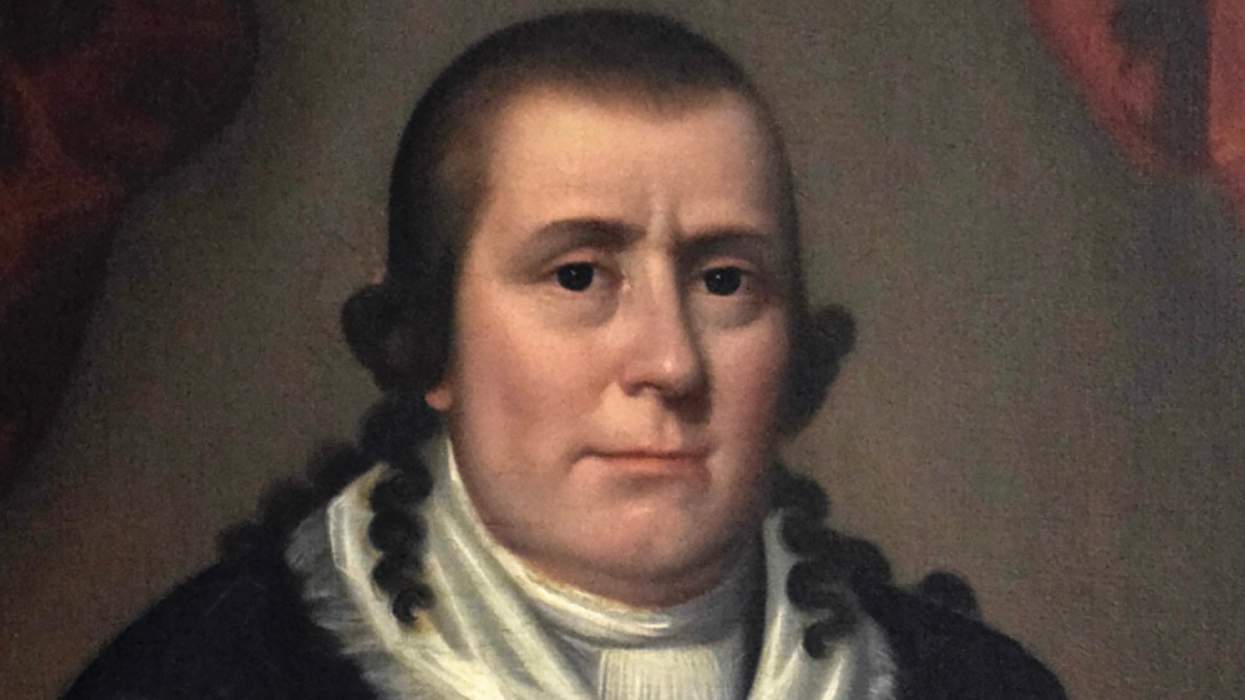

Not Your Founding Father: How a Nonbinary Minister Became America’s Most Radical Revolutionary by Nina Sankovitch is a thrilling celebration of Public Universal Friend, a forgotten hero from the American Revolution, and a nonbinary renegade whose life illustrates just how radical the American experiment could have been. Their story begins in October 1776, in the small farming community of Cumberland, Rhode Island, when 23-year-old Jemima Wilkinson nearly died from illness — and Public Universal Friend, who said Wilkinson did indeed die and her body was reanimated with a new spirit, was born.
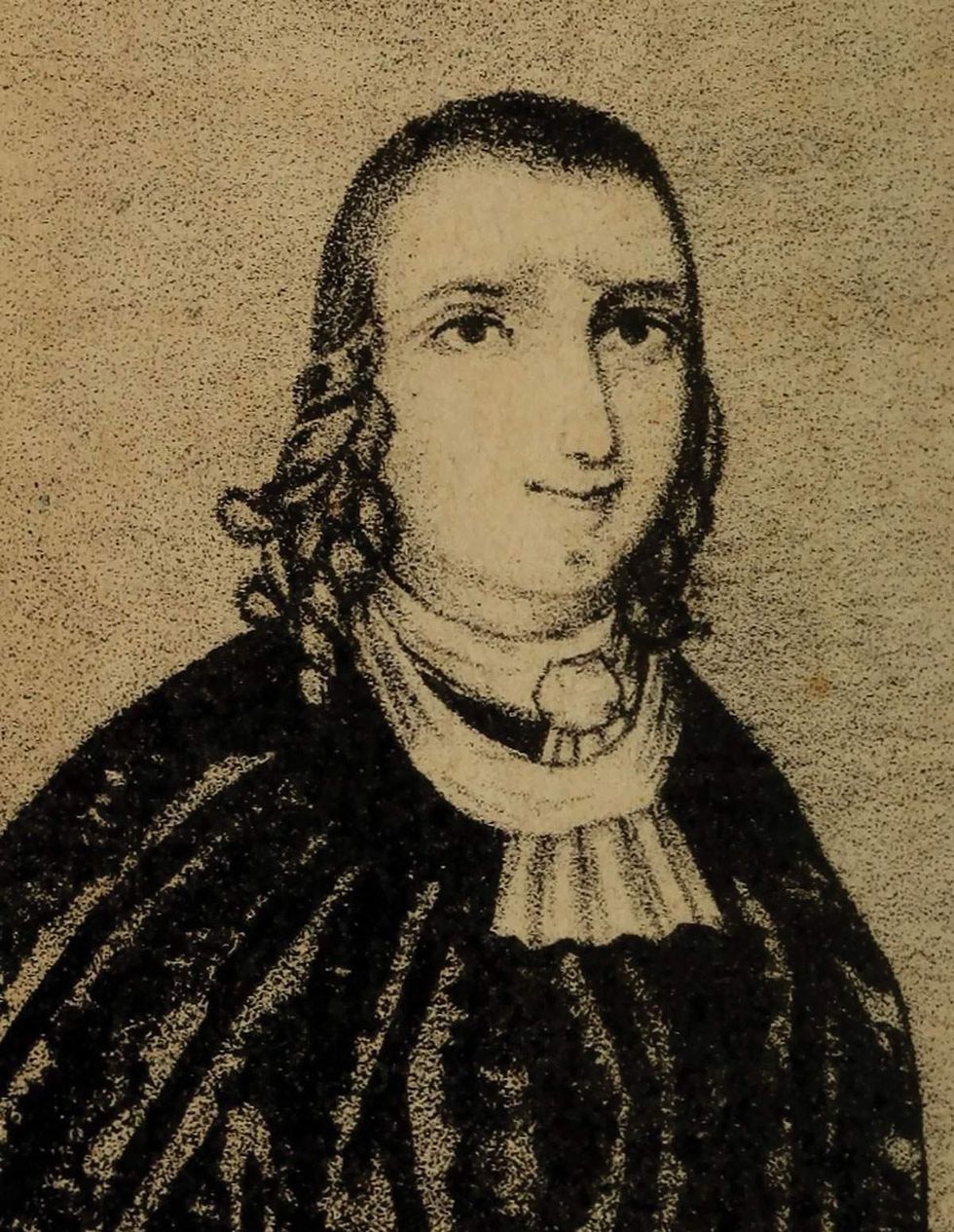 Public Universal Friendpublic domain
Over the course of the American Revolution, Universal Friend gathered followers for a sect called the Society of Universal Friends. The young minister seemed to embody the possibilities offered by the revolution, especially the right to total self-determination. Hundreds of men and women from all walks of life joined the growing sect and pledged themselves to ideals of equality, piety, and love. To authorities, however, the minister was “the devil in petticoats,” a threat to the men who sought to keep America’s power for themselves. And so, after the war, Public Universal Friend ventured west to create an Eden on the frontier, a place where, in their vision, everyone would have the right to not only life, liberty, and the pursuit of happiness, but also peace and shared prosperity. But into every Eden comes a snake. And soon, financial scams, contested wills, adultery, plagiarism, allegations of murder, and murmurs of another war with England would threaten to destroy this new American utopia, forcing Universal Friend to fight even harder for the mission of salvation and for the good of all Americans.
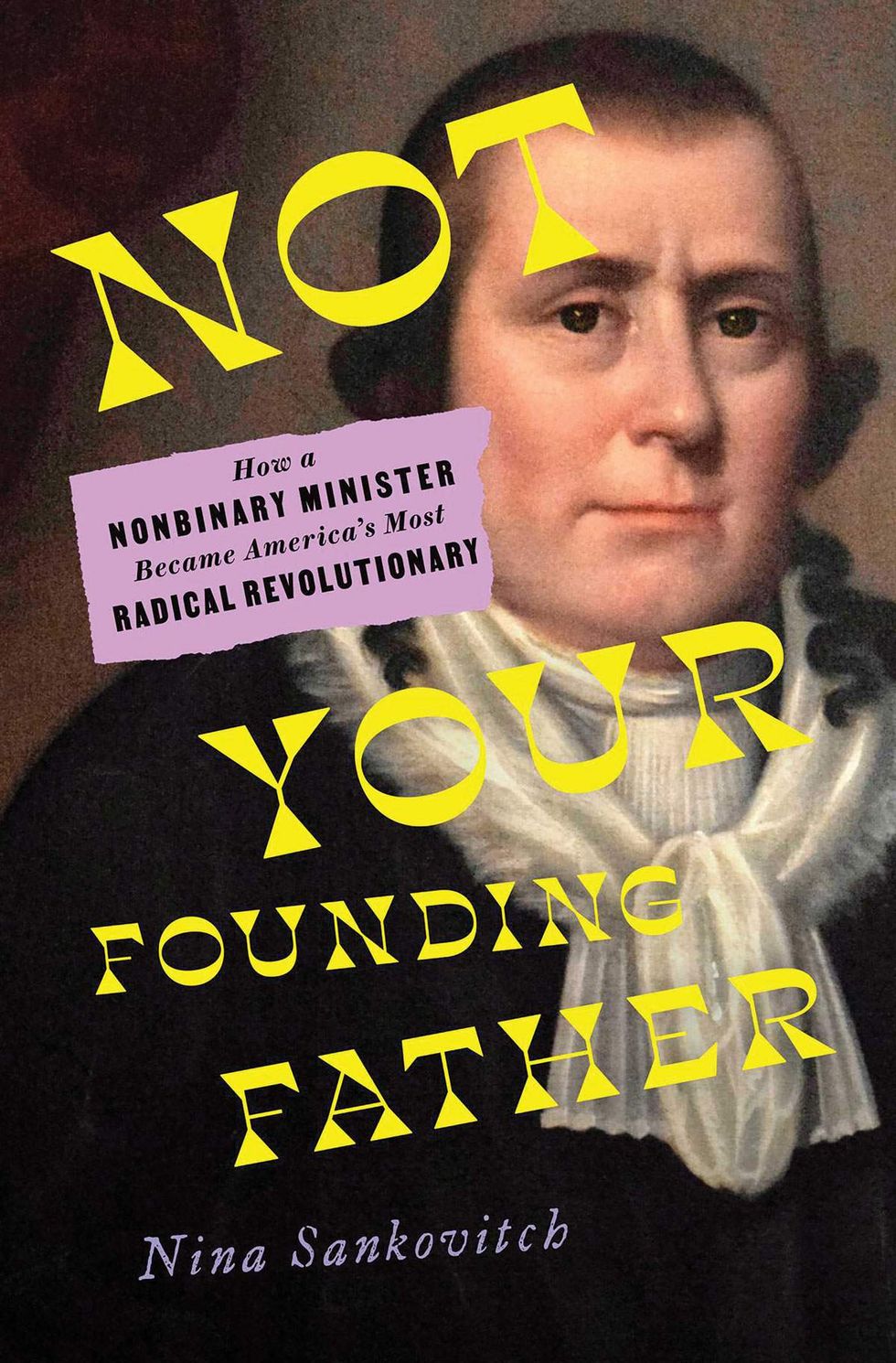 'Not Your Founding Father' by Nina Sankovitch
Read an exclusive excerpt from Not Your Founding Father below:
On the morning of October 10, 1776, a young Quaker woman named Jemima Wilkinson woke up and spoke to the brother sitting bedside.
“There is room enough.”
Jeptha Wilkinson was struck dumb. Just the night before, Jemima had been dying: “render’d almost incapable of helping herself…[on the brink] of the Shock of Death….” Now the patient was sitting up in bed, eyes clear and cheeks glowing.
The person he knew as his sister began to describe what had happened during the dark hours of the night, when “Archangels descending from the east, with golden crowns upon their heads” told the dying young woman that there was “Room, Room, Room, in the Many mansions of eternal glory for Thee and for everyone….”
The angels then revealed to Jemima that she had been chosen by God to house a “Spirit of Life…[which] was waiting to assume the Body which God had prepared for the Spirit to dwell in….” With Jemima’s body serving as the “tabernacle” for the waiting spirit, the angels explained, the reborn Jemima would carry God’s message of universal redemption to “the lost and the guilty, perishing dying world.”
Now awake and fully resurrected, the patient claimed to have been successfully transformed into a nongendered messenger sent by God to save the world — and would from that point on be known as “Public Universal Friend.”
 Feminist author Nina SankovitchDouglas Healey
Within days of Friend’s transformation, everyone within a 10-mile radius of the Wilkinson home had heard the news and the story spread even farther, traveling on the wind to tap the news out at the window of every farmhouse in the surrounding hills and dales of Rhode Island. When Universal Friend appeared in public just one week after the recovery to attend a religious gathering at a local Meeting House, a crowd of people swarmed around, eager to see the transformed Jemima Wilkinson for themselves. The crowd was so large and so curious that Friend decided to seize the opportunity to deliver a message of salvation.
Friend spoke easily and calmly for a good hour, never shifting on the stool set out for them, eyes steady and chin raised. Drawing on memorized Bible passages, Friend spoke about the importance of living a moral life, the dangers of sin, and the urgency of repentance. The sermon most likely would have ended, as most of Friend’s sermons would end in the months and years to come, with a promise of eternal bliss for everyone who faithfully followed the minister’s counsel: “What Great love God had…that all might come to the knowledge of the Truth and be Saved….”
There was nothing revelatory or new in Friend’s first sermon, although the minister’s remarkably wide knowledge of the gospels would have been impressive. What held the crowd’s attention that day, however, was not the message but the messenger. Everyone knew how ill the Wilkinson daughter had been but the tall figure that appeared before them now was hale and full of life. The round face exuded a calm energy; the broad shoulders, firmly squared, spoke of strength and resilience. Black hair, glossy in the sun, and dark eyes, brilliant and clear, completed the picture of radiant health. The woman at death’s door was gone and a powerful minister stood before them. It was a miracle rendered by God. Not only the physical attributes of health and strength but the clothes and hair of Friend proved that they were God’s own messenger: the long, dark robe, the white cravat worn around the neck, the hair unadorned by hat or ribbon but simply pulled back from the forehead and falling free to the shoulders.
Ezra Stiles, president of Yale and Congregationalist minister, stated bluntly that Friend “dressed like a man.” Another observer wrote that the minister had “so much like the dress and appearance of a man, that I conceived it to be very improper.” A Quaker from Philadelphia disapproved of Friend’s “appearance of Immodesty in a woman [which]...would go far to Confound the Distinction of the Sexes [and]...be very Improper and of Pernicious Consequences to Society.”
But Friend responded to these criticisms of “appearances as a man,” with the statement that “[t]here is nothing indecent or improper in my dress or appearance; I am not accountable to morals, I am that I am.” It was a proclamation of free will and personal choice. Rejecting the restrictions imposed by Society and Religion, Friend was living proof that a person could simply be, without being defined — or limited — by the opinions of others.
Friend’s nongendered appearance underscored their primary belief that every human being was equal before God. The outward vessel — the “tabernacle of flesh” — that housed one’s soul was not important. Gender, social status, the color of one’s skin: these were all external manifestations that did not demonstrate the value of the soul within. Friend preached that every human soul could be saved for eternal bliss, and that here on earth, every human could be happy if only they exercised agency over their own lives. There was no predestination, marking one indelibly as sinner or saved. There was no curse of Ham on people of color damning them to servitude nor any curse on women due to Eve giving Adam the apple: “everyone has to Answer for his own Sins, by himself Committed….” Every person could determine their own fate.
Friend’s message of salvation came at a time of great upheaval and uncertainty in the American colonies. War had been declared against England, and the world had turned upside down. Universal Friend preached a formula for surviving: self-empowerment. Agency. Choice. These were revolutionary concepts. And Friend, bold and strange and strong, embodied them all. The banner had been raised. Now who would follow?
Excerpted with permission from author Nina Sankovitch and Simon & Schuster. Find Not Your Founding Father at simonandschuster.com and wherever good books are sold.

This article is part of The Advocate’s May-June 2026 print issue, which hits newsstands May 26. Support queer media and subscribe — or download the issue through Apple News+, Zinio, Nook, or PressReader.