'%3E%3Cpath d='M16.3574 35.6519H12.9537L15.0491 18.8873L16.3574 35.6519ZM30.4229 54.0093L22.309 0.994385H7.91795L0 54.0093H10.6634L11.5802 46.3855H17.4014L17.9914 54.0093H30.4229Z' fill='%23971B20'/%3E%3Cpath d='M48.2073 41.8813C48.2073 43.4049 47.4892 44.0011 46.1144 44.0011H43.7595V11.0687H46.1144C47.4892 11.0687 48.2073 11.6636 48.2073 13.1885V41.8813ZM59.5273 43.6695V11.3326C59.5273 3.71323 53.5729 0.994385 47.8157 0.994385H31.7213V54.0093H47.8157C53.5729 54.0093 59.5273 51.29 59.5273 43.6695Z' fill='%23971B20'/%3E%3Cpath d='M90.183 0.994385H78.6039L75.0711 30.6157L71.9955 0.994385H59.4346L69.2474 54.0093H80.373L90.183 0.994385Z' fill='%23971B20'/%3E%3Cpath d='M107.063 42.3448C107.063 43.7359 105.951 44.5974 104.643 44.5974C103.269 44.5974 102.157 43.7359 102.157 42.3448V12.658C102.157 11.2676 103.269 10.4058 104.643 10.4058C105.951 10.4058 107.063 11.2676 107.063 12.658V42.3448ZM119.233 43.2723V11.7312C119.233 6.36384 112.952 -3.8147e-06 104.643 -3.8147e-06C96.2667 -3.8147e-06 89.9867 6.36384 89.9867 11.7312V43.2723C89.9867 48.6393 96.2667 55 104.643 55C112.952 55 119.233 48.6393 119.233 43.2723Z' fill='%23971B20'/%3E%3Cpath d='M150.976 43.9349V33.7309H139.069V42.3448C139.069 43.7359 137.957 44.5974 136.582 44.5974C135.076 44.5974 133.964 43.7359 133.964 42.3448V12.658C133.964 11.2676 135.076 10.4058 136.582 10.4058C137.957 10.4058 139.069 11.2676 139.069 12.658V21.2723H150.976V11.0687C150.976 5.70107 145.283 -3.8147e-06 136.582 -3.8147e-06C127.75 -3.8147e-06 121.796 5.70107 121.796 11.0687V43.9349C121.796 49.3022 127.75 55 136.582 55C145.283 55 150.976 49.3022 150.976 43.9349Z' fill='%23971B20'/%3E%3Cpath d='M167.478 35.6519H164.076L166.17 18.8873L167.478 35.6519ZM181.544 54.0093L173.432 0.994385H159.037L151.123 54.0093H161.785L162.704 46.3855H168.523L169.114 54.0093H181.544Z' fill='%23971B20'/%3E%3Cpath d='M205.412 10.4058V0.994385H177.081V10.4058H185.392V54.0093H197.428V10.4058H205.412Z' fill='%23971B20'/%3E%3Cpath d='M230.002 54.0093V43.9349H218.914V31.8746H226.635V21.8028H218.914V10.4058H230.002V0.994385H206.875V54.0093H230.002Z' fill='%23971B20'/%3E%3C/g%3E%3Cdefs%3E%3CclipPath id='clip0_260_7080'%3E%3Crect width='230' height='55' fill='white'/%3E%3C/clipPath%3E%3C/defs%3E%3C/svg%3E)

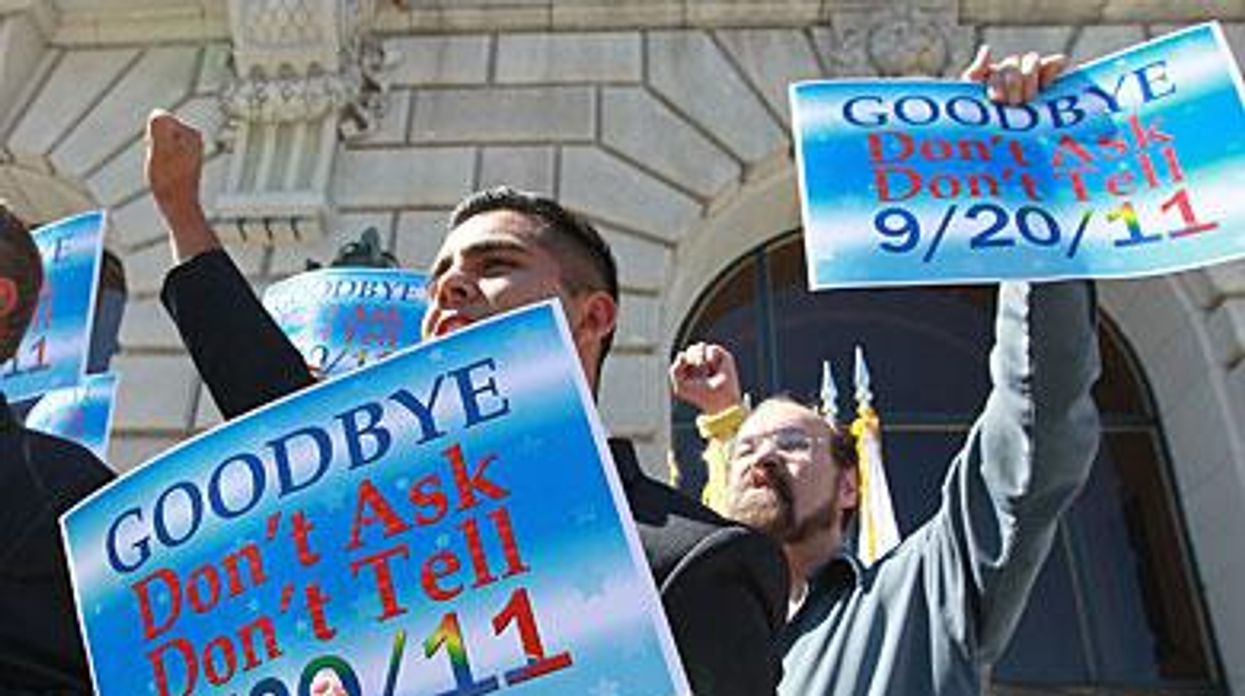
The Department of Justice wants a federal court to dismiss a class action lawsuit involving 142 people who were discharged from the military under "don't ask, don't tell" and are now in a lower pay grade because of their discharge status.
The American Civil Liberties Union announced the lawsuit Thursday, looking for a total of $2.1 million. The organization said the policy dictating the service members' separation pay was not part of the "don't ask, don't tell" repeal, so there was no change once the ban on openly gay military personnel was lifted. However, the Department of Defense can change the policy on its own, without congressional approval, according to the ACLU.
Justice Department attorney L. Misha Preheim did not argue the merits of the policy but said the Department of Defense should determine separation pay, as opposed to a court.
"The government is too embarrassed to defend the constitutionality of its policy in open court, so it is inventing new reasons to deny these service members justice," ACLU staff attorney Joshua Block said Thursday. "These veterans served their country honorably and deserve the full recognition and benefits that are afforded to other service members. The sums they seek are small to the military, but make a huge difference when readjusting to civilian life."
Separation pay is given to service members who were involuntarily discharged after at least six years of service, according to CBS News. However certain discharges, like those based on alcohol or drug abuse and previously, "don't ask, don't tell," can cause that pay to be slashed in half.
The case was brought forward by Air Force sergeant Richard Collis, who was honorably discharged in 2006 after coworkers reported that he had been spotted giving a kiss to his partner in a car 10 miles off base. At the time of the kiss, Collins was off duty and was not in uniform.
He told CBS News that he and his partner had always been cautious in public. "That one time I just happened to lean over and kiss him on the cheek," he said. "He said something sweet."