'%3E%3Cpath d='M16.3574 35.6519H12.9537L15.0491 18.8873L16.3574 35.6519ZM30.4229 54.0093L22.309 0.994385H7.91795L0 54.0093H10.6634L11.5802 46.3855H17.4014L17.9914 54.0093H30.4229Z' fill='%23971B20'/%3E%3Cpath d='M48.2073 41.8813C48.2073 43.4049 47.4892 44.0011 46.1144 44.0011H43.7595V11.0687H46.1144C47.4892 11.0687 48.2073 11.6636 48.2073 13.1885V41.8813ZM59.5273 43.6695V11.3326C59.5273 3.71323 53.5729 0.994385 47.8157 0.994385H31.7213V54.0093H47.8157C53.5729 54.0093 59.5273 51.29 59.5273 43.6695Z' fill='%23971B20'/%3E%3Cpath d='M90.183 0.994385H78.6039L75.0711 30.6157L71.9955 0.994385H59.4346L69.2474 54.0093H80.373L90.183 0.994385Z' fill='%23971B20'/%3E%3Cpath d='M107.063 42.3448C107.063 43.7359 105.951 44.5974 104.643 44.5974C103.269 44.5974 102.157 43.7359 102.157 42.3448V12.658C102.157 11.2676 103.269 10.4058 104.643 10.4058C105.951 10.4058 107.063 11.2676 107.063 12.658V42.3448ZM119.233 43.2723V11.7312C119.233 6.36384 112.952 -3.8147e-06 104.643 -3.8147e-06C96.2667 -3.8147e-06 89.9867 6.36384 89.9867 11.7312V43.2723C89.9867 48.6393 96.2667 55 104.643 55C112.952 55 119.233 48.6393 119.233 43.2723Z' fill='%23971B20'/%3E%3Cpath d='M150.976 43.9349V33.7309H139.069V42.3448C139.069 43.7359 137.957 44.5974 136.582 44.5974C135.076 44.5974 133.964 43.7359 133.964 42.3448V12.658C133.964 11.2676 135.076 10.4058 136.582 10.4058C137.957 10.4058 139.069 11.2676 139.069 12.658V21.2723H150.976V11.0687C150.976 5.70107 145.283 -3.8147e-06 136.582 -3.8147e-06C127.75 -3.8147e-06 121.796 5.70107 121.796 11.0687V43.9349C121.796 49.3022 127.75 55 136.582 55C145.283 55 150.976 49.3022 150.976 43.9349Z' fill='%23971B20'/%3E%3Cpath d='M167.478 35.6519H164.076L166.17 18.8873L167.478 35.6519ZM181.544 54.0093L173.432 0.994385H159.037L151.123 54.0093H161.785L162.704 46.3855H168.523L169.114 54.0093H181.544Z' fill='%23971B20'/%3E%3Cpath d='M205.412 10.4058V0.994385H177.081V10.4058H185.392V54.0093H197.428V10.4058H205.412Z' fill='%23971B20'/%3E%3Cpath d='M230.002 54.0093V43.9349H218.914V31.8746H226.635V21.8028H218.914V10.4058H230.002V0.994385H206.875V54.0093H230.002Z' fill='%23971B20'/%3E%3C/g%3E%3Cdefs%3E%3CclipPath id='clip0_260_7080'%3E%3Crect width='230' height='55' fill='white'/%3E%3C/clipPath%3E%3C/defs%3E%3C/svg%3E)

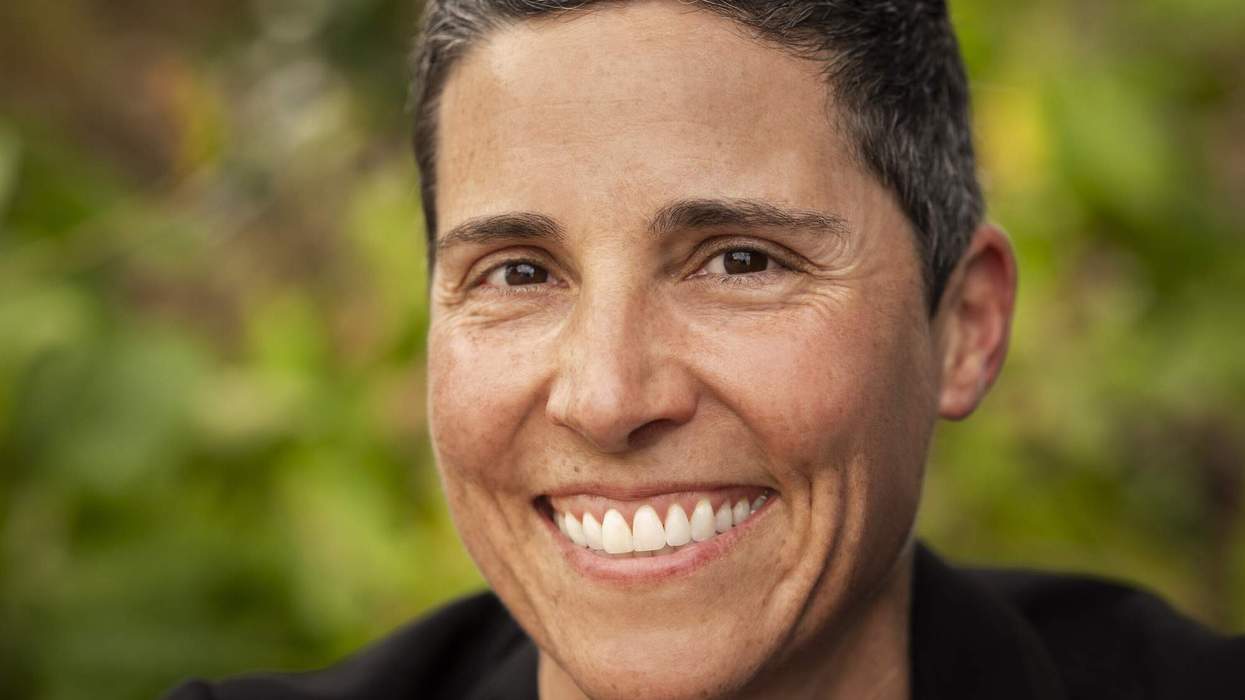
Bari Weiss, the conservative lesbian who recently became editor in chief of CBS News, abruptly killed a story about El Salvador’s notorious CECOT prison that was to run on 60 Minutes Sunday night. Weiss is getting much criticism for the decision, which she denies was politically motivated. She said the story wasn’t ready for airing and that it would be shown at a later date.
“My job is to make sure that all stories we publish are the best they can be,” she said in a statement late Sunday, as reported by The New York Times and other media outlets. “Holding stories that aren’t ready for whatever reason — that they lack sufficient context, say, or that they are missing critical voices — happens every day in every newsroom. I look forward to airing this important piece when it’s ready.”
However, Sharyn Alfonsi, who reported the story, begged to differ. “Our story was screened five times and cleared by both CBS attorneys and Standards and Practices,” she wrote in a private note to coworkers, a copy of which was obtained by theTimes and others. “It is factually correct. In my view, pulling it now, after every rigorous internal check has been met, is not an editorial decision, it is a political one.”
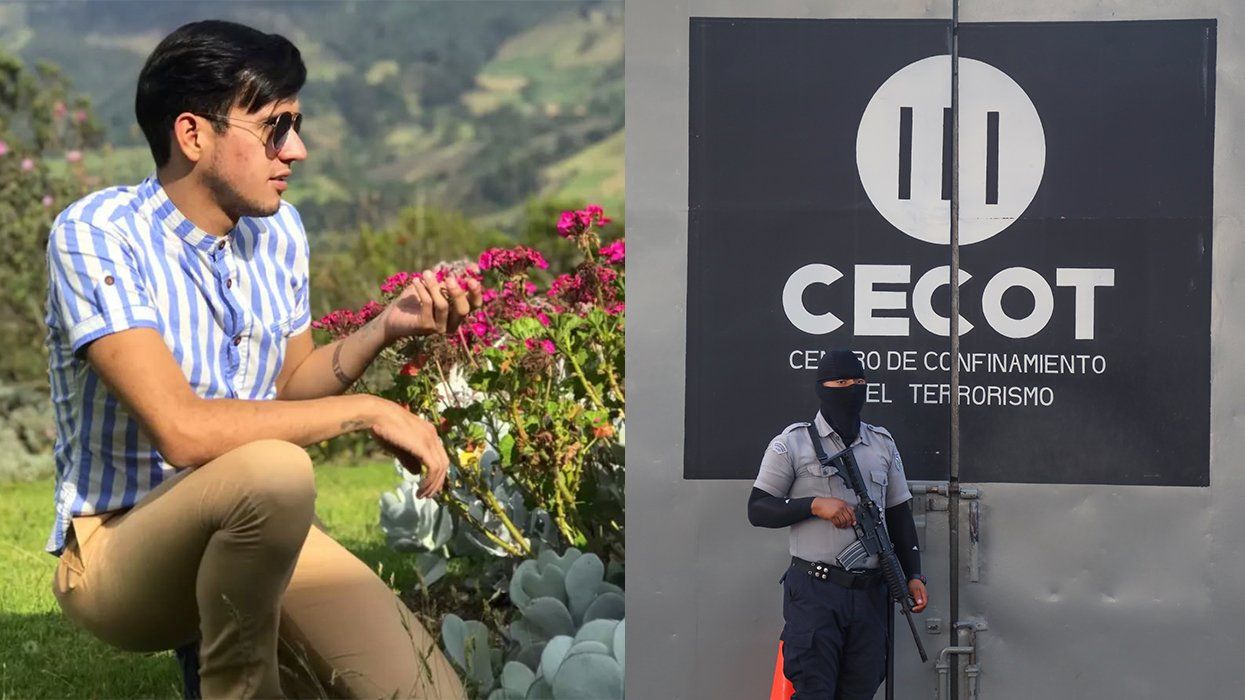
Here's what to know about CECOT, to which Donald Trump’s administration deported 252 Venezuelan refugees in March, including gay makeup artist Andry Hernández Romero. He and the others were released in a prisoner swap in July. Following that is a rundown on the situation at CBS.
The conditions at CECOT and how the men got there
“It was an encounter with torture and death,” Hernández Romero told journalists at his family home in Capacho, Venezuela, shortly after his release. He and others were beaten, shot with rubber projectiles, and confined in dark cells, he said. “Many of our fellows have wounds from the nightsticks; they have fractured ribs, fractured fingers and toes, marks from the handcuffs,” he added. “Others have marks on their chests, on their face ... from the projectiles.” The men were forced to sleep on metal slabs without mattresses, pillows, or blankets and were under constant surveillance.
CECOT stands for Centro de Confinamiento del Terrorismo, which translates to Terrorism Confinement Center. Hernández Romero and the other refugees were deported from the U.S. to CECOT because of the Trump administration’s claim that they had connections to the Venezuelan gang Tren de Aragua. The administration alleged the gang was an arm of the Venezuelan government and was invading the U.S., and Trump invoked the Alien Enemies Act, a law dating from 1798.
“Most if not all of these men had no real connections to Tren de Aragua at all but had been falsely identified as such by low-level [Department of Homeland Security] officers,” the American Immigration Council notes. Hernández Romero, for instance, had tattoos with crowns, which U.S. immigration officers considered a sign of ties to the gang. He said the crowns were a tribute to Three Kings Day. He had no criminal record and had entered the U.S. legally in 2024, seeking asylum due to antigay persecution in Venezuela. The U.S. government deported him and the rest of the men without due process and in defiance of court orders to stop the flights to El Salvador.
Related: Inside the movement that freed gay makeup artist Andry Hernández Romero from a hellhole
In another interview shortly after his release, with the Venezuelan program Con Maduro +, Hernández Romero said prison guards abused him for simply pouring some water on himself. “They took me to solitary confinement and abused me,” he said. “I was forced to perform oral sex on an officer. Three officers grabbed the batons and passed them over my private parts. And for me, that was just too devastating. It was my integrity as a human being, as a person of the [LGBTQ+] community, that [brought me to my lowest point.]”
Photojournalist Philip Holsinger, in an April story for60 Minutes Overtime, said he witnessed Romero saying, “I’m innocent” and “I’m gay,” and crying while guards shaved his head.
“He was being slapped every time he would speak up … he started praying and calling out, literally crying for his mother,” Holsinger said. “His crying out for his mother really, really touched me.”
Of the prisoners in general, Holsinger said, “They’ve been stripped of their hair and their clothes. … It’s like your life just ceased to exist. You’re just a person in white clothes now.” As he observed the prisoners, he added, he had “a sense of watching people disappear.”
Related: Andry Hernández Romero explains how he survived CECOT after the U.S. government disappeared him
In an exclusive interview withThe Advocate after his release, Hernández Romero said, “I want the world to know that being Venezuelan is not a crime.” He said he was gratified by all the interest in his case from the U.S.
“I never imagined my name, my image, my story would be so influential in the United States,” he said. “I never thought a large part of the American community would identify with the problem we were facing. It feels very beautiful to be that spokesperson for many, to let them know they are not alone, that the community is always there.”
What’s going on at CBS
Weiss, a former New York Times commentator, was named editor in chief at CBS News in October after David Ellison, the owner of CBS’s parent company, Paramount Skydance, acquired her online publication, The Free Press.
She had resigned from the Times in 2020, claiming that the paper had become an “illiberal environment" intolerant of anything that doesn’t fit a left-wing “orthodoxy.” Another gay conservative, Andrew Sullivan, resigned at the same time.
Many saw her appointment at CBS as a move to placate Trump. He had sued the network over a 60 Minutes interview with Kamala Harris, his opponent in last year’s presidential race, which he contended was deceptively edited. He had declined an interview with the program. The network’s parent company settled the suit with a $16 million payment to Trump.
CBS has also canceled The Late Show With Stephen Colbert in what it called a financial decision. But the show, which will stop airing when the current season ends in the spring, has had high ratings — and Colbert is an unflinching critic of Trump.
Related: CBS is treating Stephen Colbert’s smart fans like fools by citing a ‘financial decision’
Now Ellison is seeking Trump’s support for his attempt to buy Warner Bros. Discovery, but the president still seems hostile to 60 Minutes. “For those people that think I am close with the new owners of CBS, please understand that 60 Minutes has treated me far worse since the so-called ‘takeover,’ than they have ever treated me before. If they are friends, I’d hate to see my enemies!” he wrote recently on Truth Social.
The blowback to Weiss
One of Weiss’s suggestions for the CECOT piece was to add an interview with a highly placed member of the Trump administration, such as Stephen Miller, a deputy chief of staff at the White House who has been instrumental in creating the administration’s harsh immigration policies, the Times reports.
But Alfonsi said she had already sought comment from the administration without success, the Associated Press reports. “Government silence is a statement, not a VETO,” she wrote in her message to colleagues. “Their refusal to be interviewed is a tactical maneuver designed to kill the story. If the administration’s refusal to participate becomes a valid reason to spike a story, we have effectively handed them a ‘kill switch’ for any reporting they find inconvenient.”
Kelly McBride, senior vice president at the Poynter Institute, a nonprofit journalism organization, told The Washington Post that requiring interviews with administration officials “would give them the power to pick and choose which stories they want to go out. It would allow them to literally craft the narrative themselves.”
Now Axios has reported that 60 Minutes obtained comments from spokespeople at the White House, the Department of Homeland Security, and the State Department that were not included in the story. The comments "varied in length and substance," according to Axios. The outlet also obtained a memo Weiss sent to 60 Minutes producers and editors.
"At present, we do not present the administration's argument for why it sent 252 Venezuelans to CECOT," the memo reads in part. "What we have is [White House Press Secretary] Karoline Leavitt's soundbite claiming they are evildoers in America (rapists, murderers, etc.). But isn't there much more to ask in light of the torture that we are revealing? Tom Homan and Stephen Miller don't tend to be shy. I realize we've emailed the DHS spox, but we need to push much harder to get these principals on the record."
Also, Weiss is now creating a masthead for CBS News that "is meant to drive a more streamlined hierarchy and set of processes across show and news gathering teams that are intended to prevent disparate editorial procedures and standards," Axios reports.
Tanya Simon, executive producer of 60 Minutes, said in a private meeting Monday that she and her staff stood by the story but “ultimately had to comply” with Weiss, according to the Post, which obtained a partial transcript of the meeting.
Also during the meeting, 60 Minutes correspondent Scott Pelley said, “We’re incredibly proud of you, Sharyn, and everybody else on this story. You are doing exactly what you’re supposed to do — what this broadcast is about. And I think you’re going to find all of us standing and cheering around you.” Pelley had previously said he and others had reported critically on Trump without interference.
Mark Feldstein, a journalism professor at the University of Maryland and former broadcast reporter, told the Post, “Is Bari Weiss functioning as the managing editor of CBS News, or as the Trump administration’s in-house censor? CBS’s proud legacy of journalistic integrity, going back to Edward R. Murrow and Walter Cronkite, is sadly tarnished in ways that may never be repaired.”
Democratic U.S. Sens. Brian Schatz of Hawaii and Ed Markey of Massachusetts also lambasted Weiss’s decision. “What is happening to CBS is a terrible embarrassment and if executives think they can build shareholder value by avoiding journalism that might offend the Mad King they are about to learn a tough lesson,” Schatz wrote on X, formerly Twitter. Markey wrote on the platform, “This is what government censorship looks like.”