'%3E%3Cpath d='M16.3574 35.6519H12.9537L15.0491 18.8873L16.3574 35.6519ZM30.4229 54.0093L22.309 0.994385H7.91795L0 54.0093H10.6634L11.5802 46.3855H17.4014L17.9914 54.0093H30.4229Z' fill='%23971B20'/%3E%3Cpath d='M48.2073 41.8813C48.2073 43.4049 47.4892 44.0011 46.1144 44.0011H43.7595V11.0687H46.1144C47.4892 11.0687 48.2073 11.6636 48.2073 13.1885V41.8813ZM59.5273 43.6695V11.3326C59.5273 3.71323 53.5729 0.994385 47.8157 0.994385H31.7213V54.0093H47.8157C53.5729 54.0093 59.5273 51.29 59.5273 43.6695Z' fill='%23971B20'/%3E%3Cpath d='M90.183 0.994385H78.6039L75.0711 30.6157L71.9955 0.994385H59.4346L69.2474 54.0093H80.373L90.183 0.994385Z' fill='%23971B20'/%3E%3Cpath d='M107.063 42.3448C107.063 43.7359 105.951 44.5974 104.643 44.5974C103.269 44.5974 102.157 43.7359 102.157 42.3448V12.658C102.157 11.2676 103.269 10.4058 104.643 10.4058C105.951 10.4058 107.063 11.2676 107.063 12.658V42.3448ZM119.233 43.2723V11.7312C119.233 6.36384 112.952 -3.8147e-06 104.643 -3.8147e-06C96.2667 -3.8147e-06 89.9867 6.36384 89.9867 11.7312V43.2723C89.9867 48.6393 96.2667 55 104.643 55C112.952 55 119.233 48.6393 119.233 43.2723Z' fill='%23971B20'/%3E%3Cpath d='M150.976 43.9349V33.7309H139.069V42.3448C139.069 43.7359 137.957 44.5974 136.582 44.5974C135.076 44.5974 133.964 43.7359 133.964 42.3448V12.658C133.964 11.2676 135.076 10.4058 136.582 10.4058C137.957 10.4058 139.069 11.2676 139.069 12.658V21.2723H150.976V11.0687C150.976 5.70107 145.283 -3.8147e-06 136.582 -3.8147e-06C127.75 -3.8147e-06 121.796 5.70107 121.796 11.0687V43.9349C121.796 49.3022 127.75 55 136.582 55C145.283 55 150.976 49.3022 150.976 43.9349Z' fill='%23971B20'/%3E%3Cpath d='M167.478 35.6519H164.076L166.17 18.8873L167.478 35.6519ZM181.544 54.0093L173.432 0.994385H159.037L151.123 54.0093H161.785L162.704 46.3855H168.523L169.114 54.0093H181.544Z' fill='%23971B20'/%3E%3Cpath d='M205.412 10.4058V0.994385H177.081V10.4058H185.392V54.0093H197.428V10.4058H205.412Z' fill='%23971B20'/%3E%3Cpath d='M230.002 54.0093V43.9349H218.914V31.8746H226.635V21.8028H218.914V10.4058H230.002V0.994385H206.875V54.0093H230.002Z' fill='%23971B20'/%3E%3C/g%3E%3Cdefs%3E%3CclipPath id='clip0_260_7080'%3E%3Crect width='230' height='55' fill='white'/%3E%3C/clipPath%3E%3C/defs%3E%3C/svg%3E)
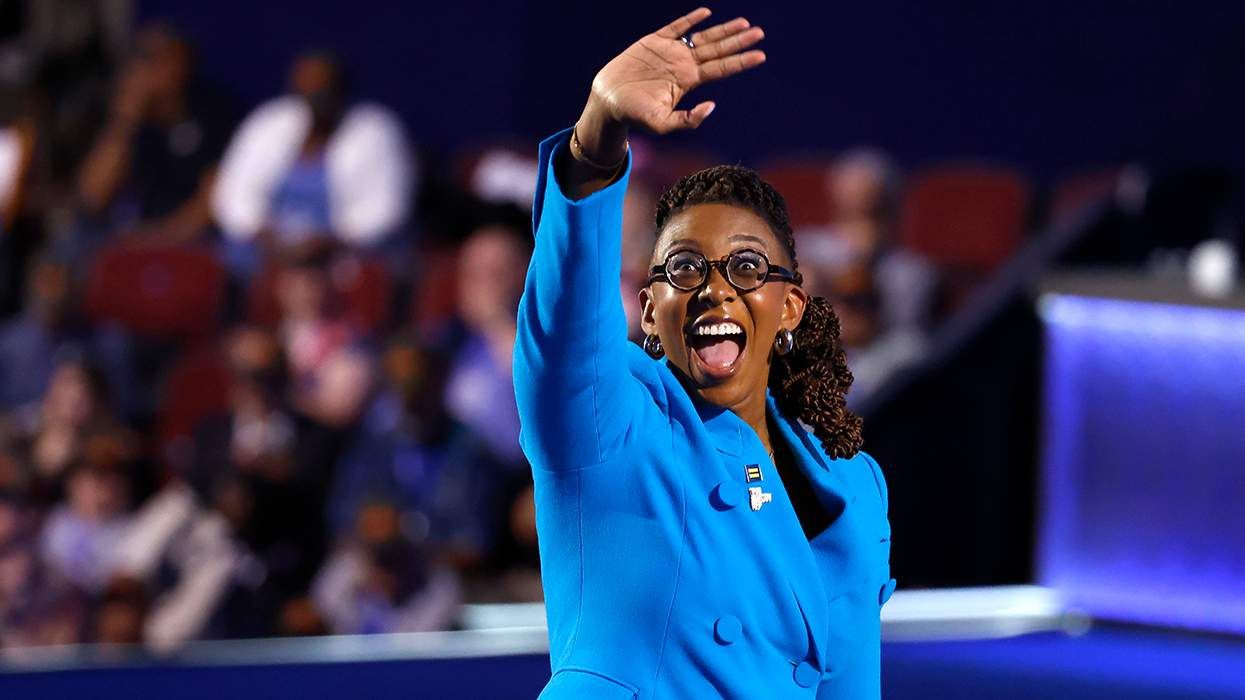
On the Sunday after National Coming Out Day and the start of Atlanta Pride, Human Rights Campaign President Kelley Robinson sat in a quiet office at Vision Cathedral of Atlanta, one of the South’s largest Black Pentecostal churches that enthusiastically affirms LGBTQ+ people, for an interview with The Advocate.
Keep up with the latest in LGBTQ+ news and politics. Sign up for The Advocate's email newsletter.
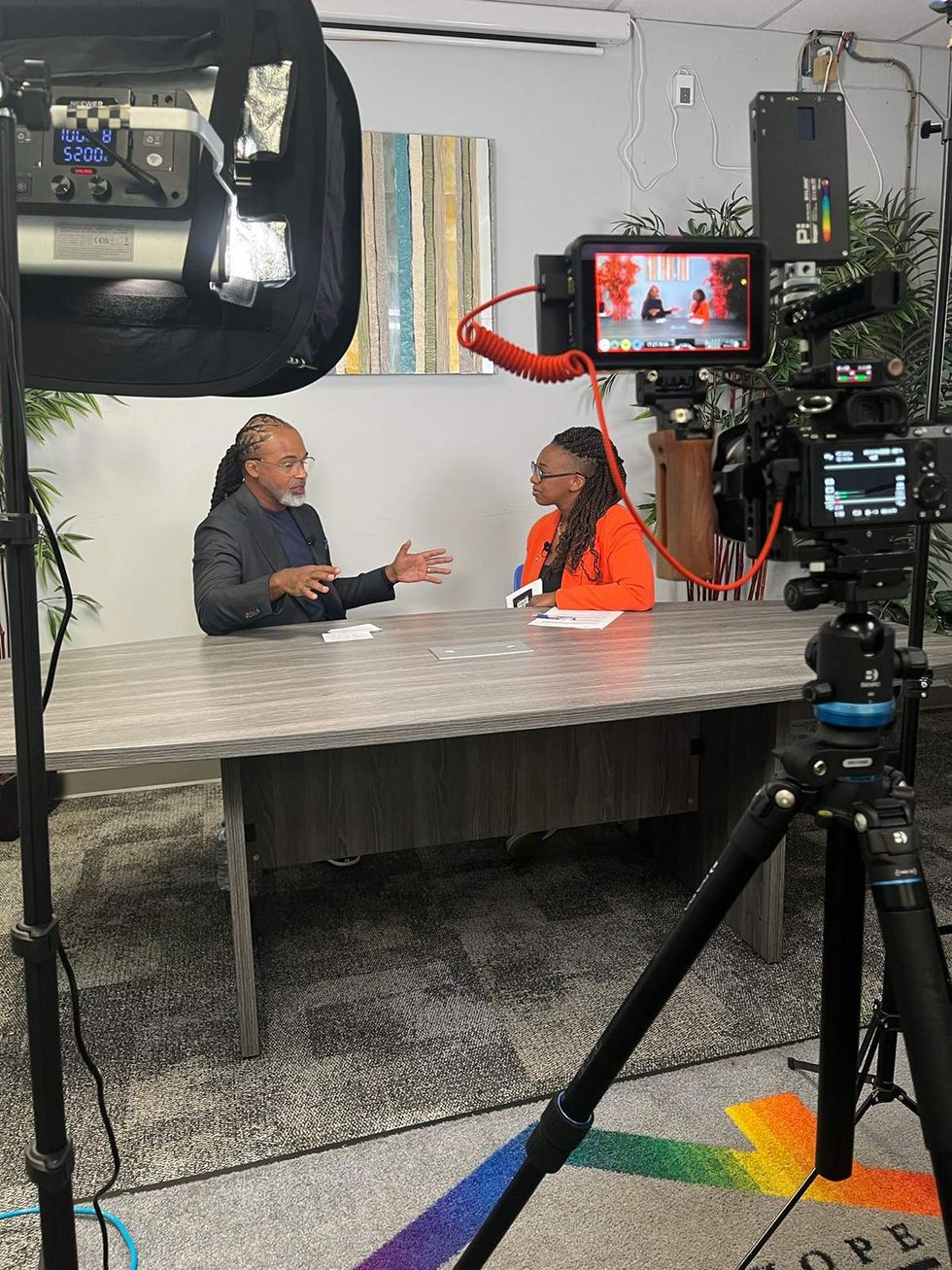
She had flown to Georgia that morning from Washington, D.C., leaving behind her wife and their two children, including an infant daughter born earlier this year, to return to a city she’d visited only two days earlier. On Friday, she’d taped an episode of HRC’s American Dreams podcast at the suburban Atlanta home of media entrepreneur and activist Ts Madison, the first Black transgender woman to produce and star in a reality TV show, before flying home and then back to speak at the church on Sunday.
“This weekend isn’t just about Pride,” Robinson said. “It’s about power — the kind that’s built from the ground up, in spaces like this.”
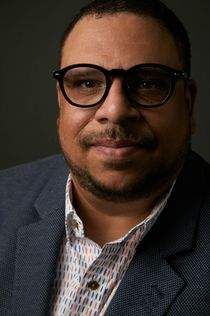
Rashad Burgess and Kelley Robinson
Courtesy Human Rights Campaign
“When America sneezes, Black gay America gets the flu”
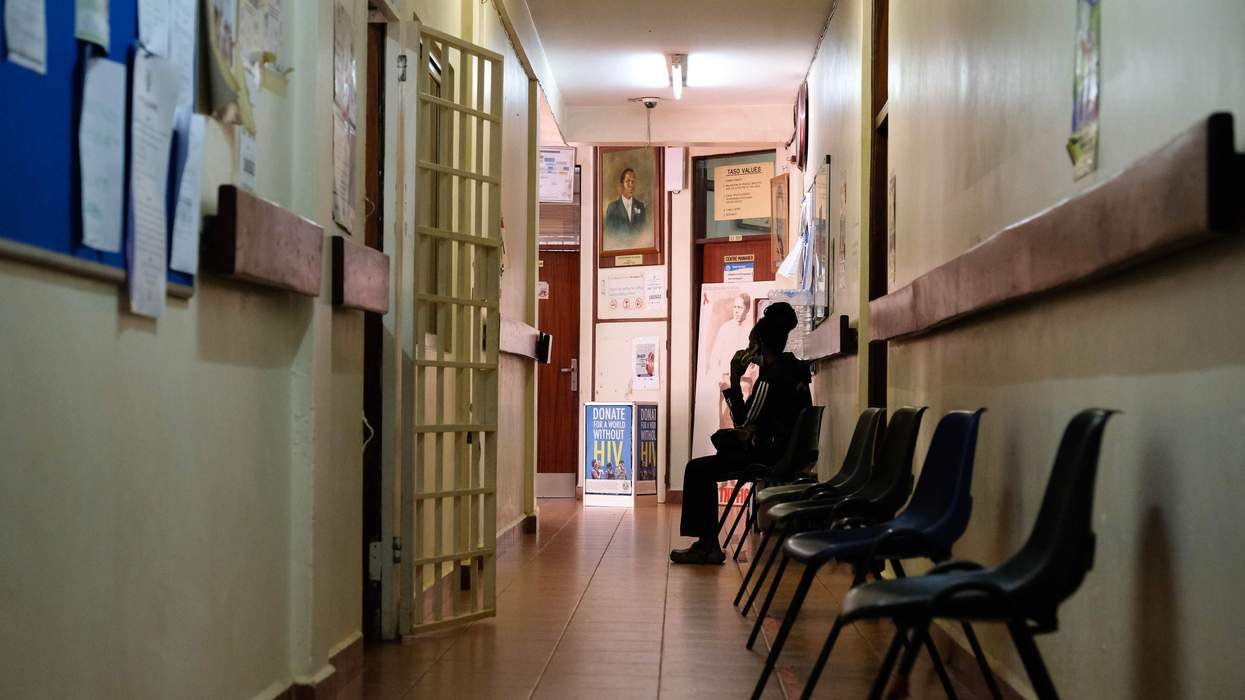
Robinson began her Sunday schedule with a visit to a local HIV and AIDS service provider. She noted the tangible fear in the room.
“When America sneezes, Black America gets a cold, and Black gay America gets the flu,” she said. “People are already asking if they can stay on PrEP, if their clinics will stay open. These are serious times.”
Related: JD Vance declares war on left-leaning organizations while hosting Charlie Kirk podcast
Under the second Trump administration, medical clinics are expected to close because of what Trump called his “one big beautiful bill,” a law that implements drastic cuts to Medicaid and could leave millions without access to health care.
She emphasized that the places currently holding communities together are often under the radar. “Leadership isn’t coming from the White House or from most statehouses,” she said. “It’s coming from churches, from community centers, from the people who care for one another when government fails us.”
Reinvention, not restoration
Robinson spoke about what comes next for the nation’s largest LGBTQ+ advocacy organization. In February, the Human Rights Campaign announced a significant restructuring, and the months since have been a period of introspection and rebuilding.
She was asked how HRC is reinventing itself to meet the challenges ahead. “First, I think a big thing for us to embrace is that to make change moving forward, it’s going to take more than the strategies and tactics that just got us here,” Robinson said.
“So much of the LGBTQ+ movement, our change has been rooted in making change in the courts,” she continued. “I’m not saying we give up on that strategy, but the courts alone will not save us. We’re thinking broadly: yes, how do we bring litigation, but how do you also make sure there’s a movement surrounding that, to cause attention to the crisis we’re in and use it as an opportunity to change hearts and minds?”
She said the organization’s work now includes narrative change and a sharper focus on visibility. “What we’re seeing is, for the first time in years, a softening of support around things like marriage equality,” she said. “We continue to see the trans community pulling at about 30 percent visibility. We’ve got to get those numbers up — and we’ve got to make sure we’re telling the stories of our lives at scale and with value.”
Robinson noted that conservative media reaches roughly 100 million people weekly, while progressive and mainstream outlets reach about 30 million. “That differential of 70 million is a gap we need to fill,” she said. “But the hopeful news for me is that HRC has 3.6 million supporters. If every individual tells their story to one or two people — not once a year, but every single day — that’s how you change hearts and minds.”
She described this new phase of HRC as one grounded in presence and proximity: “What we’re focused on now is protecting the change we’ve made in schools, especially in workplaces, and doing the broader work of fighting for democracy through policy, politics, and storytelling.”
Rashad Burgess and Kelley Robinson
Courtesy Human Rights Campaign
“If you’re awake, you should be concerned"
The American Civil Liberties Union is tracking at least 616 anti-LGBTQ+ bills nationwide so far in 2025. From the first day of his second term, President Donald Trump’s administration has targeted transgender people in all areas of life, from participation in military service to access to care and the ability to have government-issued identification that is in accordance with one’s gender identity.
After the September assassination of right-wing commentator Charlie Kirk, Vice President JD Vance indicated that the government would investigate progressive groups because the government believes they fund violent actors. There is no evidence for that claim.
Related: Human Rights Campaign to lay off 20% of staff as LGBTQ+ organization restructures (exclusive)
When asked about reports that the Trump administration is considering investigations of left-leaning advocacy organizations, including HRC, Robinson indicated that she’s ready for a fight. “If you’re awake, you should be concerned,” she said. “What we’re seeing are not only threats but actual actions. We saw what happened with Project 2025.”
She recalled how Trump and his allies initially denied any connection to that far-right blueprint. “Donald Trump said, ‘I don’t even know them,’” she said. “Those are the people who are now in the administration. So any time you hear their intentions out loud, we have to take that seriously, and we don’t need to wait until it all hits us and then try to catch up on the back end.”
Robinson said HRC and its partners are already preparing. “A lot of organizations are thinking deeply about physical and cybersecurity, safety for staff and volunteers, and resilience,” she said. “We’re learning from colleagues abroad about what it means to adapt in authoritarian environments.”
But she said the threat also forces a deeper personal reckoning. “There’s a question that comes before every person who chooses to do this work right now: Are you up for it?” she said. “The times we’re in are not going to be easy ones. Still, we’ve got to make the choice to get involved. Choosing to fight for equality and freedom comes with risk. But when I think about what’s on the line, my family, our home, our community, our future, the risk is worth taking.”
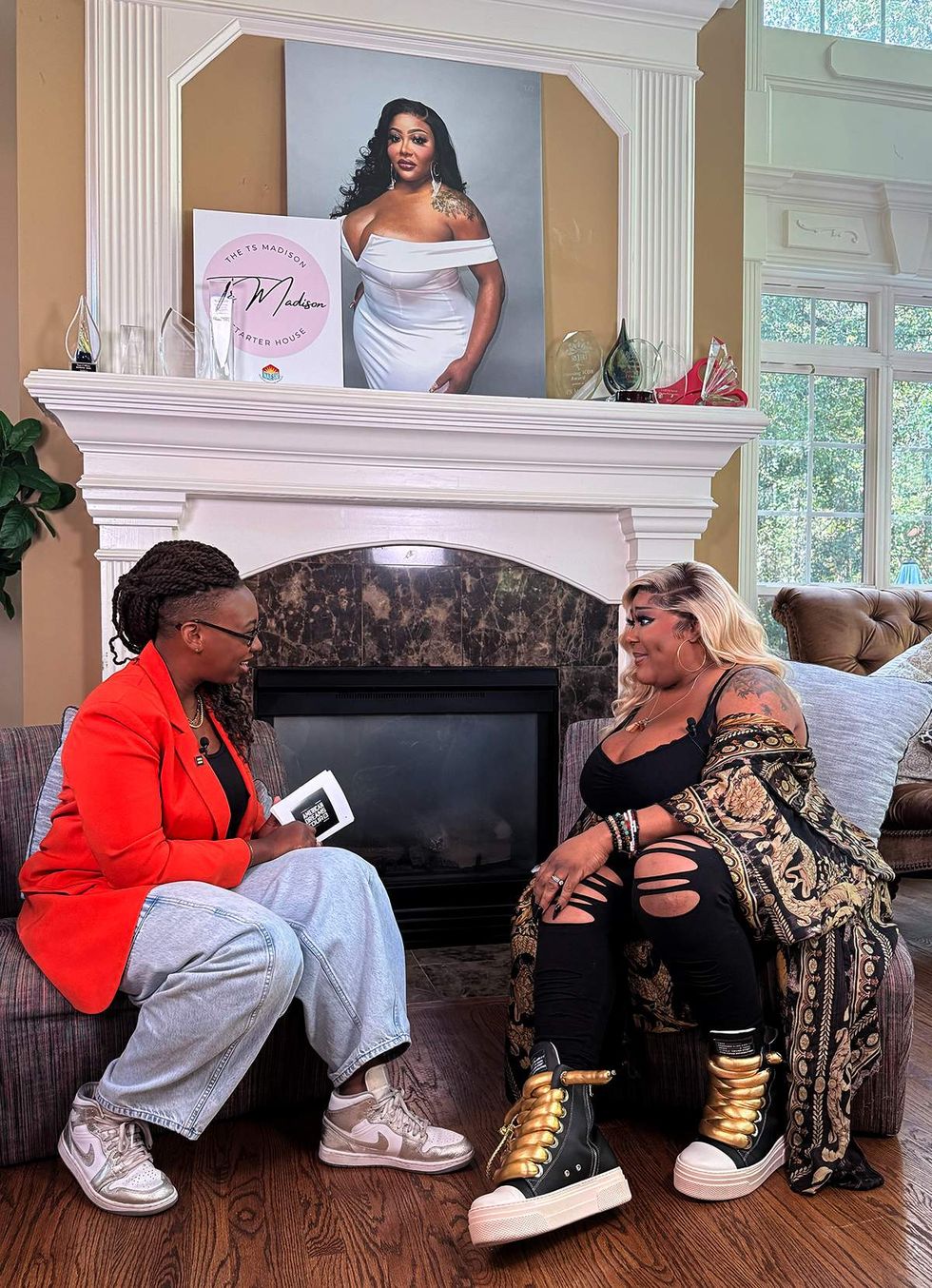
Kelley Robinson and Ts Madison talk at the trans entertainer's Atlanta home.
Courtesy Human Rights Campaign
Reframing HRC for the people
The Sunday stop in Atlanta is part of HRC’s nationwide “American Dreams” tour, launched earlier this year to elevate LGBTQ+ voices, reclaim the promise of inclusion, and move the organization closer to communities. The tour’s mission, according to HRC’s July press release, is to “travel across the country to mostly red and purple states, amplify LGBTQ+ stories, address HIV and health-care realities for the community, and chart a path toward equality.”
Just a year earlier, Robinson had stood before thousands at an electric Democratic National Convention, declaring that “we fight for LGBTQ+ freedom without exception.” That speech, filled with hope for a Kamala Harris presidency, now reads as a snapshot of light before the darkness that followed November’s election loss
Related: Ts Madison says Donald Trump and his transphobic administration should just 'pack it up'
Robinson described this iteration as one where HRC “shows up in homes, in churches, in neighborhoods.” “You can’t fight for people you don’t sit beside,” she said. “You can’t defend communities you never see.”
Asked how this shows up in practical terms, she said, “We are leveraging our national reach, but we’re also shifting to local presence, where decisions are made, where lives are lived, where people already belong.”
“We’re not going to get ahead by leaving anyone behind”
When the interview turned to gender-affirming care and laws targeting trans people, Robinson was clear-eyed. “These attacks are politically motivated,” she said. “They’re meant to hoodwink voters. If they can criminalize trans existence, immigrants are next, and Black people are already on the chopping block. We’re not going to get ahead by leaving anyone behind.” In her view, Democrats who may be wondering whether trans rights are a winning issue are not paying attention.
She added that the South, often cast as a battleground, has long been the moral center of the movement. “In other parts of the country, people see this as backlash,” she observed. “But in the South, people have been fighting all along. That steady drumbeat of oppression built resilience, and that resilience is how we’ll win.”
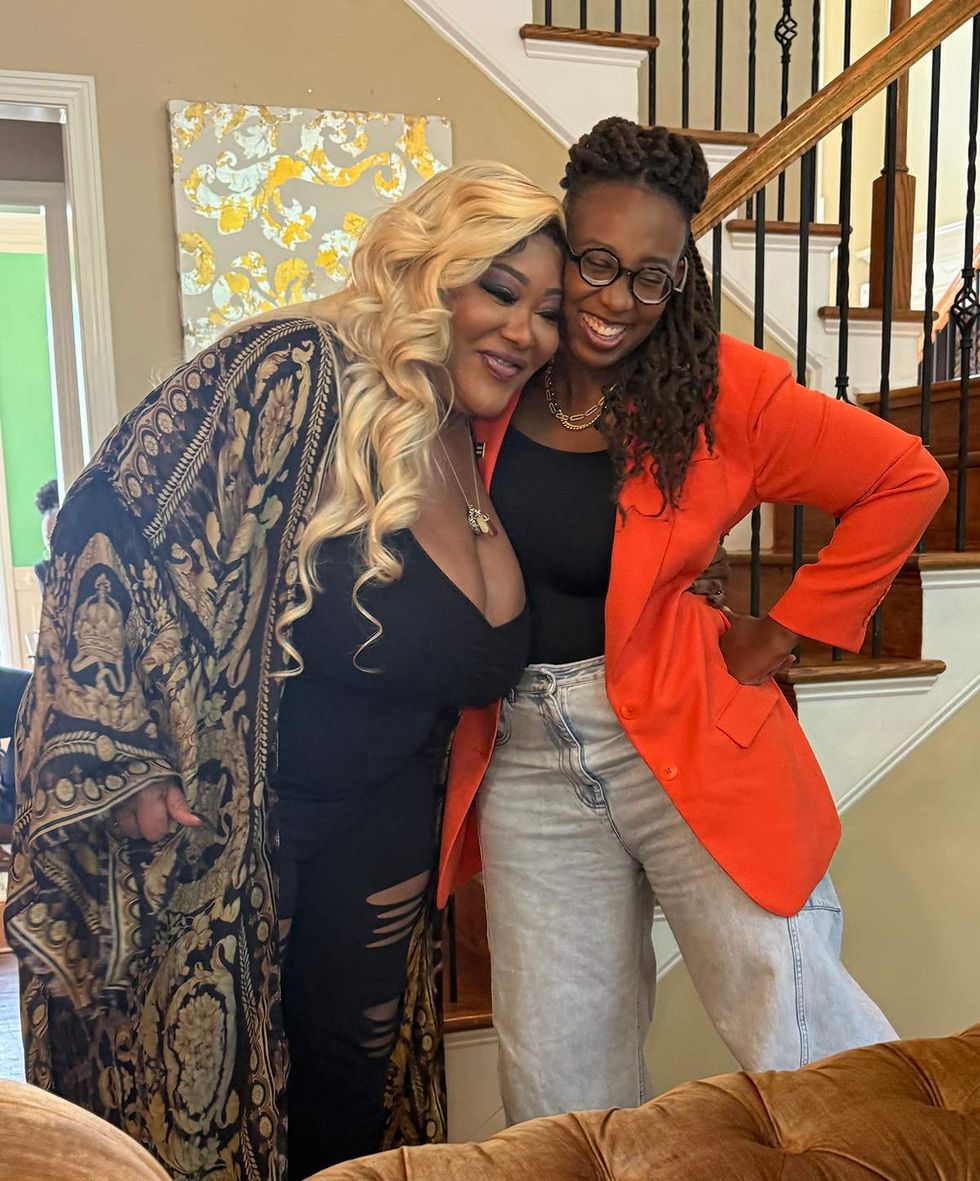
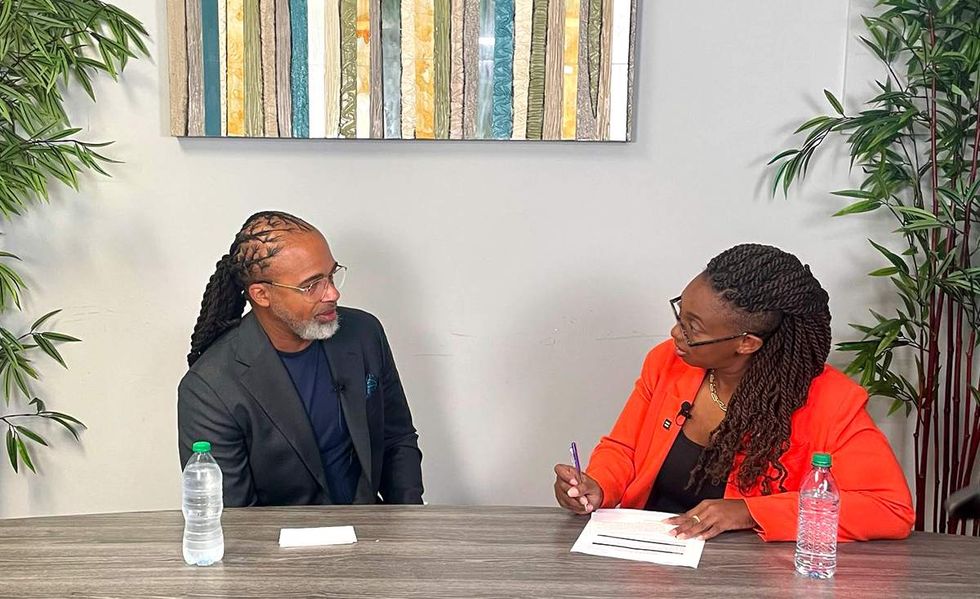
Ts Madison and Kelley Robinson
Courtesy Human Rights Campaign
From a living room to a sanctuary
Two days earlier, Robinson had sat across from Ts Madison in her home, dubbed the “TS Starter House,” for a podcast recording that turned into a cultural conversation about power, survival, and community.
“This house holds so much energy,” Madison told her. “It’s a portal of firsts. I closed on it three days before my birthday in 2007. I want the women who come here to plug into that energy and become themselves.”
Madison noted, “[The Republicans are] not worried about anybody being,” she said. “They’re only worried about power.” Robinson replied, “They’re taking your tax dollars and using them to bail out billionaires while cutting billions from HIV prevention and mental health care. It’s not just policy. It’s people’s lives.”
That same blend of faith, culture, and critique would follow her into the pulpit two days later.
“You can’t take my joy”
The sanctuary at Vision Cathedral was packed for Sunday service. The monitors above the altar flashed the greeting: “Welcome to the Vision Experience. Invite a friend. Join the family. Let us pray with you.”
The crowd — Black, Asian, and white, queer and straight, trans and cisgender, cross-generational — clapped as Bishop O.C. Allen III, standing beside his husband, Rashad Burgess, declared, “You can’t take my joy. Congress can’t take my joy!”
Related: HRC's Kelley Robinson to DNC: We fight for LGBTQ+ freedom “without exception”
When Robinson took the stage, she brought movement language into the pulpit. “Our ancestors were born in slavery,” she said. “We are living proof of their prayers every single day. We didn’t come this far only to come this far.”
“Our charge in this season,” she continued, “is to stand in truth, to love even when it’s uncomfortable, and to protect one another.”
Among the ministers present was Toi Washington-Reynolds, a transgender clergy member and one of many visible signs of the church’s inclusive ethos over its two decades.
Faith into action
During the service, HRC led a town hall conversation inside the sanctuary. Moderated by Nik Harris, HRC’s vice president of strategic outreach & engagement and a member of the church, the session invited congregants to ask Robinson about representation, strategy, and the organization’s new orientation toward community.
“I know HRC has made mistakes,” Robinson acknowledged about the organization’s past. “But the opportunity now is to put our power in service of our people — to listen, to be in community, and to build transformative power together. We are not going to get free without Black and brown people leading the charge.”
She pledged a deeper presence in the South and greater collaboration with faith communities. “The lessons we learn here don’t just transform our nation,” she said. “They change lives.”
Then she smiled. “Jesus was the OG organizer,” she said, drawing laughter and applause. “What we’re doing here is sacred. It’s about humility, imagination, and believing in one another enough to build something new.”
She added, “We didn’t come this far only to come this far. And we’re not done yet.”