'%3E%3Cpath d='M16.3574 35.6519H12.9537L15.0491 18.8873L16.3574 35.6519ZM30.4229 54.0093L22.309 0.994385H7.91795L0 54.0093H10.6634L11.5802 46.3855H17.4014L17.9914 54.0093H30.4229Z' fill='%23971B20'/%3E%3Cpath d='M48.2073 41.8813C48.2073 43.4049 47.4892 44.0011 46.1144 44.0011H43.7595V11.0687H46.1144C47.4892 11.0687 48.2073 11.6636 48.2073 13.1885V41.8813ZM59.5273 43.6695V11.3326C59.5273 3.71323 53.5729 0.994385 47.8157 0.994385H31.7213V54.0093H47.8157C53.5729 54.0093 59.5273 51.29 59.5273 43.6695Z' fill='%23971B20'/%3E%3Cpath d='M90.183 0.994385H78.6039L75.0711 30.6157L71.9955 0.994385H59.4346L69.2474 54.0093H80.373L90.183 0.994385Z' fill='%23971B20'/%3E%3Cpath d='M107.063 42.3448C107.063 43.7359 105.951 44.5974 104.643 44.5974C103.269 44.5974 102.157 43.7359 102.157 42.3448V12.658C102.157 11.2676 103.269 10.4058 104.643 10.4058C105.951 10.4058 107.063 11.2676 107.063 12.658V42.3448ZM119.233 43.2723V11.7312C119.233 6.36384 112.952 -3.8147e-06 104.643 -3.8147e-06C96.2667 -3.8147e-06 89.9867 6.36384 89.9867 11.7312V43.2723C89.9867 48.6393 96.2667 55 104.643 55C112.952 55 119.233 48.6393 119.233 43.2723Z' fill='%23971B20'/%3E%3Cpath d='M150.976 43.9349V33.7309H139.069V42.3448C139.069 43.7359 137.957 44.5974 136.582 44.5974C135.076 44.5974 133.964 43.7359 133.964 42.3448V12.658C133.964 11.2676 135.076 10.4058 136.582 10.4058C137.957 10.4058 139.069 11.2676 139.069 12.658V21.2723H150.976V11.0687C150.976 5.70107 145.283 -3.8147e-06 136.582 -3.8147e-06C127.75 -3.8147e-06 121.796 5.70107 121.796 11.0687V43.9349C121.796 49.3022 127.75 55 136.582 55C145.283 55 150.976 49.3022 150.976 43.9349Z' fill='%23971B20'/%3E%3Cpath d='M167.478 35.6519H164.076L166.17 18.8873L167.478 35.6519ZM181.544 54.0093L173.432 0.994385H159.037L151.123 54.0093H161.785L162.704 46.3855H168.523L169.114 54.0093H181.544Z' fill='%23971B20'/%3E%3Cpath d='M205.412 10.4058V0.994385H177.081V10.4058H185.392V54.0093H197.428V10.4058H205.412Z' fill='%23971B20'/%3E%3Cpath d='M230.002 54.0093V43.9349H218.914V31.8746H226.635V21.8028H218.914V10.4058H230.002V0.994385H206.875V54.0093H230.002Z' fill='%23971B20'/%3E%3C/g%3E%3Cdefs%3E%3CclipPath id='clip0_260_7080'%3E%3Crect width='230' height='55' fill='white'/%3E%3C/clipPath%3E%3C/defs%3E%3C/svg%3E)
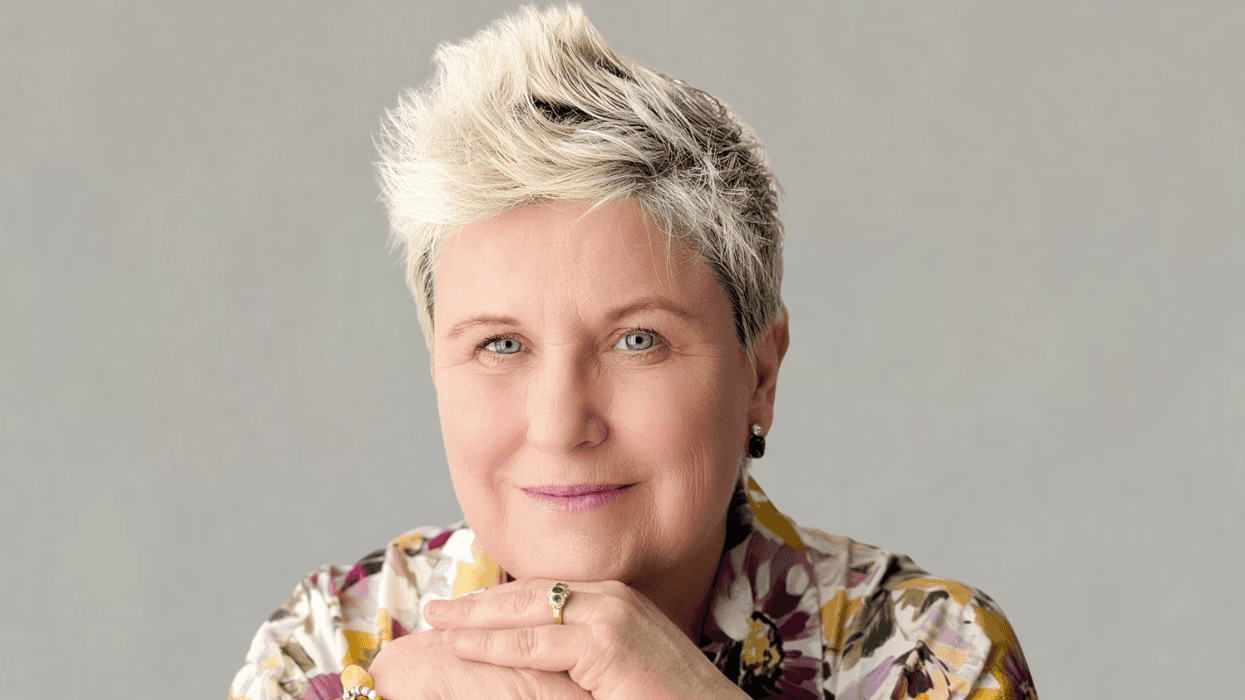
On March 31, I sat down at my computer, microphone on, ready to record. I was nervous in the good way, the way you get when something feels important. I had been booked to appear on a podcast called Living My Faith, and I want to be honest: I was surprised they wanted me.
Podcasts with that kind of name usually come from conservative faith traditions. But I had made a decision this year to lean into my faith background more deliberately, to show up in spaces where queer people and people of faith might not expect to find someone like me. An ordained minister, a Yale MDiv, someone who came out at 52 after a long marriage and never stopped believing in the loving force at the center of the universe.
Ten minutes after we were supposed to begin, with no one on the other end of the call, a message arrived.
"Hi Anne-Marie, we have some opposing views for Living My Faith, and I'd love to have you join us on a different show if that is ok with you. As you know, the topic of LGBTQIA+ is a hot one, and I'd love to have you on the show, Making a Difference. For now, we are going to cancel today’s interview, and I'm sorry for the late notice and difficult conversation."
I want to pause here for a moment, because something needs to be said about how we got to this point.
I reached out to Living My Faith. I did my part. I presented myself honestly and openly, as I always do. I am not difficult to research. I am an ordained queer minister, a woman, the founder of a coaching community serving women navigating queer identity in midlife, and a podcaster with over 130 episodes on coming out later in life. This is not hidden information. It is the first thing anyone would find.
When they said yes to having me on, that yes came with a responsibility. A responsibility to know who they had invited into their space. A basic Google search, the kind that takes thirty seconds, would have told them everything they needed to know. They either did not bother, which is a profound failure of basic professional responsibility. Or they did their research, knew exactly who I was, and said yes anyway. I will leave it to you to decide which possibility troubles you more.
What I know is this: I showed up. They did not.
I recoiled after receiving their message.
My life is not a hot topic. I cringe when I hear that framing the same way I cringe when I hear the phrase "gay lifestyle.” A lifestyle is living on a beach or golf course, being a vegan. Those are choices. My life is not a choice. It is my life. And it had just been reduced to a debate topic by someone who couldn’t even show up to have the conversation.
I wrote back. I told them the late cancellation was disrespectful of my time. More importantly, I told them that framing my identity and my community as something to be balanced with opposing views was harmful, regardless of intent. I declined the rescheduled interview. And then I did something I don’t always do. I posted about it publicly, tagging the host. Because I was angry. And because the women I serve needed to see someone refuse to be diminished without apology.
What followed was not surprising, but it was clarifying.
The host’s wife began posting videos publicly, videos expressing open disdain for the queer community. His wider church community arrived in the comments: brutally mean and abusive. I have been called a “wicked woman” and “abomination” too many times to count. Yesterday, I received an email from Victory News, the media arm of Kenneth Copeland Ministries, telling me they had already interviewed the host and were running their version of the story by Friday. They wanted my statement.
I declined, politely.
The women I coach are in their 40s, 50s, and 60s. Many of them are coming out after long marriages, leaving faith communities they have belonged to their entire lives, navigating the grief of an identity they buried decades ago under layers of religious expectation. They come to me carrying something most people don’t fully understand, a particular kind of conditioning that runs so deep it precedes the question of sexuality entirely.
I often say that I have to work through what the church has done to these women before I can even get to their LGBTQ+ identity.
Because what conservative traditions do first, before they ever said a word about homosexuality, was teach these women that their own well-being comes last. That they are responsible for everyone around them. That their needs, their desires, their interior lives are secondary to their husbands, their children, their congregations, their God. I have women who apologize constantly for taking up space. Women who are so incapacitated by guilt and shame that fear has become their resting state. Women who are terrified that their queerness will ruin everyone’s life, their children’s, their spouse's, their parents'. Women who have spent so long putting themselves last that the idea of choosing themselves feels not just selfish but sinful.
And then, on top of all of that, they are handed what are known in theological circles as the clobber passages. A handful of biblical verses that have been used for generations to tell queer people that who they are is an abomination. These passages are as old as the hills and as familiar to queer people as their own names. They are deployed like weapons. And they land in people who have already been taught that they have no right to defend themselves.
What happened to me publicly last week is what happens to these women privately every single day. The difference is that I have a platform, credentials, and a community of colleagues watching. They have none of those things. They sit alone with the videos, the comments, the family group texts, the pastor’s visit, the quiet withdrawal of people they have loved their whole lives. And they absorb it in silence because they were taught long ago that absorbing is what good women do.
This is why I refused to be quiet. Not for myself, I can handle a pile-on. But because somewhere a woman is watching to see if someone like her can stand in the fire and not be consumed by it.
Rev. Anne-Marie Zanzal hosts the podcast Coming Out & Beyond. More at annemariezanzal.com.
Opinion is dedicated to featuring a wide range of inspiring personal stories and impactful opinions from the LGBTQ+ community and its allies. Visit Advocate.com/submit to learn more about submission guidelines. We welcome your thoughts and feedback on any of our stories. Email us at voices@equalpride.com. Views expressed in Voices stories are those of the guest writers, columnists, and editors, and do not directly represent the views of The Advocate or our parent company, equalpride.