'%3E%3Cpath d='M16.3574 35.6519H12.9537L15.0491 18.8873L16.3574 35.6519ZM30.4229 54.0093L22.309 0.994385H7.91795L0 54.0093H10.6634L11.5802 46.3855H17.4014L17.9914 54.0093H30.4229Z' fill='%23971B20'/%3E%3Cpath d='M48.2073 41.8813C48.2073 43.4049 47.4892 44.0011 46.1144 44.0011H43.7595V11.0687H46.1144C47.4892 11.0687 48.2073 11.6636 48.2073 13.1885V41.8813ZM59.5273 43.6695V11.3326C59.5273 3.71323 53.5729 0.994385 47.8157 0.994385H31.7213V54.0093H47.8157C53.5729 54.0093 59.5273 51.29 59.5273 43.6695Z' fill='%23971B20'/%3E%3Cpath d='M90.183 0.994385H78.6039L75.0711 30.6157L71.9955 0.994385H59.4346L69.2474 54.0093H80.373L90.183 0.994385Z' fill='%23971B20'/%3E%3Cpath d='M107.063 42.3448C107.063 43.7359 105.951 44.5974 104.643 44.5974C103.269 44.5974 102.157 43.7359 102.157 42.3448V12.658C102.157 11.2676 103.269 10.4058 104.643 10.4058C105.951 10.4058 107.063 11.2676 107.063 12.658V42.3448ZM119.233 43.2723V11.7312C119.233 6.36384 112.952 -3.8147e-06 104.643 -3.8147e-06C96.2667 -3.8147e-06 89.9867 6.36384 89.9867 11.7312V43.2723C89.9867 48.6393 96.2667 55 104.643 55C112.952 55 119.233 48.6393 119.233 43.2723Z' fill='%23971B20'/%3E%3Cpath d='M150.976 43.9349V33.7309H139.069V42.3448C139.069 43.7359 137.957 44.5974 136.582 44.5974C135.076 44.5974 133.964 43.7359 133.964 42.3448V12.658C133.964 11.2676 135.076 10.4058 136.582 10.4058C137.957 10.4058 139.069 11.2676 139.069 12.658V21.2723H150.976V11.0687C150.976 5.70107 145.283 -3.8147e-06 136.582 -3.8147e-06C127.75 -3.8147e-06 121.796 5.70107 121.796 11.0687V43.9349C121.796 49.3022 127.75 55 136.582 55C145.283 55 150.976 49.3022 150.976 43.9349Z' fill='%23971B20'/%3E%3Cpath d='M167.478 35.6519H164.076L166.17 18.8873L167.478 35.6519ZM181.544 54.0093L173.432 0.994385H159.037L151.123 54.0093H161.785L162.704 46.3855H168.523L169.114 54.0093H181.544Z' fill='%23971B20'/%3E%3Cpath d='M205.412 10.4058V0.994385H177.081V10.4058H185.392V54.0093H197.428V10.4058H205.412Z' fill='%23971B20'/%3E%3Cpath d='M230.002 54.0093V43.9349H218.914V31.8746H226.635V21.8028H218.914V10.4058H230.002V0.994385H206.875V54.0093H230.002Z' fill='%23971B20'/%3E%3C/g%3E%3Cdefs%3E%3CclipPath id='clip0_260_7080'%3E%3Crect width='230' height='55' fill='white'/%3E%3C/clipPath%3E%3C/defs%3E%3C/svg%3E)
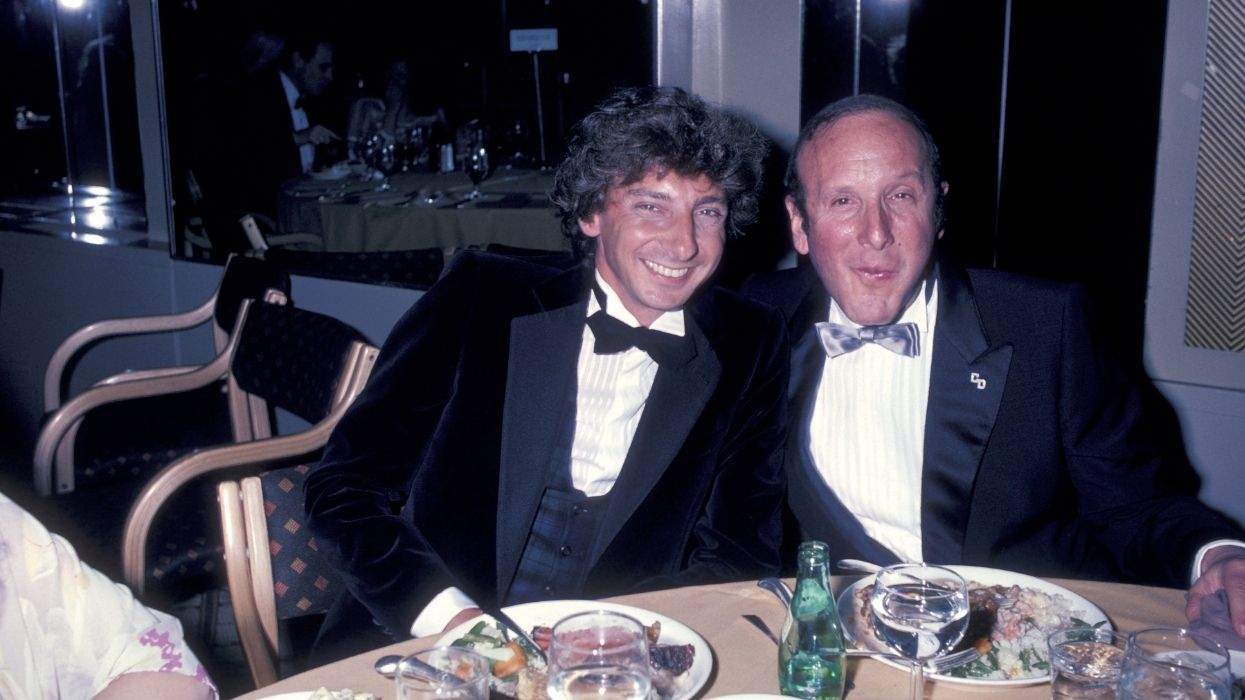
About twenty-five years ago, through a long-lost friend, I went to a party celebrating the establishment of the Clive Davis Department of Recorded Music at NYU’s Tisch School of the Arts.
Sadly, I don’t remember much about that evening, but one thing really stands out. When Clive Davis walked in, it was like Moses parting the Red Sea. He was like a deity. I have to admit to being awestruck. I was too scared to approach him, and that would not happen today, for sure.
One thing that I’ve done throughout my life is that when I meet someone of incredible stature, I read a book about them, whether a biography or memoir. For example, I’ve read about former Defense Secretary Clark Clifford, Katharine Graham, the former chairman of The Washington Post Company, and actors Burt Lancaster and Jimmy Stewart. Those are just a few examples.
After reading those tomes, I feel like I know the person better. The same holds true for Davis. So when they die, I feel their loss more profoundly.
The music industry lost perhaps its most consequential titan when Davis, at 94, died on Monday. He wasn’t just a legend; he was called the “man with the golden ears.” Besides that, I really do feel that we’ve lost a cornerstone of our cultural history.
Related: Clive Davis, bisexual star-maker who changed American pop music, dies at 94
That’s because music undoubtedly plays such a pivotal role in our lives. Songs make us happy, sad, transport us to a place and time, or bear witness to an evolving memory. And chances are that a song you love wouldn’t have existed if it weren’t for Davis.
And I say that without exaggeration.
He was the metaphorical maestro behind Whitney Houston, Barry Manilow, Janis Joplin, Aretha Franklin, Bruce Springsteen, Alicia Keys, Rod Stewart, Jennifer Hudson, and on and on. There simply isn’t room to list them all.
He was the only non-performer ever inducted into the Rock and Roll Hall of Fame. Some would argue that the institution wouldn’t exist if it weren’t for Davis.
But to our community, his legacy runs far deeper. Clive was one of us. Personally and professionally, he helped lift the careers of many queer performers.
When he published his memoir, The Soundtrack of My Life, in 2013, he did something absolutely remarkable, at least to me and many others. As an octogenarian, he came out as bisexual. For someone from his generation to do that, it couldn’t have been easy.
In the book, Davis revealed that he first came to understand his attraction to men in his 50s, following an encounter at Studio 54 in the 1970s. He was clear that his two prior marriages had been entirely genuine.
Related: For First Time, Music Icon Clive Davis Talks Publicly About Being Bisexual
After his second marriage ended in 1985, he navigated relationships with both men and women before settling into long-term monogamous relationships with men. He was honest about the personal costs, including a difficult year-long adjustment for his son, Mitchell.
And he was adamant that he was simply a man whose attractions were based on the individual, not the gender.
I’ll admit to shaking my head because I came of age when the cultural trope and recurring joke in LGBTQ+ circles was that bisexuality was a sort of pit stop. For gay men of a certain age, coming out as bisexual first was a way to soften the blow for family, friends, or society before later coming out as fully gay.
But in this case, I think Davis was crystal clear about bisexuality being real to him. “To call me anything other than bisexual would be inaccurate,” he wrote.
His stature became, in that moment, a validation for one of the most misunderstood segments of our community: the B in LGBTQ+.
But long before he articulated his own truth publicly, Davis was already building sanctuaries for queer artists, and doing so at a time when being queer could end a career overnight.
It was during the era of “bisexual first,” when corporations were often straight and homophobic. But Davis wasn’t going there. His focus remained singular: pure talent and nothing else. He championed another bisexual, Janis Joplin, and Lou Reed’s gender-bending narratives.
He famously catapulted Barry Manilow to superstardom when Manilow’s sexuality was an open secret that the industry preferred to keep buried. He backed artists who didn’t fit the mold, like Patti Smith, precisely because they didn’t fit the mold.
Related: Barry Manilow: Coming Out Has Been a 'Beautiful Experience'
His list of queer performers included Jermaine Stewart, Taylor Dayne, and Melissa Manchester. I mention them because they are names from that same “bisexual first” era I lived through when being out and queer was precarious.
And then there is his AIDS legacy. Davis began his tireless work in the fight against AIDS in 1985, at a moment when much of the entertainment industry was looking away. In 1998, that commitment was formally recognized when the American Foundation for AIDS Research (amfAR) bestowed its prestigious Humanitarian Award upon him.
Most famously, as president of Arista Records in 1985, Davis coordinated the release of the iconic charity single “That’s What Friends Are For,” featuring Dionne Warwick, Elton John, Gladys Knight, and Stevie Wonder. Davis committed Arista Records to donating all distribution profits and single proceeds to HIV and AIDS research.
The song was released in October 1985 and became Billboard’s best-selling single of 1986, generating more than $3 million from U.S. sales alone.
In March 1990, he leveraged his entire roster of Arista talent to transform the company’s 15th anniversary celebration into a star-studded AIDS fundraiser at Radio City Music Hall, famously calling it “a party with a purpose.”
These examples came during the height of the AIDS crisis, and again, for those of us of a certain age, “That’s What Friends Are For” remains an emotional touchstone to a haunting time.
We will almost certainly never see another figure like him. The monolithic record labels that once shaped global culture have fractured under the weight of streaming algorithms and a hyper-segmented media landscape, where songs come at you from a plethora of directions.
The proverbial “music man,” the executive like Davis who could spot talent a mile away and guide artists to superstar status over decades, no longer exists. YouTube clicks, and TikTok reels unearth talent long before they’re spotted in a dive bar or chorus line.
I could kick myself for not crossing that room twenty-five years ago. But I know what I would have said, probably quoting a line from “That’s What Friends Are For,” sung by Stevie Wonder: “Well, you came and opened me. And now there’s so much more I see. And so, by the way, I thank you.”
Opinion is dedicated to featuring a wide range of inspiring personal stories and impactful opinions from the LGBTQ+ community and its allies. Visit Advocate.com/submit to learn more about submission guidelines. We welcome your thoughts and feedback on any of our stories. Email us at voices@equalpride.com. Views expressed in Voices stories are those of the guest writers, columnists, and editors, and do not directly represent the views of The Advocate or our parent company, equalpride.