'%3E%3Cpath d='M16.3574 35.6519H12.9537L15.0491 18.8873L16.3574 35.6519ZM30.4229 54.0093L22.309 0.994385H7.91795L0 54.0093H10.6634L11.5802 46.3855H17.4014L17.9914 54.0093H30.4229Z' fill='%23971B20'/%3E%3Cpath d='M48.2073 41.8813C48.2073 43.4049 47.4892 44.0011 46.1144 44.0011H43.7595V11.0687H46.1144C47.4892 11.0687 48.2073 11.6636 48.2073 13.1885V41.8813ZM59.5273 43.6695V11.3326C59.5273 3.71323 53.5729 0.994385 47.8157 0.994385H31.7213V54.0093H47.8157C53.5729 54.0093 59.5273 51.29 59.5273 43.6695Z' fill='%23971B20'/%3E%3Cpath d='M90.183 0.994385H78.6039L75.0711 30.6157L71.9955 0.994385H59.4346L69.2474 54.0093H80.373L90.183 0.994385Z' fill='%23971B20'/%3E%3Cpath d='M107.063 42.3448C107.063 43.7359 105.951 44.5974 104.643 44.5974C103.269 44.5974 102.157 43.7359 102.157 42.3448V12.658C102.157 11.2676 103.269 10.4058 104.643 10.4058C105.951 10.4058 107.063 11.2676 107.063 12.658V42.3448ZM119.233 43.2723V11.7312C119.233 6.36384 112.952 -3.8147e-06 104.643 -3.8147e-06C96.2667 -3.8147e-06 89.9867 6.36384 89.9867 11.7312V43.2723C89.9867 48.6393 96.2667 55 104.643 55C112.952 55 119.233 48.6393 119.233 43.2723Z' fill='%23971B20'/%3E%3Cpath d='M150.976 43.9349V33.7309H139.069V42.3448C139.069 43.7359 137.957 44.5974 136.582 44.5974C135.076 44.5974 133.964 43.7359 133.964 42.3448V12.658C133.964 11.2676 135.076 10.4058 136.582 10.4058C137.957 10.4058 139.069 11.2676 139.069 12.658V21.2723H150.976V11.0687C150.976 5.70107 145.283 -3.8147e-06 136.582 -3.8147e-06C127.75 -3.8147e-06 121.796 5.70107 121.796 11.0687V43.9349C121.796 49.3022 127.75 55 136.582 55C145.283 55 150.976 49.3022 150.976 43.9349Z' fill='%23971B20'/%3E%3Cpath d='M167.478 35.6519H164.076L166.17 18.8873L167.478 35.6519ZM181.544 54.0093L173.432 0.994385H159.037L151.123 54.0093H161.785L162.704 46.3855H168.523L169.114 54.0093H181.544Z' fill='%23971B20'/%3E%3Cpath d='M205.412 10.4058V0.994385H177.081V10.4058H185.392V54.0093H197.428V10.4058H205.412Z' fill='%23971B20'/%3E%3Cpath d='M230.002 54.0093V43.9349H218.914V31.8746H226.635V21.8028H218.914V10.4058H230.002V0.994385H206.875V54.0093H230.002Z' fill='%23971B20'/%3E%3C/g%3E%3Cdefs%3E%3CclipPath id='clip0_260_7080'%3E%3Crect width='230' height='55' fill='white'/%3E%3C/clipPath%3E%3C/defs%3E%3C/svg%3E)


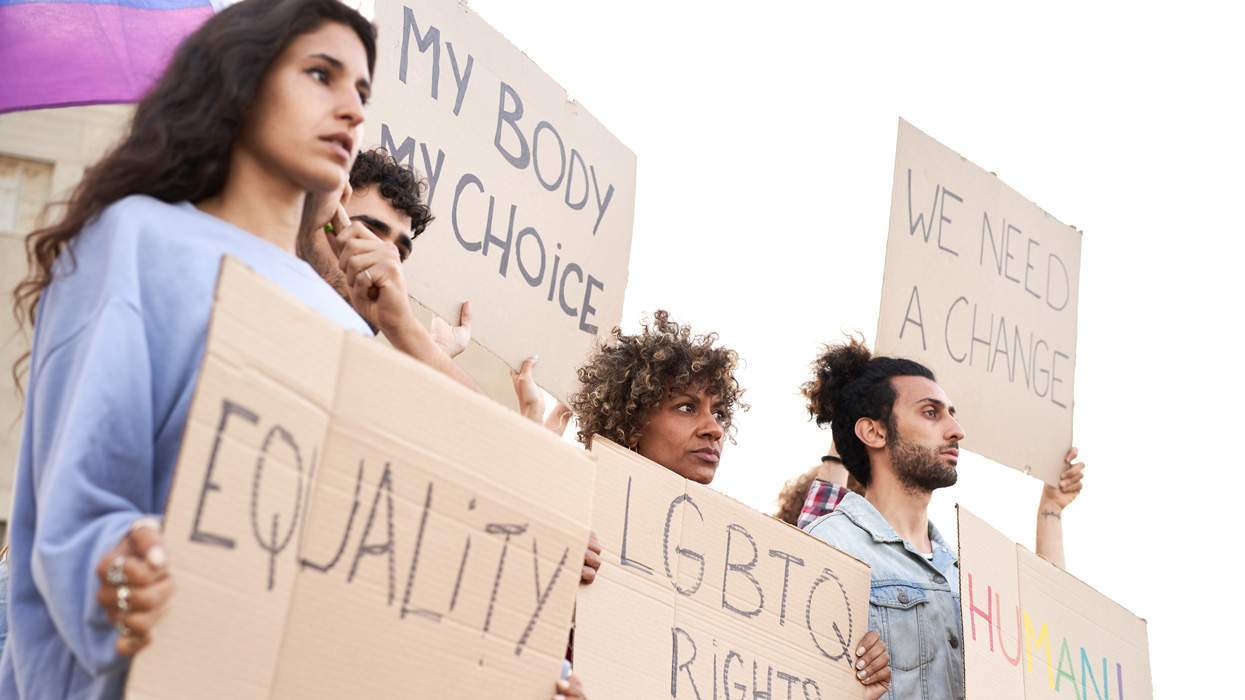
There's simply no denying that gender-affirming care is life-saving.
Transgender youth who are able to access hormone replacement therapy are less likely to be suicidal, according to a report recently published in The Journal of Pediatrics. Researchers surveyed 432 patients ages 12 to 20 over 679 days, finding that "suicidality significantly declined from pretreatment to post-treatment" across all sexes, ages, and treatment durations.
Related: The kids aren't alright: Depression and anxiety rates are skyrocketing among LGBTQ+ youth
"HT was associated with clinically meaningful reductions in suicidality over time, extending prior findings with a larger sample and longer follow-up," the report concludes. "These study findings provide clinical evidence supporting the mental health benefits of timely access to HT in this population."
Hormone replacement therapy (HRT), which falls under gender-affirming care, involves a patient taking either feminizing (estrogen) or masculinizing (testosterone) hormones for the purpose of altering their appearance to better reflect their gender identity, typically in the form of an injection.
Gender-affirming care for prepubescent youth primarily focuses on socially transitioning — changing their hair, clothing, or potentially going by a new name and pronouns. Only after many months being evaluated in talk therapy could a pubescent child demonstrating gender dysphoria be prescribed puberty blockers. When the patient is old enough, usually ages 16 to 17 per Planned Parenthood, they can then be prescribed hormones to replace those produced by their body.
The American Medical Association, the American Psychiatric Association, the American Academy of Pediatrics, the American Academy of Child & Adolescent Psychiatry, the World Medical Association, and the World Health Organization all agree that gender-affirming care is evidence-based and medically necessary not just for adults but minors as well.
Related: Transgender and nonbinary youth whose pronouns are respected attempt suicide less: report
A separate December report from The Trevor Project found that trans and nonbinary youth (ages 13 to 24) whose pronouns are respected were 31 percent less likely to attempt suicide in the past year than those whose pronouns are not respected. Nearly one-fourth (23 percent) of those who said none of the people they know use their correct name and pronouns also said they have attempted suicide in the past year, compared to just 10 percent of those who said almost everyone in their life respects them.
If you or someone you know needs mental health resources and support, please call, text, or chat with the 988 Suicide & Crisis Lifeline or visit 988lifeline.org for 24/7 access to free and confidential services. Trans Lifeline, designed for transgender or gender-nonconforming people, can be reached at (877) 565-8860. The lifeline also provides resources to help with other crises, such as domestic violence situations. The Trevor Project Lifeline, for LGBTQ+ youth (ages 24 and younger), can be reached at (866) 488-7386. Users can also access chat services at TheTrevorProject.org/Help or text START to 678678.