'%3E%3Cpath d='M16.3574 35.6519H12.9537L15.0491 18.8873L16.3574 35.6519ZM30.4229 54.0093L22.309 0.994385H7.91795L0 54.0093H10.6634L11.5802 46.3855H17.4014L17.9914 54.0093H30.4229Z' fill='%23971B20'/%3E%3Cpath d='M48.2073 41.8813C48.2073 43.4049 47.4892 44.0011 46.1144 44.0011H43.7595V11.0687H46.1144C47.4892 11.0687 48.2073 11.6636 48.2073 13.1885V41.8813ZM59.5273 43.6695V11.3326C59.5273 3.71323 53.5729 0.994385 47.8157 0.994385H31.7213V54.0093H47.8157C53.5729 54.0093 59.5273 51.29 59.5273 43.6695Z' fill='%23971B20'/%3E%3Cpath d='M90.183 0.994385H78.6039L75.0711 30.6157L71.9955 0.994385H59.4346L69.2474 54.0093H80.373L90.183 0.994385Z' fill='%23971B20'/%3E%3Cpath d='M107.063 42.3448C107.063 43.7359 105.951 44.5974 104.643 44.5974C103.269 44.5974 102.157 43.7359 102.157 42.3448V12.658C102.157 11.2676 103.269 10.4058 104.643 10.4058C105.951 10.4058 107.063 11.2676 107.063 12.658V42.3448ZM119.233 43.2723V11.7312C119.233 6.36384 112.952 -3.8147e-06 104.643 -3.8147e-06C96.2667 -3.8147e-06 89.9867 6.36384 89.9867 11.7312V43.2723C89.9867 48.6393 96.2667 55 104.643 55C112.952 55 119.233 48.6393 119.233 43.2723Z' fill='%23971B20'/%3E%3Cpath d='M150.976 43.9349V33.7309H139.069V42.3448C139.069 43.7359 137.957 44.5974 136.582 44.5974C135.076 44.5974 133.964 43.7359 133.964 42.3448V12.658C133.964 11.2676 135.076 10.4058 136.582 10.4058C137.957 10.4058 139.069 11.2676 139.069 12.658V21.2723H150.976V11.0687C150.976 5.70107 145.283 -3.8147e-06 136.582 -3.8147e-06C127.75 -3.8147e-06 121.796 5.70107 121.796 11.0687V43.9349C121.796 49.3022 127.75 55 136.582 55C145.283 55 150.976 49.3022 150.976 43.9349Z' fill='%23971B20'/%3E%3Cpath d='M167.478 35.6519H164.076L166.17 18.8873L167.478 35.6519ZM181.544 54.0093L173.432 0.994385H159.037L151.123 54.0093H161.785L162.704 46.3855H168.523L169.114 54.0093H181.544Z' fill='%23971B20'/%3E%3Cpath d='M205.412 10.4058V0.994385H177.081V10.4058H185.392V54.0093H197.428V10.4058H205.412Z' fill='%23971B20'/%3E%3Cpath d='M230.002 54.0093V43.9349H218.914V31.8746H226.635V21.8028H218.914V10.4058H230.002V0.994385H206.875V54.0093H230.002Z' fill='%23971B20'/%3E%3C/g%3E%3Cdefs%3E%3CclipPath id='clip0_260_7080'%3E%3Crect width='230' height='55' fill='white'/%3E%3C/clipPath%3E%3C/defs%3E%3C/svg%3E)
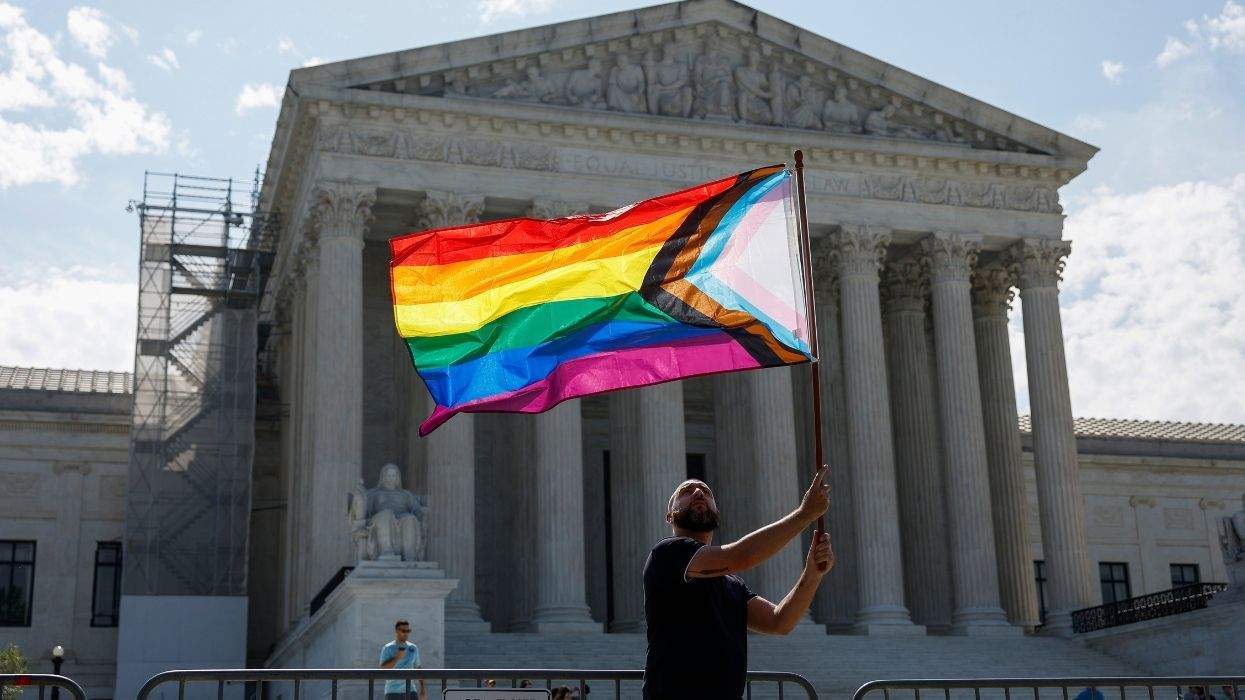
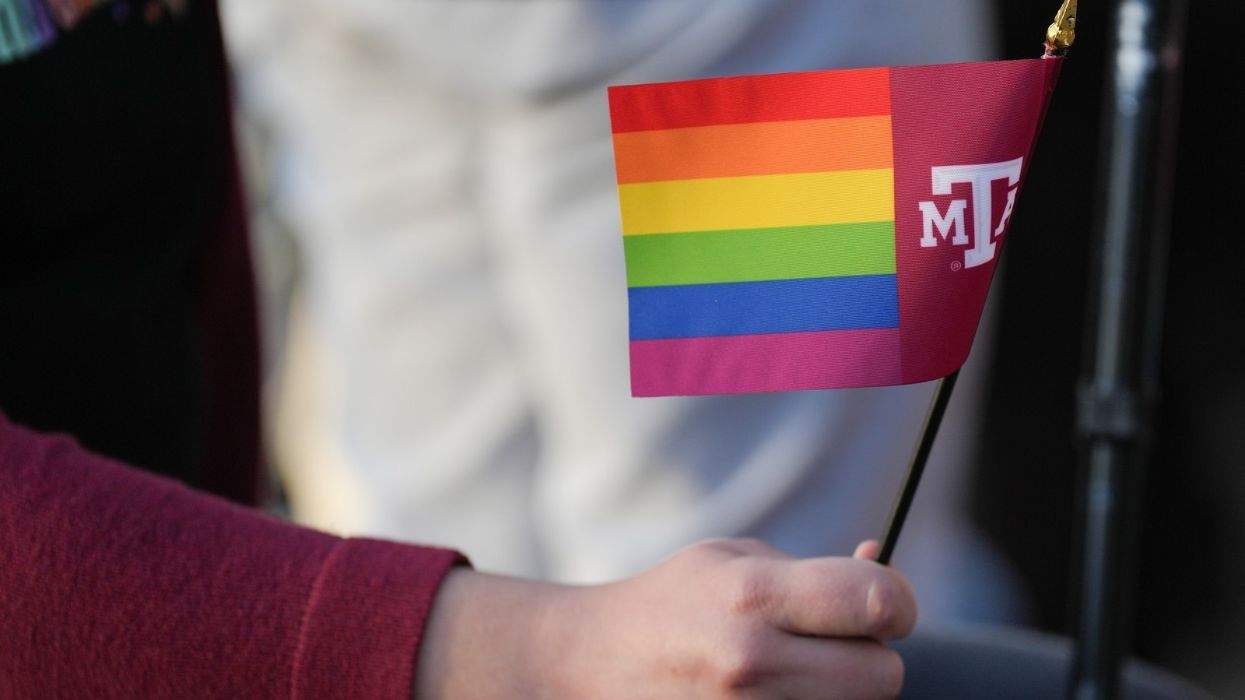
Eleven years after the U.S. Supreme Court ruled that same-sex couples have a constitutional right to marry, the Friday anniversary of Obergefell v. Hodges arrives in a country where marriage equality is deeply woven into American life and still treated by its opponents as unfinished business.
The landmark June 26, 2015, decision transformed the legal status of LGBTQ+ families across the United States. It allowed same-sex couples to marry in every state, required states to recognize those marriages, and ensured their families were protected under the equal protection of the Constitution. It also made Jim Obergefell, an Ohio widower who sued to be listed as the surviving spouse on his husband John Arthur’s death certificate, one of the most recognizable names in modern civil rights law.
Related: Kamala Harris hosts Pride Month reception honoring LGBTQ+ lives and the progress made
Jim Obergefell says marriage equality could still be lost
But in a recent interview with The Advocate, Obergefell said he never expected that, more than a decade after the ruling bearing his name, LGBTQ+ people would again have reason to fear that marriage equality could be taken away.
“I really didn’t think 11 years later we would have reason to fear that marriage would be lost,” he said. “But for almost 50 years, people didn’t think abortion rights would be lost because the Supreme Court believed in precedent. Well, they no longer do.”
For Obergefell, the current threat feels different from the fight before 2015. Then, same-sex couples were demanding access to a right they had been denied. Now, millions of people have organized their lives, families, finances, and futures around a right that has existed for only a brief period in American history.
“We were fighting for something we did not enjoy,” he said. “Well, now we’ve had 11 years of enjoying that right, of knowing our relationships, our marriages, our families are on a much more equal footing, and we stand to lose that.”
The danger, he said, is especially painful when he thinks about young LGBTQ+ people who have never known a country without marriage equality.
“I recently did an event at a high school in the Cleveland area, and I had a student come up to me and say, Jim, I was three when that decision came out,” Obergefell said. “I’ve only grown up in a world where I know in my future I can marry the person I love, whoever that happens to be.”
HRC says the anniversary is a celebration and a warning
This year’s anniversary comes months after the Supreme Court declined to hear an appeal from Kim Davis, the former Kentucky clerk who refused to issue marriage licenses to same-sex couples after Obergefell. Davis had asked the justices to revisit the ruling. The court turned her away without comment, leaving marriage equality standing.
Human Rights Campaign President Kelley Robinson said Friday that the moment should be understood as a measure of how far the country has come and how much remains at risk.
“Eleven years ago, the Supreme Court affirmed what our community has always known to be true: that love is love, and that every family deserves equal protection under the law,” Robinson said in a statement. “More than a decade later, marriage equality has transformed millions of lives. This past year, when our opponents asked the Court to tear it down, the justices left it standing. That is a testament to how deeply marriage equality has taken root in American life, and to everyone who has spent a decade defending it.
“But we are clear-eyed about the threats ahead. We are living through a coordinated, well-funded campaign to roll back our rights — from state resolutions urging the Court to revisit Obergefell to a relentless assault on transgender Americans. So today we do two things at once: we celebrate the joy and dignity of marriage equality, and we recommit to protecting it. Now is the time to make our voices heard. Because love is not only our joy. It’s an act of defiance. That’s why this anniversary is both a celebration of love, family, and resilience and a reminder that our rights must be defended and strengthened in every state, so that every LGBTQ+ person can live, work, and learn with dignity and joy.”
Related: Virginia LGBTQ+ advocates and allies come together to celebrate 10 years of marriage equality
Marriage equality became part of everyday American life
The numbers tell one part of the story. According to the Williams Institute at UCLA School of Law, an estimated 823,000 same-sex couples in the United States are now legally married, more than twice the number in 2015. Those couples are raising about 299,000 children under 18. In southern states, the share of cohabiting same-sex couples who are married rose from 38 percent to 59 percent between 2014 and 2023.
But the broader story is about a right that moved with unusual speed from political controversy to everyday fact. Weddings happened. Families were formed. Children grew up with married parents. Spouses gained access to hospital rooms, tax filings, inheritance rights, immigration protections, Social Security benefits, health insurance, and the simple dignity of being recognized as next of kin.
That ordinariness is part of what makes the current backlash so striking. In 2022, the Supreme Court overturned Roe v. Wade in Dobbs v. Jackson Women’s Health Organization. In a concurring opinion, Justice Clarence Thomas wrote that the court should reconsider other substantive due process precedents, including Obergefell. Congress responded by passing the Respect for Marriage Act, which President Joe Biden signed that year. The law requires federal and state recognition of valid same-sex and interracial marriages, though it does not require every state to issue marriage licenses to same-sex couples if Obergefell were overturned.
Public opinion, once on a steady climb, has also begun to show new signs of strain. Gallup reported this month that 65 percent of U.S. adults support legal marriage equality, down from a high of 71 percent in 2022 and 2023. The decline has been most pronounced among Republicans, whose support fell from 55 percent in 2021 and 2022 to 37 percent today.
Related: Marriage equality history in photos: Images of celebration and hope after Obergefell
Massachusetts couples led the way before Obergefell
The fight for marriage equality did not begin with Obergefell. More than a decade earlier, on May 17, 2004, Massachusetts became the first state where same-sex couples could legally marry after the state’s highest court ruled in Goodridge v. Department of Public Health that excluding gay and lesbian couples from marriage violated the state constitution.
David Wilson and Rob Compton were among the first same-sex couples to be married that day at Arlington Street Church in Boston. Their wedding came amid a furious national backlash. Political and religious leaders warned that marriage equality would damage the institution of marriage, destabilize families, and reshape society in dangerous ways.
Two decades later, Wilson and Compton told The Advocate that they gradually realized their wedding belonged to more than just the two of them.
“We wanted to get married for our own lives, but as we started to talk with communities and started visiting across the state, we realized it was important to a lot of people,” Wilson said. “So then it became more historical from our perspective, but it started personal and then it ended up really a community effort, and we’re very proud of our ability to do it.”
Compton said the fight was about recognition of LGBTQ+ people as families.
“We had made so much progress in individual rights and adoption rights, and we realized we really didn’t have rights as families,” he said. “If you had that, you have adoption rights and all the other rights. So it became very important and very honorable for us.”
The day's magnitude became clear when they arrived at the church.
“We got there, and there were news cameras that closed the streets. Before we got inside, the place was packed, and all of a sudden, we realized this was more than just our wedding,” Compton said. “This was a whole community coming together for the first same-sex marriage. So then it really hit us just how significant it was.”
Early marriage pioneers say today’s climate feels more dangerous
Asked whether they would feel as safe putting themselves in the public eye today, Wilson said the climate has changed enough to make him hesitate.
“Mine would be absolutely not,” Wilson said. “I would be frightened to death today to be a target with what’s going on, especially around the issue of guns. So I would have to really take a long, hard look and think really seriously about whether I’d be able to do this again in today’s climate.”
Compton said the hostility feels more openly sanctioned now.
“The really radical conservatives really didn’t have permission to act out and say the things they were able to say now,” he said. “So we kind of had some protections, but today people would say whatever they want to do, whatever they want, and it’s much more threatening than it was back then.”
For Obergefell, the legacy of the case remains inseparable from Arthur and from the simple demand at the heart of their lawsuit.
“I hope they look back and realize that the fight John and I started, the fight we became part of, wasn’t caused or motivated by anything other than love and the desire to exist, the desire to be seen,” he said. “I loved my husband, and we deserve to exist, and that’s worth fighting for.”