'%3E%3Cpath d='M16.3574 35.6519H12.9537L15.0491 18.8873L16.3574 35.6519ZM30.4229 54.0093L22.309 0.994385H7.91795L0 54.0093H10.6634L11.5802 46.3855H17.4014L17.9914 54.0093H30.4229Z' fill='%23971B20'/%3E%3Cpath d='M48.2073 41.8813C48.2073 43.4049 47.4892 44.0011 46.1144 44.0011H43.7595V11.0687H46.1144C47.4892 11.0687 48.2073 11.6636 48.2073 13.1885V41.8813ZM59.5273 43.6695V11.3326C59.5273 3.71323 53.5729 0.994385 47.8157 0.994385H31.7213V54.0093H47.8157C53.5729 54.0093 59.5273 51.29 59.5273 43.6695Z' fill='%23971B20'/%3E%3Cpath d='M90.183 0.994385H78.6039L75.0711 30.6157L71.9955 0.994385H59.4346L69.2474 54.0093H80.373L90.183 0.994385Z' fill='%23971B20'/%3E%3Cpath d='M107.063 42.3448C107.063 43.7359 105.951 44.5974 104.643 44.5974C103.269 44.5974 102.157 43.7359 102.157 42.3448V12.658C102.157 11.2676 103.269 10.4058 104.643 10.4058C105.951 10.4058 107.063 11.2676 107.063 12.658V42.3448ZM119.233 43.2723V11.7312C119.233 6.36384 112.952 -3.8147e-06 104.643 -3.8147e-06C96.2667 -3.8147e-06 89.9867 6.36384 89.9867 11.7312V43.2723C89.9867 48.6393 96.2667 55 104.643 55C112.952 55 119.233 48.6393 119.233 43.2723Z' fill='%23971B20'/%3E%3Cpath d='M150.976 43.9349V33.7309H139.069V42.3448C139.069 43.7359 137.957 44.5974 136.582 44.5974C135.076 44.5974 133.964 43.7359 133.964 42.3448V12.658C133.964 11.2676 135.076 10.4058 136.582 10.4058C137.957 10.4058 139.069 11.2676 139.069 12.658V21.2723H150.976V11.0687C150.976 5.70107 145.283 -3.8147e-06 136.582 -3.8147e-06C127.75 -3.8147e-06 121.796 5.70107 121.796 11.0687V43.9349C121.796 49.3022 127.75 55 136.582 55C145.283 55 150.976 49.3022 150.976 43.9349Z' fill='%23971B20'/%3E%3Cpath d='M167.478 35.6519H164.076L166.17 18.8873L167.478 35.6519ZM181.544 54.0093L173.432 0.994385H159.037L151.123 54.0093H161.785L162.704 46.3855H168.523L169.114 54.0093H181.544Z' fill='%23971B20'/%3E%3Cpath d='M205.412 10.4058V0.994385H177.081V10.4058H185.392V54.0093H197.428V10.4058H205.412Z' fill='%23971B20'/%3E%3Cpath d='M230.002 54.0093V43.9349H218.914V31.8746H226.635V21.8028H218.914V10.4058H230.002V0.994385H206.875V54.0093H230.002Z' fill='%23971B20'/%3E%3C/g%3E%3Cdefs%3E%3CclipPath id='clip0_260_7080'%3E%3Crect width='230' height='55' fill='white'/%3E%3C/clipPath%3E%3C/defs%3E%3C/svg%3E)
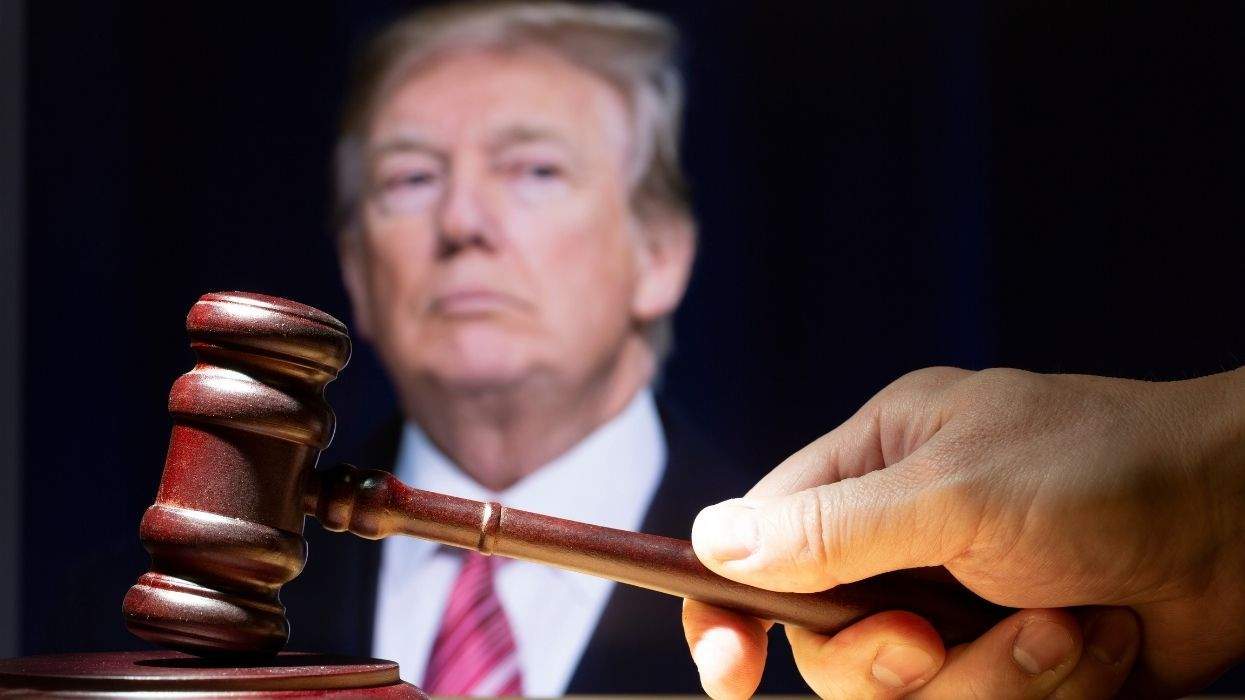

A federal judge appointed by President Donald Trump issued a blistering opinion Wednesday night, accusing the Trump administration’s Justice Department of "appalling" behavior, including misleading courts, manipulating the judicial system, and targeting transgender youth through what she concluded was an unlawful effort to obtain deeply sensitive medical records.
In a 24-page ruling, Rhode Island U.S. District Judge Mary McElroy quashed a federal subpoena seeking years of records connected to gender-affirming care for minors at Brown Health’s Rhode Island Hospital. She also barred the Department of Justice from obtaining, retaining, or disseminating identifying patient information tied to the subpoena.
The opinion reads like a warning flare from the federal bench about the government’s conduct.
“The discrepancy between the honorable conduct expected of federal prosecutors and DOJ’s tactics in this case is unsettling,” McElroy wrote.
From the opening paragraphs, McElroy identified the case as a breakdown in trust between the judiciary and the nation’s most powerful law enforcement agency.
“The United States Department of Justice (‘DOJ’) possesses immense prosecutorial authority and discretion,” she wrote. “As citizens, we trust that federal prosecutors, when wielding this awesome power against a state, a company, or certainly against vulnerable children, will play fair and be honest with its counterparts and the judiciary.”
“DOJ has proven unworthy of this trust at every point in this case,” she continued.
Related: Rhode Island resists Trump DOJ demand for trans youth records ordered by Texas judge
The subpoena at the center of the dispute demanded records for every minor patient who received gender-affirming care at Rhode Island Hospital since 2020, including names, Social Security numbers, addresses, diagnoses, clinical histories, and family information.
The Justice Department claimed the records were necessary for an investigation into possible violations of federal drug laws related to the off-label prescribing of puberty blockers and hormone therapy. But McElroy dismantled that legal theory in extraordinary detail, noting that federal courts, including the 1st U.S. Circuit Court of Appeals, have long recognized that physicians may legally prescribe FDA-approved drugs for off-label uses.
“The off-label prescribing conduct at the core of the DOJ’s theory is not illegal under the [Federal Food, Drug, and Cosmetic Act],” McElroy wrote.
She concluded the subpoena “lacks a congressionally authorized purpose” and was issued “for an improper purpose in bad faith.”
But the ruling goes beyond the subpoena's legality. McElroy accused DOJ attorneys of concealing information from courts, misleading opposing parties, and strategically steering the case to a more favorable judge in Texas.
According to the ruling, Rhode Island Hospital had spent months negotiating with federal prosecutors over the subpoena’s scope and possible compliance. Yet while those discussions were still ongoing, DOJ attorneys quietly filed an enforcement action in the Northern District of Texas before Judge Reed O’Connor, a conservative jurist who has become a favored venue for Republican legal challenges.
McElroy concluded the government intentionally concealed that move from the hospital.
“This omission leads the Court to conclude this request was a subterfuge to prevent RIH from realizing that DOJ had decided to go to Texas for an order compelling production of the very records that they had been discussing for months,” she wrote.
Related: Trump administration seeks transgender patient records from NYU Langone
In a pointed footnote, McElroy noted that O’Connor himself has previously referred to the Justice Department as a “frequent forum shopper.” “It is clear that the DOJ has done so here,” she wrote.
According to Rhode Island Current, McElroy pressed DOJ attorneys during the hearing about why they sought enforcement in Texas rather than in Rhode Island.
“You chose Justice O’Connor in Texas,” she said during the hearing, according to Rhode Island Current. “Just be honest enough to admit that.”
The opinion also accuses DOJ attorneys of making misleading factual claims to the Texas court. Federal prosecutors claimed Rhode Island Hospital had not communicated with the government since February 2026. But McElroy found that assertion “clearly misleading, if not utterly false,” because DOJ lawyers had continued corresponding with the hospital into late April.
“This reckless disregard for the duty of candor owed to a federal court is appalling,” she wrote.
At another point, McElroy criticized DOJ leadership for allowing a junior attorney with only six months of legal experience to field questions about the department’s conduct while senior officials remained silent.
Related: Federal judge baffled by Supreme Court order targeting trans Americans’ passports
The ruling also examines the administration’s broader campaign against gender-affirming care as the central context for the subpoena fight.
“The Administration has publicly characterized gender-affirming care for minors as abuse, directed the DOJ to bring its practice to an end, and celebrated when hospitals curtailed such programs as a result of this subpoena campaign,” she wrote.
Seven other federal courts reviewing similar DOJ subpoenas have likewise concluded the investigations appeared improper, McElroy noted.
The opinion culminates in an expansive discussion of transgender youths’ constitutional privacy rights. McElroy concluded that forcing the hospital to disclose these records would violate minors’ Fourteenth Amendment right to informational privacy.
“DOJ’s request for intimate medical details from one of this country’s most vulnerable populations constitutes a drastic overreach of its investigative authority,” she wrote.
The judge also revealed that DOJ attorneys acknowledged during oral arguments that investigators intended to locate and question both children and their caregivers as part of the inquiry.
McElroy ended her ruling with a warning that extended beyond this single subpoena fight. Quoting another recent federal opinion criticizing the department, she wrote that the longstanding judicial presumption that DOJ could be trusted “with little doubt about its intentions and stated purposes—no longer holds.”
“It is regrettable that this is now the case,” she added.