'%3E%3Cpath d='M16.3574 35.6519H12.9537L15.0491 18.8873L16.3574 35.6519ZM30.4229 54.0093L22.309 0.994385H7.91795L0 54.0093H10.6634L11.5802 46.3855H17.4014L17.9914 54.0093H30.4229Z' fill='%23971B20'/%3E%3Cpath d='M48.2073 41.8813C48.2073 43.4049 47.4892 44.0011 46.1144 44.0011H43.7595V11.0687H46.1144C47.4892 11.0687 48.2073 11.6636 48.2073 13.1885V41.8813ZM59.5273 43.6695V11.3326C59.5273 3.71323 53.5729 0.994385 47.8157 0.994385H31.7213V54.0093H47.8157C53.5729 54.0093 59.5273 51.29 59.5273 43.6695Z' fill='%23971B20'/%3E%3Cpath d='M90.183 0.994385H78.6039L75.0711 30.6157L71.9955 0.994385H59.4346L69.2474 54.0093H80.373L90.183 0.994385Z' fill='%23971B20'/%3E%3Cpath d='M107.063 42.3448C107.063 43.7359 105.951 44.5974 104.643 44.5974C103.269 44.5974 102.157 43.7359 102.157 42.3448V12.658C102.157 11.2676 103.269 10.4058 104.643 10.4058C105.951 10.4058 107.063 11.2676 107.063 12.658V42.3448ZM119.233 43.2723V11.7312C119.233 6.36384 112.952 -3.8147e-06 104.643 -3.8147e-06C96.2667 -3.8147e-06 89.9867 6.36384 89.9867 11.7312V43.2723C89.9867 48.6393 96.2667 55 104.643 55C112.952 55 119.233 48.6393 119.233 43.2723Z' fill='%23971B20'/%3E%3Cpath d='M150.976 43.9349V33.7309H139.069V42.3448C139.069 43.7359 137.957 44.5974 136.582 44.5974C135.076 44.5974 133.964 43.7359 133.964 42.3448V12.658C133.964 11.2676 135.076 10.4058 136.582 10.4058C137.957 10.4058 139.069 11.2676 139.069 12.658V21.2723H150.976V11.0687C150.976 5.70107 145.283 -3.8147e-06 136.582 -3.8147e-06C127.75 -3.8147e-06 121.796 5.70107 121.796 11.0687V43.9349C121.796 49.3022 127.75 55 136.582 55C145.283 55 150.976 49.3022 150.976 43.9349Z' fill='%23971B20'/%3E%3Cpath d='M167.478 35.6519H164.076L166.17 18.8873L167.478 35.6519ZM181.544 54.0093L173.432 0.994385H159.037L151.123 54.0093H161.785L162.704 46.3855H168.523L169.114 54.0093H181.544Z' fill='%23971B20'/%3E%3Cpath d='M205.412 10.4058V0.994385H177.081V10.4058H185.392V54.0093H197.428V10.4058H205.412Z' fill='%23971B20'/%3E%3Cpath d='M230.002 54.0093V43.9349H218.914V31.8746H226.635V21.8028H218.914V10.4058H230.002V0.994385H206.875V54.0093H230.002Z' fill='%23971B20'/%3E%3C/g%3E%3Cdefs%3E%3CclipPath id='clip0_260_7080'%3E%3Crect width='230' height='55' fill='white'/%3E%3C/clipPath%3E%3C/defs%3E%3C/svg%3E)
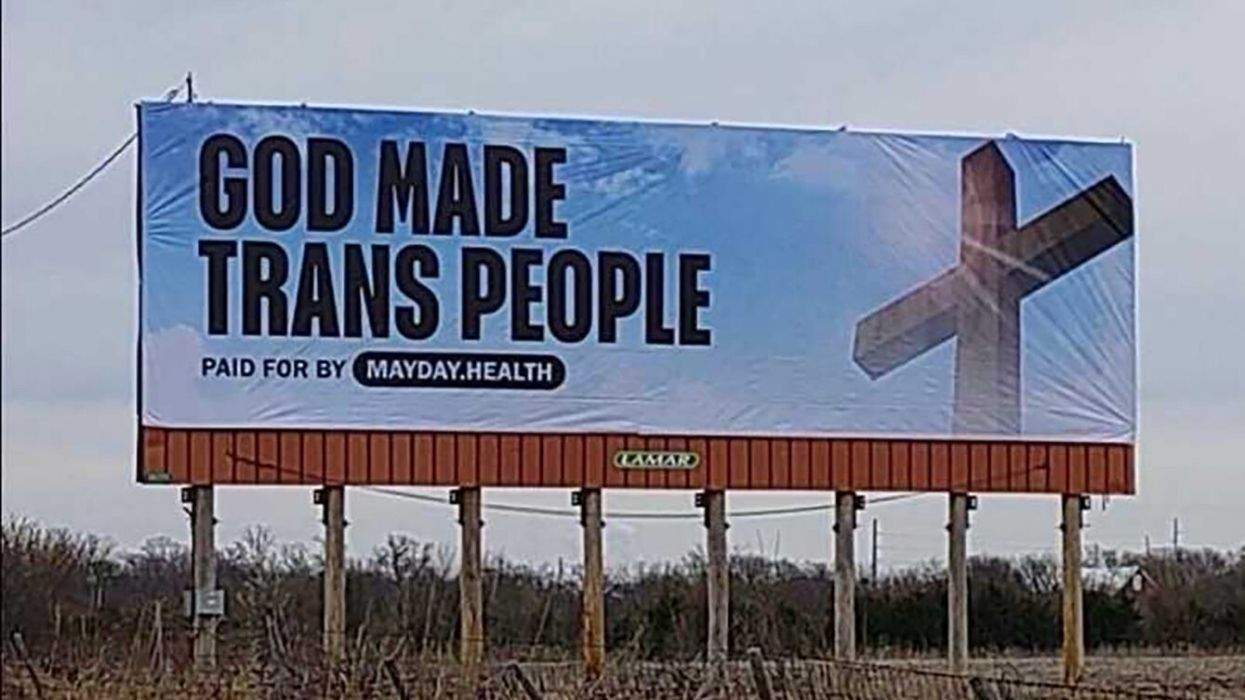
A new billboard campaign declaring “God Made Trans People” is rolling out across Kansas highways just weeks after the state took the extraordinary step of invalidating transgender residents’ driver’s licenses. That development has left many navigating daily life without a valid ID or with an identification that no longer reflects who they are.
Keep up with the latest in LGBTQ+ news and politics. Sign up for The Advocate's email newsletter.
The four-week campaign, launched by Mayday Health, spans major corridors in Kansas City, Topeka, and Wichita. Organizers say seven billboards are expected to reach more than 1.2 million drivers over the next month.
For Liv Raisner, the organization’s executive director, the placement is intentional.
“We wanted to put these billboards up on the roads because a lot of trans Kansans right now are driving with identification that doesn’t reflect who they are, and that can be really painful,” Raisner told The Advocate. “We want trans Kansans to know while they’re driving to work, to the grocery store, throughout their own state, we want them to see themselves reflected back.”
Related: Kansas immediately revokes transgender residents’ driver’s licenses
The campaign arrives amid a comprehensive rollback of transgender rights in Kansas.
In February, the state enacted a law requiring all state-issued identification to reflect sex assigned at birth, retroactively invalidating driver’s licenses and birth certificates that had been updated by transgender residents. The policy reversed years of legal recognition and forced affected individuals to obtain new documents that do not match their gender identity.
The law builds on a 2023 statute redefining sex in state law and is part of a broader slate of measures targeting transgender people’s access to public life, including restrictions on bathroom use in government buildings. The measure creates a bounty system for people who suspect they may encounter a transgender person in a restroom that doesn't correspond to their sex assigned at birth.
Related: Kansas lawmakers override governor's veto of anti-trans 'bathroom bounty' bill
Related: Lyft steps in to offer rides after Kansas voids transgender residents’ driver’s licenses
Kansas, Raisner noted, is among the most religious states in the country, and many of the lawmakers advancing these policies cite faith in their arguments.
“We’re not arguing with them about politics. We are meeting them on their own terrain,” Raisner said. “If you think God doesn’t make mistakes, that includes trans people.”
Each billboard directs drivers to Mayday Health’s website, which provides information about accessing gender-affirming medical, mental health, and financial support, resources organizers say remain available even in states where care is increasingly restricted.
The campaign is already resonating with some of the people it was designed to reach. Raisner said a transgender woman running for state office told them she saw one of the billboards during her morning commute and “it made her smile.”
That response, Raisner said, highlights the campaign’s core purpose: visibility at a time when state policy is moving in the opposite direction.
“I hope people are reminded that trans people exist,” Raisner said. “Legislators can pass laws that erase trans people from their documents, but they cannot erase trans people from Kansas.”
The campaign also reflects Mayday Health’s broader strategy. Founded after the U.S. Supreme Court’sDobbs ruling that overturned Roe v. Wade in 2022, the organization focuses on distributing information about health care that is restricted or banned in certain states, including abortion access and gender-affirming care.
“When state governments target folks and violate their fundamental rights, we respond,” Raisner said.