'%3E%3Cpath d='M16.3574 35.6519H12.9537L15.0491 18.8873L16.3574 35.6519ZM30.4229 54.0093L22.309 0.994385H7.91795L0 54.0093H10.6634L11.5802 46.3855H17.4014L17.9914 54.0093H30.4229Z' fill='%23971B20'/%3E%3Cpath d='M48.2073 41.8813C48.2073 43.4049 47.4892 44.0011 46.1144 44.0011H43.7595V11.0687H46.1144C47.4892 11.0687 48.2073 11.6636 48.2073 13.1885V41.8813ZM59.5273 43.6695V11.3326C59.5273 3.71323 53.5729 0.994385 47.8157 0.994385H31.7213V54.0093H47.8157C53.5729 54.0093 59.5273 51.29 59.5273 43.6695Z' fill='%23971B20'/%3E%3Cpath d='M90.183 0.994385H78.6039L75.0711 30.6157L71.9955 0.994385H59.4346L69.2474 54.0093H80.373L90.183 0.994385Z' fill='%23971B20'/%3E%3Cpath d='M107.063 42.3448C107.063 43.7359 105.951 44.5974 104.643 44.5974C103.269 44.5974 102.157 43.7359 102.157 42.3448V12.658C102.157 11.2676 103.269 10.4058 104.643 10.4058C105.951 10.4058 107.063 11.2676 107.063 12.658V42.3448ZM119.233 43.2723V11.7312C119.233 6.36384 112.952 -3.8147e-06 104.643 -3.8147e-06C96.2667 -3.8147e-06 89.9867 6.36384 89.9867 11.7312V43.2723C89.9867 48.6393 96.2667 55 104.643 55C112.952 55 119.233 48.6393 119.233 43.2723Z' fill='%23971B20'/%3E%3Cpath d='M150.976 43.9349V33.7309H139.069V42.3448C139.069 43.7359 137.957 44.5974 136.582 44.5974C135.076 44.5974 133.964 43.7359 133.964 42.3448V12.658C133.964 11.2676 135.076 10.4058 136.582 10.4058C137.957 10.4058 139.069 11.2676 139.069 12.658V21.2723H150.976V11.0687C150.976 5.70107 145.283 -3.8147e-06 136.582 -3.8147e-06C127.75 -3.8147e-06 121.796 5.70107 121.796 11.0687V43.9349C121.796 49.3022 127.75 55 136.582 55C145.283 55 150.976 49.3022 150.976 43.9349Z' fill='%23971B20'/%3E%3Cpath d='M167.478 35.6519H164.076L166.17 18.8873L167.478 35.6519ZM181.544 54.0093L173.432 0.994385H159.037L151.123 54.0093H161.785L162.704 46.3855H168.523L169.114 54.0093H181.544Z' fill='%23971B20'/%3E%3Cpath d='M205.412 10.4058V0.994385H177.081V10.4058H185.392V54.0093H197.428V10.4058H205.412Z' fill='%23971B20'/%3E%3Cpath d='M230.002 54.0093V43.9349H218.914V31.8746H226.635V21.8028H218.914V10.4058H230.002V0.994385H206.875V54.0093H230.002Z' fill='%23971B20'/%3E%3C/g%3E%3Cdefs%3E%3CclipPath id='clip0_260_7080'%3E%3Crect width='230' height='55' fill='white'/%3E%3C/clipPath%3E%3C/defs%3E%3C/svg%3E)
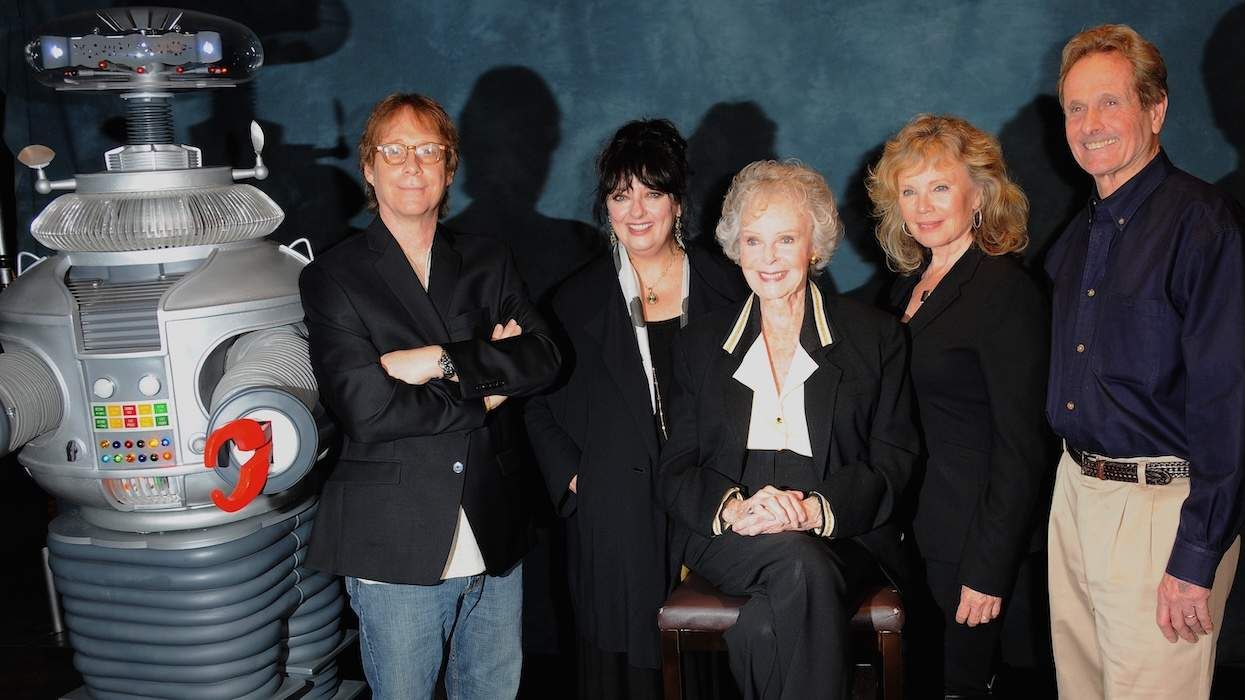

When I was a little boy, all the kids in our neighborhood would gather at a friend’s in the late afternoons during the summer to watch reruns of Lost in Space. They were the only family on the block with a color TV, which made their living room the center of the universe for us.
Some of the early episodes were still in black and white, but that didn’t matter. We’d drop whatever we were doing on warm summer days, and head inside to watch the show. I was proud of the fact that I could do a dead-on impression of “Robot.” Oddly, he never had a real name, just “Robot,” and we all identified with young Will Robinson, who was about our age. I think we were a bit jealous of Will because he lived such an exciting life in outer space.
Lost in Space was a futuristic adventure about a family of explorers, the Robinsons, who get thrown off course on their mission in deep space. It was part sci-fi and part family drama. The show also included a gay icon, actor Jonathan Harris, who played the weaselly Dr. Smith.
But what grounded the show wasn’t the spaceships or alien worlds; it was the steady presence of the family’s matriarch, Maureen Robinson, played by June Lockhart.
Long before she ventured into space, Lockhart had already become America’s mom on another beloved series, Lassie. The show followed the adventures of that famous collie and the humans whose lives she saved.
It ran for 19 seasons. Lassie became one of the most iconic programs in television history. Several actresses played the role of the boy’s mother over the years, but June Lockhart’s portrayal over six years made her the one everyone remembers most.
June Lockhart died Thursday, closing the final chapter in a series of beloved TV moms from the ‘50s and 60s who are all gone. They included Barbara Billingsley on Leave it to Beaver, Jane Wyatt on Father Knows Best, and Florence Henderson on The Brady Bunch.
Lockhart’s career spanned more than eight decades, from her early work as a child actor on Broadway and in films to her celebrated television roles in the 1950s and ’60s. Later in life, she became known for her sharp curiosity about the world.
She was famous for attending presidential press conferences, starting with Dwight Eisenhower, and engaging with journalists in the White House briefing room. When I worked on the Hill, I recall conversations about Lockhart being at the White House frequently.
As I got older, my fondness for her only deepened. I remember being at a party years ago when her name came up, and a friend told me she had been a lifelong LGBTQ+ ally.
He was right. I went home and checked, and at arguably the height of her fame, Lockhart spoke out for our community when few others dared.
In a groundbreaking moment on The Virginia Graham Show in 1970, Lockhart joined Rev. Troy Perry, the founder of the Metropolitan Community Church, for what would become one of television’s earliest and most courageous conversations about homosexuality. Remember, this aired less than a year after the Stonewall riots, at a time when the word “gay” was rarely spoken on television, much less discussed with dignity.
The conversation began with Rev. Perry explaining the principles behind his newly founded church, which offered a spiritual home for gay and lesbian Christians who had been rejected by their congregations. With calm conviction, he reminded viewers that human beings are entitled to seek love and happiness, whether in heterosexual or homosexual relationships.
Related: Letters to President-elect Obama: Reverend Troy Perry
He spoke about homosexuality as a natural and enduring part of humanity, noting that between 4 percent and 10 percent of the population had always identified that way. His church, he said, was simply giving them a place to worship without shame.
Lockhart, sitting beside him, listened thoughtfully before weighing in. She told the audience that no one has the right to moralize about another person’s life or identity, especially an experience they themselves have never lived.
It was a simple statement, but in 1970 it was a huge act of empathy, especially from someone whose public image was the very definition of mainstream wholesomeness.
At that moment, Lockhart became one of the first celebrities to use her fame not to protect her career but to expand the country’s morality and acceptance. She made it clear that compassion was not incompatible with faith and that love should never be subject to someone else’s approval.
More than 50 years later, that exchange still resonates. The LGBTQ+ community has come a long way since then, but Lockhart’s courage and Rev. Perry’s endeavors helped make that progress possible.
Yes, June Lockhart was adventurous in her life, flew a blimp, drove a fire engine, rode elephants, embraced new experiences, and lived with vitality, but she was also sympathetic and supportive and ahead of her time.
While she will forever be remembered as a legendary TV mom, her legacy should also include her compassion, her willingness to stand up for what was right, and her advocacy for the LGBTQ+ community.
For that, she leaves behind many grateful gay fans, myself among them, who will always remember her not only as the mother who guided Will Robinson and Lassie’s Timmy but as a woman who helped guide America, toward greater understanding.
Voices is dedicated to featuring a wide range of inspiring personal stories and impactful opinions from the LGBTQ+ community and its allies. Visit Advocate.com/submit to learn more about submission guidelines. Views expressed in Voices stories are those of the guest writers, columnists, and editors, and do not directly represent the views of The Advocate or our parent company, equalpride.