'%3E%3Cpath d='M16.3574 35.6519H12.9537L15.0491 18.8873L16.3574 35.6519ZM30.4229 54.0093L22.309 0.994385H7.91795L0 54.0093H10.6634L11.5802 46.3855H17.4014L17.9914 54.0093H30.4229Z' fill='%23971B20'/%3E%3Cpath d='M48.2073 41.8813C48.2073 43.4049 47.4892 44.0011 46.1144 44.0011H43.7595V11.0687H46.1144C47.4892 11.0687 48.2073 11.6636 48.2073 13.1885V41.8813ZM59.5273 43.6695V11.3326C59.5273 3.71323 53.5729 0.994385 47.8157 0.994385H31.7213V54.0093H47.8157C53.5729 54.0093 59.5273 51.29 59.5273 43.6695Z' fill='%23971B20'/%3E%3Cpath d='M90.183 0.994385H78.6039L75.0711 30.6157L71.9955 0.994385H59.4346L69.2474 54.0093H80.373L90.183 0.994385Z' fill='%23971B20'/%3E%3Cpath d='M107.063 42.3448C107.063 43.7359 105.951 44.5974 104.643 44.5974C103.269 44.5974 102.157 43.7359 102.157 42.3448V12.658C102.157 11.2676 103.269 10.4058 104.643 10.4058C105.951 10.4058 107.063 11.2676 107.063 12.658V42.3448ZM119.233 43.2723V11.7312C119.233 6.36384 112.952 -3.8147e-06 104.643 -3.8147e-06C96.2667 -3.8147e-06 89.9867 6.36384 89.9867 11.7312V43.2723C89.9867 48.6393 96.2667 55 104.643 55C112.952 55 119.233 48.6393 119.233 43.2723Z' fill='%23971B20'/%3E%3Cpath d='M150.976 43.9349V33.7309H139.069V42.3448C139.069 43.7359 137.957 44.5974 136.582 44.5974C135.076 44.5974 133.964 43.7359 133.964 42.3448V12.658C133.964 11.2676 135.076 10.4058 136.582 10.4058C137.957 10.4058 139.069 11.2676 139.069 12.658V21.2723H150.976V11.0687C150.976 5.70107 145.283 -3.8147e-06 136.582 -3.8147e-06C127.75 -3.8147e-06 121.796 5.70107 121.796 11.0687V43.9349C121.796 49.3022 127.75 55 136.582 55C145.283 55 150.976 49.3022 150.976 43.9349Z' fill='%23971B20'/%3E%3Cpath d='M167.478 35.6519H164.076L166.17 18.8873L167.478 35.6519ZM181.544 54.0093L173.432 0.994385H159.037L151.123 54.0093H161.785L162.704 46.3855H168.523L169.114 54.0093H181.544Z' fill='%23971B20'/%3E%3Cpath d='M205.412 10.4058V0.994385H177.081V10.4058H185.392V54.0093H197.428V10.4058H205.412Z' fill='%23971B20'/%3E%3Cpath d='M230.002 54.0093V43.9349H218.914V31.8746H226.635V21.8028H218.914V10.4058H230.002V0.994385H206.875V54.0093H230.002Z' fill='%23971B20'/%3E%3C/g%3E%3Cdefs%3E%3CclipPath id='clip0_260_7080'%3E%3Crect width='230' height='55' fill='white'/%3E%3C/clipPath%3E%3C/defs%3E%3C/svg%3E)

This story is part of History is Queer, an Advocate series examining key LGBTQ+ moments, events, and people in history and their ongoing impact. Is there a piece of LGBTQ+ history we should write about? Email us at history@advocate.com.
In the late 1960s and early 1970s, second-wave feminism, a.k.a. women’s liberation, was gathering steam, but it still didn’t have widespread support. Many Americans wondered why feminists would protest the revered Miss America pageant, as they did in 1968. “Women’s lib” was a punch line for comedians, and TV shows often presented feminist characters in a negative light. Amid all this, some feminist leaders were worried that their movement would have an image problem because of the presence of … lesbians.
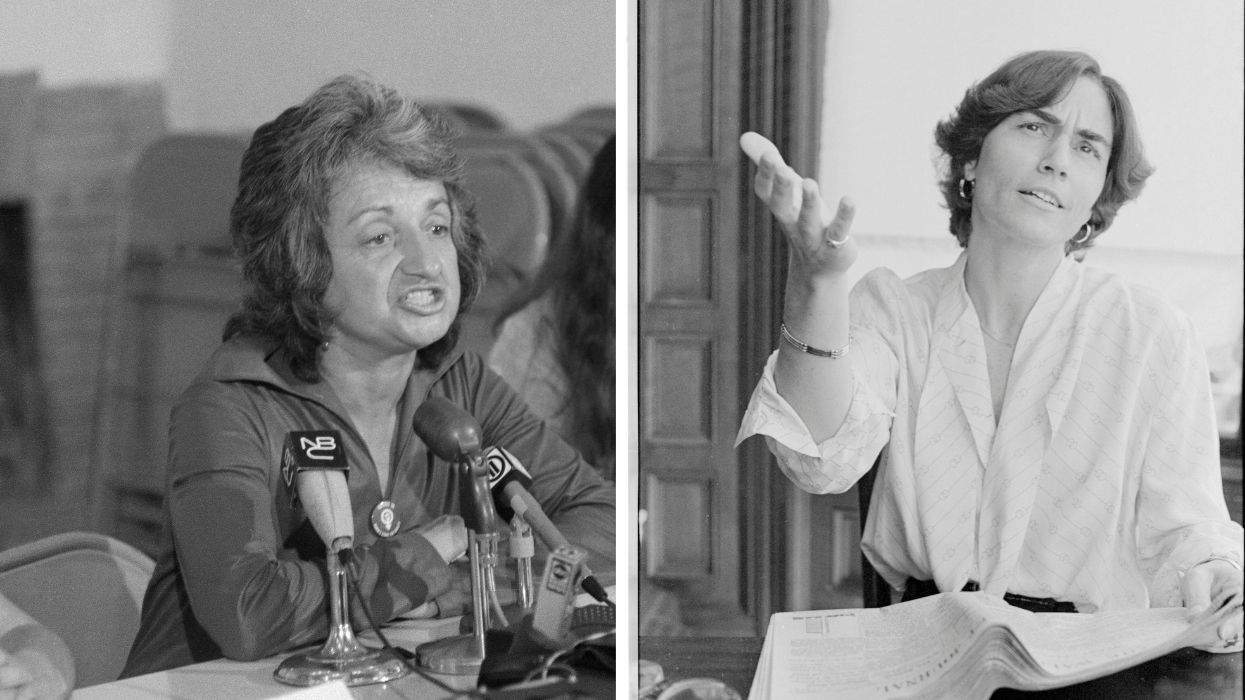
Betty Friedan was one of the feminists particularly worried about lesbians. Friedan authored The Feminine Mystique, a 1963 book that revealed the dissatisfaction many women felt with traditional roles. It helped inspire second-wave feminism, although it was criticized for its focus on affluent white straight women. In 1966, Friedan and others founded the National Organization for Women, which became the leading U.S. feminist group.
At a 1969 NOW meeting, Friedan declared that the movement was being threatened by a “lavender menace,” that is, lesbians. “Mainstream media had already dismissed the feminist movement as ‘a bunch of bra-burning lesbians,’ so Friedan and other straight feminist leaders were acutely sensitive to this labeling — and dismissal — of all feminists as lesbians,” Victoria A. Brownworth wrote in a column published by The Advocate in 2023. “Friedan wanted ‘feminine feminists’ in the movement.”
Friedan went on to purge lesbians from NOW, including Rita Mae Brown, then editor of NOW’s newsletter and soon to be an iconic author, and Ivy Bottini, who had designed the organization’s logo. Friedan feared that lesbians "would kill the women's movement," Bottini told The Advocate's LGBTQ&A podcast in 2020, adding, "That was Betty Friedan's image in her head."
However, they and other lesbians weren’t about to go quietly. They fought back in a big way the following year.
In 1970, NOW’s Second Congress to Unite Women was held in New York City. One night during the conference, women from Radicalesbians and other lesbian-inclusive feminist groups crashed the meeting. They turned the lights off, then turned them back on, and made their presence known, with some lining the aisles and others in the audience. Many of them wore T-shirts emblazoned with “Lavender Menace.”
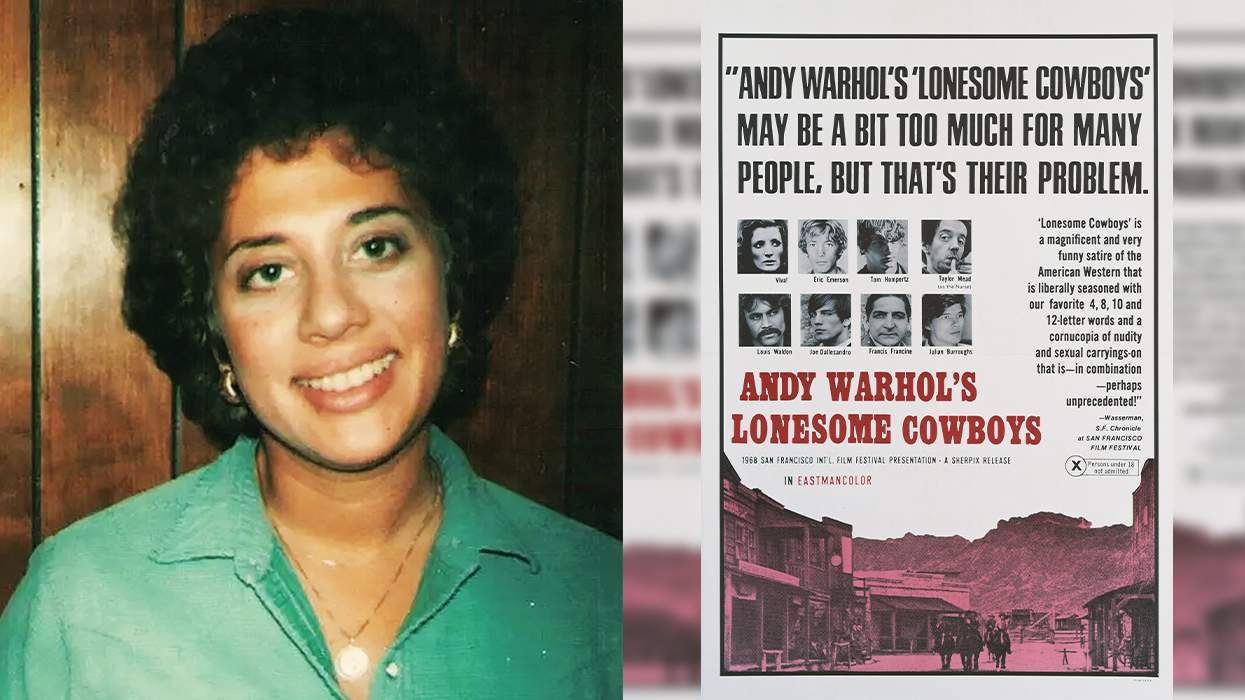
“I was dressed in a nice blouse. I stood up and I said, ‘Sisters, I’m so tired of being in the closet in the women’s movement. This is too much already.’ And I ripped my blouse off, and I had a ‘Lavender Menace’ T-shirt underneath,” activist Karla Jay told NBC News in 2024.
The lesbian demonstrators and held signs with slogans such as “We are all lesbians,” “Lesbianism is a women’s liberation plot,” and “We are your worst nightmare, your best fantasy.” They took over the stage and demanded that the women’s movement address issues of concern to lesbians.
“NOW leaders attempted to restore their planned session and a few women left, but the majority of the audience was engaged by the action’s humor and theatricality,” notes an online article from the NYC LGBTQ Historical Sites Project. “The Menaces held the floor for over two hours, inviting all attendees to share their thoughts and questions on lesbianism. Many straight women thanked Menaces for making them confront their feelings about lesbianism, and Black and working-class women connected with the Menaces’ feelings of exclusion in the women’s liberation movement.” The following year, NOW adopted a resolution recognizing “oppression of lesbians as a legitimate concern of feminism.”
Lesbian inclusion progressed further at the National Women’s Conference, held in 1977 in Houston to mark International Women’s Year. The conference was something hard to imagine today — it was funded by Congress with bipartisan support, as politicians wanted “to find out what women wanted the government to do,” notes a blog post from the Organization of American Historians. (That didn’t keep far-right leaders, including Phyllis Schlafly, from organizing a competing event.)
Along with discussions of the Equal Rights Amendment, reproductive freedom, childcare, workplace equality, and more, delegates at the conference considered lesbian rights. They came together on a National Plan of Action, consisting of 26 planks that they said “ran the gamut of issues that touch women’s lives.”
“The most controversial plank” was “the one calling for equal protection under the law regardless of ‘sexual preference,’” according to the Organization of American Historians blog. (“Sexual preference,” a term considered offensive today, was accepted language at the time.) In adopting this plank, the conference attendees clapped back at Anita Bryant’s antigay crusade, which had resulted in the repeal of a gay rights ordinance in Miami that year. Such homophobia “led many straight feminists to conclude that their lesbian sisters needed their support,” the OAH article relates.
“When the plank was adopted, lesbians in the balconies erupted with cheers of “thank you, sisters!” the article continues. “One reporter described a great sense of satisfaction that she detected in the feminist delegates, proud of themselves for having adopted the lesbian rights plank in bold defiance of the right. This, she wrote, seemed to confirm that they were, in fact, better than men. It was ‘impossible to imagine a comparable group of men conquering their sexual fear of each other and rising to embrace male homosexuals, and these women knew that.’”
Also at the conference, Friedan apologized for her use of the term “lavender menace.”
The women’s movement hasn’t been without tensions and challenges since then, but the conference did make clear that lesbians were welcome in the movement and integral to it. Such inclusion likely wouldn’t have happened without the Lavender Menace action of 1970, and the women who participated in it have advice for present-day activists.
Related: Prime Timers: A New Age for Activism
Related: From Stonewall to now: LGBTQ+ elders on navigating fear in dark times
“Our movement is needed right here, right now,” one of them, Flavia Rando, told NBC in 2024. “It’s really because we’re an easy scapegoat, an easy target. There’s kind of a gender hysteria in the country right now.”
“It didn’t matter that there were only 30 or 40 of us, and I think that young people today can do what they want and not be afraid that there aren’t enough of them to make social change,” Jay told the network. “They have to have the courage of their convictions and go out and organize, and they have to decide what dream they want to follow. Don’t follow my dream. I’m still marching, but I want them to pick up their own torches and march up the street as well.”