'%3E%3Cpath d='M16.3574 35.6519H12.9537L15.0491 18.8873L16.3574 35.6519ZM30.4229 54.0093L22.309 0.994385H7.91795L0 54.0093H10.6634L11.5802 46.3855H17.4014L17.9914 54.0093H30.4229Z' fill='%23971B20'/%3E%3Cpath d='M48.2073 41.8813C48.2073 43.4049 47.4892 44.0011 46.1144 44.0011H43.7595V11.0687H46.1144C47.4892 11.0687 48.2073 11.6636 48.2073 13.1885V41.8813ZM59.5273 43.6695V11.3326C59.5273 3.71323 53.5729 0.994385 47.8157 0.994385H31.7213V54.0093H47.8157C53.5729 54.0093 59.5273 51.29 59.5273 43.6695Z' fill='%23971B20'/%3E%3Cpath d='M90.183 0.994385H78.6039L75.0711 30.6157L71.9955 0.994385H59.4346L69.2474 54.0093H80.373L90.183 0.994385Z' fill='%23971B20'/%3E%3Cpath d='M107.063 42.3448C107.063 43.7359 105.951 44.5974 104.643 44.5974C103.269 44.5974 102.157 43.7359 102.157 42.3448V12.658C102.157 11.2676 103.269 10.4058 104.643 10.4058C105.951 10.4058 107.063 11.2676 107.063 12.658V42.3448ZM119.233 43.2723V11.7312C119.233 6.36384 112.952 -3.8147e-06 104.643 -3.8147e-06C96.2667 -3.8147e-06 89.9867 6.36384 89.9867 11.7312V43.2723C89.9867 48.6393 96.2667 55 104.643 55C112.952 55 119.233 48.6393 119.233 43.2723Z' fill='%23971B20'/%3E%3Cpath d='M150.976 43.9349V33.7309H139.069V42.3448C139.069 43.7359 137.957 44.5974 136.582 44.5974C135.076 44.5974 133.964 43.7359 133.964 42.3448V12.658C133.964 11.2676 135.076 10.4058 136.582 10.4058C137.957 10.4058 139.069 11.2676 139.069 12.658V21.2723H150.976V11.0687C150.976 5.70107 145.283 -3.8147e-06 136.582 -3.8147e-06C127.75 -3.8147e-06 121.796 5.70107 121.796 11.0687V43.9349C121.796 49.3022 127.75 55 136.582 55C145.283 55 150.976 49.3022 150.976 43.9349Z' fill='%23971B20'/%3E%3Cpath d='M167.478 35.6519H164.076L166.17 18.8873L167.478 35.6519ZM181.544 54.0093L173.432 0.994385H159.037L151.123 54.0093H161.785L162.704 46.3855H168.523L169.114 54.0093H181.544Z' fill='%23971B20'/%3E%3Cpath d='M205.412 10.4058V0.994385H177.081V10.4058H185.392V54.0093H197.428V10.4058H205.412Z' fill='%23971B20'/%3E%3Cpath d='M230.002 54.0093V43.9349H218.914V31.8746H226.635V21.8028H218.914V10.4058H230.002V0.994385H206.875V54.0093H230.002Z' fill='%23971B20'/%3E%3C/g%3E%3Cdefs%3E%3CclipPath id='clip0_260_7080'%3E%3Crect width='230' height='55' fill='white'/%3E%3C/clipPath%3E%3C/defs%3E%3C/svg%3E)
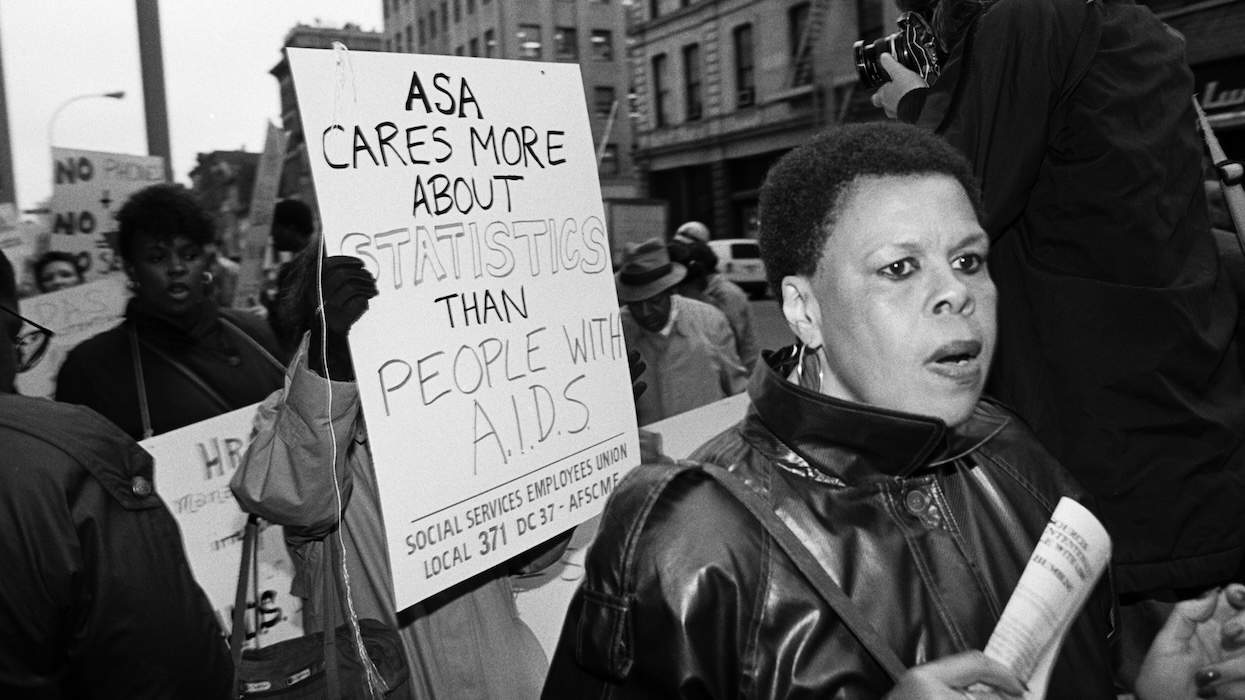

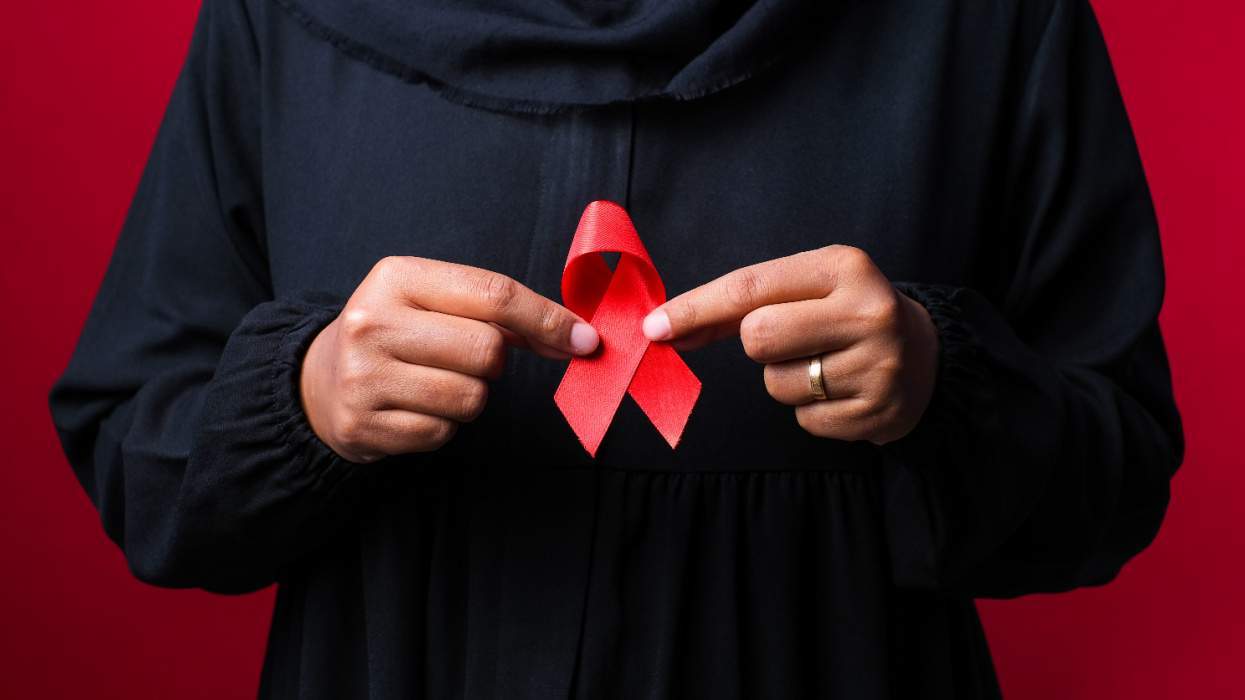
In the early days of the AIDS crisis, there were no treatments for people with HIV and no pre-exposure prophylaxis (PrEP), a prescription-based daily pill or an injection that people not living with HIV can take to prevent HIV infection, to prevent its spread. On top of it all, institutional racism in the realm of public health often left Black patients out.
“Back in those days, it really exposed the vulnerability of our community and the lack of a safety net that we were missing to deal with any kind of crisis,” Vincent Slatt, director of archiving for the Rainbow History Project, told American University Radio about the early days of the crisis.
“This is the first thing that came across. We didn't have access to medical care. We didn't have access to what few drugs were available. We didn't have access to appropriate housing and support, and not a handout but a hand up. HIV AIDS exposed the worst things that could happen to our community, and that's what happened. It was a disaster in the making.”
Related: The Whitewashed History of HIV: A Black Teen Died of AIDS in 1969
The result? Within a decade of HIV emerging first as a threat to gay white men, Black patients made up the largest group of new infections in the late 1980s, a trend that could continue through the 1990s and beyond. But federal systems offered little help. It fell on the Black community itself to set up systems of relief.
In the first decade of the spread of AIDS, queer people of color suffered a dearth of any treatment at all. In 1986, Dr. Arthur Brewer, chair of the National Minority AIDS Council, spoke at a panel in St. Louis about fighting perceptions that AIDS was a “white homosexual disease.”
“AIDS has been an epidemic in the Black community from the very beginning, but because we refuse to talk about it and refuse to educate ourselves about the disease, we will continue to die in large numbers,” he said, according to archives from Washington University in St. Louis.
The National Coalition of Black Lesbians and Gays similarly noted around the same time that many organizations serving Black communities showed disinterest in serving a queer constituency.
“Because Blacks deny homosexuality as a problem in their community, they deny AIDS, but what they don’t realize is that the disease is affecting heterosexuals increasingly and on a national level it is caused primarily by IV drug users,” said NCBLG co-founder Gil Gerald in 1986.
In Washington, D.C., which has a large Black population, the Whitman-Walker Medical Clinic began outreach efforts specifically to the LGBTQ+ community, ensuring residents knew of breakthroughs in HIV treatment and prevention. City government produced blunt videos about the threat of AIDS, but also how queer men could practice safe sex and limit the spread of the disease. As AIDS became more prevalent in the community, so did condom dispensers in local bars.
When Black Pride was founded in D.C. in 1991, organizers Welmore Cook, Theodore Kirkland, and Ernest Hopkins stressed an urgency in organizing the queer Black community. The city also opened one of the first government-run offices of LGBTQ+ Affairs.
As the AIDS crisis morphed to disproportionately impact Black communities, other organizations arose. The Black AIDS Institute in Atlanta formed in 1999, launched by HIV-positive Black activist Phill Wilson. The Institute served as a massive outreach effort to educate Black Americans about the spread of AIDS in the community and about the growing treatment options.
“At agencies like AID Atlanta, the city’s primary AIDS service organization, white gay men dominated leadership positions and volunteer structures,” Dan Royles, an LGBTQ+ history professor, wrote in 2021 for The Baffler.
“Not seeing themselves reflected in efforts to address the new disease, Black gay men believed themselves to be insulated from it. However, by 1983, over a quarter of people diagnosed with AIDS in the United States were Black, roughly double their share of the national population.”
Royles detailed the emergence of the first Black LGBTQ+ groups and their focus on HIV in his book, To Make the Wounded Whole: The African American Struggle against HIV/AIDS.
For example, Bebashi in 1985 Philadelphia became the first organization in the United States to address the AIDS epidemic in the African American community. It remains in operation today, offering free testing for sexually transmitted infections including HIV.
National efforts to educate about the crisis were also underway. When Joseph Beam compiled In the Life: A Black Gay Anthology, a story of 29 gay Black men, it prominently included tales about the impact of AIDS in the subculture.
Related: 13 Black community organizations fighting HIV in the U.S. you should know
Efforts occurred on both coasts. In 1989, AIDS Project Los Angeles redirected $100,000 in education funding toward reaching Black and Latino gay and bisexual men. “That’s the top priority in terms of primary prevention,” foundation CEO Stephen Bennett told the Los Angeles Times at the time. That effort set up the organization to address gaps in public health offerings over the course of the 1990s.
Around 1996, the San Francisco AIDS Foundation had launched Black Brothers Esteem, a psychosocial support program for the Black LGBTQ+ community. In its early days, the program made sure to connect Black men dealing with the disease with medical care while issuing appeals to the Black community at large to also support the at-risk gay population.
The inequity in support for queer Black men compared to white peers still manifests itself in unequal care. Adoption of PrEP among minority communities remains lower than among whites at risk of contracting the virus, according to the National Institutes of Health. But more organizations than ever before aim to expand both public education and treatment availability of modern treatments.