'%3E%3Cpath d='M16.3574 35.6519H12.9537L15.0491 18.8873L16.3574 35.6519ZM30.4229 54.0093L22.309 0.994385H7.91795L0 54.0093H10.6634L11.5802 46.3855H17.4014L17.9914 54.0093H30.4229Z' fill='%23971B20'/%3E%3Cpath d='M48.2073 41.8813C48.2073 43.4049 47.4892 44.0011 46.1144 44.0011H43.7595V11.0687H46.1144C47.4892 11.0687 48.2073 11.6636 48.2073 13.1885V41.8813ZM59.5273 43.6695V11.3326C59.5273 3.71323 53.5729 0.994385 47.8157 0.994385H31.7213V54.0093H47.8157C53.5729 54.0093 59.5273 51.29 59.5273 43.6695Z' fill='%23971B20'/%3E%3Cpath d='M90.183 0.994385H78.6039L75.0711 30.6157L71.9955 0.994385H59.4346L69.2474 54.0093H80.373L90.183 0.994385Z' fill='%23971B20'/%3E%3Cpath d='M107.063 42.3448C107.063 43.7359 105.951 44.5974 104.643 44.5974C103.269 44.5974 102.157 43.7359 102.157 42.3448V12.658C102.157 11.2676 103.269 10.4058 104.643 10.4058C105.951 10.4058 107.063 11.2676 107.063 12.658V42.3448ZM119.233 43.2723V11.7312C119.233 6.36384 112.952 -3.8147e-06 104.643 -3.8147e-06C96.2667 -3.8147e-06 89.9867 6.36384 89.9867 11.7312V43.2723C89.9867 48.6393 96.2667 55 104.643 55C112.952 55 119.233 48.6393 119.233 43.2723Z' fill='%23971B20'/%3E%3Cpath d='M150.976 43.9349V33.7309H139.069V42.3448C139.069 43.7359 137.957 44.5974 136.582 44.5974C135.076 44.5974 133.964 43.7359 133.964 42.3448V12.658C133.964 11.2676 135.076 10.4058 136.582 10.4058C137.957 10.4058 139.069 11.2676 139.069 12.658V21.2723H150.976V11.0687C150.976 5.70107 145.283 -3.8147e-06 136.582 -3.8147e-06C127.75 -3.8147e-06 121.796 5.70107 121.796 11.0687V43.9349C121.796 49.3022 127.75 55 136.582 55C145.283 55 150.976 49.3022 150.976 43.9349Z' fill='%23971B20'/%3E%3Cpath d='M167.478 35.6519H164.076L166.17 18.8873L167.478 35.6519ZM181.544 54.0093L173.432 0.994385H159.037L151.123 54.0093H161.785L162.704 46.3855H168.523L169.114 54.0093H181.544Z' fill='%23971B20'/%3E%3Cpath d='M205.412 10.4058V0.994385H177.081V10.4058H185.392V54.0093H197.428V10.4058H205.412Z' fill='%23971B20'/%3E%3Cpath d='M230.002 54.0093V43.9349H218.914V31.8746H226.635V21.8028H218.914V10.4058H230.002V0.994385H206.875V54.0093H230.002Z' fill='%23971B20'/%3E%3C/g%3E%3Cdefs%3E%3CclipPath id='clip0_260_7080'%3E%3Crect width='230' height='55' fill='white'/%3E%3C/clipPath%3E%3C/defs%3E%3C/svg%3E)
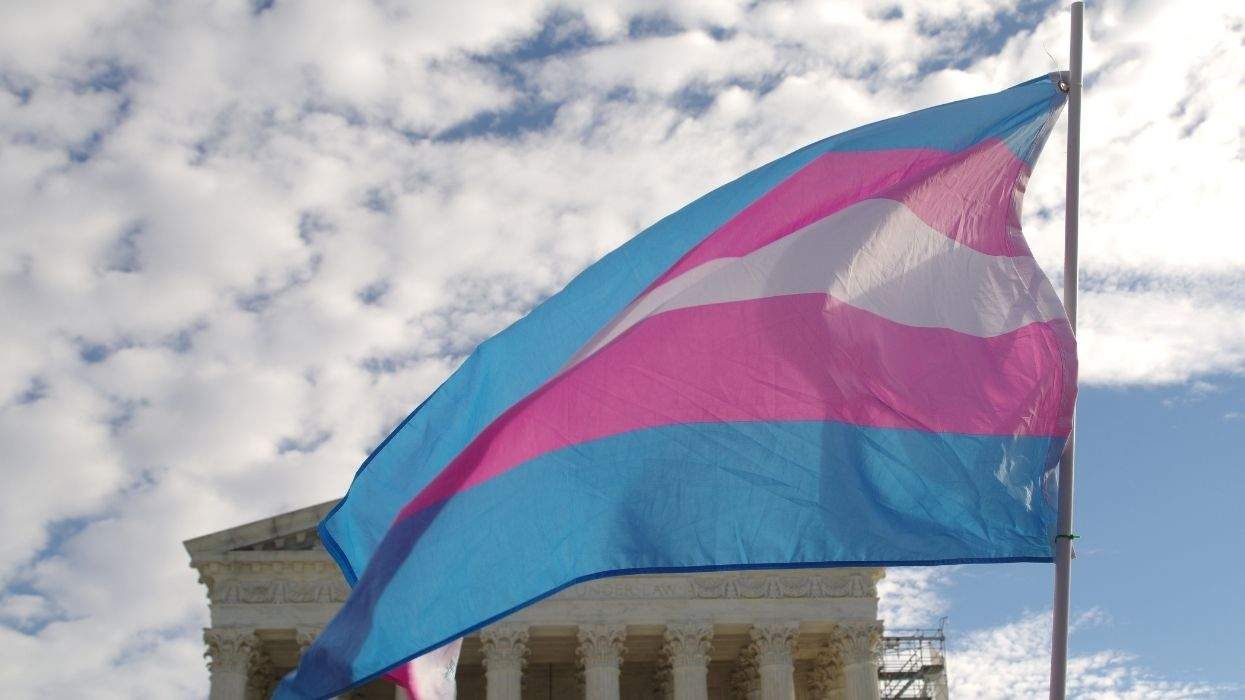

A conservative legal group, representing parents and teachers in California, has filed an emergency appeal with the U.S. Supreme Court asking it to allow school officials to inform parents and guardians about a student’s transgender identity, including chosen name and pronouns, even without the student’s consent.
In 2016, the California Department of Education issued legal guidance advising school districts to “accept and respect a student’s assertion of their gender identity where the student expresses that identity at school,” to consult with the student about who can be informed of that identity, and to respect the limits the student places on disclosure except in “very rare” situations. In 2024, California became the first state to pass this guidance into law. Some other states have passed laws mandating or promoting forced outing of trans or all LGBTQ+ students.
Related: Forced outing leads to high depression rates among LGBTQ+ youth, yet legislation persists
Related: Judge blocks California school district’s transgender outing policy
In 2023, four teachers in the Escondido Union School District filed a federal lawsuit against the state policy, alleging it violated their rights to free speech and free exercise of religion. They are Elizabeth Mirabelli, Lori Ann West, and two teachers identified by the pseudonyms Jane Boe and Jane Roe, and they are represented by the Chicago-based Thomas More Society.
Of Mirabelli and West, the Thomas More Society says, “As Christians, they believe that God created their precious students as male and female — immutably and without mistake. But under EUSD’s Parental Exclusion Policies, they were forced to perpetuate a deeply immoral scheme of deception against parents with children who suffer from gender dysphoria.”
The suit was originally known as Mirabelli v. Olson, Mark Olson being president of the Escondido school board. Parents from other California school districts soon joined the suit; they said their children had gone through social transition at school without their knowledge. California Attorney General Rob Bonta was added as a defendant, so the case is now Mirabelli v. Bonta.
On December 22, U.S. District Judge Roger Benitez, an appointee of George W. Bush, granted a permanent injunction blocking the state policy. “Parents have a right to receive gender information and teachers have a right to provide to parents accurate information about a child’s gender identity,” he wrote. Benitez also certified the case as a class action, so his ruling covered all parents, students, and teachers in California public schools.
But on January 5, a three-judge panel of the U.S. Court of Appeals for the Ninth Circuit issued a stay of the injunction. The judges expressed doubts about the class action status and noted that teachers are allowed to disclose a student’s gender identity without the student’s consent “where there is a compelling need to do so to protect the student’s wellbeing,” quoting guidance from the attorney general.
“It is thus not clear from the district court’s order which particular policies are problematic, and it is doubtful that all of those policies categorically forbid disclosure of information,” the panel wrote. The judges also said the parents and teachers are unlikely to succeed on their constitutional claims.
The panel consisted of Mary H. Murguia, who is chief judge, and Andrew D. Hurwitz and Salvador Mendoza Jr. Murguia and Hurwitz were appointed by President Barack Obama, and Mendoza by President Joe Biden.
Three days after the appeals court’s ruling, the Thomas More Society and its clients filed an emergency application with the Supreme Court seeking a lift of the stay. They also asked for a rehearing of the case by the full Ninth Circuit, but, the application says, California parents’ “religious and fundamental parental rights — and the health and safety of their children — are too precious for them to delay seeking relief” from the Supreme Court.
The high court has not decided whether it will take the case. Justice Sonia Sotomayor has set January 21 as the deadline for California officials to deliver a response to the application.
The court is also considering whether to take a similar case out of Massachusetts, in which parents objected to the confidentiality policy regarding gender identity. The U.S. Court of Appeals for the First Circuit ruled against the parents in February.