'%3E%3Cpath d='M16.3574 35.6519H12.9537L15.0491 18.8873L16.3574 35.6519ZM30.4229 54.0093L22.309 0.994385H7.91795L0 54.0093H10.6634L11.5802 46.3855H17.4014L17.9914 54.0093H30.4229Z' fill='%23971B20'/%3E%3Cpath d='M48.2073 41.8813C48.2073 43.4049 47.4892 44.0011 46.1144 44.0011H43.7595V11.0687H46.1144C47.4892 11.0687 48.2073 11.6636 48.2073 13.1885V41.8813ZM59.5273 43.6695V11.3326C59.5273 3.71323 53.5729 0.994385 47.8157 0.994385H31.7213V54.0093H47.8157C53.5729 54.0093 59.5273 51.29 59.5273 43.6695Z' fill='%23971B20'/%3E%3Cpath d='M90.183 0.994385H78.6039L75.0711 30.6157L71.9955 0.994385H59.4346L69.2474 54.0093H80.373L90.183 0.994385Z' fill='%23971B20'/%3E%3Cpath d='M107.063 42.3448C107.063 43.7359 105.951 44.5974 104.643 44.5974C103.269 44.5974 102.157 43.7359 102.157 42.3448V12.658C102.157 11.2676 103.269 10.4058 104.643 10.4058C105.951 10.4058 107.063 11.2676 107.063 12.658V42.3448ZM119.233 43.2723V11.7312C119.233 6.36384 112.952 -3.8147e-06 104.643 -3.8147e-06C96.2667 -3.8147e-06 89.9867 6.36384 89.9867 11.7312V43.2723C89.9867 48.6393 96.2667 55 104.643 55C112.952 55 119.233 48.6393 119.233 43.2723Z' fill='%23971B20'/%3E%3Cpath d='M150.976 43.9349V33.7309H139.069V42.3448C139.069 43.7359 137.957 44.5974 136.582 44.5974C135.076 44.5974 133.964 43.7359 133.964 42.3448V12.658C133.964 11.2676 135.076 10.4058 136.582 10.4058C137.957 10.4058 139.069 11.2676 139.069 12.658V21.2723H150.976V11.0687C150.976 5.70107 145.283 -3.8147e-06 136.582 -3.8147e-06C127.75 -3.8147e-06 121.796 5.70107 121.796 11.0687V43.9349C121.796 49.3022 127.75 55 136.582 55C145.283 55 150.976 49.3022 150.976 43.9349Z' fill='%23971B20'/%3E%3Cpath d='M167.478 35.6519H164.076L166.17 18.8873L167.478 35.6519ZM181.544 54.0093L173.432 0.994385H159.037L151.123 54.0093H161.785L162.704 46.3855H168.523L169.114 54.0093H181.544Z' fill='%23971B20'/%3E%3Cpath d='M205.412 10.4058V0.994385H177.081V10.4058H185.392V54.0093H197.428V10.4058H205.412Z' fill='%23971B20'/%3E%3Cpath d='M230.002 54.0093V43.9349H218.914V31.8746H226.635V21.8028H218.914V10.4058H230.002V0.994385H206.875V54.0093H230.002Z' fill='%23971B20'/%3E%3C/g%3E%3Cdefs%3E%3CclipPath id='clip0_260_7080'%3E%3Crect width='230' height='55' fill='white'/%3E%3C/clipPath%3E%3C/defs%3E%3C/svg%3E)
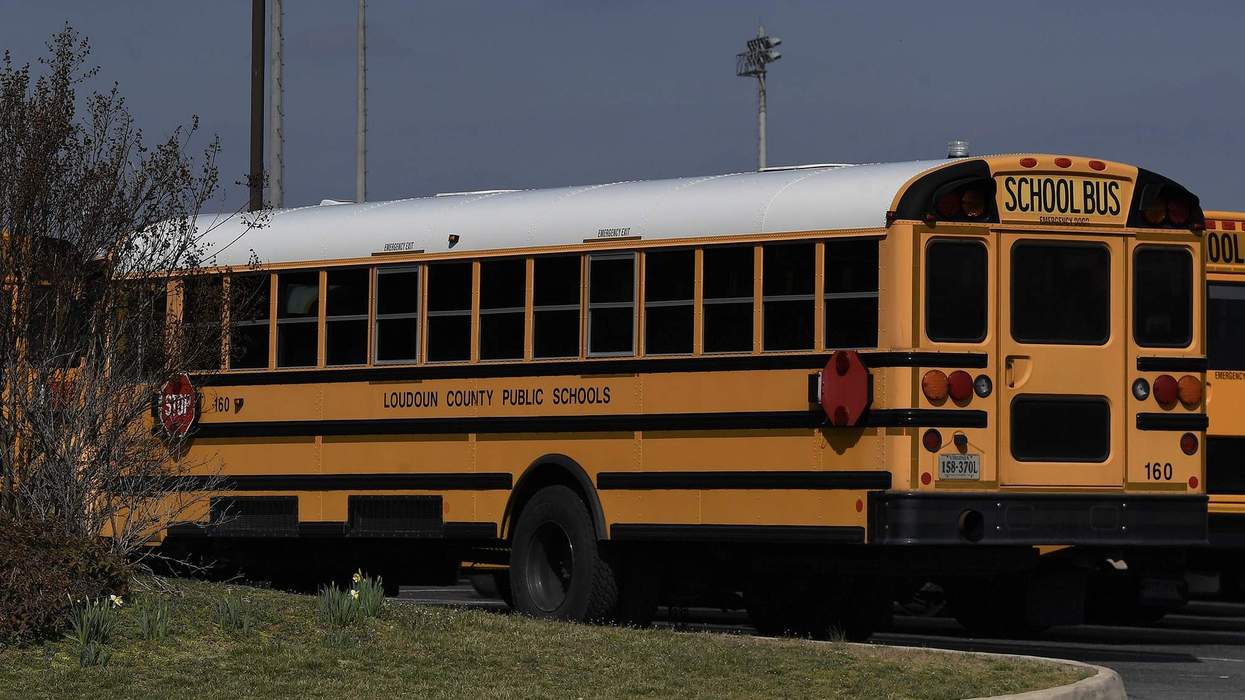

A Virginia school board settled a legal dispute last week with two students who sued after they were suspended for their treatment of a trans classmate.
Keep up with the latest in LGBTQ+ news and politics. Sign up for The Advocate's email newsletter.
In March 2025, the Loudoun County School Board suspended three boys for filming a transgender student using the male locker room at Stone Bridge High School and asking probing questions. The school board opened a Title IX investigation into the boys and found two responsible for sexual harassment and sex-based discrimination, Loudoun Now reported.
The two boys then sued the school board, arguing it discriminated against them for their Christian faith. The case quickly drew attention from conservative groups and raised $130,000 in an online fundraiser to cover the boys’ legal fees. In late 2025, the Justice Department asked the federal judge overseeing the case to join the plaintiffs, but its request was denied.
Related: Virginia sued over Glenn Youngkin’s anti-transgender student policies
Related: Cisgender students allowed to sue Virginia schools to avoid sharing restrooms with trans classmates
Judge Leonie M. Brinkema, who presides over the U.S. District Court for the Eastern District of Virginia, said at a hearing last Friday that the school board and the boys’ legal team had settled on the case, according to Loudon Now. The terms of the settlement have not been made public.
A media representative for Loudoun County Public Schools declined to comment on the settlement. Administrators at the high school and the students’ legal counsel did not immediately return requests for comment.
Related: Supreme Court seems likely to rule against transgender athletes in school sports programs
Related: Virginia school board adopts anti-transgender policy and blocks LGBTQ+ club
The Loudoun County School Board permits students to use facilities that align with their gender, including locker rooms. A federal court in Virginia had previously ruled that school districts could not prohibit trans students from using the restrooms that match their gender identity.
This article was written as part of the Future of Queer Media fellowship program at The Advocate, which is underwritten by a generous gift from Morrison Media Group. The program helps support the next generation of LGBTQ+ journalists.
Editor's note: This story has been updated to indicate that Loudoun County Public Schools declined to comment.