'%3E%3Cpath d='M16.3574 35.6519H12.9537L15.0491 18.8873L16.3574 35.6519ZM30.4229 54.0093L22.309 0.994385H7.91795L0 54.0093H10.6634L11.5802 46.3855H17.4014L17.9914 54.0093H30.4229Z' fill='%23971B20'/%3E%3Cpath d='M48.2073 41.8813C48.2073 43.4049 47.4892 44.0011 46.1144 44.0011H43.7595V11.0687H46.1144C47.4892 11.0687 48.2073 11.6636 48.2073 13.1885V41.8813ZM59.5273 43.6695V11.3326C59.5273 3.71323 53.5729 0.994385 47.8157 0.994385H31.7213V54.0093H47.8157C53.5729 54.0093 59.5273 51.29 59.5273 43.6695Z' fill='%23971B20'/%3E%3Cpath d='M90.183 0.994385H78.6039L75.0711 30.6157L71.9955 0.994385H59.4346L69.2474 54.0093H80.373L90.183 0.994385Z' fill='%23971B20'/%3E%3Cpath d='M107.063 42.3448C107.063 43.7359 105.951 44.5974 104.643 44.5974C103.269 44.5974 102.157 43.7359 102.157 42.3448V12.658C102.157 11.2676 103.269 10.4058 104.643 10.4058C105.951 10.4058 107.063 11.2676 107.063 12.658V42.3448ZM119.233 43.2723V11.7312C119.233 6.36384 112.952 -3.8147e-06 104.643 -3.8147e-06C96.2667 -3.8147e-06 89.9867 6.36384 89.9867 11.7312V43.2723C89.9867 48.6393 96.2667 55 104.643 55C112.952 55 119.233 48.6393 119.233 43.2723Z' fill='%23971B20'/%3E%3Cpath d='M150.976 43.9349V33.7309H139.069V42.3448C139.069 43.7359 137.957 44.5974 136.582 44.5974C135.076 44.5974 133.964 43.7359 133.964 42.3448V12.658C133.964 11.2676 135.076 10.4058 136.582 10.4058C137.957 10.4058 139.069 11.2676 139.069 12.658V21.2723H150.976V11.0687C150.976 5.70107 145.283 -3.8147e-06 136.582 -3.8147e-06C127.75 -3.8147e-06 121.796 5.70107 121.796 11.0687V43.9349C121.796 49.3022 127.75 55 136.582 55C145.283 55 150.976 49.3022 150.976 43.9349Z' fill='%23971B20'/%3E%3Cpath d='M167.478 35.6519H164.076L166.17 18.8873L167.478 35.6519ZM181.544 54.0093L173.432 0.994385H159.037L151.123 54.0093H161.785L162.704 46.3855H168.523L169.114 54.0093H181.544Z' fill='%23971B20'/%3E%3Cpath d='M205.412 10.4058V0.994385H177.081V10.4058H185.392V54.0093H197.428V10.4058H205.412Z' fill='%23971B20'/%3E%3Cpath d='M230.002 54.0093V43.9349H218.914V31.8746H226.635V21.8028H218.914V10.4058H230.002V0.994385H206.875V54.0093H230.002Z' fill='%23971B20'/%3E%3C/g%3E%3Cdefs%3E%3CclipPath id='clip0_260_7080'%3E%3Crect width='230' height='55' fill='white'/%3E%3C/clipPath%3E%3C/defs%3E%3C/svg%3E)
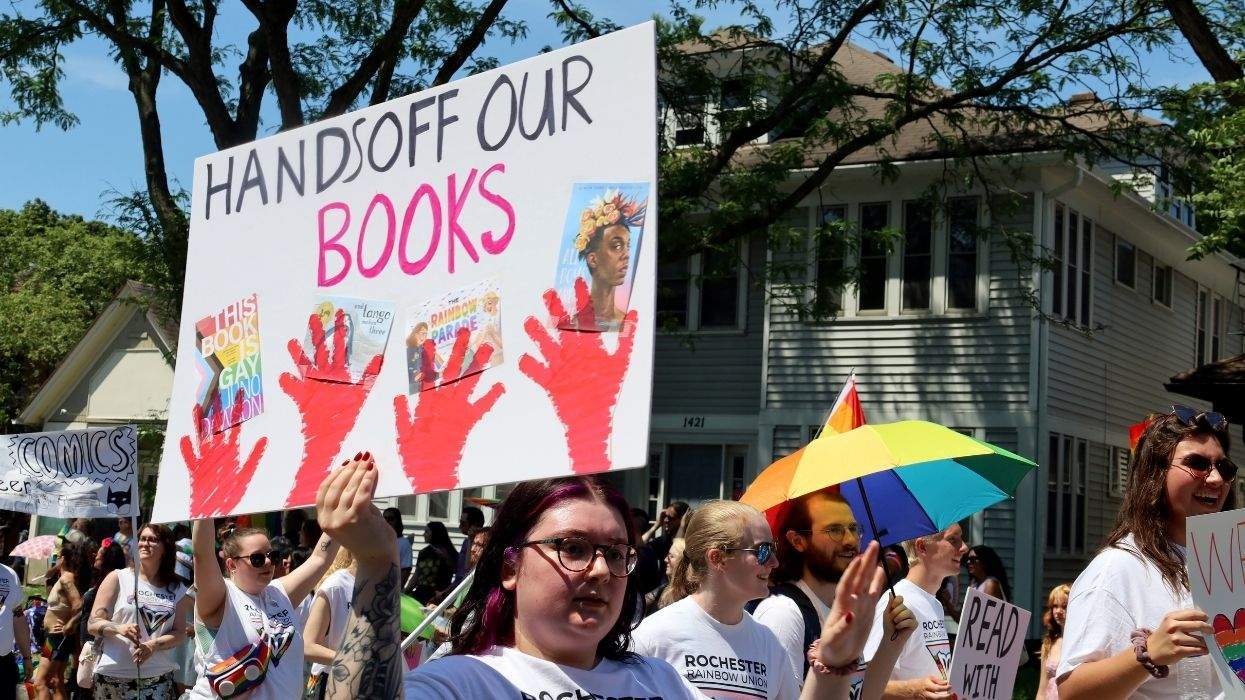
On Friday, in classrooms and libraries, in church basements and living rooms, in school auditoriums and small-town community centers, people across all 50 states will open books that, in many places, have become political lightning rods.
Keep up with the latest in LGBTQ+ news and politics. Sign up for The Advocate's email newsletter.
They will read about queer families. About transgender children. About love and belonging and the quiet relief of seeing yourself reflected on a page.
And they will do so deliberately.
The Human Rights Campaign Foundation’s 11th annual National Day of Reading arrives amid what the organization describes as escalating hostility toward LGBTQ+ youth, from restrictions on teaching about gender identity and sexual orientation to the rollback of civil rights protections and intensified battles over who can play sports.
Related: Book bans in schools are more widespread than ever. Which states have had the most?
“As LGBTQ+ youth and their families face escalating hostility and attacks from the current administration, communities and allies will come together to elevate and celebrate queer stories,” the group said in announcing the event.
What began as a local response to a single dispute has evolved into a national show of solidarity.
“We started this effort 11 years ago,” Cheryl Greene, vice president of school and youth programming at HRC, said in an interview with The Advocate.
The origin story is by now part of the movement’s lore: A kindergarten teacher in a small Wisconsin town sought to read I Am Jazz, a book about a transgender girl, to their class, which included a transgender student. When parents objected, allies organized a public reading at a library; hundreds attended.
“What it showed us is that one, the power of allies and saying, this is not okay, but the power of reading,” Greene said.
Expanding the movement
This year’s participation reflects both urgency and expansion. Greene said roughly 2,800 readings have been pledged across all 50 states and the District of Columbia, with organizers hoping to reach nearly 300,000 people.
“That’s blowing our numbers out of the water this year,” she said.
Related: These are the most challenged library books in America — yes, most are LGBTQ+
Related: These are not ordinary times: How the Human Rights Campaign plans to move forward
The event is anchored by HRC’s Welcoming Schools program, which the organization describes as the nation’s most comprehensive bias-based bullying prevention initiative, providing LGBTQ-inclusive training and resources for Pre-K–12 educators.
This year, the coalition behind the day has broadened. In addition to longstanding education partners, groups such as the National Education Association, PEN America, EveryLibrary, Authors Against Book Bans, the School Board Integrity Project, Lambda Literary, the American Association of School Librarians, Red, Wine and Blue, and Mama Dragons have joined the effort.
The breadth of that partnership underscores how battles over books have become proxy wars over democracy itself, about who defines “appropriate,” who counts as a child worth protecting, and who decides what empathy looks like in a pluralistic society.
What’s actually in the books?
At the center of the controversy, Greene said, is a persistent misunderstanding.
“I think that one of the things is that people conflate sexual orientation and gender,” she said. “What they’re saying is you are too young to be talking about sex, and that’s not what’s in these books.”
Instead, she describes stories rooted in “love,” “family,” and “treating each other with respect.”
Part of the day’s purpose, she said, is almost disarmingly straightforward: read the books before condemning them.
“Open these books and read them instead of listening to the propaganda on the right that’s telling you that it’s whatever it is they’re saying,” Greene said.
She believes many critics have not done so.
“I guarantee that so many of these right-wing people are saying that we shouldn’t be doing this, have never opened one of these books,” she said. The cost of removal, she argues, is not abstract. “When these books are taken off the shelves, the message that we’re sending is that you are not valid and that your lives are not valid and that you don’t exist,” Greene said.
Reading as defiance
For HRC President Kelley Robinson, the stakes are deeply personal and generational.
“LGBTQ+ youth are growing up in a world where they watch books disappear from shelves and lessons about their lives get pushed aside. Even if they don’t understand every political decision behind it, they feel the impact,” Robinson said in a statement. “Moments like the National Day of Reading remind them that their stories matter. Sharing books becomes an act of defiance, and when communities show up for one another, we build understanding and acceptance. Standing together, we make it clear that no one is facing this moment alone and queer stories deserve to be told.”
Greene describes the current wave of censorship as driven by “a small minority that is super vocal,” even as she sees signs of broader pushback.
“There are more of us than them,” she said.
Across the country, she said, students have been speaking at school board meetings to demand that their libraries reflect the diversity of their communities.
An Invitation to participate
Participation does not require official sanction. Greene emphasized that anyone can pledge to read — in a classroom, at a place of worship, in a neighborhood gathering, or simply with one other person.
“It doesn’t have to be a full, organized event,” she said. “Just have a discussion around the importance of books, and most importantly, open the book and read it, and then talk about why these books are important.”