'%3E%3Cpath d='M16.3574 35.6519H12.9537L15.0491 18.8873L16.3574 35.6519ZM30.4229 54.0093L22.309 0.994385H7.91795L0 54.0093H10.6634L11.5802 46.3855H17.4014L17.9914 54.0093H30.4229Z' fill='%23971B20'/%3E%3Cpath d='M48.2073 41.8813C48.2073 43.4049 47.4892 44.0011 46.1144 44.0011H43.7595V11.0687H46.1144C47.4892 11.0687 48.2073 11.6636 48.2073 13.1885V41.8813ZM59.5273 43.6695V11.3326C59.5273 3.71323 53.5729 0.994385 47.8157 0.994385H31.7213V54.0093H47.8157C53.5729 54.0093 59.5273 51.29 59.5273 43.6695Z' fill='%23971B20'/%3E%3Cpath d='M90.183 0.994385H78.6039L75.0711 30.6157L71.9955 0.994385H59.4346L69.2474 54.0093H80.373L90.183 0.994385Z' fill='%23971B20'/%3E%3Cpath d='M107.063 42.3448C107.063 43.7359 105.951 44.5974 104.643 44.5974C103.269 44.5974 102.157 43.7359 102.157 42.3448V12.658C102.157 11.2676 103.269 10.4058 104.643 10.4058C105.951 10.4058 107.063 11.2676 107.063 12.658V42.3448ZM119.233 43.2723V11.7312C119.233 6.36384 112.952 -3.8147e-06 104.643 -3.8147e-06C96.2667 -3.8147e-06 89.9867 6.36384 89.9867 11.7312V43.2723C89.9867 48.6393 96.2667 55 104.643 55C112.952 55 119.233 48.6393 119.233 43.2723Z' fill='%23971B20'/%3E%3Cpath d='M150.976 43.9349V33.7309H139.069V42.3448C139.069 43.7359 137.957 44.5974 136.582 44.5974C135.076 44.5974 133.964 43.7359 133.964 42.3448V12.658C133.964 11.2676 135.076 10.4058 136.582 10.4058C137.957 10.4058 139.069 11.2676 139.069 12.658V21.2723H150.976V11.0687C150.976 5.70107 145.283 -3.8147e-06 136.582 -3.8147e-06C127.75 -3.8147e-06 121.796 5.70107 121.796 11.0687V43.9349C121.796 49.3022 127.75 55 136.582 55C145.283 55 150.976 49.3022 150.976 43.9349Z' fill='%23971B20'/%3E%3Cpath d='M167.478 35.6519H164.076L166.17 18.8873L167.478 35.6519ZM181.544 54.0093L173.432 0.994385H159.037L151.123 54.0093H161.785L162.704 46.3855H168.523L169.114 54.0093H181.544Z' fill='%23971B20'/%3E%3Cpath d='M205.412 10.4058V0.994385H177.081V10.4058H185.392V54.0093H197.428V10.4058H205.412Z' fill='%23971B20'/%3E%3Cpath d='M230.002 54.0093V43.9349H218.914V31.8746H226.635V21.8028H218.914V10.4058H230.002V0.994385H206.875V54.0093H230.002Z' fill='%23971B20'/%3E%3C/g%3E%3Cdefs%3E%3CclipPath id='clip0_260_7080'%3E%3Crect width='230' height='55' fill='white'/%3E%3C/clipPath%3E%3C/defs%3E%3C/svg%3E)
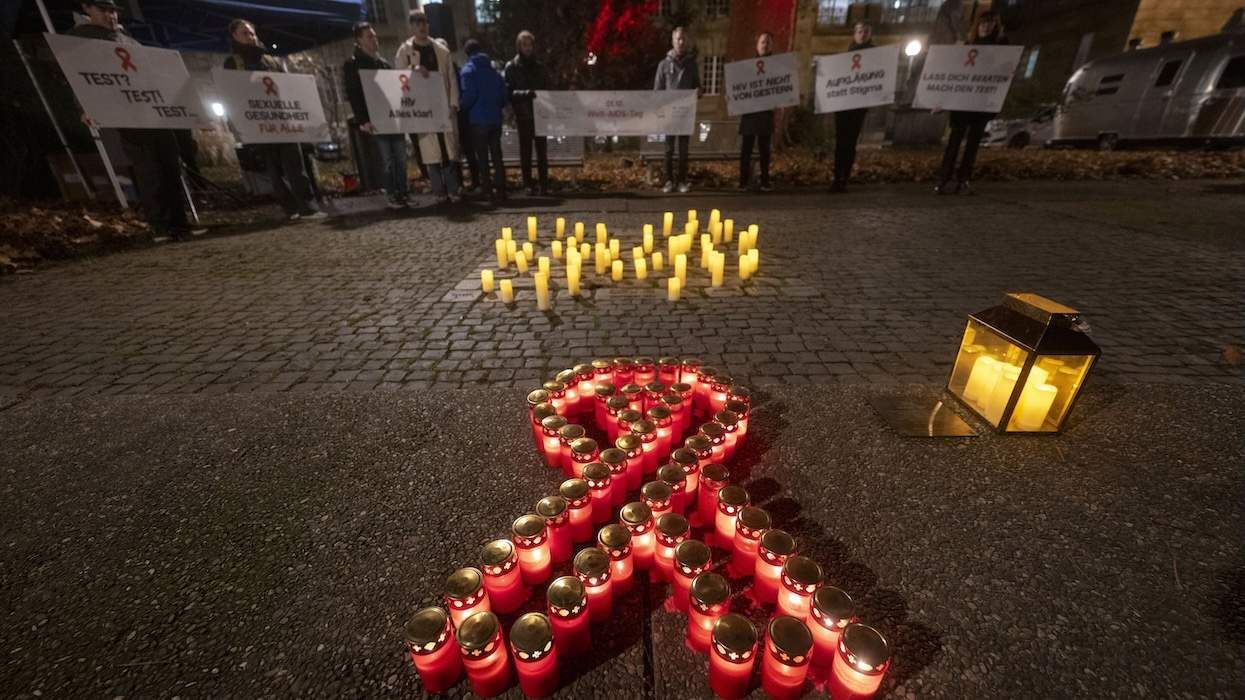

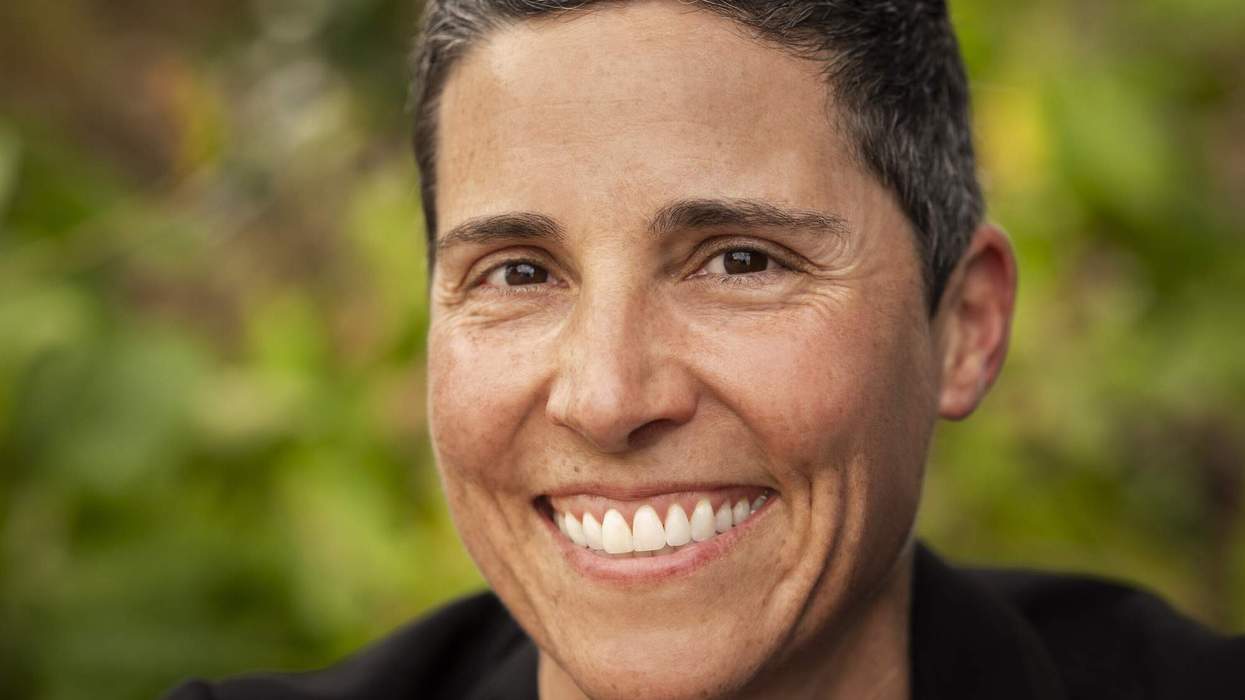
On World AIDS Day, it’s worth remembering how far we’ve come in combating HIV and AIDS — and that we can cross the finish line to eliminate the disease, says Matthew Rose, senior public policy advocate at the Human Rights Campaign.
“We’ve changed the face of what HIV was 40 years ago to what it is now,” he says, with drugs to suppress the virus (although they don’t cure it) and keep it from progressing to AIDS, and others to prevent its transmission. “It is breathtaking what we’ve been able to do in this space, and we can use those efforts and those tools to truly end an epidemic, something that we haven’t done on a disease level in a long, long time.”
With HIV being a manageable condition for those who have access to treatment, the epidemic isn’t on the minds of the general public, as it was in the 1980s and ’90s.
“You talk to young people sometimes, and they don’t think about HIV,” Rose says. They might think about, Oh, I can take this pill, but it’s not top of mind like it once was, when people had seen the celebrity concerts, had heard of Ryan White, had seen a special here or there growing up. If you grew up in the ’90s, you saw these things.”
Among LGBTQ+ Americans, however, there still is significant awareness, as demonstrated by the HRC Foundation’s 2025 LGBTQ+ Community Survey. “We continuously see the number of people who prioritize HIV and the effects of HIV in their lives,” he says. “There are always some knowledge gaps that happen, but I think you’re still seeing a broad base of folks who are seeing the effects of it and are understanding that there are some real consequences this year. … I think that people are getting that we have made progress, that the good things we’ve done are continuing to tip the needle, and that we should keep doing those things.”
The survey also indicates the problems the Trump administration has created around HIV prevention and treatment. In the survey, conducted between September 29 and October 20.9 percent of American adults, including 30 percent of LGBTQ+ adults, said federal government policies have made accessing prevention and treatment more difficult in the past year. LGBTQ+ adults who have low incomes or depend on Medicare or Medicaid reported even more difficulty.
“We have now had three or four times this year where the federal government has just decided they don’t like HIV prevention,” Rose says. “Remember the beginning of the administration when [Donald Trump] tried to cancel federal grants, not understanding what that meant, and then again in February, we had a fire alarm moment where they gutted all the research dollars and some HIV prevention dollars, and then when we saw the president’s budget, which eliminated all HIV prevention at [the Centers for Disease Control and Prevention].”
Related: Funding cuts could cause 3.3 million additional HIV infections by 2030: report
“Then we saw in June when they delayed the five-year cooperative agreement that funds the health departments to do HIV prevention, and while some of the health departments were able to weather that because they’re larger institutions, we definitely saw smaller nonprofits really take a hit there and some of them not even be able to fully recover, all because of the delay, and they were working on smaller margins,” he continues. “And you do it in a year where Yeztugo just comes out and you’ve got another prevention drug, an option that works amazingly well and provides a new choice for people.”
Most of the grant funding has been restored, largely through lawsuits, and there has been some progress because of the Ending the HIV Epidemic in the U.S. initiative started by Trump in his first term, Rose says. But in his second term, he and his administration have turned hostile to efforts to end the epidemic.
“You’re just caught in this like whiplash of like, you hate us, you don’t, you do, I don’t know, but you’re trying to eliminate our funding every time we get a moment, or you’re trying to restrict it, as you can see on the global side,” he says. On the global side, the State Department has decreed that HIV prevention drugs available through the President’s Emergency Play for AIDS Relief must be distributed only to pregnant and breastfeeding women, not LGBTQ+ people.
“I think President Trump has a complicated narrative when it comes to HIV,” Rose says. He lived in New York City at the height of the epidemic, and he was close to prominent right-wing lawyer Roy Cohn, who died of AIDS complications (all while insisting he didn’t have AIDS and wasn’t gay). There’s even video of Trump visiting Ryan White, the hemophiliac youth who contracted HIV through a blood transfusion and became a major symbol of the disease.
Trump likely started the initiative to end HIV because he thought he could accomplish something President Barack Obama couldn’t, but he probably doesn’t think much about HIV and AIDS now, Rose says. He’s content to let Russ Vought, the far-right activist turned director of the Office of Management and Budget, do his bidding and slash funding for HIV programs and anything considered “woke,” according to Rose.
Also, he notes, the Christian right has much more power in the second Trump administration than in the first, and people with this ideology see HIV and AIDS as something that results from so-called bad lifestyle choices. And the administration seems to hate the CDC, Rose says.
Related: RFK Jr.’s damage to the CDC is ‘past the point of no return,’ Dr. Demetre Daskalakis warns
While the administration’s actions have had negative consequences domestically, the situation overseas is far worse, given the dismantling of the U.S. Agency for International Development.
Most of the programs that deliver HIV medications overseas are run through USAID, not local governments, Rose points out. “And if you look at the USAID cuts, a lot of those were targeted on the fact that you’re promoting ‘woke ideology’ or ‘gender ideology,’ and really targeting LGBTQ people,” he says. “On the global side, it’s a little bit more pernicious than people think about because if you back out young women and girls from East Africa, Southern and East Africa, where we’ve seen most of our gains, you actually still see increases [in HIV] in key populations, which is mainly LGBTQ folks. And so their population’s risk is growing, and we’ve decided to just gut the funding.”
“In some of those countries, you can’t go to the government,” Rose says, and now the cuts have devastated nongovernmental organizations.
There are things people can do to fight back, he notes: “First of all, you’ve got to get skin in the game locally, so you can support local organizations and efforts that are ending the epidemic. They’re literally all over this country. We can be calling our lawmakers and showing up and telling them from all different sectors that we believe in doing big things. And one of those big things is ending the HIV epidemic, and we know programs that work, and they have proven that they’ve worked, and we want you to support programmatic efforts that deliver.”
In another snub of the effort against HIV, the federal government is not recognizing World AIDS Day this year, but that’s a motivation to fight back as well, Rose says. “At the end of the day, we know what they think about World AIDS Day, but World AIDS Day has always been about the community and about the people,” he says. “I have celebrated this day with friends in countries who would have you killed for being HIV-positive, and they’ve done it in defiance of that. And I think we in the United States who have been at the forefront of HIV activism and advocacy, we will continue, regardless of what our government thinks, to bend that government to our will to save our people.”
“As long as people willing to fight, we will change the course of history,” he adds.