'%3E%3Cpath d='M16.3574 35.6519H12.9537L15.0491 18.8873L16.3574 35.6519ZM30.4229 54.0093L22.309 0.994385H7.91795L0 54.0093H10.6634L11.5802 46.3855H17.4014L17.9914 54.0093H30.4229Z' fill='%23971B20'/%3E%3Cpath d='M48.2073 41.8813C48.2073 43.4049 47.4892 44.0011 46.1144 44.0011H43.7595V11.0687H46.1144C47.4892 11.0687 48.2073 11.6636 48.2073 13.1885V41.8813ZM59.5273 43.6695V11.3326C59.5273 3.71323 53.5729 0.994385 47.8157 0.994385H31.7213V54.0093H47.8157C53.5729 54.0093 59.5273 51.29 59.5273 43.6695Z' fill='%23971B20'/%3E%3Cpath d='M90.183 0.994385H78.6039L75.0711 30.6157L71.9955 0.994385H59.4346L69.2474 54.0093H80.373L90.183 0.994385Z' fill='%23971B20'/%3E%3Cpath d='M107.063 42.3448C107.063 43.7359 105.951 44.5974 104.643 44.5974C103.269 44.5974 102.157 43.7359 102.157 42.3448V12.658C102.157 11.2676 103.269 10.4058 104.643 10.4058C105.951 10.4058 107.063 11.2676 107.063 12.658V42.3448ZM119.233 43.2723V11.7312C119.233 6.36384 112.952 -3.8147e-06 104.643 -3.8147e-06C96.2667 -3.8147e-06 89.9867 6.36384 89.9867 11.7312V43.2723C89.9867 48.6393 96.2667 55 104.643 55C112.952 55 119.233 48.6393 119.233 43.2723Z' fill='%23971B20'/%3E%3Cpath d='M150.976 43.9349V33.7309H139.069V42.3448C139.069 43.7359 137.957 44.5974 136.582 44.5974C135.076 44.5974 133.964 43.7359 133.964 42.3448V12.658C133.964 11.2676 135.076 10.4058 136.582 10.4058C137.957 10.4058 139.069 11.2676 139.069 12.658V21.2723H150.976V11.0687C150.976 5.70107 145.283 -3.8147e-06 136.582 -3.8147e-06C127.75 -3.8147e-06 121.796 5.70107 121.796 11.0687V43.9349C121.796 49.3022 127.75 55 136.582 55C145.283 55 150.976 49.3022 150.976 43.9349Z' fill='%23971B20'/%3E%3Cpath d='M167.478 35.6519H164.076L166.17 18.8873L167.478 35.6519ZM181.544 54.0093L173.432 0.994385H159.037L151.123 54.0093H161.785L162.704 46.3855H168.523L169.114 54.0093H181.544Z' fill='%23971B20'/%3E%3Cpath d='M205.412 10.4058V0.994385H177.081V10.4058H185.392V54.0093H197.428V10.4058H205.412Z' fill='%23971B20'/%3E%3Cpath d='M230.002 54.0093V43.9349H218.914V31.8746H226.635V21.8028H218.914V10.4058H230.002V0.994385H206.875V54.0093H230.002Z' fill='%23971B20'/%3E%3C/g%3E%3Cdefs%3E%3CclipPath id='clip0_260_7080'%3E%3Crect width='230' height='55' fill='white'/%3E%3C/clipPath%3E%3C/defs%3E%3C/svg%3E)

While watching the documentary Barbara Forever at the 2026 Sundance Film Festival, I learned that the legendary and seminal lesbian filmmaker Barbara Hammer had been married to a man and had even said she loved him.
However, once she met some feminists and lesbians, and learned that a new, better way of life was possible, she dove in headfirst, fully embracing the lesbian identity and community.
Half a century later, I wonder if lesbians online would let her embrace that label.
A personal essay published last summer on lesbian culture site Autostraddle has been making the rounds on sapphic social media lately. Many lesbians online are taking issue with the essay, titled "Lowkey, I Chose To Be a Lesbian," saying that lesbians are born, and anyone who has ever experienced attraction to a man must be bisexual, not a lesbian.
Things got even more heated when the writer of the essay posted a now-deleted video on TikTok, doubling down on her stance and defending "the political elements of lesbianism."
"By that logic, a corporate lesbian, like a woman who leads the LGBTQIA affinity group for Lockheed Martin, so long as she's never admitted on the internet that she's ever had a crush on a guy, is queerer to you than me, a woman who lives and dies for gay bitches," she says. "Because if you'd rather align with a Pete Buttigieg type or corporate gay over an artist like me or Doechii who had a spiritual and slow awakening to our queer identity, that's between you and God."
The essay, originally published in June of 2025, has received so much attention that the recently lesbian-labeled rapper Doechii commented on her previous acknowledgement of it, clarifying that while she thinks the writing is "honest/vulnerable," there are "quite a few things that don't align" with her own views or experiences.
I'm not here to defend that essay. Like Doechii, I read it and found many things that don't align with my experiences and views. My lesbianism has nothing to do with men and everything to do with women. My lesbianism isn't motivated by saying "fuck you" to the patriarchy. I have no fond memories or feelings of attraction to men in my mind.
But I did choose to be a lesbian.
I first came out as a lesbian nearly 15 years ago, but I haven't always been here. After coming out, I quickly joined online and IRL lesbian spaces, even working at Autostraddle for years. I thought I'd found my home.
Despite what some of the essay's critics might say, it can be extremely hard to be a lesbian.
It's no secret that there are more bisexual, pansexual, and otherwise queer women than lesbians. Study after study has shown this. So even in a sapphic community, it's likely that most people there will have some attraction to men. So when you don't, you can feel lonely, alien, and other. So sometimes, you choose attraction to men.
When I squinted hard enough, I could conceptualize why certain men were considered attractive. I even wrapped my mind around some of the reasons why a woman might want to be held and touched by a man.
During my time as a self-identified bisexual, I went on dates with men, slept with men, and wrote proudly about my identity and attraction. I was happily embraced by my friends and queer community. I was ready for my life as a person who was attracted to men.
Now, when I read those essays, I see a young lesbian's desperate attempts to fit in with the majority of her sapphic community. Now, I see a young lesbian exploring new, sometimes dangerous waters, and I'm so glad I had the safe harbor of lesbianism to come back to.
I definitely chose my bisexuality. I built attraction toward men out of my appreciation for a multitude of bodies, lack of experiences in my younger years, and my desire to be like my friends. I also chose to go back to lesbianism.
It took me two things to decide to be a lesbian again. First, I had to realize that I had chosen to be bisexual so that I would feel less alone. Second, and much harder, I had to learn to love and be OK with being alone with myself.
Those were choices I made, and they were difficult ones. I could've stayed stagnant and safe as a bisexual woman, but I chose myself, and I chose happiness, and that meant choosing lesbianism.
A queer woman choosing lesbianism over bisexuality isn't the same thing as the Political Lesbianism of the past, where Gender Studies professors proudly waved lesbian and Black Lives Matter flags only to go home to their brownstone, bored husband, and underpaid, undocumented nanny.
If a person looks at all the options and decides lesbianism is the best one for them, why would we want to reject them?
Believe me, I understand the impulse to want to protect lesbianism from people who would hurt or undermine the label and community. I bristle when straight girls say they wish they could "just go gay" to avoid dating men. I would never talk to someone again if they said I might one day find the "right" man.
As Charli XCX says, "it's so confusing sometimes to be a girl." Life is mercurial, and I know it's scary, but sometimes people change. Attraction is a strange, confusing thing, and being human is even stranger and more confusing. We need to allow for that confusion without creating division. I would rather see lesbianism as a safe harbor than a militarized fort.
Women should be allowed to change, to grow, to learn, and to redefine who we are. Even if that means that someone might identify as a lesbian now and something else at another time.
Locking a woman away from lesbianism because she fondly remembers having a crush on a boy in school, or she was married, or she flirted with a trans man, or he flirted with the idea of being a trans man, does nothing but limit women and limit lesbians.
It limits women who are exploring gender. It limits women who are pressured into relationships with men. It limits women who convince themselves that they must have some ounce of attraction to men. It limits women who are lost and looking for a community.
Lesbianism is freedom, and we need to allow people the freedom to explore and blaze new trails, while also providing a place they can come home to. That's how a community survives and grows.
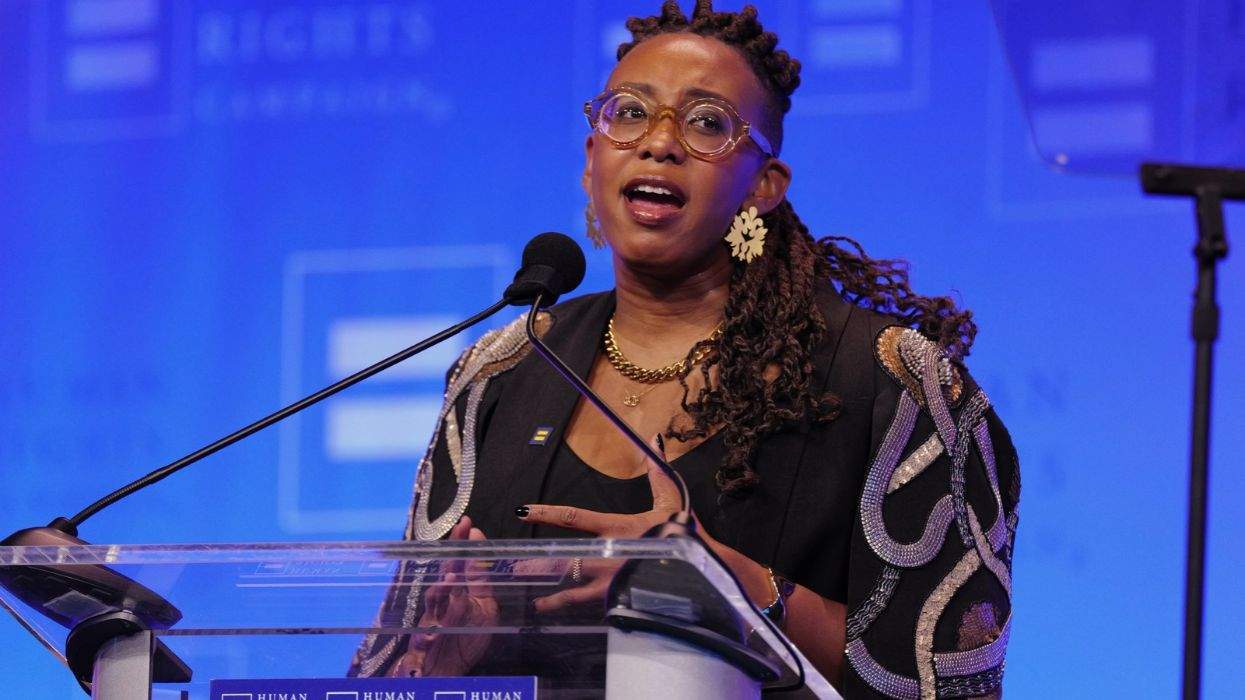
Mey Rude is an associate editor for Out. Find her on Instagram @Meyrude.
Voices is dedicated to featuring a wide range of inspiring personal stories and impactful opinions from the LGBTQ+ community and its allies. Visit out.com/submit to learn more about submission guidelines. We welcome your thoughts and feedback on any of our stories. Email us at voices@equalpride.com. Views expressed in Voices stories are those of the guest writers, columnists, and editors, and do not directly represent the views of Out or our parent company, equalpride.