'%3E%3Cpath d='M16.3574 35.6519H12.9537L15.0491 18.8873L16.3574 35.6519ZM30.4229 54.0093L22.309 0.994385H7.91795L0 54.0093H10.6634L11.5802 46.3855H17.4014L17.9914 54.0093H30.4229Z' fill='%23971B20'/%3E%3Cpath d='M48.2073 41.8813C48.2073 43.4049 47.4892 44.0011 46.1144 44.0011H43.7595V11.0687H46.1144C47.4892 11.0687 48.2073 11.6636 48.2073 13.1885V41.8813ZM59.5273 43.6695V11.3326C59.5273 3.71323 53.5729 0.994385 47.8157 0.994385H31.7213V54.0093H47.8157C53.5729 54.0093 59.5273 51.29 59.5273 43.6695Z' fill='%23971B20'/%3E%3Cpath d='M90.183 0.994385H78.6039L75.0711 30.6157L71.9955 0.994385H59.4346L69.2474 54.0093H80.373L90.183 0.994385Z' fill='%23971B20'/%3E%3Cpath d='M107.063 42.3448C107.063 43.7359 105.951 44.5974 104.643 44.5974C103.269 44.5974 102.157 43.7359 102.157 42.3448V12.658C102.157 11.2676 103.269 10.4058 104.643 10.4058C105.951 10.4058 107.063 11.2676 107.063 12.658V42.3448ZM119.233 43.2723V11.7312C119.233 6.36384 112.952 -3.8147e-06 104.643 -3.8147e-06C96.2667 -3.8147e-06 89.9867 6.36384 89.9867 11.7312V43.2723C89.9867 48.6393 96.2667 55 104.643 55C112.952 55 119.233 48.6393 119.233 43.2723Z' fill='%23971B20'/%3E%3Cpath d='M150.976 43.9349V33.7309H139.069V42.3448C139.069 43.7359 137.957 44.5974 136.582 44.5974C135.076 44.5974 133.964 43.7359 133.964 42.3448V12.658C133.964 11.2676 135.076 10.4058 136.582 10.4058C137.957 10.4058 139.069 11.2676 139.069 12.658V21.2723H150.976V11.0687C150.976 5.70107 145.283 -3.8147e-06 136.582 -3.8147e-06C127.75 -3.8147e-06 121.796 5.70107 121.796 11.0687V43.9349C121.796 49.3022 127.75 55 136.582 55C145.283 55 150.976 49.3022 150.976 43.9349Z' fill='%23971B20'/%3E%3Cpath d='M167.478 35.6519H164.076L166.17 18.8873L167.478 35.6519ZM181.544 54.0093L173.432 0.994385H159.037L151.123 54.0093H161.785L162.704 46.3855H168.523L169.114 54.0093H181.544Z' fill='%23971B20'/%3E%3Cpath d='M205.412 10.4058V0.994385H177.081V10.4058H185.392V54.0093H197.428V10.4058H205.412Z' fill='%23971B20'/%3E%3Cpath d='M230.002 54.0093V43.9349H218.914V31.8746H226.635V21.8028H218.914V10.4058H230.002V0.994385H206.875V54.0093H230.002Z' fill='%23971B20'/%3E%3C/g%3E%3Cdefs%3E%3CclipPath id='clip0_260_7080'%3E%3Crect width='230' height='55' fill='white'/%3E%3C/clipPath%3E%3C/defs%3E%3C/svg%3E)
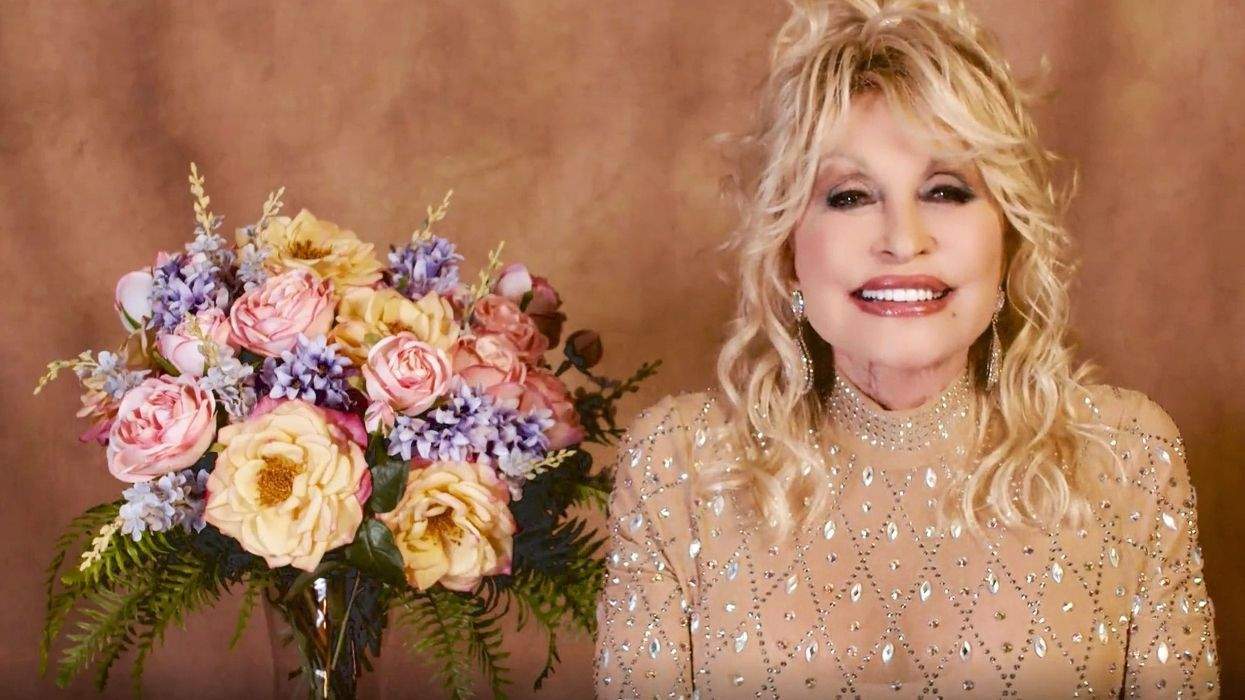

It was heartbreaking to hear that Dolly Parton passed away. Yes, she was 80, but it is genuinely hard to believe. Not because 80 is young, but because Dolly never seemed to belong to time the way the rest of us do. She was ageless in looks, laughter, and love.
You could watch her talk, giggle at her own jokes, hear her sing - and see her act - and swear she hadn't changed in 40 years. She had a rare, luminous vibrancy that made you feel like she'd always be here, and always be in your corner.
Losing her feels less like losing an 80-year-old icon and more like losing a friend who remained the same all her life.
I've spent eight years writing about the LGBTQ+ community for The Advocate. When I'm asked if there is one column I regret writing, or would take back, the answer is easy. It was about Dolly.
Three years ago, she released a duets album with music legends including Paul McCartney and Stevie Nicks, as well as queer artists Miley Cyrus, Elton John, and Melissa Etheridge. I wrote about how strange it was that Dolly, a lifelong LGBTQ+ ally, would include Kid Rock, a screaming transphobe and homophobe who has spent years cozying up to Donald Trump and Pete Hegseth, both openly hostile to us.
Related: 10 times Dolly Parton cemented her status as an LGBTQ+ icon
I said so. I also spent most of that column praising Dolly for a lifetime of allyship that very few artists, in any music genre, or celebrity-hood for that matter, have matched.
Sometimes I peruse the comment section on my columns, particularly when there are many commenters. Such was the case with my Dolly column. Almost nobody who posted seemed to have read past the headline, but it didn't matter.
What I read wasn't people lashing out at Kid Rock. It was people defending Dolly, fiercely, fervently, and protectively, from someone — me — they rightly assumed hadn’t earned the right to question her.
I've written hundreds of columns in eight years. Only a handful do I truly wish I could take back. One was my overconfidence that Kamala Harris would become our next president. But it's the Dolly column that sticks out.
I should have let it go and kept my mouth shut. She didn't deserve it, and I deserved all the nasty comments.
If I'm honest with myself, some part of it was chasing clicks, and that's a lousy excuse for taking a shot at someone who spent 60 years taking none at us.
So let me tell you what I actually think Dolly Parton did for this community, because it deserves more room than my sincere regret.
If you want the single moment I'd point to, the one I think of as the real watershed, it was a song most casual fans have never heard. It's the song I was reminded of recently when I heard Dolly wasn't doing well.
In 1991, on the album Eagle When She Flies, Dolly released a song titled "Family." The lyrics run through a list of disparate relatives: "some are preachers, some are gay, some are addicts, drunks and strays, but not one of them gets turned away, because family."
But three words, "some are gay,” in a country song in 1991, and next to preachers and addicts, with love declared unconditional, were gobsmacking. Hard to believe 35 years later, but they were. It’s hard to explain how earth-shattering that was.
You have to remember what country radio looked like in 1991. You have to remember what the country looked like. This was the height of the AIDS crisis, when the word "gay" in mainstream culture was still treated as a big no-no.
Country music in particular didn't go near queer identity - at all. Dolly didn't make some giant political statement or scream it from the mountaintops. Instead, she made a family portrait and put us within the frame, perhaps without listening to those who might have told her not to.
I can imagine Dolly plowing ahead, more concerned with doing the right thing than with listening to someone tell her no. But little did she know what she was doing.
Dolly's gutsy move helped build the road that Chely Wright, Kacey Musgraves, and Orville Peck have all walked down since. She made it thinkable that a country star could stand up for us and keep her career intact.
Related: Chely Wright: Country Singer Comes Out
She kept doing it, too, long after she didn't need to prove anything to anybody. In 2005, she wrote "Travelin' Thru" for Transamerica, a film about a trans woman, at a moment when almost no A-list star would go near trans subject matter. It earned her an Oscar nomination, proving that her acceptance wasn't just loving; her work was solid, too.
In 2009, when asked about marriage equality on television, she gave the answer in that unmistakable Dolly cadence: "Sure, why shouldn't they get married? They should suffer just like the rest of us."
It was a joke, but it wasn't to anyone desperate for the right to marry. It was Dolly's way of saying, I have your back.
When a Dollywood employee once asked a guest to turn her marriage-equality T-shirt inside out, Dolly wasn't happy. She said plainly that Dollywood is a family park and all families are welcome.
And it's well known how much she loved drag culture. She once entered a Dolly Parton lookalike contest herself, and lost.
The thing about Dolly that I think younger fans sometimes miss, and that people my age never will forget, is that she treated allyship like it was no big deal. She was simply incapable of looking at someone differently.
I'll go to my grave wishing I'd let the Kid Rock thing go. But I won't spend one more minute wishing I'd said less about everything else, because none of it was too much. Dolly Parton was ahead of nearly everyone for longer than most of us have been alive, and it was a genuine comfort just knowing she was out there.
Opinion is dedicated to featuring a wide range of inspiring personal stories and impactful opinions from the LGBTQ+ community and its allies. Visit Advocate.com/submit to learn more about submission guidelines. We welcome your thoughts and feedback on any of our stories. Email us at voices@equalpride.com. Views expressed in Voices stories are those of the guest writers, columnists, and editors, and do not directly represent the views of The Advocate or our parent company, equalpride.